
Introduction
You are considering a 2013 Chevrolet Trax LT / 1LT because you want something more versatile than a compact sedan but more affordable and efficient than a full-size SUV. For many buyers, the Trax represents a practical middle ground: a small crossover that is easy to drive in the city, economical to own, and flexible enough for daily errands, commuting, and light family use.
However, as a first‑year model in North America, the 2013 Trax requires a more careful, informed approach when shopping used. This guide is designed to walk you through exactly what to look for before buying. It combines clear explanations, structured checklists, and practical inspection tips so you can evaluate a used 2013 Chevrolet Trax LT (1LT) with confidence.
https://www.youtube.com/shorts/azgqfk6PBlc
Understanding the 2013 Chevrolet Trax LT (1LT)
Where the Trax Fits in Chevrolet’s Lineup
The Chevrolet Trax was introduced as a subcompact crossover, positioned below larger models like the Equinox. Its purpose was to offer the elevated seating position and cargo flexibility of an SUV in a smaller, more urban-friendly package. Compared with traditional compact sedans, the Trax provides easier access, better visibility, and a hatchback-style cargo area.
For buyers who spend most of their time in the city, this size and layout can be more convenient than a larger SUV, especially when parking, navigating tight streets, or managing fuel costs.
What the LT (1LT) Trim Includes
The LT (1LT) trim adds practical comfort and convenience features over the base model. While exact equipment can vary slightly by market and original options, buyers can generally expect:
- Air conditioning
- Power windows and power door locks
- Bluetooth connectivity
- Cruise control
- Keyless entry
- Alloy wheels
The LT trim focuses on everyday usability rather than luxury. It is intended for drivers who value function, reasonable comfort, and affordability.
Who This Vehicle Is Best Suited For
The 2013 Chevrolet Trax LT (1LT) is typically a good fit for:
- City commuters who want a compact, easy-to-drive vehicle
- Budget-conscious buyers looking for crossover versatility
- Drivers who prioritize fuel efficiency and maneuverability
- Owners who are prepared to follow regular maintenance schedules
It is less suitable for drivers who need strong towing capability, frequent long-distance highway driving at high speeds, or long-term ownership with minimal maintenance attention.
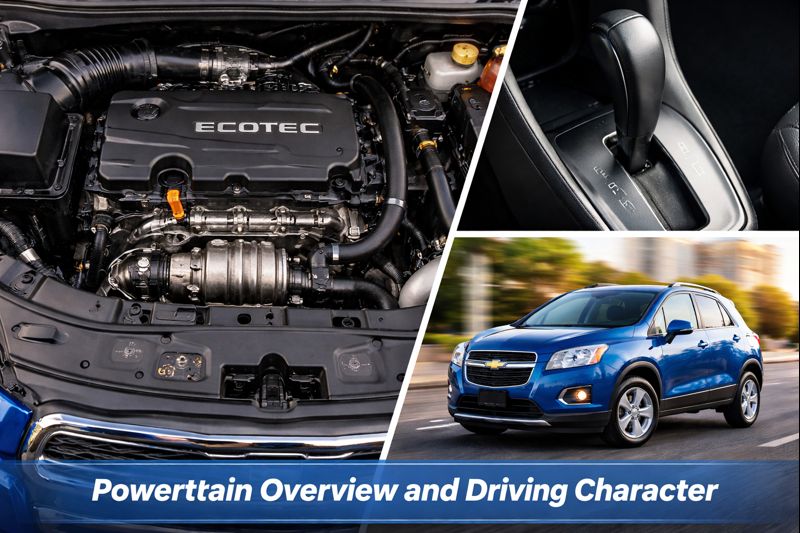
Powertrain Overview and Driving Character
1.4L Turbo ECOTEC Engine Explained
The 2013 Trax LT (1LT) is powered by a 1.4‑litre turbocharged ECOTEC four‑cylinder engine. This engine was designed to deliver adequate low‑rpm torque for city driving while keeping fuel consumption relatively low. Turbocharging allows the engine to feel responsive at lower speeds, which is helpful in stop‑and‑go traffic.
That said, turbocharged engines are more sensitive to oil quality and service intervals than naturally aspirated engines. Skipped oil changes or incorrect oil specifications can significantly reduce engine and turbocharger lifespan. For this reason, service history is especially important when evaluating a used Trax.
6-Speed Automatic Transmission (FWD)
The Trax uses a six‑speed automatic transmission paired with front‑wheel drive. In normal operation, shifts should feel smooth and predictable. Some hesitation at very low speeds can be characteristic of this transmission, but harsh shifts, shuddering, or delayed engagement should be investigated further.
During a test drive, pay attention to how the transmission behaves when pulling away from a stop, creeping in traffic, and accelerating gently. Consistent, smooth operation is a positive sign.
What the Trax Feels Like on the Road
On the road, the 2013 Trax is tuned for comfort and ease of use rather than performance. Acceleration is adequate for city driving, steering is light, and the elevated seating position provides good outward visibility.
At highway speeds, the Trax can feel less planted than larger crossovers, especially in strong crosswinds. This is normal for a vehicle of its size, but excessive vibration, noise, or instability may indicate worn suspension components or alignment issues.
Fuel Economy and Everyday Costs
Official Fuel Economy Ratings
Fuel efficiency is one of the Trax’s main selling points. For the front‑wheel‑drive automatic version, fuel economy ratings are approximately:
- City: about 9.0 L/100 km
- Highway: about 6.9 L/100 km
- Combined: about 8.1 L/100 km
These figures make the Trax competitive with compact sedans while offering the practicality of a crossover.
Real-World Fuel Consumption
In real‑world use, fuel consumption depends heavily on driving style. Frequent short trips, aggressive acceleration, and heavy traffic can push city consumption closer to 9.5 L/100 km. Gentle driving and steady highway cruising can bring results closer to official ratings.
Buyers should also keep in mind that turbo boost usage directly affects fuel consumption. Smooth throttle input helps keep fuel costs down.
Is the Trax a Cost-Effective Daily Driver in Vancouver?
For urban driving in and around Vancouver, the Trax’s compact size, fuel efficiency, and easy maneuverability are advantages. Parking is simpler than with larger SUVs, and insurance costs are generally lower due to the vehicle’s size and classification.
If most of your driving is within the city, the Trax can be a cost‑effective daily vehicle, provided it has been well maintained.
Safety Ratings and Basic Protection
For buyers who want to review independent safety data, the following authoritative resources provide additional context on the 2013 Chevrolet Trax:
- The Insurance Institute for Highway Safety (IIHS) publishes detailed crash-test results and explains how ratings such as “Good” are determined. Buyers can review the official results on the IIHS crash-test ratings for the 2013 Chevrolet Trax.
- The National Highway Traffic Safety Administration (NHTSA) provides star ratings and frontal crash-test data for U.S.-market vehicles. Official results are available on the NHTSA vehicle safety ratings page for the 2013 Chevrolet Trax.
These sources help confirm how the Trax performed under standardized testing for its model year.

IIHS Crash-Test Results Explained
According to the Insurance Institute for Highway Safety (IIHS), the 2013 Chevrolet Trax earned “Good” ratings in several key crashworthiness categories. You can review the full breakdown of results and testing methodology on the official IIHS vehicle ratings page for the 2013 Chevrolet Trax.
The Insurance Institute for Highway Safety (IIHS) rated the 2013 Chevrolet Trax “Good” in several key crashworthiness categories, including moderate overlap front, side impact, roof strength, and head restraints. These ratings indicate solid basic occupant protection for the vehicle’s class.
It is important to note that the small overlap front crash test was not conducted for this model year. As a result, safety evaluation reflects testing standards of its time rather than modern protocols.
NHTSA Safety Ratings
The National Highway Traffic Safety Administration (NHTSA) assigns star ratings based on frontal and other crash tests. Buyers can review the official NHTSA crash-test results and safety details for the 2013 Chevrolet Trax through the NHTSA vehicle safety portal.
The National Highway Traffic Safety Administration (NHTSA) awarded the 2013 Trax high marks in frontal crash testing for front‑wheel‑drive configurations. This supports the conclusion that the vehicle offers reasonable structural protection for everyday driving scenarios.
What Safety Features to Expect
The 2013 Trax focuses on structural safety rather than advanced driver‑assistance technology. Buyers should not expect features such as automatic emergency braking or lane‑keeping assist. When evaluating safety, the emphasis should be on vehicle condition, tire quality, braking performance, and completed recall work.
Common Issues and What to Check Before Buying
Understanding common problem areas helps you focus your inspection on the most important components.
Turbocharger and Oil System Concerns
The turbocharger relies on clean, properly pressurized oil. Common warning signs of turbo‑related issues include:
- Loss of power
- Whining or siren‑like noises
- Blue or grey smoke from the exhaust
Ask for proof of regular oil changes and inspect for oil residue around the turbo area. A well‑maintained turbo system should operate quietly and smoothly.
PCV System and Valve Cover Issues
The PCV system on this engine is integrated into the valve cover. Failures can lead to oil consumption, rough idle, or vacuum leaks. Listen for whistling noises at idle and look for oil seepage around the valve cover.
Cooling System Risks
Cooling system issues, including water pump or thermostat problems, have been reported on some early Trax models. Check coolant levels, inspect for leaks, and ensure the engine maintains a stable operating temperature during the test drive.
Transmission Behavior to Evaluate
While outright transmission failures are uncommon, buyers should check for:
- Rough or delayed shifts
- Hesitation when accelerating from a stop
- Shuddering during light throttle
Any of these symptoms warrant further inspection before purchase.
Suspension and Steering Wear
Front suspension components such as control arm bushings and sway bar links can wear, particularly on vehicles driven on rough city roads. Listen for clunks over bumps and check for uneven tire wear.
Electrical and Infotainment Issues
Some owners report minor electrical issues, including infotainment freezing, power window problems, or sensor warnings. During inspection, operate every switch and function to confirm proper operation.
Recall History and VIN Check Checklist
Before purchasing any used vehicle, it is important to review official recall information from government and manufacturer sources. The following resources are commonly used by Canadian buyers to verify recall status:
Common Recall Categories
The 2013 Chevrolet Trax has been subject to recalls related to airbags, electrical systems, and restraint components. The exact recalls applicable depend on the vehicle’s VIN.
How to Check Recalls Through Transport Canada
Transport Canada maintains a public database of vehicle defects and recalls. Buyers can search by year, make, and model to see which safety campaigns have affected the 2013 Chevrolet Trax using the Transport Canada vehicle recalls database. This resource helps identify known issues and understand their safety implications.
Transport Canada provides a public database where buyers can search for vehicle recalls by year, make, and model. This allows you to see which safety campaigns have affected the Trax.
How to Confirm Recall Completion with GM Canada
General Motors Canada provides a VIN-based recall lookup tool. By entering the vehicle identification number (VIN), buyers can confirm whether all recall repairs and service actions have been completed using the official GM Canada recall lookup tool. Any outstanding recalls should be addressed by an authorized GM dealer at no cost to the owner.
GM Canada offers a VIN‑based recall lookup tool. By entering the specific VIN, you can confirm whether all recall repairs have been completed. Outstanding recalls should be addressed by an authorized dealer at no cost before purchase.
Pricing Expectations and Market Value
Typical Price Range for a 2013 Trax LT (1LT)
As one of the most affordable crossover options on the used market, pricing for a 2013 Trax LT (1LT) varies widely based on mileage, condition, and service history. Well‑maintained examples generally command higher prices but offer better long‑term value.
What Makes One Trax Worth More Than Another
Factors that positively affect value include:
- Complete maintenance records
- Clean accident history
- Recent replacement of wear items such as brakes or tires
Conversely, vehicles with missing records, visible neglect, or unresolved mechanical issues should be priced accordingly.
When a Low Price Is a Warning Sign
An unusually low asking price may indicate deferred maintenance, unresolved recalls, or hidden mechanical problems. Buyers should be cautious and prioritize inspection over price alone.
Comparing Private Sale vs Dealership Purchase
Private sales can sometimes offer lower prices, but they typically lack formal inspections, warranty options, and post‑sale support. Purchasing through a dealership allows you to browse vehicles in Our inventory, compare options side by side, and receive assistance with documentation and next steps.
Pre-Purchase Inspection Checklist
Exterior and Body Condition
Inspect the exterior for rust, mismatched paint, panel alignment issues, and damage to glass or lighting components.
Under-the-Hood Checks
Check all fluid levels, inspect hoses and belts, and look for oil or coolant leaks. Ensure there are no aftermarket modifications that could affect reliability.
Undercarriage and Suspension Review
Look for rust, damaged components, and leaks. Worn bushings or shocks can often be identified during a road test.
Interior and Electronics Check
Test windows, locks, mirrors, infotainment, heating, and air conditioning. Confirm that all warning lights operate normally.
Reviewing Service Records and Inspection Reports
Request service records and any recent inspection documentation. You can learn more about dealership standards on the About us page or ask specific questions using the Contact us form.
Test-Drive Guide for the 2013 Trax
Cold Start and Idle Behavior
Start the engine cold if possible and listen for abnormal noises. The engine should idle smoothly without excessive vibration.
City Driving Evaluation
Drive the vehicle at low speeds to assess throttle response, braking feel, and transmission behavior in stop‑and‑go traffic.
Highway Driving Assessment
At highway speeds, evaluate stability, noise levels, and acceleration. Minor wind sensitivity is normal, but the vehicle should track straight and feel predictable.
Post-Drive Checks
After the drive, recheck for leaks, unusual smells, or warning lights. Stable engine temperature is a positive sign.
Booking a Test Drive
If you would like to evaluate a specific vehicle in person, you can arrange a visit through the Book a test drive page.
Financing, Trade-In, and Budget Planning
Estimating Total Ownership Cost
When budgeting, consider purchase price, insurance, fuel, and a maintenance reserve for unexpected repairs.
Financing Options
Financing can make ownership more manageable by spreading costs over time. You can explore options through the Finance application page.
Using a Trade-In to Reduce Cost
Your existing vehicle may help offset the purchase price. To estimate its value, you can use the Trade-in appraisal form.
Why Buying From a Reputable Dealership Matters
A reputable dealership provides transparency, inspections, and post‑sale support. You can learn more about Variety Auto’s approach on the About us page.
Is the 2013 Chevrolet Trax LT (1LT) Right for You?
Ideal Buyer Profile
This vehicle suits buyers who want affordable crossover versatility for city driving and are committed to proper maintenance.
When Another Vehicle May Be a Better Fit
Drivers who need higher performance, frequent highway travel, or minimal maintenance involvement may prefer other options available in Our inventory.
Pros and Considerations Summary
Pros:
- Fuel efficient for a crossover
- Compact and easy to park
- Affordable entry point into SUV‑style ownership
Considerations:
- First‑year model requires careful inspection
- Turbocharged engine demands regular maintenance
- Limited advanced safety technology
Final Recommendation and Next Steps
A well‑maintained 2013 Chevrolet Trax LT (1LT) can be a practical and economical choice for city‑focused drivers. The key to a positive ownership experience is selecting a vehicle with documented service history, completed recalls, and a clean inspection.
To move forward:
- Browse available options in Our inventory
- Schedule a visit through the Book a test drive
- Ask detailed questions using the Contact us form
With the right preparation, you can confidently determine whether the Trax fits your needs and budget.
Frequently Asked Questions (FAQ)
Is the 2013 Chevrolet Trax LT (1LT) reliable?
The 2013 Chevrolet Trax LT (1LT) can be reliable when properly maintained, but buyers should remember this is a first-year model. Reliability depends heavily on service history, oil-change intervals, and cooling-system care. A well-documented vehicle with a clean inspection is key.
Is the 1.4L turbo engine a good engine?
The 1.4L turbo ECOTEC engine is designed for efficiency and city driving rather than performance. It works well when oil changes are done on time with the correct specification. Neglecting maintenance increases the risk of turbocharger and PCV-related issues.
What are the most common problems with the 2013 Trax?
Common areas to check include the turbocharger system, PCV valve/valve cover, cooling components, front suspension wear, and minor electrical or infotainment issues. These are not guaranteed failures but should be evaluated during inspection.
Is the 2013 Trax good for highway driving?
The Trax can handle highway driving, but it is more comfortable in city and suburban use. Wind sensitivity and limited power at higher speeds are normal for a vehicle of this size. Buyers who spend most of their time on the highway may prefer a larger vehicle.
Is the 2013 Chevrolet Trax expensive to maintain?
Routine maintenance costs are generally affordable. However, repairs can become costly if turbo or cooling-system issues develop. Budgeting for preventive maintenance helps keep ownership costs reasonable.
What should I check before buying a used 2013 Trax?
Buyers should review service records, confirm all recalls are completed, inspect the turbo and cooling system, test all electronics, and complete a thorough test drive. A professional inspection is strongly recommended.