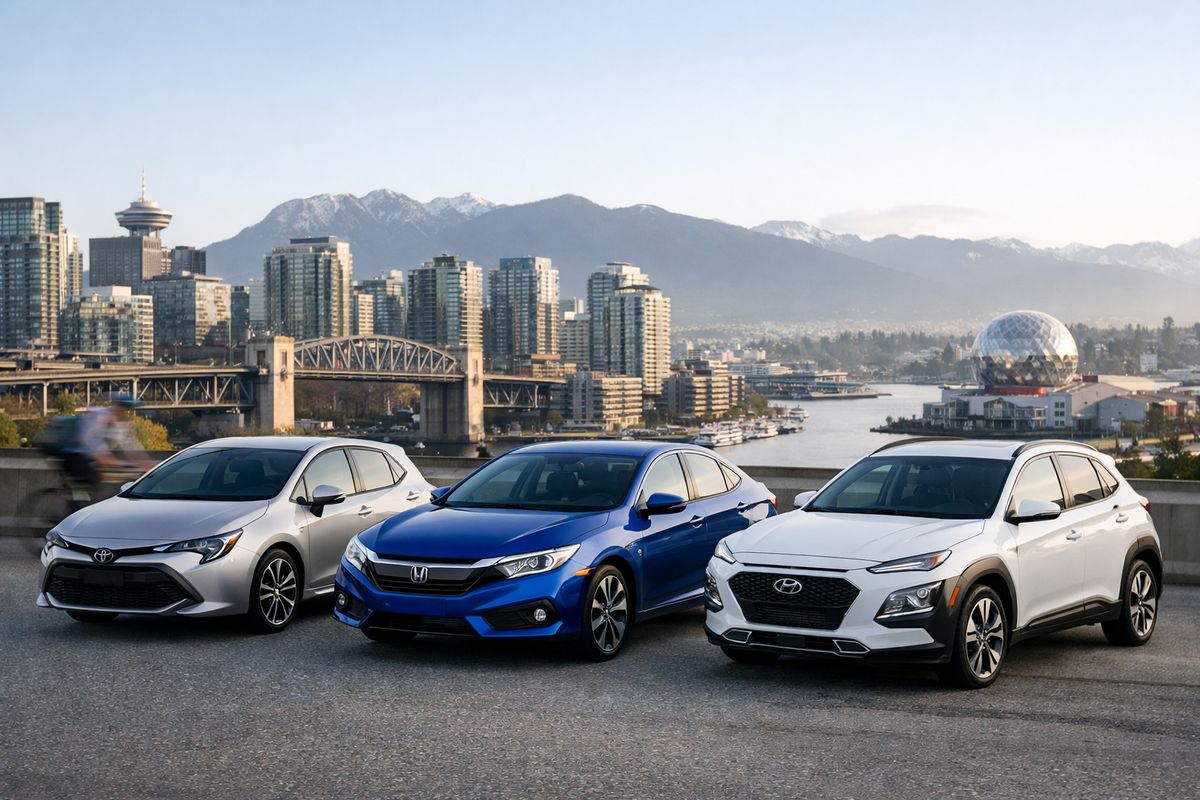
If your day starts with bridge backups, tight parking, and rain on the windshield, the best commuter cars are not the flashiest ones. The right pick makes Vancouver traffic less annoying, costs less to run, and still feels easy to live with six months from now.
Quick picks at a glance
Here’s the short version: if gas savings matter most, get a Prius. If you want the safest all-around bet, get a Civic. If your life includes soaked roads, steep parkades, and weekend escapes up the Sea-to-Sky, the Crosstrek earns its higher fuel bill.
Car Body style Fuel economy Typical used price Best for Toyota Prius Hatchback 4.3 to 5.0 L/100 km $12,000 to $34,000 Stop-and-go fuel savings Honda Civic Sedan/Hatchback 6.0 to 7.5 L/100 km $9,000 to $32,000 Best all-around balance Toyota Corolla Hybrid Sedan 4.4 to 5.0 L/100 km $23,000 to $34,000 Low running costs Mazda3 Sedan/Hatchback 6.5 to 8.0 L/100 km $10,000 to $30,000 More enjoyable driving feel Honda Fit Hatchback 6.5 to 7.5 L/100 km $8,000 to $22,000 Tight parking and cargo flexibility Subaru Crosstrek Hatchback/Crossover 7.2 to 8.8 L/100 km $15,000 to $34,000 Rain, rough roads, weekend trips Hyundai Elantra Hybrid Sedan 4.5 to 5.2 L/100 km $22,000 to $31,000 Hybrid value alternative
How these commuter cars were picked
A good commuter car has one job: make daily driving easier, cheaper, and less tiring. That means fuel economy matters, but not by itself. A car that saves a few dollars at the pump and then eats that money with surprise repairs is not a smart commuter.
For Vancouver and the Lower Mainland, a few things matter more than people admit. Visibility in the rain matters. Easy parking matters. A calm cabin matters when your morning includes Boundary Road, Highway 1, or the crawl toward the Ironworkers. Reliability matters most of all, because a cheap used car stops being cheap the moment it lives at the repair shop.
Used-market value also played a big role here. Some cars are excellent on paper but overpriced in real listings. If you want a better sense of how asking prices compare across similar models, this guide to checking used values before you commit helps cut through the guesswork.
What actually matters in a vancouver commuter car
Size is the first thing to get right. If your life involves condo parking, downtown meters, or squeezing into an older parkade in Mount Pleasant, a compact sedan or hatchback usually makes more sense than a small SUV. The extra height of a crossover feels nice, but the extra bulk gets old fast when every spot feels half a size too small.
Hybrid powertrains shine here. Slow bridge traffic and long lights punish regular gas cars, but hybrids turn that mess into their best-case scenario. That is why models like the Prius and Corolla Hybrid keep showing up on every smart short list, especially if your commute is mostly urban. If fuel costs are your sore spot, it also helps to compare a few more low-consumption used options for daily driving.
Hatchbacks deserve more attention than they get. You get city-friendly length, better cargo access, and enough space for groceries, work gear, or a surprise IKEA stop without jumping to an SUV. Repair costs matter too. A commuter car should be easy to service, easy to find parts for, and predictable enough that routine upkeep stays routine. That sounds boring. Boring is good.
Toyota prius - best for fuel savings in stop-and-go traffic
The Prius is the obvious answer for a reason. If your week is full of red lights, bridge backups, and slow-moving city traffic, nothing here stretches a tank quite like it.
Key features
The Prius works because the hybrid system is perfectly matched to commuting. It sips fuel in conditions that make other cars miserable, and it does it without asking you to change anything about how you drive. Visibility is good, the hatchback layout is genuinely useful, and the cabin feels calm in a way that takes some sting out of ugly traffic.
You also get a strong track record for reliability, especially on well-kept examples. That matters in a used commuter, because you want predictability more than excitement.
Pros and cons
The upside is simple: excellent fuel economy, proven durability, and low day-to-day running costs. The catch is that used pricing can still feel a little proud, especially for clean, lower-kilometre examples. Styling has never been the Prius selling point, and the driving feel is more appliance than entertainment.
Still, if your gas bill makes you wince every week, that tradeoff is easy to live with.
Pricing
Older third-generation cars with higher mileage often start around $12,000 to $17,000. Cleaner mid-mileage examples tend to land in the high teens or low twenties. Newer AWD or latest-generation versions can push well past $30,000.
Mileage matters, but not in a vacuum. Service history matters just as much, sometimes more. It helps to understand how age and kilometres play off each other before you zero in on one listing.
Verdict
Buy a Prius if fuel savings are your main goal and you spend serious time in traffic. Skip it if you care a lot about sharp handling or you want the best possible deal upfront. For pure commuting math, it stays near the top.
Honda civic - best all-around commuter car
If you want one car that gets almost everything right, the Civic is it. No drama, no weird compromises, just a solid daily driver that works in almost every version of Vancouver life.
Key features
The Civic blends good fuel economy, an easy driving position, and more interior space than many compact rivals. Newer trims bring helpful safety tech, and even older ones tend to feel intuitive right away. Nothing feels fussy. You get in, set your coffee down, and go.
That everyday usability is the whole point. The Civic fits a commute, a grocery run, a weekend errand loop, and long ownership without feeling like the wrong tool for any of it.
Pros and cons
Its biggest strengths are reliability, strong resale, and balanced road manners. The downside is that everybody knows this, so used prices stay firm. Some model years also let in more road noise than you might expect, and trim differences matter more than casual shoppers realize.
A base Civic and a better-equipped Civic can feel like two different cars. Pay attention to features, not just badges.
Pricing
Older Civics with honest mileage can start around $9,000 to $14,000. Sweet-spot models often live between $15,000 and $24,000, especially if you want newer safety features without paying new-car money. Late-model hatchbacks and well-optioned trims can push past $30,000.
Verdict
Choose the Civic if you want the safest all-around answer. It handles the Burnaby-to-downtown grind, holds value, and rarely surprises you in bad ways. That is high praise for a commuter.
Toyota corolla hybrid - best for low running costs
The Corolla Hybrid is the quiet money-saver here. It is less iconic than a Prius, less trendy than a crossover, and honestly, that is part of the appeal.
Key features
You get excellent hybrid fuel economy, Toyota dependability, compact dimensions that make parking easy, and modern safety features on newer models. It feels simple in the best way. Nothing about it asks for attention.
For a lot of commutes, that is perfect. You want the car to disappear into the background while it keeps costs down.
Pros and cons
Running costs are impressively low, and long-term reliability looks strong. The main compromise is modest power. If you expect punchy acceleration merging onto Highway 1, this is not that car. The trunk is also less flexible than a hatchback, which matters if you carry awkward stuff often.
Pricing
Because the Corolla Hybrid is newer in the used market, pricing usually starts higher than budget shoppers hope. Expect roughly $23,000 to $34,000 for most examples. That stings upfront, but the fuel savings and lower maintenance risk can even things out over time.
Verdict
If your goal is simple, get to work, get home, and spend as little as possible keeping the car alive, the Corolla Hybrid is one of the smartest answers on this list.
Mazda3 - best for a more enjoyable daily drive
Some commuter cars feel like a kitchen toaster with wheels. The Mazda3 is not one of them. If you still want a bit of spark on the way to work, this is the pick.
Key features
The Mazda3 has sharp steering, tidy handling, and a cabin that feels nicer than the price suggests. The hatchback version adds useful versatility, and some used models offer all-wheel drive, which is appealing for wet Lower Mainland mornings.
It is still practical enough to be a real commuter. That balance is why it stands out.
Pros and cons
You get a better driving experience than most compact rivals, along with solid build quality. The tradeoffs are tighter rear-seat space, a firmer ride on some trims, and fuel economy that trails the hybrid crowd. Rear visibility can also feel a bit pinched in some hatchback years.
Pricing
Older models often start around $10,000 to $14,000. Strong value tends to sit in the $15,000 to $24,000 range, especially for later third-generation and early fourth-generation cars. AWD hatchbacks and nicely equipped newer versions can climb closer to $30,000.
Verdict
If your commute includes both city streets and stretches where driving feel still matters, the Mazda3 is easy to recommend. It makes the daily grind feel less gray.
Honda fit - best for tight parking and flexible cargo space
The Honda Fit is the small-car cheat code. It is compact when you need to park, roomy when you need to haul, and far more useful than it looks from the curb.
Key features
Its standout trick is interior packaging. The rear seats fold in clever ways, creating a cargo area that punches way above the car’s size. Visibility is excellent, fuel economy is solid, and the narrow footprint is perfect for crowded streets and older parking garages.
If your daily life mixes commuting with groceries, sports gear, or apartment living, the Fit just makes sense.
Pros and cons
The Fit shines in dense neighborhoods and awkward parking situations. The downside is that highway power is only adequate, and cabin noise is more noticeable than in a Civic or Prius. On rough pavement, it can feel a little busy.
Pricing
Older Fits can start around $8,000 to $12,000, with nicer later examples commonly landing between $13,000 and $22,000. Because the model has a loyal following, resale stays stronger than many subcompacts.
Verdict
If you want one of the smartest used buys for city commuting and everyday hauling, the Fit is hard to beat. It is tiny in the places that matter and big in the ones that count.
Subaru crosstrek - best for rain, rough roads, and weekend escapes
If your commute stays practical but your weekends point toward the North Shore, Whistler, or muddy trailheads, the Crosstrek makes a strong case for itself.
Key features
Standard all-wheel drive is the headline, but it is not the only reason this car works. You also get hatchback cargo space, comfortable ride quality, and extra ground clearance for rougher roads, steep driveways, and the occasional ugly winter morning.
In heavy rain, that planted feeling is reassuring. You notice it.
Pros and cons
The Crosstrek’s versatility is its big win. It handles weather and gear better than a typical compact car without ballooning into a large SUV. The tradeoffs are slower acceleration on some years and fuel economy that cannot touch the hybrids here.
If you are still deciding between car-like efficiency and crossover practicality, this breakdown of how sedans and SUVs fit Vancouver budgets helps frame the tradeoff clearly.
Pricing
Used Crosstreks often run from about $15,000 to $34,000. Subaru demand keeps prices firm, especially for clean, lower-mileage examples with full service records. Earlier years can be good value if condition is strong and maintenance is well documented.
Verdict
Choose the Crosstrek if weather confidence, cargo space, and weekend versatility matter almost as much as the commute itself. For the right lifestyle, the extra fuel cost is worth it.
Hyundai elantra hybrid - best value hybrid alternative
The Elantra Hybrid is the one to watch if you want hybrid economy without paying the Toyota tax. It often feels newer for the money, which is a pretty good way to shop used.
Key features
You get strong fuel economy, a roomy interior, modern tech, and a lot of commuter-friendly equipment at a competitive price. Newer used examples may still carry part of Hyundai’s warranty coverage, which adds peace of mind if you are buying recent model years.
Pros and cons
Value is the biggest draw. You can often get a newer-feeling car for less than a comparable Prius or Corolla Hybrid. The catch is that long-term confidence in the used market is not quite as automatic as it is with Toyota, and feature differences between trims are worth checking carefully.
Pricing
Most used Elantra Hybrids sit around $22,000 to $31,000. That gap versus Toyota rivals matters. It can buy you a newer year, lower mileage, or extra equipment without stretching your budget.
Verdict
If you want a practical hybrid that feels current and reasonably priced, the Elantra Hybrid deserves a serious look. It is one of the better value plays in the segment.
Used commuter car buying tips for vancouver and the lower mainland
A good listing can still hide an annoying car. Vancouver commuting leaves marks, even on reliable models, so condition matters just as much as the badge on the hood.
Before buying, get familiar with what to check first on a local used car. That is especially useful if a car looks clean in photos but has spent years dealing with curbs, potholes, wet roads, and bumper-to-bumper driving.
Watch for rainy-weather wear and city-driving scars
Look closely at tires, brakes, curb rash, bumpers, and windshield condition. City cars collect little battle scars: scraped corners, wheel damage, parking dings, and suspension wear from potholes. None of that is shocking, but it tells you how the car was treated.
Also check for musty smells, moisture in lights, and worn wiper seals. Constant rain exposes weak points fast.
Hybrid questions worth asking before you buy
Ask about battery health, fuel economy history, warning lights, and service records. A hybrid that suddenly gets much worse mileage than expected deserves a closer look. You also want to know whether the car has had regular maintenance instead of just being driven until something flashes on the dash.
If the seller gets vague, that is your answer.
Best body styles for your commute
Sedans work best if your route leans freeway and you want quiet efficiency. Hatchbacks are the best all-around city choice because they park easily and carry more than you expect. Small crossovers make sense if you need ride height, all-weather confidence, or weekend utility beyond the Monday-to-Friday grind.
Whatever body style you choose, do not skip a proper inspection. Paying for an outside mechanic to look it over first is usually cheaper than fixing somebody else’s neglect.
Which commuter car is the best fit for your routine?
The right answer depends less on trend and more on what annoys you most right now. Gas bills? Parking? Rainy morning confidence? Highway boredom? Match the car to the pain point.
Best if your top priority is saving gas
The Prius still wins if your tank empties too fast and your commute is full of stop-and-go traffic. The Corolla Hybrid is close behind if you want a simpler-looking sedan. The Elantra Hybrid is the value pick if you want strong mileage without paying quite so much upfront.
Best if you want the easiest ownership experience
The Civic is the best all-around easy answer, with the Prius right beside it if hybrid ownership does not scare you. The Corolla Hybrid also belongs here, especially if low running costs matter more than excitement. Before signing anything, it helps to review the BC paperwork and process that catch people off guard.
Best if you need versatility beyond the commute
Pick the Fit if parking is tight and cargo flexibility matters. Pick the Crosstrek if your car needs to handle wet roads, rougher surfaces, and spontaneous weekend plans. Pick the Mazda3 hatchback if you want utility without giving up driving feel.
Best next step before you buy
Shortlist two models, then drive both on a familiar route, ideally somewhere that includes slow traffic, rough pavement, and one awkward parking move. A spin near Boundary Road or the approach to the Ironworkers tells you more than ten spec sheets ever will. Bring a simple checklist, compare visibility, seat comfort, and low-speed smoothness, then move on the one that feels easiest to live with.
Frequently asked questions
What is the best commuter car for heavy vancouver traffic?
The Toyota Prius is the strongest pick for heavy stop-and-go traffic because hybrid systems are at their best in slow driving. If you want something less hatchback-shaped, the Corolla Hybrid is a close second.
Is a hybrid worth it for a short daily commute?
Usually, yes, especially if your drive includes lights, congestion, and city speeds. A hybrid saves the most in exactly those conditions, even if your total distance is not huge.
Should you buy a sedan, hatchback, or small crossover for commuting?
A sedan works well for simple freeway driving and lower fuel costs. A hatchback is usually the smartest all-around choice in Vancouver because it is easy to park and more practical than it looks. A small crossover makes sense if weather confidence and weekend utility matter more than fuel economy.
How much mileage is too much on a used commuter car?
There is no magic number. A well-maintained car with higher kilometres can be a better buy than a neglected low-mileage one. If you want a better sense of where the line starts to matter, this guide on when kilometres become a real concern is worth reading.
Are all-wheel-drive commuter cars worth the extra cost in vancouver?
Not always. For most city and highway commuting, good tires matter more than AWD. But if your routine includes steep areas, winter trips, or rougher roads, something like a Crosstrek can absolutely be worth the tradeoff.