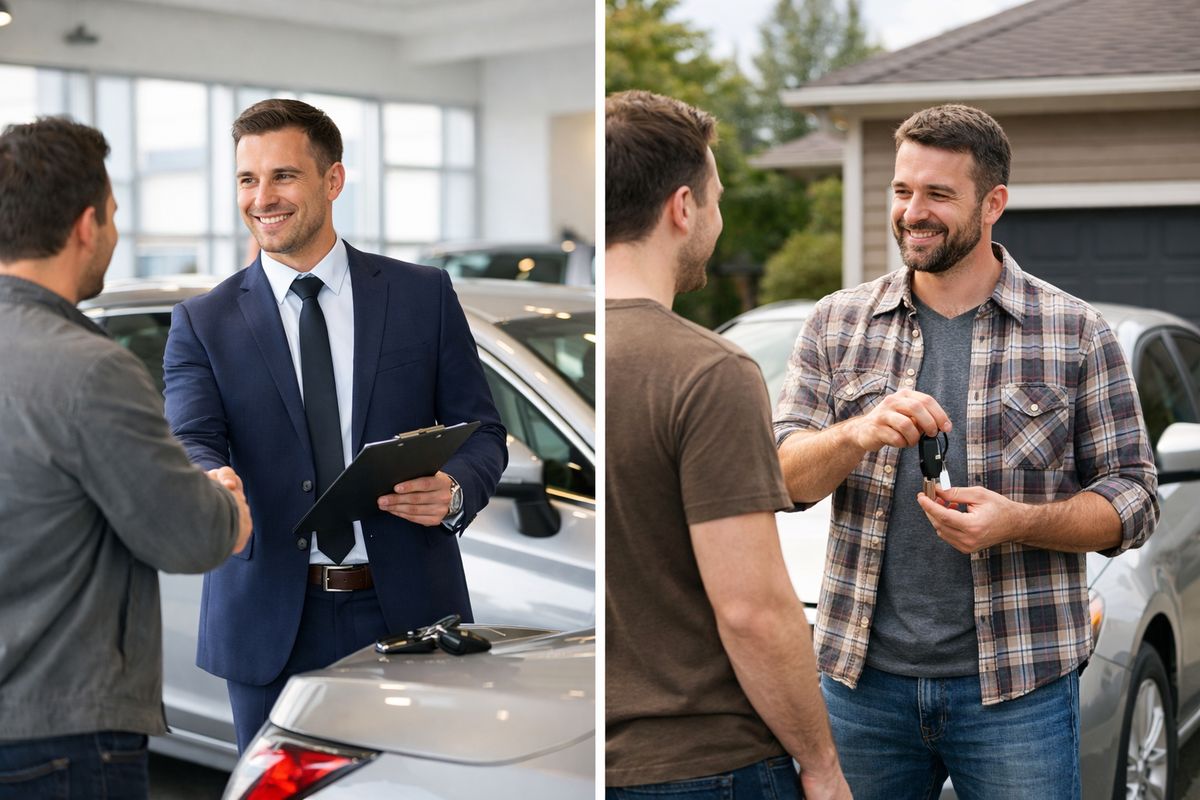
Trying to decide whether to buy used car from dealer or private seller usually comes down to one frustrating question: do you want the lower price, or the lower stress? For most Vancouver and Lower Mainland shoppers, the better deal is a dealer, not because every dealer car is better, but because the extra structure, paperwork support, and legal protection often save you from expensive surprises later.
Dealer vs private seller at a glance
Here’s the short version: a dealer usually wins on safety, convenience, and clean process. A private seller usually wins on sticker price. That’s the trade.
If your goal is to spend the least amount possible on day one, private sale listings will grab your attention fast. If your goal is to avoid paperwork mistakes, financing headaches, sketchy history gaps, and surprise repairs right after purchase, a dealer often gives you the stronger overall deal.
“Winning” is not just about the number on the ad. It’s about total cost, how much risk you can handle, and how much time you want to spend chasing records, arranging inspections, and standing in the rain trying to finish a sale before an ICBC broker closes.
Price: upfront cost vs total cost
Private sellers almost always look cheaper at first glance. That part is real. But the cheapest listing is not always the cheapest car to own.
A dealer price often includes some combination of reconditioning, basic inspection, detailing, paperwork prep, and sometimes a short warranty. A private seller usually offers none of that. So while the upfront number may be lower, your total cost can jump fast if the car needs brakes, tires, suspension work, or catch-up maintenance two weeks later.
This is where shoppers get tripped up. Saving $2,000 upfront feels great until the check engine light comes on and you’re suddenly spending that money anyway.
Why private sellers often list lower
Private sellers do not have dealership overhead. No showroom, no sales staff, no lot costs, no reconditioning department. That usually means more room to negotiate and a lower asking price.
Sometimes that lower price is a real bargain. Sometimes it is a warning.
The catch is that a private listing can hide problems that are expensive and easy to miss, like overdue transmission service, accident repairs that were done cheaply, or even an unpaid lien. If you are comparing values, it helps to spend a few minutes checking what similar used cars are actually worth before getting attached to one listing.
Why dealer pricing can be higher
Dealer pricing is higher because you are paying for more than the car itself. You are also paying for prep work, documentation, some level of accountability, and usually a cleaner buying process.
That extra cost can protect your wallet when the car has already had obvious issues fixed before it hits the lot. Not always, and not perfectly, but often enough that it matters. If you are buying on a tight budget, paying more upfront for a car that is ready to drive can beat buying cheap and fixing problems immediately after.
Selection and availability
Dealers make shopping easier when you want options in one place. Private listings make shopping wider, but slower.
If you are trying to compare mileage, trim levels, body style, or price across several similar vehicles, a dealer lot saves time. One stop can show you three compact SUVs, two sedans, and a hatchback in your range. Private shopping means opening tabs, sending messages, waiting for replies, and driving across the region one meeting at a time.
What a dealer lot makes easier
A dealer lot lets you compare cars side by side, which sounds simple because it is. If your Saturday is packed, that matters.
Visiting an auto row or checking a few nearby lots in one afternoon can tell you more than a week of scrolling ads. You can sit in multiple cars, compare cargo space, notice wear patterns, and narrow your shortlist quickly. If you are still deciding on vehicle type, something like comparing a practical SUV with a sedan budget can help before you even step onto a lot.
What private listings do better
Private listings are better for one-off finds. Maybe an older Corolla with low kilometers, maybe a well-kept manual hatchback, maybe a car owned by someone who saved every oil-change receipt in a folder.
That search can feel like thrifting. Most of the time you sift through junk, vague ads, and overpriced “mint condition” claims. Then once in a while, you find something genuinely solid.
Vehicle condition and reconditioning
A shiny car is not automatically a good car. That is true at a dealership and in a private driveway.
Condition matters more than presentation, and presentation can be misleading. Fresh tire shine and clean floor mats do not tell you whether the cooling system is healthy or whether the brakes are near the end.
Dealer reconditioning standards
Reconditioning is just the cleanup and fix-up process before resale. That can include an inspection, minor repairs, fluid top-ups, replacing worn parts, and detailing.
That sounds reassuring, and sometimes it should be. But standards vary a lot. One dealer may replace tires at 5/32 tread and fix every small issue. Another may only do the bare minimum to make the car sellable. Ask what was actually repaired, not just whether the car was “fully inspected.”
Private seller condition reality
Private seller cars range from lovingly maintained to “please buy this before the transmission gives up.” You have to figure out which one you are looking at.
Maintenance records help more than a polished hood ever will. So does a driveway test drive. Cold start behavior, idle quality, warning lights, strange smells, clunks over bumps, and uneven tire wear can tell you a lot fast. If the car has a lot of kilometers, it helps to understand when mileage is just a number and when it becomes a real concern.
Inspections and mechanical confidence
A pre-purchase inspection is worth it every time, no matter who is selling the car. Full stop.
That single step does more to protect your money than almost anything else in this process. If a seller pushes back hard against an independent inspection, take that seriously.
Third-party inspections for dealer cars
Even if a dealer says the car has already been checked, an outside mechanic can still catch issues that a sales inspection missed, ignored, or chose not to fix. Cosmetic cleanup can hide leaks, worn suspension parts, or past damage.
An independent inspection keeps the process honest. If you want a clearer sense of what that check should include, this guide to what gets looked at before you hand over money is worth a quick read.
Third-party inspections for private sales
This matters even more in a private sale because there is usually no safety net afterward. The easiest way to handle it is to keep it matter-of-fact: if the seller is serious, the car goes to a mechanic.
In the Lower Mainland, that can be as simple as meeting in Burnaby or Surrey, taking the car to a trusted shop nearby, and only handing over payment after the inspection comes back clean enough for your comfort. No drama, just process.
History reports, paperwork, and title issues
Paperwork is where a decent deal can quietly turn into a mess.
Dealers usually organize this for you. Private sellers might have everything ready, or they might have a story about why the registration is missing, the service records are “somewhere,” and the VIN on the dashboard “must be a typo.” Slow down when the details get fuzzy.
What dealers usually provide
A dealer will usually provide transfer paperwork, financing documents if needed, some kind of history report, and basic disclosures. That alone reduces stress because fewer things are left for you to chase down.
You should still review the records yourself, especially accident history, branding, and ownership details. If you want a better sense of what a BC history file can show, this breakdown of what turns up in a local vehicle background check is useful.
What to verify with a private seller
With a private seller, check the seller’s ID, registration, VIN match, lien status, and service history. Every one of those matters.
Here’s the trick: if anything feels rushed, strangely vague, or inconsistent, stop. A legitimate sale can wait long enough for you to verify the details. If you want a cleaner handoff, this guide to the documents BC buyers should have in order can help you avoid missing something basic.
Consumer protection and legal risk
This section tips the scale toward dealers for most people.
In British Columbia, buying from a licensed dealer usually gives you a better paper trail and stronger recourse if something was misrepresented. Buying privately is much more final.
Protections that come with buying from a dealer
Dealer sales come with disclosure obligations, licensing requirements, and records that are easier to trace if a dispute shows up later. That does not mean every dealer experience is perfect. It means your position is usually stronger if the car was described inaccurately or key facts were withheld.
Practical protection matters more than people expect. When something goes wrong, paperwork beats promises.
Risks that come with buying from a private seller
A private sale is usually an as-is sale in real life, even if nobody says the phrase out loud. Once the car is yours, most problems become yours too.
That changes what counts as a good deal. A cheaper private car has to be cheap enough to justify the extra risk, not just slightly cheaper than a dealer listing.
Warranties, returns, and after-sale support
If a warning light pops on a week later, the difference between dealer and private seller gets very real.
Dealer warranty options
Some dealer cars come with limited warranty coverage, certified used benefits, or the option to buy extended protection. Not all of that coverage is equally useful, and some plans are thin once you read the details.
Still, some backup is better than none. Just make sure you understand what is covered, for how long, and what deductibles or exclusions apply.
Private sale aftercare: mostly none
Private sales rarely come with returns, repair help, or goodwill after the money changes hands. That is the biggest reason a low price can stop feeling low very quickly.
If the alternator fails next week or the car overheats on the way home, that is your problem now. No service desk, no callback, no coverage.
Financing and payment flexibility
If you need monthly payments, a dealer becomes much easier.
If you have cash or bank financing already lined up, private sale becomes more realistic.
Financing through a dealer
Dealers can often arrange financing in one place, which is undeniably convenient. The catch is that convenience can cost you through interest, add-ons, or loan terms that make the monthly payment look comfortable while raising the total amount paid.
It can feel a bit like adding extras at checkout because it is so easy to say yes in the moment. If financing is part of your plan, it helps to understand how local used car loans usually work before you apply.
Paying a private seller
Private sellers usually expect cash, a bank draft, or proof that your loan funds are ready. That can save money because the process is simpler, but it adds steps.
You may need to arrange financing through your bank or credit union ahead of time, then coordinate timing for payment, paperwork, and insurance on the same day.
Trade-ins and convenience
This is one of the clearest dealer advantages.
If you need to replace your current vehicle quickly, a trade-in and a same-day purchase can save a lot of hassle.
Why dealers win on convenience
A dealer can take your current car, handle much of the paperwork, and move you into the next one in a single visit. That is especially helpful if your current vehicle is becoming unreliable or you do not have time to manage separate sales.
You usually get less for your trade-in than you would in a private sale. But for many shoppers, that discount is the price of skipping weeks of messages, meetups, and no-shows.
Why private selling can still pay off
Selling your current vehicle yourself can bring in more money. Sometimes quite a bit more.
But you earn that difference. You take the photos, answer the messages, schedule the test drives, deal with flakers, and keep your weekend open for strangers who may or may not show up.
Negotiation and deal transparency
Both paths involve negotiation, just in different ways.
At a dealer, the challenge is understanding the full price. In a private sale, the challenge is judging the car and the seller without much structure around you.
Negotiating with a dealer
Dealer pricing can include fees, add-ons, protection packages, and financing terms that blur the real number. Slow the conversation down and ask for the out-the-door price, not just the sale price.
That one move clears a lot of fog. If negotiation is not your favorite sport, it helps to know how to push back on a used car price without turning it into a battle.
Negotiating with a private seller
Private-sale negotiation is usually more direct. You talk about asking price, maintenance, tires, timing, and what the inspection found.
The conversation can still get emotional. Sellers get attached to what the car “should” be worth, and buyers can feel rushed by other interested people. Keep it simple and let the condition guide the offer.
Insurance, registration, and the ICBC process
The deal is not done when you shake hands. In BC, the insurance and transfer steps matter just as much.
How dealers can simplify the handoff
Some dealers help coordinate transfer paperwork, plates, temporary arrangements, or the next steps needed to get you legally on the road. For a first-time buyer, that support removes a lot of uncertainty.
Even when the dealer handles most of it, you still want to understand the process. Knowing the basics makes it easier to spot mistakes before they become delays.
What to prepare for in a private sale
A private sale takes more coordination. You need the timing, payment method, paperwork, and insurance plan lined up before the handoff happens.
That can mean wrapping up a sale in Vancouver or Richmond and heading straight to an ICBC broker before closing time on a rainy weekday, hoping nothing on the forms is missing. If you want fewer surprises, this walkthrough of how the ownership transfer works in BC lays out the flow clearly.
Best fit: when a dealer is the better deal
For most buyers, a dealer is the better deal overall. Not the cheaper one, the better one.
Choose a dealer if you want less risk
If you want clearer paperwork, stronger recourse, some after-sale protection, and fewer chances to miss something big, choose a dealer. You still need to inspect the car and review the numbers carefully, but your margin for error is better.
That matters if this is your only vehicle, your commute depends on it, or a surprise repair would hit your budget hard.
Choose a dealer if you need financing or a trade-in
If paying monthly matters, or you want to trade your current car and be done in one move, a dealer is the obvious fit. The process is faster, cleaner, and easier to manage.
Convenience is not everything, but when you need a car soon, convenience starts looking a lot like value.
Best fit: when a private seller is the better deal
A private seller can absolutely be the better deal, but only for the right kind of buyer.
Choose a private seller if price is your top priority
If your main goal is the lowest upfront cost and you have cash ready, private sale can win. That is especially true when you know how to inspect a car properly, check the records, and budget for some immediate maintenance.
A lower price works best when it is paired with discipline, not hope.
Choose a private seller if you’re comfortable doing the legwork
Private sale suits someone patient, organized, and willing to walk away. You need to verify records, arrange inspections, compare values, and keep emotions out of it.
If that sounds fine, you may save real money. If that sounds exhausting, the savings may not be worth the friction.
Final verdict: which used car deal actually wins?
For most used-car shoppers in Vancouver and the Lower Mainland, the dealer wins. You pay more upfront, but you usually get a safer process, cleaner paperwork, easier financing, and a better shot at avoiding expensive mistakes.
A private seller wins only when you know exactly what to check, you are comfortable doing the legwork, and the lower price is low enough to justify the extra risk. Before making a move, try one simple test: compare one dealer listing and one private listing for the same type of car, then stack the real costs side by side, including inspection, transfer steps, warranty, and likely repairs. The better deal usually gets obvious fast.
Frequently asked questions
Is it safer to buy a used car from a dealer or private seller?
Yes, buying from a dealer is usually safer. You get more documentation, a clearer paper trail, and stronger consumer protection in BC. That does not remove all risk, but it lowers it.
Do private sellers always have lower prices?
Usually, yes. But lower asking price does not always mean better value. If the car needs repairs, has missing records, or comes with title issues, the “deal” can disappear quickly.
Should you get a pre-purchase inspection for a dealer car?
Yes. A dealer inspection is not the same as an independent inspection. Having your own mechanic check the car is one of the smartest ways to avoid hidden problems.
Can you finance a car through a private seller?
Not directly in most cases. You usually need to arrange financing through a bank or credit union before meeting the seller, then pay with a bank draft or similar method.
What matters most in a private sale?
Condition, paperwork, and patience. You want matching VIN details, clear registration, no lien surprises, maintenance records, and enough time to get the car inspected before paying.
Is buying from a dealer worth the extra money?
For most buyers, yes. If you value lower risk, easier paperwork, financing options, and some after-sale support, the added cost is often worth it.