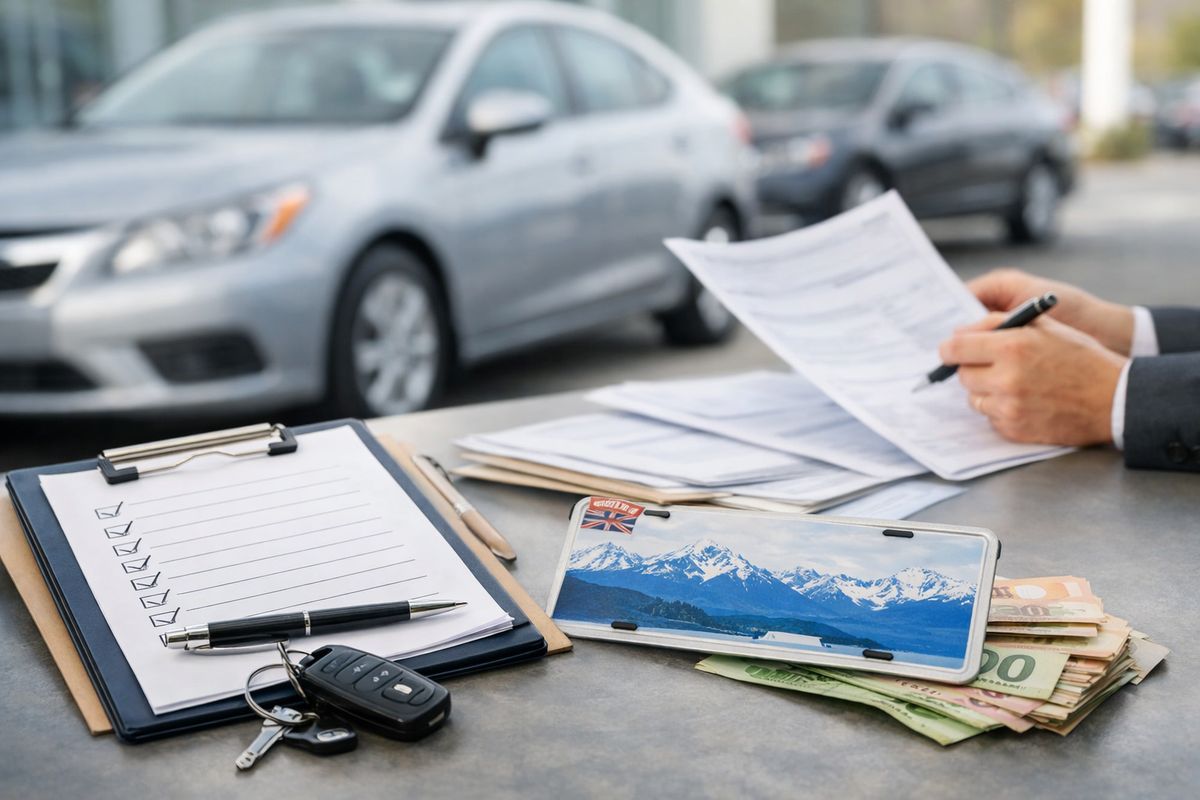
Buying used car BC searches usually start with the fun part, price, mileage, maybe that clean Civic parked on a side street near Commercial Drive. The paperwork is the part that trips people up. Get it straight before money changes hands, and the whole deal gets a lot less stressful.
What you’ll need before you start
Before you look at listings seriously, pull together a simple folder on your phone or laptop for every car you consider. You want one place for screenshots, the seller’s contact details, the VIN, history report, and copies of any forms you fill out later. It sounds basic, but this alone cuts down on mix-ups when you’re comparing two similar cars in the same week.
You’ll also want government ID, a way to pay that leaves a record, and enough time to visit an Autoplan broker without rushing. If you plan to finance part of the purchase, sort that out early, because funding delays can throw off pickup timing and deposits. If that applies, it helps to understand how used-car borrowing works locally before you commit.
Step 1: get clear on the kind of used car deal you’re making
Identify whether you’re buying from a private seller, a dealership, or from outside BC.
Confirm where the vehicle is currently registered.
Ask right away if the vehicle has rebuilt or out-of-province status.
That first classification matters more than most people expect. The paperwork for a BC private sale is usually the simplest, but it also puts more responsibility on you to verify details before purchase day.
Know the difference between a private sale and a dealer sale
A dealer sale usually comes with more formal paperwork, and sometimes warranty information or financing documents. A private sale is often more casual, which is exactly why you need to be more careful. Casual is nice until a name doesn’t match a registration slip.
If you’re still deciding which route makes more sense, it helps to compare the tradeoffs between a lot and a private driveway sale. For paperwork alone, dealer sales are often smoother. For price, private sales can be better. That’s the deal.
Check whether the car is already registered in BC
A vehicle already registered in BC is usually the easiest version of this process. The ownership transfer is more straightforward, and you’re less likely to hit surprise inspection requirements.
Ask to confirm this before you go meet up. If the seller says the car just came from Alberta, Ontario, or anywhere else, treat that as a separate paperwork path, not a small side note.
Watch for out-of-province or rebuilt status
Out-of-province vehicles can require extra steps before registration, including inspections depending on the situation. Rebuilt status matters too, because it affects value, insurability, and your comfort level with the car’s history.
If a listing mentions rebuilt status, or even hints at major previous damage, pause and read more about when a rebuilt title is worth the risk. The catch is simple: if you notice this after you’ve handed over a deposit, the conversation gets a lot harder.
Step 2: gather the core vehicle details before you agree to buy
Ask for the VIN, year, make, model, and plate number.
Request a photo of the current registration.
Get the seller’s legal name and phone number or email.
Save all of it in your folder before discussing a deposit.
Think of this as checking the recipe before turning on the stove. Once payment enters the picture, missing details become much more annoying.
Confirm the VIN, make, model, year, and current plate details
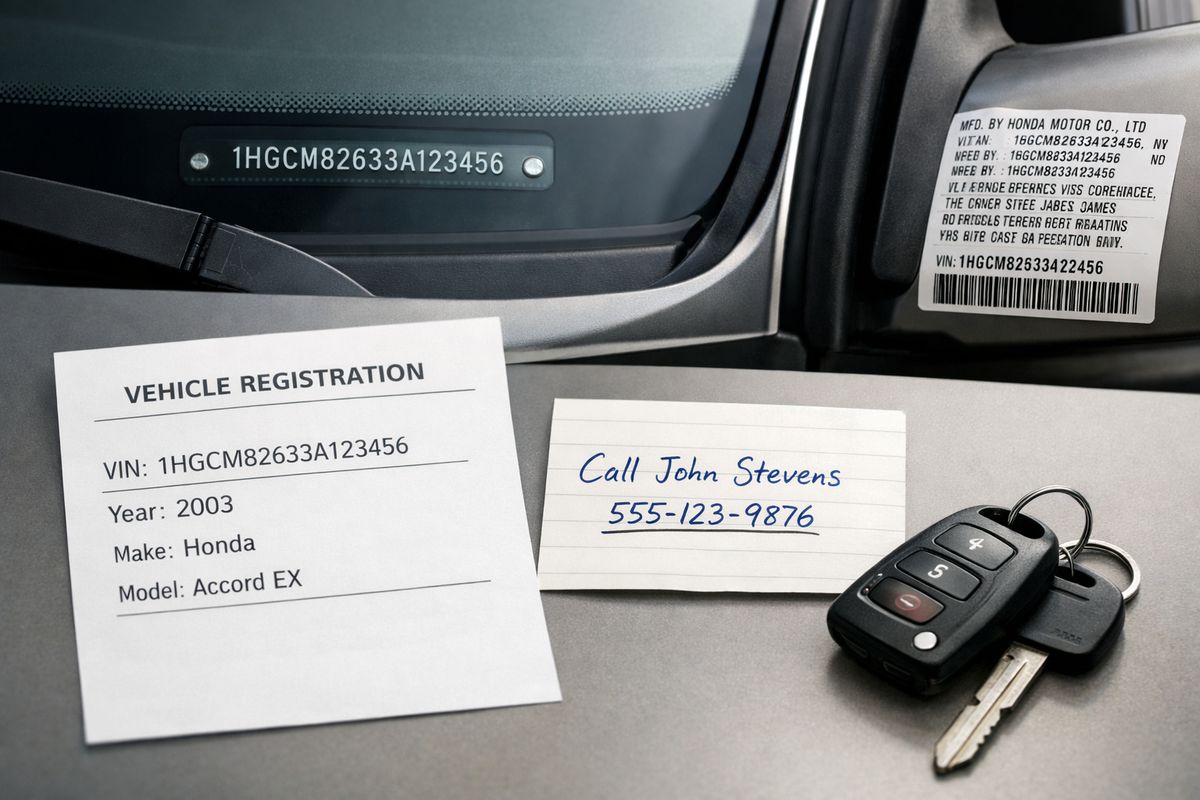
The VIN is your anchor for everything else. It should match the car, the registration, the history report, and the transfer paperwork exactly. Not close. Exactly.
Have the seller send the VIN in writing, not just over the phone. That reduces transcription mistakes and gives you something to compare later.
Ask to see the vehicle registration
The registration tells you whether the vehicle is registered in BC and gives you a name to compare against the seller. Ask for a clear photo before you meet, then check the original in person on purchase day.
If the registration shows a different name, don’t brush it off. There may be an explanation, but you want it sorted out before you move any money.
Get the seller’s full legal name and contact information
You want the exact legal name that will go on the bill of sale and transfer forms, plus a phone number and email you can save. If anything goes wrong later, this becomes your paper trail.
It also helps with basic peace of mind. A seller who gets vague about identity is telling you something, and it’s probably not good.
Step 3: check the history paperwork before you hand over money
Order a vehicle history report using the VIN.
Search for liens on the vehicle.
Review any service records or receipts the seller has.
Compare every result against the seller’s description.
This is where a cheap check can save you from a much more expensive mistake.
Order a vehicle history report
A history report can show reported damage, branding, registration history, and other flags. In BC, this is one of the smartest small purchases you can make before buying. If you want a deeper sense of what these reports actually show and what they miss, this guide to reading a car-history report in BC is worth a look.
The key checkpoint is simple: the report should line up with the seller’s story. If the seller says “no accidents” and the report shows a major damage claim, you’ve learned something useful before the handoff.
Search for liens on the vehicle
A lien means money may still be owed on the vehicle. That debt can follow the car, not just the person selling it, which is why this check matters.
Don’t settle for a verbal “it’s paid off.” If there was financing, ask for proof that any lien has been cleared. Paper beats promises every time.
Review maintenance records and repair receipts
Service records tell you how the car was treated. Regular oil changes, brake work, tires, and larger repairs all help fill in the story. Missing records are not an automatic no, but a thick stack of receipts is usually a good sign.
This is also where you get context for mileage. A higher-mileage car with strong records can be safer than a lower-mileage one with mystery gaps. If mileage is part of your debate, it helps to compare age versus kilometres instead of fixating on one number.
Step 4: prepare the sale documents you’ll need on purchase day
Bring a bill of sale template or draft one in advance.
Confirm the Transfer/Tax Form details with the seller.
Plan to record the exact odometer reading.
Ask ahead about any extra documents tied to the car.
This step keeps the handoff from turning into a parking-lot scavenger hunt.
Use a clear bill of sale
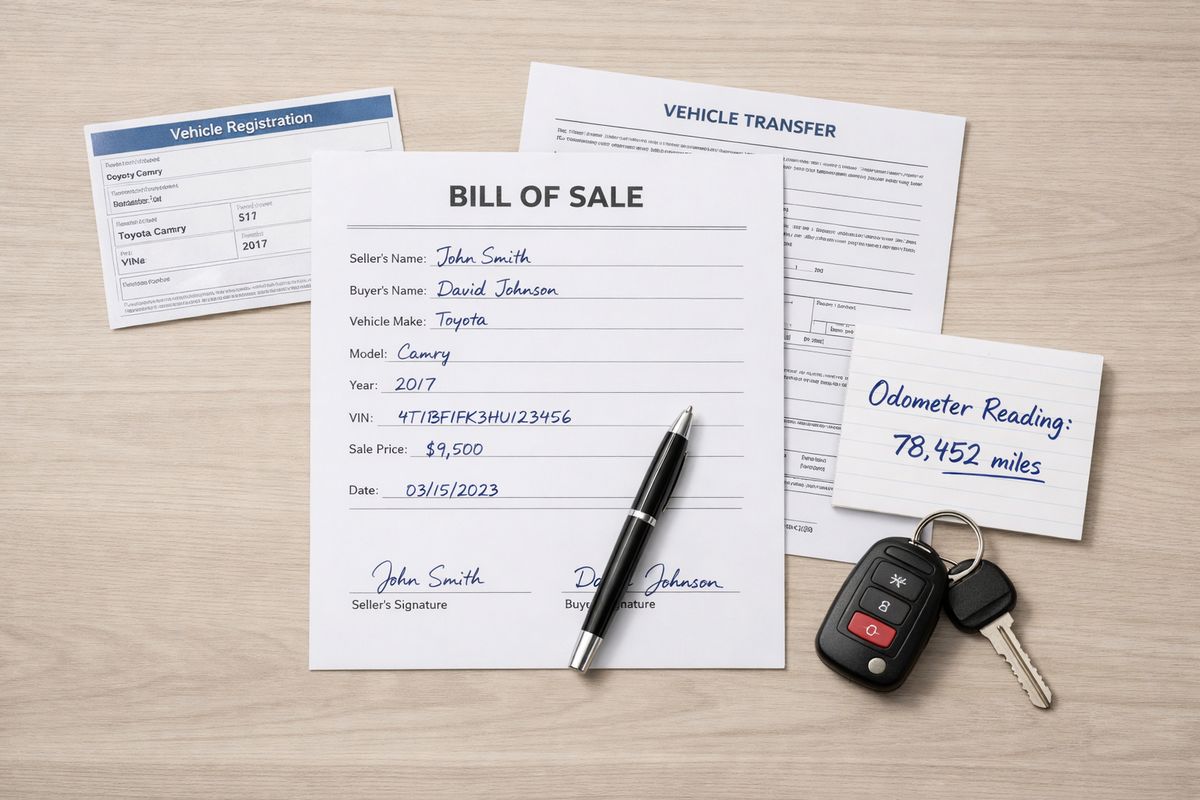
Your bill of sale should include the date, purchase price, VIN, year, make, model, odometer reading, and both parties’ legal names and signatures. It should also note the payment method and any deposit already paid.
This one document does a lot of heavy lifting. If there’s ever a dispute about price, timing, or what changed hands, the bill of sale is usually the first thing you’ll reach for.
Double-check the Transfer/Tax form details
BC ownership changes require transfer paperwork with accurate identifying information. One wrong digit in the VIN or a missing signature can slow registration fast.
Before meeting, confirm who is filling out which parts and make sure the seller brings any necessary registration documents. If you want a cleaner walkthrough of the transfer side itself, this breakdown of how ownership changes hands in BC helps.
Record the odometer reading at the time of sale
Write down the odometer reading exactly as shown when the car changes hands. Put it on the bill of sale and on any other sale paperwork where mileage belongs.
It sounds small, but it creates one more point of proof. That matters if questions come up later about usage, condition, or value.
Get any extra documents that apply
Some sales need extra paperwork, some don’t. That can include lien release documents, inspection records, warranty papers from a dealer, or out-of-province inspection documents.
Ask for these before purchase day, not after. Chasing down a missing document after you’ve paid is like realizing you forgot your house keys after the door clicks shut.
Step 5: meet the seller and verify every document against the car
Match the VIN on the car to every form.
Check the seller’s ID against the registration and bill of sale.
Review every signature and blank space before payment.
Pause if anything feels inconsistent.
This is your last calm moment before the deal becomes final.
Match the VIN on the car to the paperwork
You can usually find the VIN at the base of the windshield on the driver’s side and often on the door jamb as well. Compare it character by character to the registration, bill of sale, and history report.
One wrong character is enough to stop the process. Treat that as a hard stop, not a typo to fix later.
Confirm the seller’s ID matches the sale documents
The legal name on the seller’s ID should match the registration and the bill of sale. If it doesn’t, stop and sort out the reason before moving ahead.
This is also a good moment to trust your instincts. If the story keeps changing, the paperwork probably won’t get clearer after payment.
Check for signed forms before payment
Before you send an e-transfer, hand over a bank draft, or release any other payment, make sure every required section is filled in and signed. Blank spaces have a way of becoming your problem later.
Success here looks boring: complete forms, matching details, no missing signatures, no crossed-out mystery edits.
Step 6: handle payment and get proof of the transaction
Use a payment method that creates a record.
Note the payment details on the bill of sale.
Get a separate signed receipt if needed.
Document any deposit terms in writing.
A clean transaction is boring in the best possible way.
Choose a traceable payment method
A bank draft, certified cheque, or e-transfer usually gives you a much clearer paper trail than cash. Cash can work, but if something gets disputed later, you’ll wish you had cleaner proof.
If you’re still working out fair price before payment day, take time to compare market values properly. Paperwork matters, but overpaying by $2,500 still hurts.
Get a signed receipt if payment is separate from the bill of sale
If the bill of sale already clearly states that full payment was received, that may be enough. But for deposits, split payments, or delayed final payment, a separate signed receipt helps.
Include the date, amount paid, payment method, remaining balance if any, and what the payment was for. Keep it simple and specific.
Be careful with deposits
A deposit should always be documented in writing. Spell out the amount, whether it is refundable, and under what conditions. Vague promises are where headaches start.
If the seller refuses to put deposit terms in writing, that’s your answer. Walk away.
Step 7: transfer ownership, register the car, and pay the tax
Take the signed documents and your ID to an Autoplan broker.
Complete the ownership transfer and registration.
Pay the applicable taxes and fees.
Confirm plate details before leaving.
The car is not really yours on paper until this step is done.
Bring the required paperwork to an autoplan broker
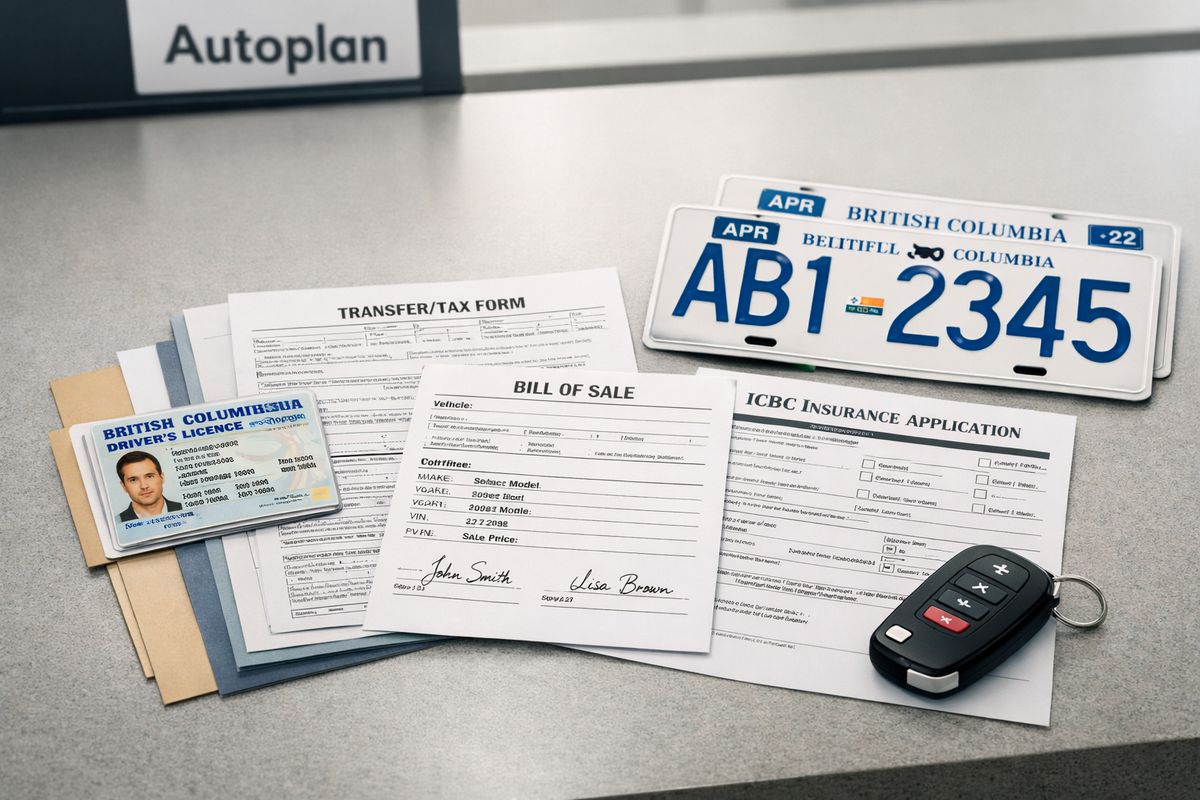
Bring your identification, the signed transfer paperwork, the bill of sale, and any extra documents tied to the sale, such as lien release proof or inspection forms. Double-check before leaving home so you don’t end up making a second trip across Burnaby or Surrey for one missing page.
If the vehicle needs an inspection, handle that before assuming same-day registration will be possible.
Understand PST and declared value questions
Used vehicle purchases in BC are generally subject to provincial sales tax. The declared sale price matters, and unusually low numbers can trigger questions at the broker. For tax and transfer basics, ICBC’s used vehicle guidance is a good starting point (ICBC).
Put the real price on the paperwork. Trying to get cute here can slow the process down fast.
Know what happens if you’re transferring plates
In some cases, you may be able to move plates from your old vehicle to the newly purchased one, subject to BC rules and timing. ICBC notes that some buyers can use plates from a previous vehicle for a limited period while completing the switch (ICBC).
If the timing is messy, new plates may be simpler. Simple is underrated.
Step 8: set up insurance before you drive away
Arrange basic insurance through your broker before taking the car on the road.
Decide whether optional coverage makes sense for this vehicle.
Confirm the exact pickup timing so coverage starts when needed.
Ownership and insurance usually move together, so timing matters.
Get basic insurance in place
You need valid insurance to drive legally in BC. Your Autoplan broker can help set this up when you complete the transfer and registration.
Bring the purchase details and be ready to choose your start time carefully. If you’re buying and driving away the same day, that timing should be crystal clear.
Consider optional coverage for a used car
Collision covers damage from crashes. Comprehensive covers things like theft, vandalism, or some non-collision losses. Whether optional coverage is worth it depends on the car’s value, your budget, and how painful it would be to replace.
Insurance cost can vary more than people expect by model. If you’re still shopping, it helps to look at used models that are easier on insurance costs before you buy.
Ask how pickup timing affects coverage
If you pay today but pick up the car tomorrow, or later in the week, confirm exactly when your coverage starts. Don’t assume ownership paperwork and active road coverage begin at the same moment unless your broker says so.
This is one of those tiny details that only matters when it really matters.
Step 9: tie up the loose ends after the sale
Save copies of every document.
Collect keys, manuals, and service items.
Update parking, toll, and maintenance records.
Start your own ownership file right away.
These are easy to forget once the car is parked in your driveway.
Save digital and paper copies of everything
Keep copies of the bill of sale, transfer documents, receipt, insurance paperwork, history report, and any lien or inspection documents. Save digital photos or scans, then keep the paper versions in one folder at home.
Future-you will appreciate this when it’s time to sell, insure, or answer a question about the car’s history.
Check for spare keys, manuals, and service booklets
Ask for the spare key, owner’s manual, wheel lock key, service booklet, and any security code cards that came with the vehicle. These aren’t formal transfer documents, but replacing them can cost real money.
One missing smart key can turn a good deal into a slightly annoying one.
Update parking, toll, and maintenance records
Change over any parking permits, building parking registrations, and toll account details tied to your old vehicle. Then start your own maintenance log from day one, even if it’s just a note in your phone.
That clean start matters. It also makes staying ahead of low-cost upkeep much easier.
Troubleshooting common paperwork problems
Paperwork problems are usually easier to solve before the car changes hands. After that, every fix gets slower and more awkward.
The seller’s name doesn’t match the registration
Pause the deal until you get a clear explanation backed by documents. Sometimes there’s a legitimate reason, but you want proof, not a story in a parking lot.
If the registered owner is someone else entirely and that person is not involved, treat it as a major warning sign.
The VIN on the form doesn’t match the VIN on the car
Stop immediately. Don’t pay, don’t sign anything further, and don’t assume it can be corrected later without risk.
A VIN mismatch is not a small typo to ignore. It undercuts the entire transaction.
There’s A lien showing on the vehicle
Ask for written proof that the lien has been discharged before you complete the purchase. If the seller says it will be cleared after payment, that is not good enough.
Verbal promises do not remove legal risk.
The seller says a bill of sale is enough
A bill of sale matters a lot, but it may not be the only document needed to transfer ownership and register the vehicle. You still need the supporting registration and transfer paperwork required for BC.
Finding that out at the broker’s desk is a bad time to learn it.
The car came from outside BC
Plan for extra time and possible inspection requirements before registration can be completed. This is where people get impatient and start making assumptions.
Don’t. Extra steps for out-of-province vehicles are normal, not personal.
What you should have when you’re done
Done should feel clear. You should know exactly what you bought, what you paid, and what paperwork proves it.
Your final used car paperwork checklist
Before you call the purchase complete, make sure you have the signed bill of sale, completed transfer paperwork, proof of payment, registration and insurance details, and any extra documents tied to liens, inspections, warranties, or out-of-province status. You should also have a saved copy of the history report, the exact odometer reading from the day of sale, and the seller’s contact information.
Try one thing before your next viewing: make a note on your phone with these items as a live checklist. In a seller’s driveway, simple beats memorable.
Frequently asked questions
Do you need a bill of sale for a used car in BC?
Yes. A bill of sale is one of the main records of the transaction. It should include the date, price, VIN, vehicle details, mileage, and both parties’ legal names and signatures.
Can you drive a used car home right after buying it in BC?
Only if registration and insurance are properly in place. Don’t assume the handoff alone makes the car road-legal.
What if the seller still owes money on the car?
Treat that seriously. Ask for written proof that the lien has been cleared before finishing the purchase. A promise to deal with it later is not enough.
Is a vehicle history report worth paying for?
Yes. It’s one of the cheapest ways to catch reported damage, branding issues, or registration history that doesn’t match the seller’s story.
What paperwork should you bring to the broker?
Bring your ID, the signed transfer documents, the bill of sale, and any supporting documents such as lien release paperwork or inspection records.
Is buying from a private seller in BC riskier than buying from a dealer?
For paperwork, yes, usually. Private sales can be perfectly fine, but you need to verify more yourself and be much stricter about matching names, VINs, and documents.