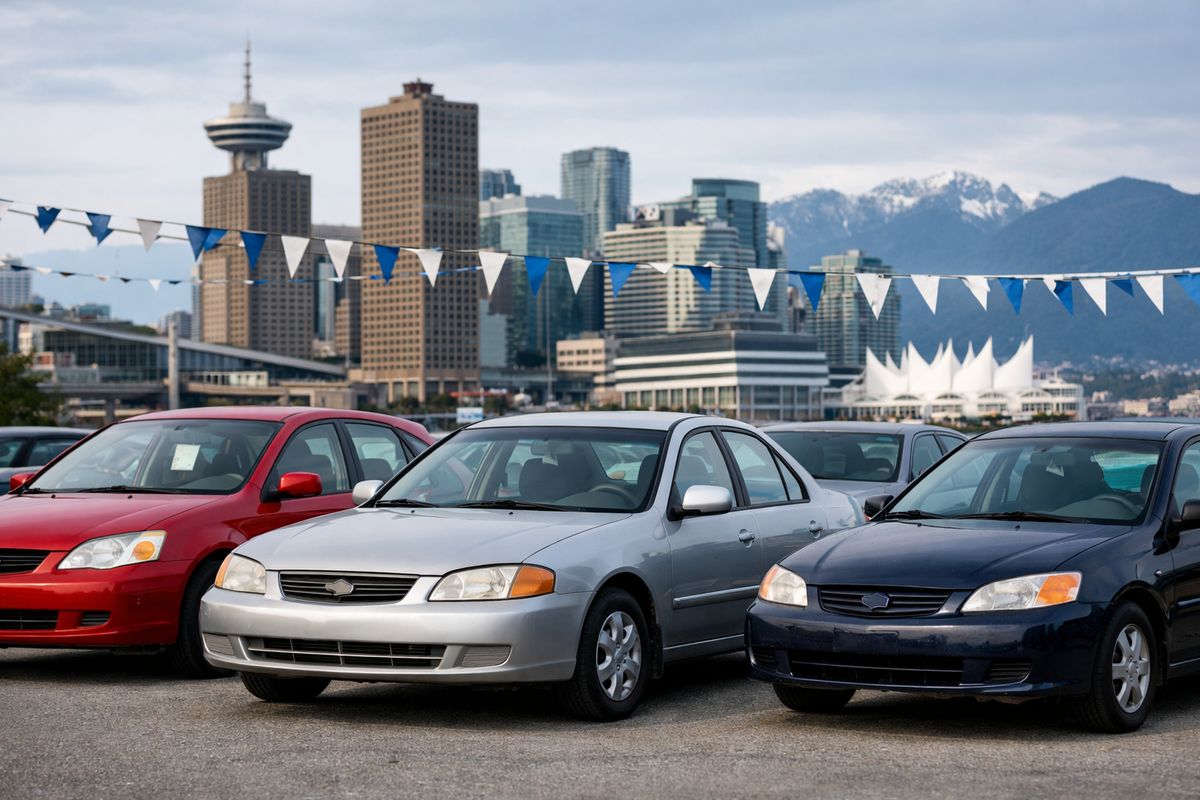
Cheap used cars Vancouver shoppers find are rarely as cheap as the phrase sounds. In this market, “cheap” usually means affordable for Vancouver, not bargain-basement pricing, and that difference can save you from buying the wrong car for the wrong reason.
What “cheap used cars” really means in vancouver
A cheap used car in Vancouver is a car that fits your real budget after purchase, not just your search filter. That means the sticker price matters, but so do taxes, insurance, fuel, registration, maintenance, and the repairs waiting around the corner.
Here’s the thing: a $4,500 car with worn tires, a leaking shock, and expensive insurance is not cheaper than a $9,500 car that starts every morning and sips fuel on the way from Burnaby to downtown. Cheap is relative. In Vancouver, it often means choosing the least painful total cost, not the lowest number on the windshield.
That shift in mindset changes everything. Instead of asking, “What’s the cheapest car I can find?” the better question is, “What can you buy without getting hit by surprise costs a month later?”
Why vancouver prices feel higher than expected
If you have ever searched Surrey, Burnaby, Richmond, Coquitlam, and Langley in one sitting, you have probably noticed the same thing: prices can feel oddly high, even for older cars. That is not your imagination.
Vancouver has strong demand for practical used cars. Fuel-efficient commuters are popular because traffic is real and gas adds up fast. Small SUVs and hatchbacks stay in demand because they fit city life better than oversized vehicles. AWD models often carry a premium because mountain trips, rainy winters, and weekend drives make that extra traction appealing, even if you do not truly need it every day.
Lower-priced inventory is also thinner than many shoppers expect. A genuinely decent car at the lower end of the market gets attention quickly. Sellers know that. So a car that would feel mid-priced in a smaller city can look like a budget buy here.
The vancouver market has its own version of “budget”
The same 10-year-old compact sedan can cost more in the Lower Mainland than in a smaller BC market. That happens because convenience, demand, and local driving needs shape pricing. If a car is known to be easy on fuel, easy to park, and easy to insure, it will usually command more money here.
That is why a search for cheap used cars Vancouver buyers trust often turns up listings that do not look cheap at first glance. Locally, “budget” often starts higher than expected, especially for clean, inspected commuter cars. If you want a quick reality check on pricing, it helps to know how to tell when a listing is simply overpriced before you get emotionally attached.
Season, vehicle type, and location change the price
Timing matters more than most shoppers think. When weather gets ugly or ski season ramps up, AWD crossovers and winter-ready SUVs can climb in price. In warmer months, small commuter cars and hybrids can move quickly because fuel economy is front and center again.
Location also changes the feel of the market. One listing in Richmond may look cheaper because it has cosmetic wear or higher mileage, while a similar car in Coquitlam carries a premium because it looks cleaner, has better records, or sits on a dealer lot. Even neighborhood matters a little. A practical hatchback near a transit-heavy area can get snapped up fast because it fits daily life so well.
Budget tiers: what you can usually expect at different price points
This is where “cheap” becomes easier to understand. Different price brackets buy very different kinds of ownership experiences.
Under $5,000: the cheapest entry point
Under $5,000 is the true basement of the market, and it usually shows. Expect older cars, high mileage, faded paint, worn interiors, and a decent chance of needing repairs soon. At this level, transportation comes first, comfort second.
That does not mean every car in this range is bad. Some are honest, basic commuters with plenty of life left. But the margin for error is thin. A battery, brakes, and tires can erase your “deal” almost overnight.
$5,000 To $10,000: where value starts to show up
This is where the market starts to get more interesting. You usually see more choice, more realistic commuter options, and better odds of finding a car with service history and fewer immediate problems.
The trade-off is still there. You may choose lower mileage with more age, or newer model years with higher kilometres. That is normal. If you want ideas in this range, browsing solid options that stay under five figures helps set expectations before you start messaging sellers.
$10,000 To $15,000: a more comfortable kind of “cheap”
In Vancouver, this still counts as budget shopping for a lot of buyers. You are not necessarily shopping for luxury here. You are shopping for fewer headaches.
Cars in this tier often have better maintenance histories, more modern safety features, and a lower chance of hitting you with a big repair right after purchase. Paying more upfront can feel like swapping one giant problem for fewer annoying ones later. That is a trade many budget shoppers are happy to make.
$15,000 And up: still budget for some shoppers
Budget is personal. If your goal is the lowest monthly fuel bill, lower repair risk, and a car you can keep for years, then a newer used car can still be a budget move even if the sticker price starts above what you first had in mind.
This is especially true if you plan to finance. But the catch is that monthly payments can make a more expensive car feel harmless when it is not. Before going that route, it helps to understand how used car loans really affect the full cost.
The real cost of a cheap used car
The cheapest listing is not automatically the cheapest car. That is the core truth of budget car shopping, and it is worth repeating because so many bad purchases start with tunnel vision on price.
Insurance, taxes, and registration add up fast
In BC, the advertised price is only the start. Sales tax, insurance, and registration all land on top of it. That matters because a car that barely fits your cash budget can stop fitting the moment those extras show up.
Insurance can also vary more than expected depending on the model, age, repair costs, and your driving profile. A sportier car with a tempting sticker price can quietly become a budget wreck once coverage is priced out. If keeping monthly costs down matters, looking at cars that are usually easier on insurance is time well spent.
Repairs and maintenance can change the deal overnight
A cheap used car can become expensive with one repair bill. Brakes, tires, suspension parts, batteries, fluid leaks, and check-engine issues are common enough at the lower end of the market. None of that is dramatic. It is just expensive.
That is why neglected cars are dangerous bargains. If oil changes were skipped, tires are unevenly worn, and warning lights are glowing, the low price may just be advance notice that the next owner gets the bill.
Fuel economy matters more than it looks
Fuel costs feel small when you look at one fill-up. Then your monthly total shows up and changes your mood. It is like buying cheap groceries one item at a time and wondering why the receipt still hit hard.
For Lower Mainland commuting, fuel economy matters a lot. A slightly pricier compact car can end up costing less than a cheaper SUV if you are crossing bridges and crawling through traffic all week. For that reason alone, many shoppers are better off narrowing down used cars that stretch a tank further.
What to look for in a budget used car
At the lower end of the market, dependability matters more than excitement. Fancy options are nice. A car that has been cared for is better.
Service records beat fancy features
Service records are simply proof of maintenance: oil changes, brake work, tires, fluids, timing service, battery replacement, and other routine care. In a budget car, that paperwork matters more than leather seats, a sunroof, or a big touchscreen.
A clean stack of receipts tells you the car was not ignored. A loaded interior with no maintenance history tells you almost nothing useful. If you have to choose between features and evidence, choose evidence every time.
Mileage matters, but condition matters more
Mileage matters, but not in the simplistic way people often think. A well-kept car with mostly highway kilometres can be a safer bet than a lower-mileage car that sat for long periods, skipped maintenance, or lived a rough city life.
That is why odometer reading should never be your only filter. Looking at how age, kilometres, and upkeep work together gives you a much better way to judge value than chasing the lowest number.
Watch for rust, accident history, and neglect
Some red flags are worth taking seriously right away. Rust around wheel arches or underneath the car can point to bigger problems. Mismatched paint can suggest past body repairs. Warning lights, rough shifting, smoke from the exhaust, or a neglected interior often hint that maintenance was not exactly a top priority.
A vehicle history report helps you catch accident claims, title issues, and other surprises. A pre-purchase inspection helps you catch the stuff that never makes it into the ad. Honestly, on a budget car, that inspection can be the difference between a smart buy and a very expensive lesson.
Best types of cheap used cars for vancouver driving
The best cheap car for you depends on how you actually drive. Not your ideal weekend self, your real Tuesday self.
Compact sedans and hatchbacks for daily commuting
For a lot of Vancouver shoppers, compact sedans and hatchbacks make the most sense. They are easier to park, usually cheaper on fuel, often cheaper to insure, and better suited to stop-and-go traffic than larger vehicles.
If your life is mostly errands, work commutes, and the occasional trip across the city, a smaller car usually wins on total cost. It is not glamorous, but it is practical in the best possible way.
Older japanese models and other reliability favorites
Older Japanese compacts and midsize cars stay popular for a reason. Parts are usually easier to find, mechanics know them well, and many have long track records for durability when maintained properly.
Simple, proven cars are often the sweet spot for budget ownership. Less complexity usually means fewer expensive surprises. That is also why first-time buyers often do well starting with easy-to-own used cars that keep things simple.
When an SUV or AWD is worth paying more for
Sometimes paying more for an SUV or AWD makes sense. If you regularly head into the mountains, carry a lot of gear, or need extra cargo space every week, the added capability can be worth it.
But a lot of shoppers overbuy here. AWD sounds comforting. So does extra ride height. The catch is that both usually bring a higher purchase price, higher fuel use, and often higher maintenance costs. If your driving is mostly pavement, traffic, and parking garages, a sedan or hatchback may be the smarter budget move.
Where to find cheap used cars in vancouver
Where you shop changes the price, the risk, and the amount of homework required.
Dealerships vs. private sellers
Dealerships usually offer more convenience. Paperwork is simpler, financing may be available, and some cars come inspected or with limited warranty coverage. You will often pay more for that structure.
Private sellers can look cheaper upfront, and sometimes genuinely are. But you need to be more careful. You have to verify the condition, ask sharper questions, and handle more of the process yourself. If you are comparing both routes, it helps to understand how the trade-offs play out between a lot and a private driveway.
Online listings and how to filter quickly
Online listings are useful, but only if you filter hard. Start with your true maximum budget, not your hopeful one. Then narrow by mileage, seller type, accident history if shown, and vehicle category.
Ignore vague ads with one dark photo, no maintenance details, and lines like “priced to sell today.” Good listings usually include enough information to help you decide whether the car is even worth seeing in person.
How to spot a listing that deserves a reply
A strong listing usually has clear photos, a VIN, a reasonable description, maintenance details, and a price that fits the market without looking suspiciously low. Recent work like brakes, tires, or battery replacement is worth noting because that is money you may not have to spend immediately.
A weak listing feels thin. No service history. No clear explanation. Strange urgency. If you go see a car after a rainy Saturday in Surrey, flaws in paint, wipers, defogging, and tires tend to reveal themselves fast. That is not magic. Water just makes neglect harder to hide.
Common mistakes budget car shoppers make
Most bad budget-car decisions come from rushing, not from lack of effort.
Chasing the lowest price and ignoring the total cost
The lowest-priced car in your search results is often the most expensive one to own. Cheap upfront can mean expensive every month after that. If the car needs tires, brakes, suspension work, and more gas than you expected, your “deal” disappears fast.
Skipping the inspection to “save money”
Skipping an inspection to save a couple hundred dollars is one of the easiest ways to lose thousands. A mechanic can catch leaks, worn brakes, accident repairs, suspension issues, and other problems that photos will never show. Before buying anything at the lower end of the market, it is worth seeing what an inspection can catch on a budget car.
Falling for monthly payment thinking
Monthly payments can hide the real cost of a car. Stretch the loan long enough and almost anything starts to look affordable for one month at a time.
But total cost still matters. Interest, taxes, fees, and a larger purchase price all stay real, even if the payment looks manageable. If you finance, think beyond the monthly number.
Questions to ask before you buy
A few simple questions can save you from wasting time on the wrong car.
What’s A realistic budget for a reliable used car in vancouver?
A realistic starting point for a dependable used car in Vancouver is often above the absolute bottom of the market. Under $5,000 can work, but risk goes up fast. Many shoppers start seeing better value somewhere in the $7,000 to $15,000 range, depending on age, mileage, and vehicle type.
Is buying private worth it for a cheaper price?
It can be, especially if the seller has records, the car is priced fairly, and you still get an inspection. The lower price only matters if the car is actually sound. If not, private can become expensive in a hurry.
How old is too old for a used car?
Age alone is not the whole story. A well-kept older car with available parts can be a better buy than a newer neglected one. Condition, maintenance history, and repair costs matter more than the birthday on the registration.
What one step should you try first?
Set a total budget before saving any listings. Include tax, insurance, and the cost of an inspection. That one step keeps you focused on cars you can actually afford, not just cars that look good in search results.
Frequently asked questions
Are cheap used cars in vancouver always high mileage?
No. But lower-priced cars often come with either higher mileage, more age, rougher condition, or some mix of all three. A better approach is to judge the full picture instead of rejecting a car just because the odometer looks high.
Is $10,000 enough for a decent used car in vancouver?
Yes, often. Around $10,000, you usually start finding more realistic commuter cars with better maintenance history and fewer immediate repair needs than the very bottom of the market.
Should you buy a cheap SUV or a cheaper sedan?
If daily driving means traffic, city parking, and commuting, a sedan or hatchback often makes more financial sense. An SUV is worth paying more for when you actually need the space, height, or traction on a regular basis.
How much extra should you budget beyond the sale price?
Plan for tax, insurance, registration, and an inspection at minimum. It also helps to leave room for basic catch-up maintenance after purchase, because even a good used car may need something small right away.
What kind of ad is usually safest to answer first?
Look for clear photos, a VIN, recent maintenance details, realistic pricing, and a seller who sounds organized rather than rushed. A complete ad does not guarantee a good car, but it is a much better starting point.
Once you understand what “cheap” really means in Vancouver, the shopping process gets clearer fast. Try this first: set your all-in budget before you save a single listing, and every choice after that gets easier.