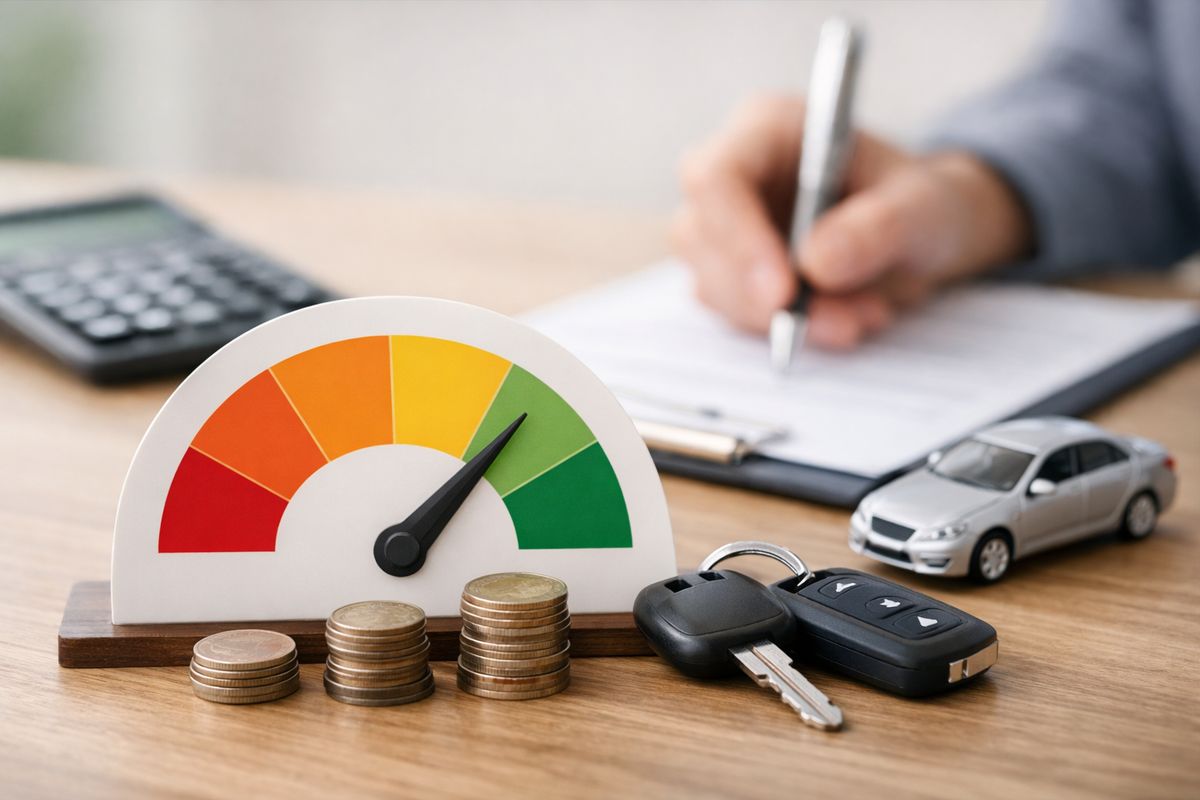
Shopping for a used car can get stressful fast, especially when you keep hearing different answers about the right credit score for car loan approval. Here’s the simple version: there usually is not one magic number, but your score has a big effect on whether you get approved, what rate you get, and how much the car ends up costing you every month.
What credit score do you need for a used car loan?
You do not need a perfect credit score to get a used car loan. In most cases, a higher score gets you better approval odds and lower interest rates, but plenty of buyers with fair or bad credit still get financed.
Here’s the thing: lenders look at risk, not just one number on a screen. If you are shopping in places like Burnaby, Surrey, or Richmond, the loan offer in front of you usually depends on a mix of your credit score, your income, your down payment, and the car itself. A score in the mid-600s can absolutely work. A score below 600 can still work too, but the loan usually gets more expensive.

How credit scores affect a used car loan
Your credit score is a quick snapshot of how you handle borrowed money. It pulls together habits like paying bills on time, keeping balances under control, and managing debt over time. Lenders use it because it helps answer one question fast: how likely are you to repay the loan as agreed?
For you, that score usually affects three things that matter right away: approval, interest rate, and down payment requirements. A stronger score can make approval easier and lower the rate. A weaker score can mean a bigger down payment, tighter lender rules, or both.
Why there isn’t one universal minimum score
There is no single minimum score across every lender. Banks, credit unions, and dealership financing sources all make different calls. One lender may be comfortable at 620, while another may want 680 for the same type of used car.
The catch is that lower-score approvals often come with tradeoffs. That could mean a higher rate, a shorter loan term, stricter proof of income, or a larger amount due upfront. So yes, approval with lower credit is possible, but it rarely looks the same as approval with strong credit.
What “good” credit usually means for car financing
For car loans, score ranges are less about labels and more about options. If your score is excellent, usually 720 and up, you are more likely to see the best rates and more lender choices. If your score is good, roughly 660 to 719, you can still qualify for strong financing, though details start to matter more.
Fair credit, often 600 to 659, is where rates tend to rise more noticeably. Poor credit, below 600, does not shut the door, but it usually narrows it. You may need to be more flexible about the car, the term, or the down payment.
Credit score ranges and what they can mean for your rate
The biggest difference between credit tiers is not just approval. It is cost. Two buyers can look at the same used car in Surrey and leave with very different monthly payments simply because one got a lower rate.
That matters because most people shop by payment first. A few percentage points may not sound dramatic, but over a multi-year car loan, the difference gets real fast.
720 And up: easiest approvals and better rates
If your score is 720 or higher, you are usually in the best position. Lenders tend to offer lower rates, more flexible terms, and more choices on vehicle age and mileage.
That last part matters with used cars. Some lenders get picky about older vehicles or high-kilometre inventory, but stronger credit can make those conversations easier.
660 To 719: still solid, but pricing matters
This range is still strong enough for many good loan offers. But lenders start looking more closely at the full picture, including the car’s age, your loan amount, and how much you are putting down.
In plain English, your score is good, but it may not erase a weak spot somewhere else. An overpriced car or a very small down payment can affect the offer more than you expect.
600 To 659: possible approval, higher borrowing cost
Approval is still very possible in this range. But rates often climb fast here, and that can push a manageable car into a payment that feels too high.
This is where careful shopping really pays off. Keeping the loan amount reasonable, choosing a car that holds value, and avoiding long loan terms on an older vehicle can help keep the deal from getting out of hand.
Below 600: you can still get a loan, but the terms get tougher
Yes, you can still get financed with bad credit. That part is true. The harder part is accepting the tradeoffs that usually come with it.
You may see higher rates, fewer lender options, a bigger required down payment, or requests for extra documents like proof of income and residence. A co-signer can help in some cases. So can choosing a less expensive vehicle. If you are also checking the car’s background, start with what to look for in a used vehicle’s past, because paying a high rate on the wrong car is the deal you want to avoid most.
Other things lenders look at besides your credit score
https://www.youtube.com/watch?v=G-MNxv0t4XY
A credit score matters, but it is not the whole story. That is why two people with similar scores can get very different loan offers.
Lenders want to know not just how you used credit before, but whether this specific loan makes sense right now.
Income, job stability, and debt load
Income matters because lenders want to see room in your budget for a car payment. Job stability helps too, because steady income looks less risky than income that changes a lot month to month.
Debt load usually gets measured through debt-to-income ratio. That just means how much of your monthly income already goes to debt payments. If too much is already spoken for, even a decent credit score may not carry the deal.
Down payment, trade-in, and loan amount
A down payment lowers the amount you need to borrow. That lowers lender risk and can improve both approval odds and loan terms. A trade-in can do the same thing.
This is especially useful in the used market, where prices can swing a lot depending on condition, trim, and mileage. Even a modest amount down can turn a borderline loan into an easier yes.
The car itself: age, mileage, and price
Used car financing is not just about you. The vehicle matters too. Older, high-mileage cars can be harder to finance because lenders worry more about reliability and resale value.
That can surprise buyers. You could have decent credit and still run into lender limits because the car is too old, has too many kilometres, or is priced above what the lender believes it is worth.
How to get a used car loan with fair or bad credit
If your score is not where you want it to be, the goal is simple: improve the parts of your application you can control before you apply. Small changes can make a real difference.
Think of it like cleaning up before guests arrive. You do not need to rebuild the whole house. You just want the obvious problems fixed first.
Check your credit before you shop
Check your credit report and score before you start looking at cars. That helps you spot errors, old missed payments reported incorrectly, or balances that are higher than expected.
You do not want your first surprise to happen in the dealership office.
Lower your credit use and pay bills on time
Credit utilization means how much of your available credit you are using. If your cards are close to maxed out, paying them down can help more than many buyers expect.
On-time payments matter too, and fast. Even one fresh late payment can hurt your application more than a lot of people realize.
Save a bigger down payment if you can
A bigger down payment can improve your deal in two ways. It lowers the amount borrowed, and it gives the lender more confidence.
Even a few thousand dollars can change the math enough to open up better options.
Consider pre-approval before visiting a dealership
Pre-approval means getting a lender’s conditional loan offer before you shop. It gives you a clearer budget and helps you compare financing offers without guessing.
That can be especially helpful if you are walking a lot in Richmond or Coquitlam and every car suddenly looks tempting. Pre-approval keeps your budget grounded in reality, not in the monthly payment somebody hopes you will focus on.
What a used car loan could cost at different credit levels
This is where credit score stops feeling abstract and starts feeling expensive. The same car can look affordable or overpriced depending on your rate.
Monthly payment example on the same used car
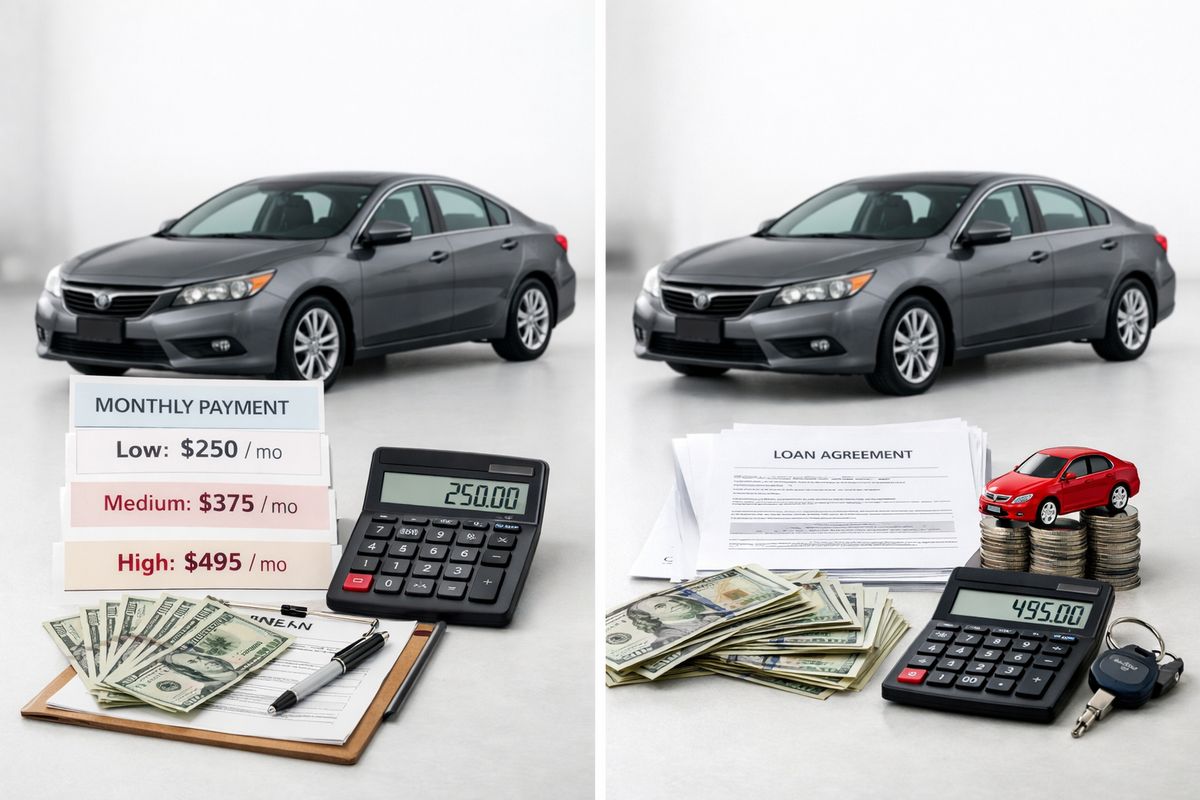
Say you finance a used car for $25,000 over 60 months with no down payment. At 6 percent interest, your monthly payment is about $483. At 10 percent, it jumps to about $531. At 16 percent, it lands around $608.
That is the same car. Same price. Same term. But the gap between strong credit and weak credit is about $125 a month in this example. Over five years, that difference adds up to thousands.
Why a lower rate can save you more than negotiating the sticker price
Here’s a direct claim worth remembering: cutting your interest rate often saves more than knocking a small amount off the price of the car.
For example, saving $1,000 on the sticker price feels great in the moment. But if you also reduce your rate by several points, the total savings over the life of the loan can be even bigger. Price is one lever. Financing is the other. Smart buyers pay attention to both.
Common questions about credit score for a car loan
Can you get a used car loan with no credit?
Yes. No credit is different from bad credit. If you do not have much borrowing history yet, lenders may look more closely at your income, down payment, and job stability. A co-signer can also help.
Does applying for a car loan hurt your credit?
A loan application can create a hard inquiry, which may cause a small temporary dip in your score. But rate shopping within a short period is generally treated more gently by scoring models, so comparing offers is usually not the disaster people fear.
Is dealer financing easier than bank financing?
Dealer financing can feel easier because the dealership often sends your application to multiple lenders for you. Bank or credit union financing can sometimes offer better rates or more transparency. The better choice depends on the offer, not the logo on the building.
Should you improve your score before buying?
If you can raise your score quickly by paying down cards or fixing reporting errors, waiting a little can make sense. But if your current vehicle is unreliable or already costing you too much in repairs, moving ahead now may be the better call.
How to shop smarter for a used car loan in greater vancouver
Used car shopping around Greater Vancouver can move fast. Inventory changes quickly, prices can vary a lot between Langley and North Vancouver, and it is easy to stretch your budget when a car looks perfect in person.
The trick is to decide your financing limits before the emotional part starts.
Set your payment before you pick the car
Start with a monthly payment you can comfortably afford, then work backward to a price range. That keeps you from falling for a car first and figuring out the math later.
A realistic payment beats a dream car with a stressful loan every time.
Compare total loan cost, not just the monthly payment
A lower monthly payment is not always the cheaper deal. Sometimes it just means a longer term and much more interest paid overall.
It is like picking the smaller weekly bill without noticing it runs for an extra year. The payment looks easier, but the total cost ends up higher.
Try one step before you apply anywhere
Before you send in applications, do one thing first: check your credit, set your budget, or get pre-approved. Any one of those steps makes the process easier and puts you in a stronger position when you are ready to buy.
Frequently asked questions
What is a good credit score for a used car loan?
A good score is usually around 660 or higher, because that often opens the door to better rates and more lender options. But used car loans are still available below that range.
What is the minimum credit score for a car loan?
There is no universal minimum. Some lenders approve borrowers below 600, while others want much higher scores. Your income, down payment, and the car itself also affect approval.
Can a bigger down payment help if your credit score is low?
Yes. A bigger down payment reduces the amount borrowed and lowers lender risk, which can improve approval odds and sometimes help you get better terms.
Is it better to get pre-approved for a used car loan?
Usually, yes. Pre-approval gives you a realistic budget, helps you compare offers, and makes it easier to avoid focusing only on the monthly payment.
Do older used cars need a higher credit score to finance?
Not exactly, but older cars with high mileage can be harder for lenders to approve. Even with decent credit, the vehicle may not fit the lender’s rules.
How much does your credit score affect your car payment?
It can affect your payment a lot. A higher score usually means a lower interest rate, and even a few points difference in rate can change your monthly payment by dozens or even hundreds of dollars.