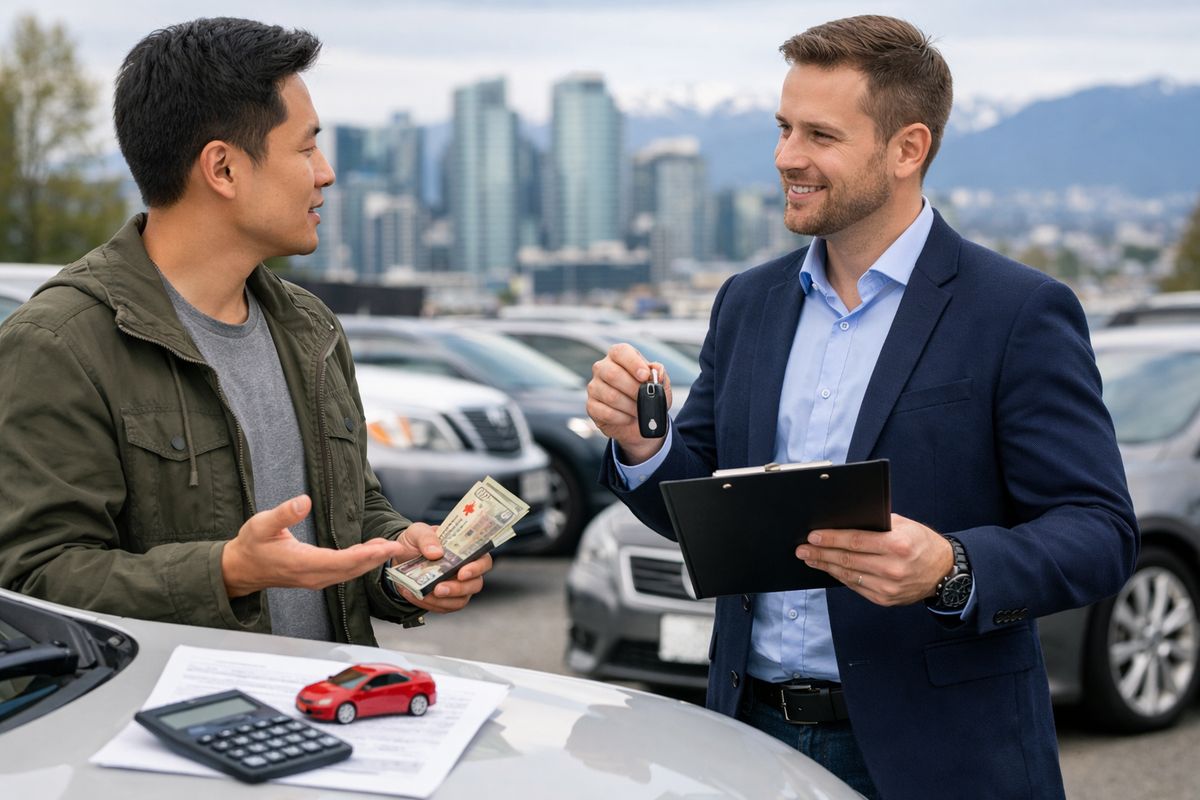
Shopping for a used car in Vancouver can get expensive fast, especially if you walk onto a lot or meet a seller without a plan. The good news is that learning how to negotiate used car price is not about being pushy, it’s about showing up with the right numbers, noticing the right details, and staying calm when the conversation gets slippery.
What you'll need before you start
Before any call, text, or test drive, get your basics in place. Negotiation gets much easier when you are not doing math in your head in a dealership chair or standing in the rain near Marine Drive trying to remember what you can actually afford.
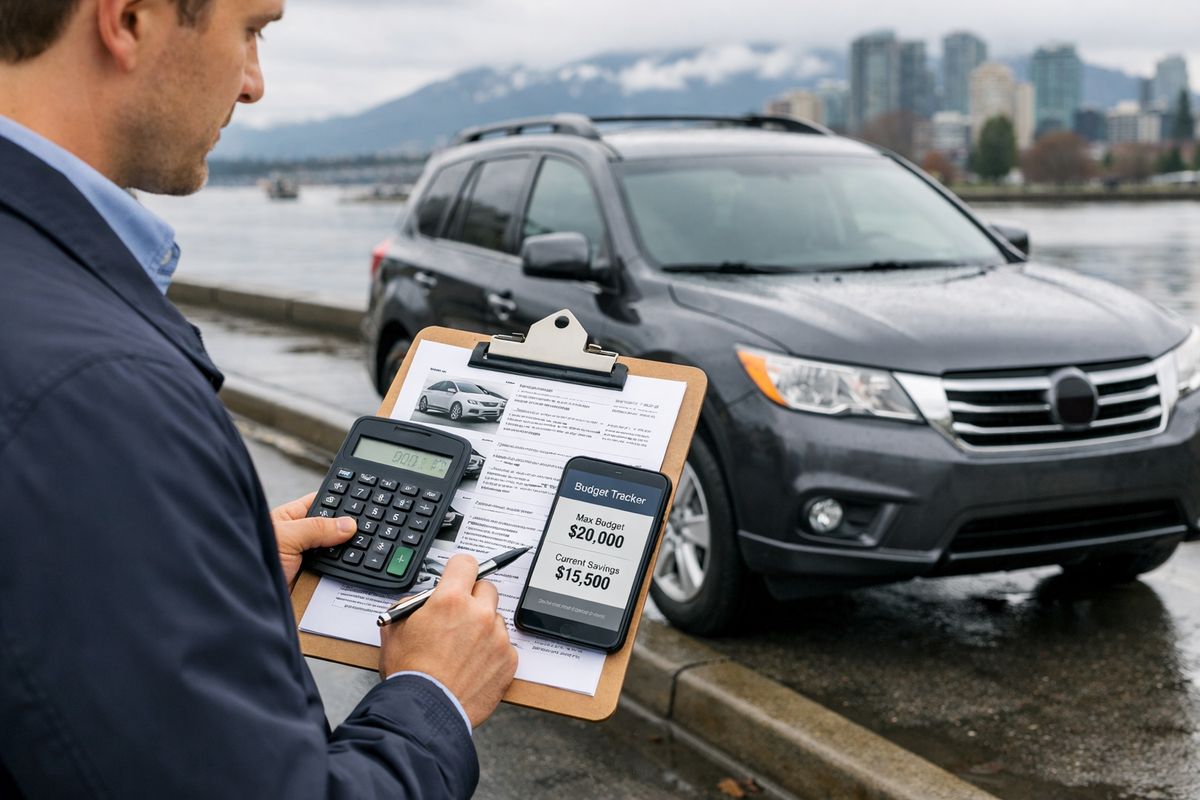
Your target price, max price, and walk-away number
Set three numbers in advance. Your target price is the deal you would feel good about. Your max price is the highest number you will accept. Your walk-away number is the point where you leave, even if the car looks perfect.
That setup matters because emotion quietly inflates budgets. A clean interior, low mileage, or a seller who says “there’s lots of interest” can make you bend without noticing. If your numbers are already saved in your phone, you have a guardrail.
A shortlist of comparable vancouver and lower mainland listings
Pull local listings for the same kind of vehicle from Vancouver, Burnaby, Richmond, Surrey, Coquitlam, and nearby areas. Match the year, trim, mileage, and condition as closely as you can. If you need help sorting out what actually makes one listing comparable to another, this guide to checking used car values side by side makes the process much easier.
Local comparisons matter more than random listings from Alberta or Ontario. Prices shift by region, and so does demand.
Financing, taxes, fees, and insurance notes
Know your financing rate, your likely insurance cost, and the taxes and fees you will need to pay. If you are financing, get pre-approved before you shop. A seller does not need every detail, but you do.
The catch is simple: a car can look like a deal at $18,500 and still turn into a budget problem once loan costs, PST, GST, transfer charges, and insurance land on top of it. If financing is part of your plan, read up on what used car loans look like in Vancouver before you negotiate anything.
Step 1: research the car’s real market value in vancouver
Asking price is just the opening line. Your job is to figure out what the vehicle is actually worth in your local market.
Compare similar vehicles, not just the same model name
Look beyond the badge. A 2019 Toyota RAV4 LE with higher mileage is not the same thing as a 2019 RAV4 XLE AWD with a cleaner history and newer tires. Match the year, trim, drivetrain, mileage, condition, accident history, and useful extras.
That detail is where a lot of shoppers get lazy, and it costs money. Similar-looking cars can be thousands apart for very normal reasons.
Check private seller prices vs dealer prices
Keep dealer listings separate from private-party listings. Dealer pricing usually includes overhead, reconditioning, and a little more cushion. Private sellers often have more flexibility, but you may get less paperwork support and less post-sale protection.
If you are still deciding where to shop, it helps to understand how dealer and private-sale deals usually differ. That difference affects how much negotiation room you can expect.
Notice vancouver-specific price factors
In the Lower Mainland, some features carry more weight than others. AWD matters more here than in flatter, drier places because people head to Whistler, Cypress, and the Sea-to-Sky year-round. Fuel economy also matters because commuting adds up quickly, especially if you cross bridges every day.
Clean service records count too. In a wet climate, signs of rust, water intrusion, worn tires, or neglected maintenance are worth taking seriously. Fancy trim pieces are nice, but good rubber and a clean underside matter more.
Step 2: set your budget around the total cost, not just the sticker
A low sticker price can still produce a bad deal. Budget around the full cost of owning the car, not just the number in the ad.
Add taxes, documentation fees, and registration costs
At a dealership, ask for the full out-the-door total. That means vehicle price, taxes, documentation fee, registration-related costs, and anything else included in the contract. If a seller only wants to talk about the headline price, slow the conversation down.
This is where people get tripped up. Negotiating the sticker while ignoring the final total is like celebrating a cheap plane ticket before noticing the bag fees and seat charges.
Estimate maintenance, fuel, and immediate repairs
Build in the first round of ownership costs. Think tires, brakes, oil change, transmission service, battery, windshield chip repair, and anything an inspection uncovers. If fuel economy matters to your budget, compare your shortlist against efficient used options for Vancouver commuting so your monthly cost stays realistic.
A car that is $1,500 cheaper up front can easily cost more within the first three months. That happens all the time.
Decide what you can trade off
Pick your priorities before the negotiation starts. Maybe you care most about lower mileage. Maybe a cleaner history matters more than trim. Maybe a base model with better tires beats a fancier version with deferred maintenance.
Once you know your trade-offs, you stop negotiating emotionally. If the seller will not move on price, you already know what else still makes sense.
Step 3: check the car’s condition before you talk numbers
Negotiate after you understand the car, not before. Condition gives your offer a backbone.
Review the vehicle history report and service records
Ask for the history report and whatever maintenance records exist. Look for accident claims, title issues, liens, and gaps in service. More records usually support a stronger asking price. Fewer records usually support a lower offer.
If you want a clearer picture of what these reports can and cannot tell you, this breakdown of what BC history checks usually reveal is worth a quick read.
Inspect the car in person
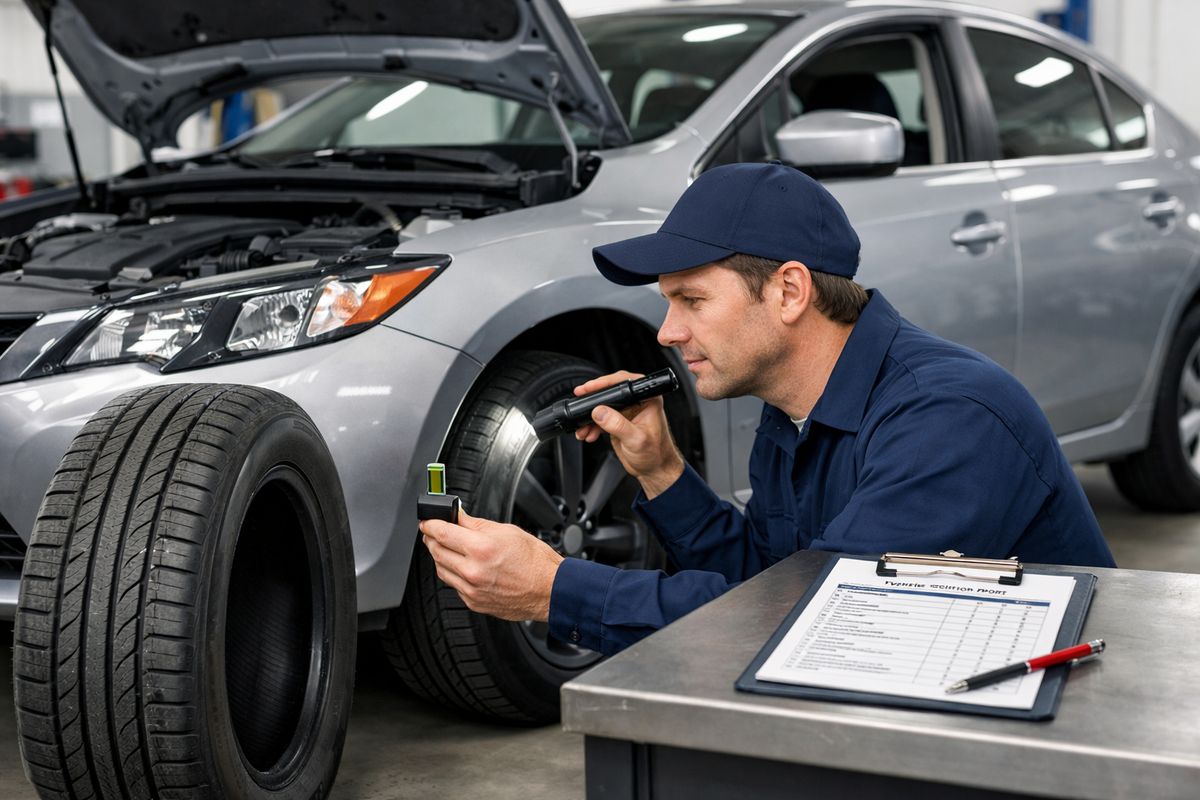
Do a slow walkaround. Check the tires for even wear. Look at the paint in daylight. Notice panel gaps, windshield chips, worn seats, mildew smells, cloudy headlights, and rust around wheel arches or underneath. Open and close everything.
You are not trying to become a technician in ten minutes. You are trying to spot enough to ask better questions and avoid paying top dollar for a car that looks tidy only from twenty feet away.
Take a test drive with a checklist
Drive long enough to notice something real. Test braking, acceleration, steering, parking-lot turns, and highway speed if possible. Listen for clunks over bumps, whining from the transmission, steering pull, or warning lights that disappear and reappear.
A checklist helps because nerves make people forget obvious things. If you want a more structured look at what to scan before buying, this guide to what to check on a used car in Vancouver covers the usual trouble spots.
Get a pre-purchase inspection if the deal is serious
If the car is a real contender, book an independent inspection before you commit. That matters even more with private sales, higher-mileage vehicles, or anything that seems underpriced for the market.
An inspection changes the conversation. Instead of saying “something feels off,” you can say “the front brakes are near end of life and the tires need replacing soon.” That is useful leverage.
Step 4: start the conversation and make a smart opening offer
Once you know the market and the car, make the first number count. Good offers are calm, specific, and easy to defend.
Ask a few direct questions before naming a price
Before you put out a number, ask how long the car has been listed, whether any repairs are still pending, and how much interest there has been. If the ad has been sitting for three weeks with price drops, that tells you something. If fresh maintenance was just done, that tells you something too.
Those details help you judge flexibility without turning the conversation into a standoff.
Open below your target, but keep it reasonable
Start below your target price so there is room to move, but stay grounded in reality. If fair market value looks like $21,000 and the car is listed at $22,500, opening at $17,000 just kills the conversation.
A better move sounds like this: based on similar local listings, the mileage, and the tire condition, your offer is $20,200. Clean, polite, and defensible.
Use simple reasons, not a speech
Keep your explanation short. Mention two or three facts, not ten. Mileage, tire age, small cosmetic damage, missing records, or inspection items are enough.
Here’s the thing: calm facts travel farther than performance. You are not trying to “win” the moment. You are trying to move the number.
Step 5: negotiate the price without getting pulled off track
This is where deals often drift. The seller starts talking monthly payments, extras, urgency, or how much interest there has been. Stay with the number that matters.
Negotiate the out-the-door price at a dealership
At a dealership, ask for the total price in writing with fees and taxes broken out clearly. If you only discuss the vehicle price, extra charges can quietly inflate the final deal later.
This one habit saves a lot of frustration. It also makes it much easier to compare one dealership against another.
Keep monthly payment talk separate
A lower monthly payment can hide a longer loan, more interest, or both. Agree on the vehicle price first. Then review financing terms separately.
If a seller or finance office keeps steering back to “only $389 per month,” bring it right back to purchase price. That sentence alone can save you thousands.
Use silence, pauses, and time to your advantage
Make your offer, then stop talking. Silence feels awkward, but it works. People often fill quiet moments by revealing flexibility, adjusting numbers, or offering something extra.
The trick is not to rescue the conversation for the other side. Say your number. Let it sit.
Be ready to leave if the numbers stop making sense
Your walk-away number is only useful if you actually use it. If fees appear out of nowhere, inspection access gets blocked, or the seller keeps dodging straightforward questions, leave.
That can feel annoying in the moment, especially after a test drive and a long commute across the city. But another listing in Burnaby, Richmond, or Surrey will show up faster than you think.
Step 6: handle common seller responses and counteroffers
Most negotiations reuse the same lines. Once you expect them, they lose a lot of power.
“That’s Already the lowest price”
Come back to the facts. Point to local comparables, visible condition issues, or inspection findings. Keep it plain and short.
If the price truly will not move, shift the conversation. Ask for maintenance items, included accessories, or a cleaner contract with fewer extras.
“Someone else is coming to see it today”
Maybe true. Maybe pressure. Either way, urgency is not a reason to skip your process.
A simple response works best: if the car is still available after that visit, your offer stands. No drama needed.
“Another buyer offered more”
Do not bid against a ghost. Ask whether the car is still available and restate your best clean offer. If the seller has a stronger deal, fine.
Walking away from a shadow bidding war is almost always the right move.
“The payment is only…”
Pull the conversation back to total purchase price, interest rate, and loan length. That is the whole move.
If the monthly payment sounds manageable but the loan stretches too long, you are not getting a bargain. You are just spreading out the pain.
Step 7: negotiate extras, repairs, or terms if the price won’t move
Sometimes the number sticks. That does not mean the negotiation is over.
Ask for repairs or maintenance items
If price is firm, ask for practical fixes. Brake service, fresh fluids, a battery test, tire replacement, or a chipped windshield repair can all matter more than a tiny discount.
Focus on the items you would otherwise pay for right away. That is where the real savings sit.
Ask for useful add-ons
Useful extras can have real value, especially in this market. Winter tires, a second key, roof racks, floor mats, or proof of very recent servicing all count.
For Vancouver driving, a solid set of winter tires for trips north can beat a token $200 price cut every time.
Adjust the terms instead of the price
If a seller still will not budge, improve the terms. Ask for time to complete an inspection, a deposit hold, or removal of dealer add-ons you do not want.
A simpler deal is often the better deal. Fewer surprises, fewer headaches.
Step 8: review the paperwork before you say yes
This is the last place to catch problems. Slow down.
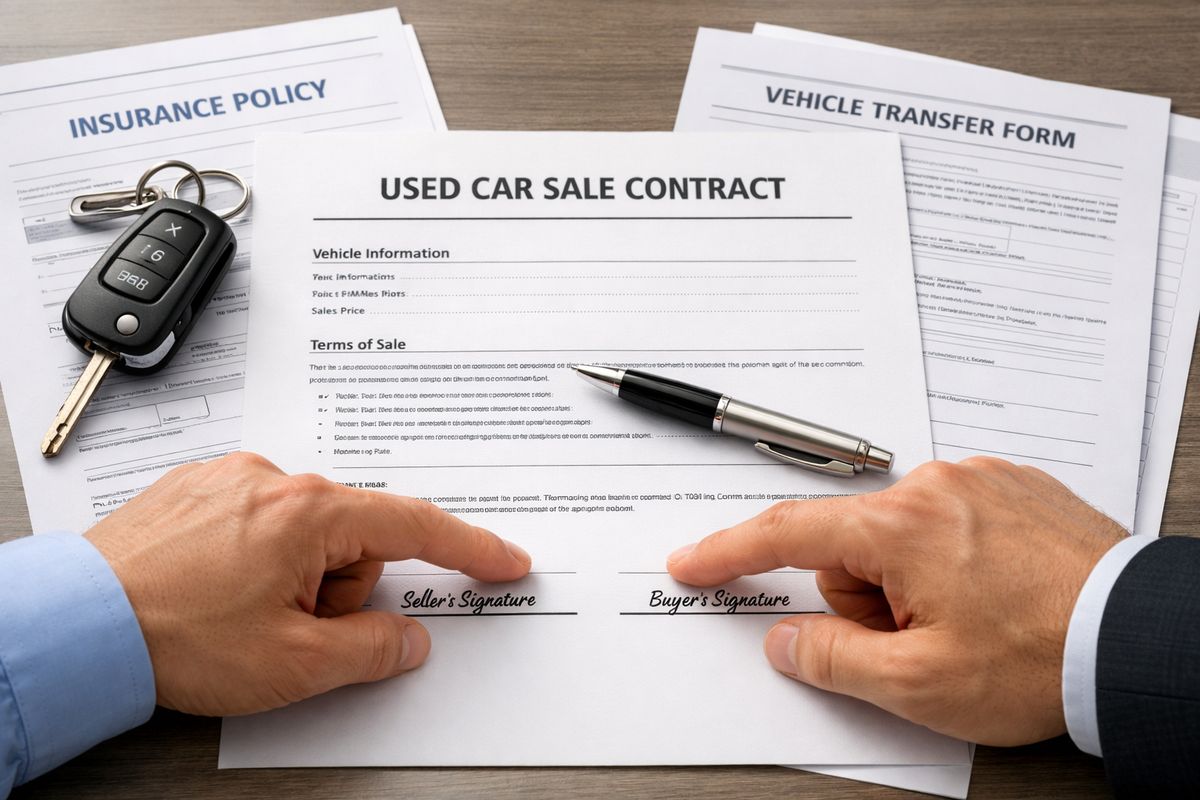
Check the bill of sale line by line
Match the agreed price, taxes, fees, deposit, and included items against what was discussed. If winter tires, roof racks, or a repair were part of the agreement, make sure they appear somewhere in writing.
Do not sign first and fix later. Later usually gets harder.
Confirm ownership, liens, and transfer details
Make sure the seller has the legal right to sell the vehicle and that no unpaid loan is attached. This matters a lot in private sales, where paperwork carries the whole deal. For a smoother handoff, review the BC transfer steps for used car buyers before pickup day.
Paperwork is not glamorous, but it is where clean deals stay clean.
Read warranty or “as-is” language carefully
If the car is sold as-is, understand what that means in plain English: once you sign, future repairs are usually on you. At a dealership, read any warranty language carefully and confirm what is actually covered.
A friendly salesperson does not change contract language. The paper wins.
Troubleshooting: common negotiation mistakes and how to fix them
Even with good prep, it is easy to wobble when a car feels right or the conversation gets tense.
You fell in love with one car too early
Step back and compare a few more options before making your final offer. Distance helps. Attachment does not.
A used car is not the last seat on the plane. There is almost always another one.
The seller won’t share enough information
If history reports, service records, or inspection access keep getting blocked, treat that as your answer. Lack of transparency is useful information.
The safest negotiation move is often leaving.
The deal looks good until fees show up
Ask for the complete out-the-door total in writing before you agree to anything. Surprise charges are much easier to challenge before signatures than after.
This is especially common when the first conversation stayed too general.
You’re Not comfortable negotiating in person
Start over text or email if needed. Send a clean offer with your reasons and your timeline. That keeps the numbers straight and lowers the pressure.
For a lot of people, writing the offer is easier than saying it beside a car on a busy lot.
What result to expect and what to do next
A good negotiation is not about squeezing every last dollar from the deal. It is about getting a fair price on a solid car, with terms you understand and costs you can live with.
What a good outcome looks like
Sometimes you get a lower price. Sometimes you get winter tires, brake service, or a cleaner out-the-door total. Sometimes the win is avoiding an overpriced car entirely.
That still counts. Honestly, that can be the best result of all.
Your next move after the purchase
Set up insurance, save every record, and book any immediate maintenance the car needs. Then spend a few minutes learning the basics, tire pressure settings, fuel type, spare key situation, and dashboard controls.
That first hour after pickup is a good time to double-check everything while the details are fresh.
One thing to try before your next test drive
Put your target price, max price, and walk-away number in your phone notes before you leave home. It takes one minute, and it changes the whole tone of the conversation.
Frequently asked questions
How much can you usually negotiate on a used car in vancouver?
Expect a realistic discount, not a dramatic one. A few hundred dollars to a couple thousand can happen, depending on mileage, condition, demand, and how the asking price compares with similar local listings.
Should you make the first offer on a used car?
Yes, if you have done your research. A first offer helps anchor the conversation, as long as it is reasonable and backed by local comps and the car’s condition.
Is it better to negotiate in person or by text?
Text or email can work very well because it keeps the numbers clear and lowers pressure. In person can be useful after a test drive, but only if you already know your target and walk-away numbers.
Can you negotiate with a private seller?
Yes. In many cases, private sellers have more flexibility than dealerships. The key is staying respectful, using facts, and not acting like every small flaw deserves a massive discount.
What if the seller refuses a pre-purchase inspection?
Treat that as a warning sign. If inspection access is blocked on a serious deal, the safest move is usually to walk away and keep shopping.
Should you negotiate price or financing first?
Negotiate the vehicle price first. Financing comes after that. Mixing the two makes it much easier for the real cost to get hidden inside the monthly payment.