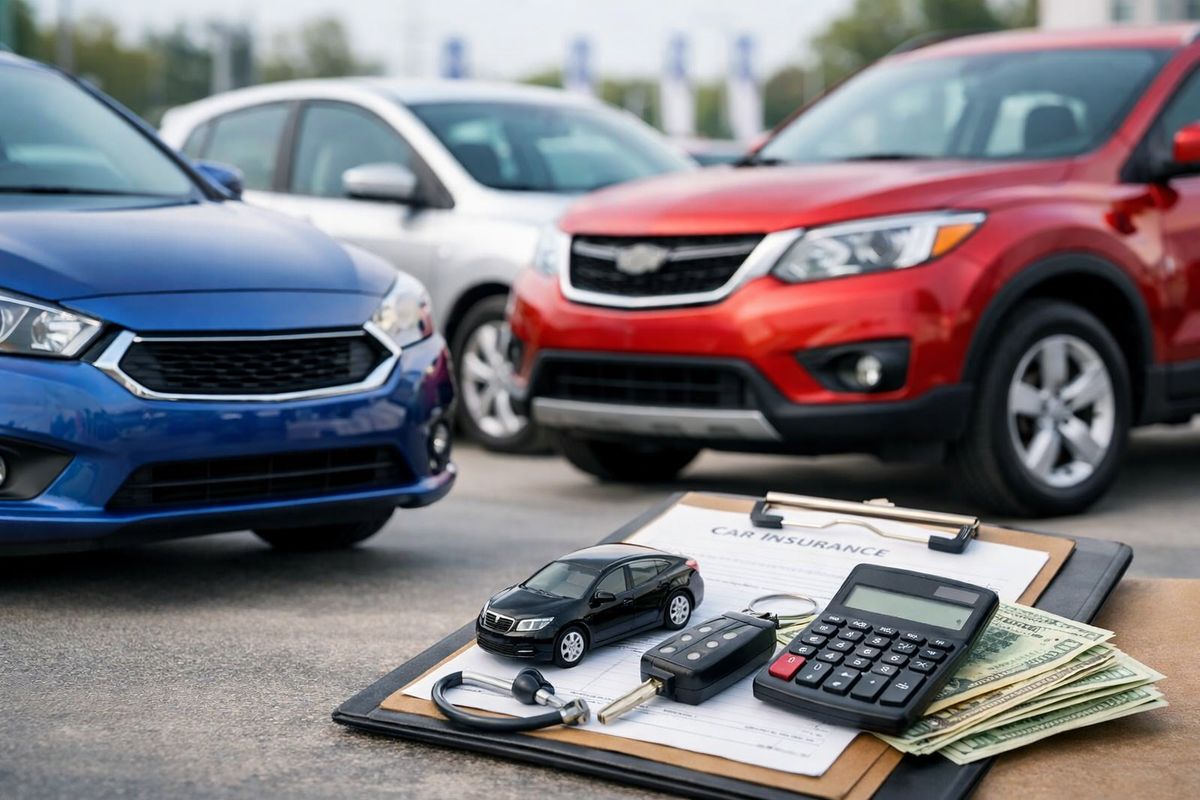
Shopping for low insurance used cars can feel fine right up until the quote shows up and hits like a parking ticket on West Broadway. The good news is that insurance costs are not random, and once you know what insurers tend to like, it gets much easier to spot the used cars that keep your monthly budget under control.
Why some used cars cost less to insure than others
Insurance companies are trying to predict one thing: how expensive your car is likely to be when something goes wrong. That includes crashes, theft, repairs, injuries, and even how often a certain model ends up in claims in the first place. So a car can be modest, practical, and used, but still cost more to insure if it has a rough claims record or pricey parts.
In plain English, insurers usually care about repair costs, theft risk, safety performance, claim history, engine size, and how the whole vehicle category behaves. A common compact sedan with easy-to-find parts usually looks safer to insure than a sporty coupe with larger wheels, turbo hardware, and a history of expensive fender-benders.
The biggest factors that move your premium
Vehicle value matters, but not as much as many shoppers assume. A car that costs more to replace can push premiums up, yet a cheaper used model can still be expensive to insure if it gets stolen often or racks up costly claims.
Collision claim history is a big one. If a model tends to be involved in a lot of accidents, or tends to suffer expensive damage when hit, insurers notice. Repair pricing matters too, especially now that bumpers, sensors, lights, and calibration work can turn a minor hit into a surprisingly large bill.
Safety features help because they reduce injury risk and sometimes prevent crashes in the first place. Anti-lock brakes, stability control, strong crash-test results, and newer driver-assist systems all matter. Theft risk also matters more than most shoppers expect. If a certain model is popular with thieves, your rate can climb even if the car itself is not fancy.
Why “cheap to buy” does not always mean “cheap to insure”
Here’s the catch: sale price and insurance price are related, but not twins. A used sporty compact with a tempting sticker can cost more to insure than a slightly pricier midsize sedan because the insurer sees more risk in the way that model gets driven, stolen, or repaired.
That is why bargain hunting on used cars needs a wider view. Before getting attached to a price tag, it helps to compare the full picture, including how to tell when a used car is priced too high for what it is. A car that saves you $1,500 upfront can easily give that money back through higher premiums over the next couple of years.
What to look for in a low-insurance used car
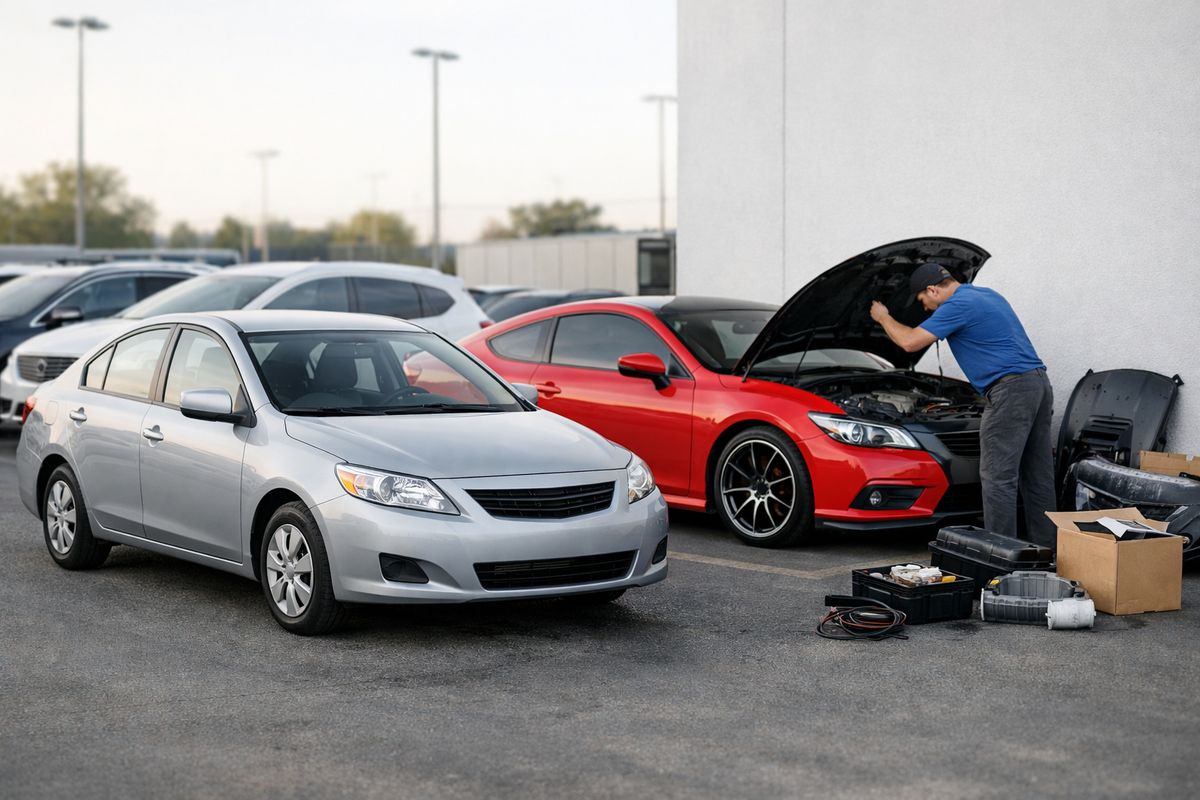
If your real goal is a manageable monthly total, not just a low purchase price, a few buying criteria matter more than everything else. The sweet spot is usually a common vehicle, in a practical body style, with a clean history, moderate trim, and no signs that somebody tried to turn it into a race car.
Stick with common, lower-risk body styles
Compact sedans, everyday hatchbacks, small SUVs, and minivans often land in a better place for insurance than sports cars, luxury models, lifted trucks, or heavily modified vehicles. That is partly because these body styles are driven in more predictable ways, and partly because parts supply and repair patterns are easier for insurers to price.
For Vancouver and the Lower Mainland, these body styles also make daily life easier. You get something simple to park in Kitsilano, manageable in Richmond traffic, and still comfortable enough for a rainy bridge commute or a weekend run up to North Vancouver.
Prioritize safety and easy-to-find parts
A safe car is not just better in a crash. It can also be cheaper to insure because lower injury risk tends to mean lower claims cost overall. Newer used vehicles often add useful features like automatic emergency braking, blind-spot warning, or lane support. You do not need every gadget, but newer safety tech can help.
Parts availability matters just as much. Common models from brands with strong local parts support are usually easier and cheaper to fix. Before buying, it also helps to look into a car’s background through a closer look at what BC history reports can reveal, because prior claims, rebuild status, and damage records can change both cost and insurability.
Look for moderate trims and smaller engines
This is one of the easiest ways to save money. A base or mid-level trim often costs less to insure than the turbo, sport, or premium version of the exact same model. Same badge, different bill.
Insurers can treat a Civic LX very differently from a Civic Si, or a regular Escape differently from a higher-output trim. Smaller engines, smaller wheels, and fewer performance cues usually work in your favor. The trick is to shop by trim level, not just by model name.
Best types of low-insurance used cars for vancouver and the lower mainland
The best fit depends on how you drive, where you park, and whether your weekends involve Costco, Cypress, or both. But some categories keep showing up for good reason.
Compact sedans and hatchbacks
Compact sedans and hatchbacks are often the strongest starting point if you want low insurance used cars. Models like the Toyota Corolla, Honda Civic, Toyota Camry, Honda Accord, and Volkswagen Jetta tend to make sense because they are common, practical, and usually not outrageously expensive to repair.
They also work well in the Lower Mainland. You get decent fuel economy, easier street parking, and less pain at the gas pump during a long commute. If your driving is mostly city and highway, this category is hard to beat for total cost.
Small SUVs and wagons
Small SUVs and wagons hit a nice middle ground. Vehicles like the Honda CR-V, Toyota RAV4, Subaru Forester, Subaru Outback, Subaru Crosstrek, Mazda CX-5, Ford Escape, Chevrolet Equinox, Hyundai Tucson, and Kia Sportage offer more cargo room and a higher seating position without stepping straight into expensive full-size SUV territory.
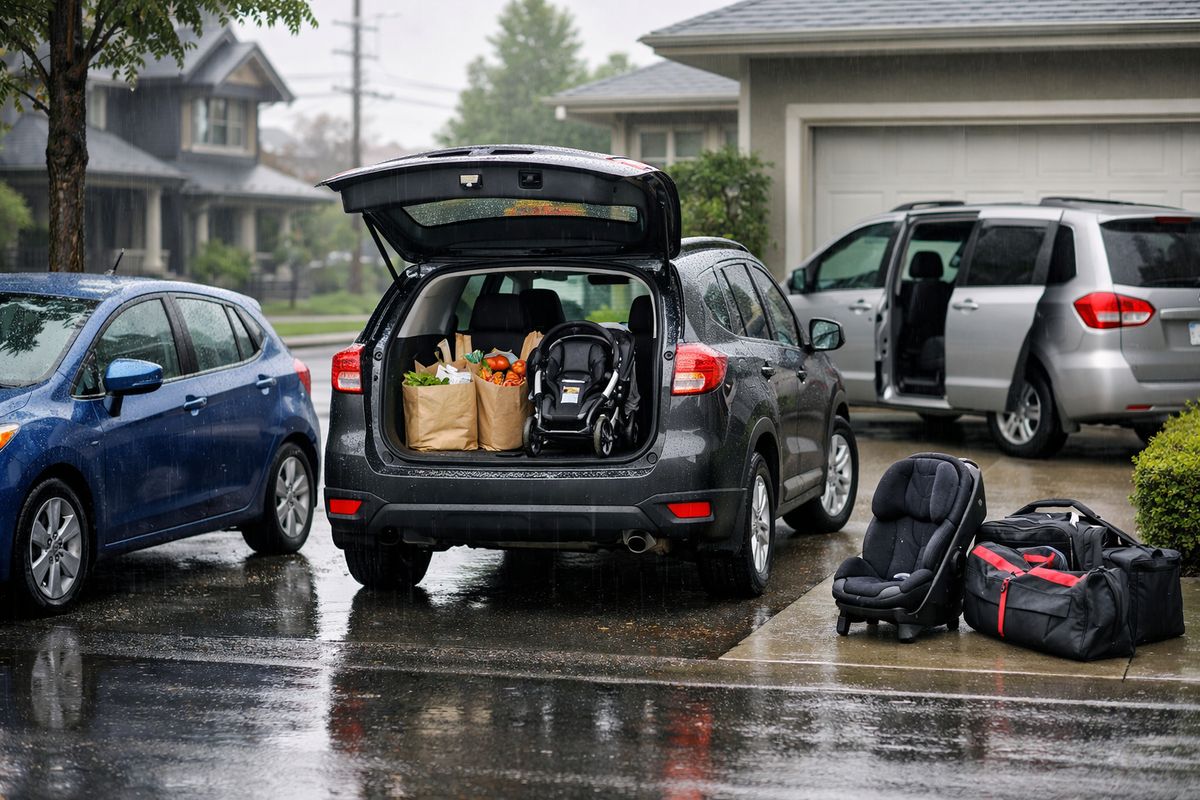
For local life, that matters. Rainy roads, ski gear, strollers, grocery runs, and the occasional trip toward Squamish all fit more naturally in this category. If you want the shape and flexibility of an SUV without a huge jump in ownership costs, this is usually the best lane.
Minivans and family-friendly picks
Minivans are not exciting, which is exactly part of the appeal from an insurance perspective. The Honda Odyssey and Toyota Sienna are usually bought for hauling kids, gear, and real life, not for showing off. That practical use case can help keep insurance more reasonable than some large SUVs.
You also get more usable space than many three-row crossovers. Sliding doors in tight parking lots are a lot more useful than flashy styling, honestly.
Trucks if you actually need a bed
If you genuinely need a truck for work, hauling, or regular outdoor gear that does not fit anywhere else, certain midsize trucks can be reasonable. The Ford Ranger, Toyota Tacoma, Chevrolet Colorado, GMC Canyon, and some Ford F-150 trims are often better bets than bigger or more specialized pickups.
But the point is simple: if you do not need a truck, skipping one usually saves money. Trucks often cost more to buy, fuel, insure, and maintain. A compact SUV can solve most lifestyle problems without dragging your monthly budget uphill.
Specific used models worth shortlisting
A shortlist is more useful than a giant ranking because it helps you compare similar choices without getting lost.
Best low-insurance used sedans
The Toyota Corolla is a classic budget-friendly choice because it is common, dependable, and usually straightforward to repair. It suits commuting, student life, and anybody who wants simple ownership. Check for service history, accident records, and whether the trim stayed basic.
The Honda Civic deserves a spot too, especially if you avoid the sportier trims. It is easy to live with, easy to park, and easy to find. Just pay attention to theft exposure, trim level, and any modifications.
The Toyota Camry and Honda Accord make sense if you want more comfort without jumping into luxury-car costs. Both are solid daily drivers for longer commutes. They often carry reasonable insurance for midsize sedans, especially in regular trims.
The Hyundai Sonata and Ford Fusion can also be smart value picks in the used market, often giving you more features for the money. The trade-off is that condition matters even more, so it is worth checking whether extra kilometres actually change the deal as much as people assume when comparing two examples.
Best low-insurance used SUVs
The Honda CR-V and Toyota RAV4 are near the center of the target for practical used SUV shopping. Comfortable, roomy, widely available, and usually not outrageous to insure, especially in non-luxury trims. These are strong picks if you need one vehicle to handle commuting, groceries, road trips, and wet weather.
The Subaru Forester, Outback, and Crosstrek deserve attention if all-weather confidence matters to you. Standard all-wheel drive helps in rough weather and mountain-adjacent travel, though fuel use can be a touch higher than a basic front-wheel-drive sedan. Still, for Vancouver-area buyers balancing city use with outdoor plans, these often make sense.
The Mazda CX-5 adds a slightly nicer cabin without moving too far from mainstream ownership costs. The Chevrolet Equinox and Ford Escape can also be worthwhile, especially if purchase price is attractive and the condition is solid. Before committing, it helps to plan for an inspection that catches the expensive stuff early.
Best low-insurance used family vehicles and trucks
The Honda Odyssey and Toyota Sienna are easy picks for larger households. If your life includes car seats, hockey bags, folding strollers, or airport runs, both do the job better than many SUVs. Insurance often stays more reasonable than large three-row utility vehicles, and the packaging is simply better.
For trucks, the Ford Ranger and Toyota Tacoma are usually the most practical place to start. Both suit buyers who truly need a bed and want something easier to manage than a full-size truck. The catch is that a truck’s total monthly cost can creep up fast once fuel, tires, and insurance all join the party.
How to compare the total monthly cost before you buy
A used car can look affordable right up until every side cost starts stacking up. That is why comparing total monthly cost beats staring at sticker prices.
Add up the full cost, not just the car payment
Start with purchase price or financing, then add insurance, fuel, maintenance, tires, parking, and expected repairs. Keep it simple. Even a rough monthly estimate will tell you more than a listing price ever will.
This matters even more if you are shopping at the lower end of the market, where what a tight used-car budget really gets you around Vancouver can vary a lot by condition and ownership history. Cheap up front is only good if the rest stays manageable too.
Get insurance quotes before you commit
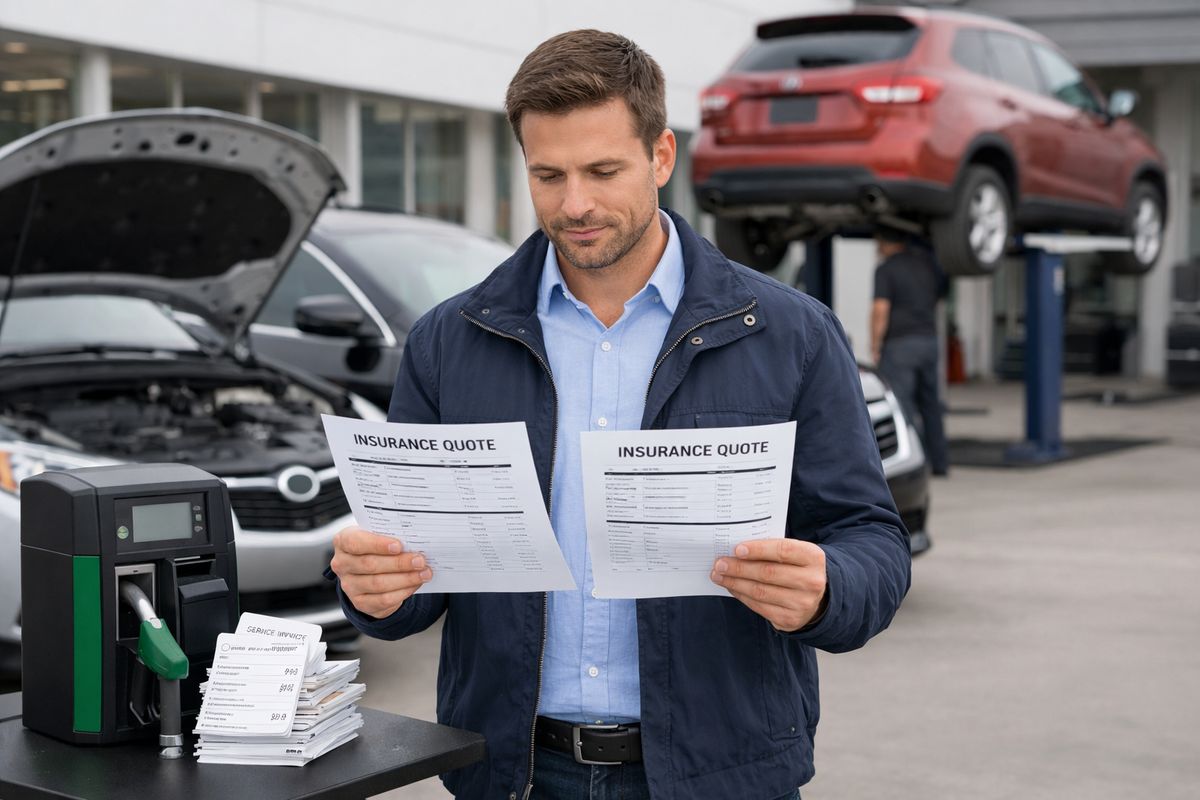
Always get quotes before signing anything. Even two similar cars parked on the same lot can produce very different premiums because of trim, engine, claims history, and theft patterns.
Using actual VINs is best. If you cannot get that far yet, at least compare the exact year, trim, and engine. A five-minute quote check can save you from buying the wrong version of the right car.
Check repair history, claims history, and theft exposure
A clean title and a nice test drive do not tell the whole story. Accident history, rebuilt status, repeated body repairs, and model-specific theft risk all affect what the car may cost to insure and own.
This is also where paperwork matters. Before finalizing anything, make sure you understand the BC steps and documents involved in taking ownership properly. A car with messy history can become a budget problem long before the first insurance renewal.
Common mistakes that push insurance costs up
Some insurance mistakes are dramatic. Most are quiet. That is what makes them expensive.
Buying the sporty trim because the price looks close
That slightly hotter trim can seem like a harmless upgrade when the sticker difference is small. But badges like Si, GT, ST, turbo, or premium sport packages often push insurance up because the car looks riskier to insure and usually costs more to repair.
The sale price gap might be only a couple thousand dollars. The insurance gap can keep charging you every month after that. That is why the plain trim so often wins the value argument.
Forgetting that modifications can raise your rate
Lowered suspension, aftermarket wheels, tint, exhaust changes, body kits, and cosmetic upgrades can all make a practical used car look riskier. Some modifications increase theft appeal. Some increase repair cost. Some suggest the car was driven harder than average.
Even tasteful upgrades can change the insurance picture. If your goal is low monthly cost, boring is your friend.
Choosing too little car for your quote shopping
Getting attached to one exact car too early is a budget trap. If the quote comes back high, you feel stuck. But swapping to a similar model can be like changing grocery stores and instantly cutting the bill.
A Corolla instead of a sport-trim Civic, or a CR-V instead of a truck, can make more difference than chasing tiny discounts later. Compare categories, not just individual listings.
Ways to keep insurance costs down after you buy
Post-purchase savings exist, but most of the big wins happen before you buy. Still, a few habits can help.
Compare quotes regularly and adjust coverage thoughtfully
Insurance is not set once and forgotten. Shopping your rate occasionally can help, especially after a move, a cleaner driving record, or a change in how much you drive.
Coverage should also match the car’s value. On an older used car, it can make sense to review deductibles and optional coverage carefully instead of paying for protection that no longer fits the vehicle.
Ask about discounts that fit your situation
Bundling policies, insuring multiple vehicles together, driving fewer kilometres, and maintaining a clean record can all help. Some insurers also recognize winter tires or usage-based programs, depending on the policy options available.
You are not trying to collect every tiny discount like coupons in a drawer. You are trying to make sure nothing obvious gets missed.
Drive a car insurers already like
Here’s the simplest truth in this whole guide: the easiest insurance savings usually start before you buy. A safe, common, easy-to-fix model does more for your budget than chasing discounts after the fact.
That is why practical mainstream cars keep winning. They are not flashy, but your wallet notices the difference every month.
Best low-insurance used cars by budget and use case
The best choice depends less on hype and more on how your week actually looks.
If you want the cheapest sensible commuter
Start with compact sedans and hatchbacks like the Corolla, Civic, Jetta, or in some cases a Cruze or Fusion if condition is better and the quote checks out. Simple drivetrains, common parts, and easy parking usually matter more than bells and whistles.
If you are shopping on a tighter number, it helps to compare a few solid older options that still make sense under a five-figure budget. Plenty of everyday commuters live in that range without turning into money pits.
If you need space for kids, gear, or costco runs
The CR-V, RAV4, Forester, and Outback make sense if you want cargo room without minivan size. If you need three rows or maximum family usefulness, the Odyssey and Sienna are usually better tools for the job than a bulky SUV.
Think about your real cargo, not your fantasy cargo. Groceries, backpacks, sports gear, and stroller duty call for something different than towing or work-site hauling.
If you want one car for city driving and weekend escapes
The Crosstrek, Forester, Outback, and CX-5 stand out here. You get better bad-weather confidence, enough room for gear, and a shape that still works in daily Vancouver traffic.
For drives toward Squamish, the Sea-to-Sky, or the North Shore in ugly weather, these feel like a practical compromise instead of a lifestyle costume.
If you need to keep the whole budget predictable
Choose a common, non-luxury, non-performance model with a clean history, moderate trim, and easy parts supply. That formula is boring on paper and excellent in real life.
Try one thing before visiting the lot: get three insurance quotes on three different models you already like. That one step can save you from buying the wrong car for the right price.
Frequently asked questions
Are used cars always cheaper to insure than new cars?
Not always. Used cars often cost less to insure because replacement value is lower, but claim history, theft risk, repair cost, and trim level can still make a used car expensive. A practical newer model can sometimes insure better than an older sporty one.
Which body style is usually cheapest to insure?
Compact sedans and practical hatchbacks are often the safest bet for lower premiums. Small SUVs can also be reasonable. Sports cars, luxury models, and heavily modified vehicles usually trend higher.
Does mileage affect insurance on a used car?
It can, but not usually as much as model type, claims history, and repair cost. Mileage matters more for wear, maintenance, and long-term value, which is why it helps to understand how high mileage changes a used-car decision in real life.
Can two versions of the same car have very different insurance rates?
Yes. Trim, engine size, turbocharging, wheels, theft patterns, and repair parts can all change the quote. A base model and a sport trim with the same name can land surprisingly far apart.
Should you get an insurance quote before a pre-purchase inspection?
Yes. Quote first, then inspect the finalists. That order helps you avoid paying for an inspection on a car that already misses your monthly budget, though deciding when an inspection is worth paying for is still a smart part of the process.
What is the safest way to keep your insurance cost low long term?
Buy a car insurers already price favorably, then keep the driving record clean and review quotes from time to time. A common, safe, easy-to-fix vehicle usually beats any discount strategy after purchase.