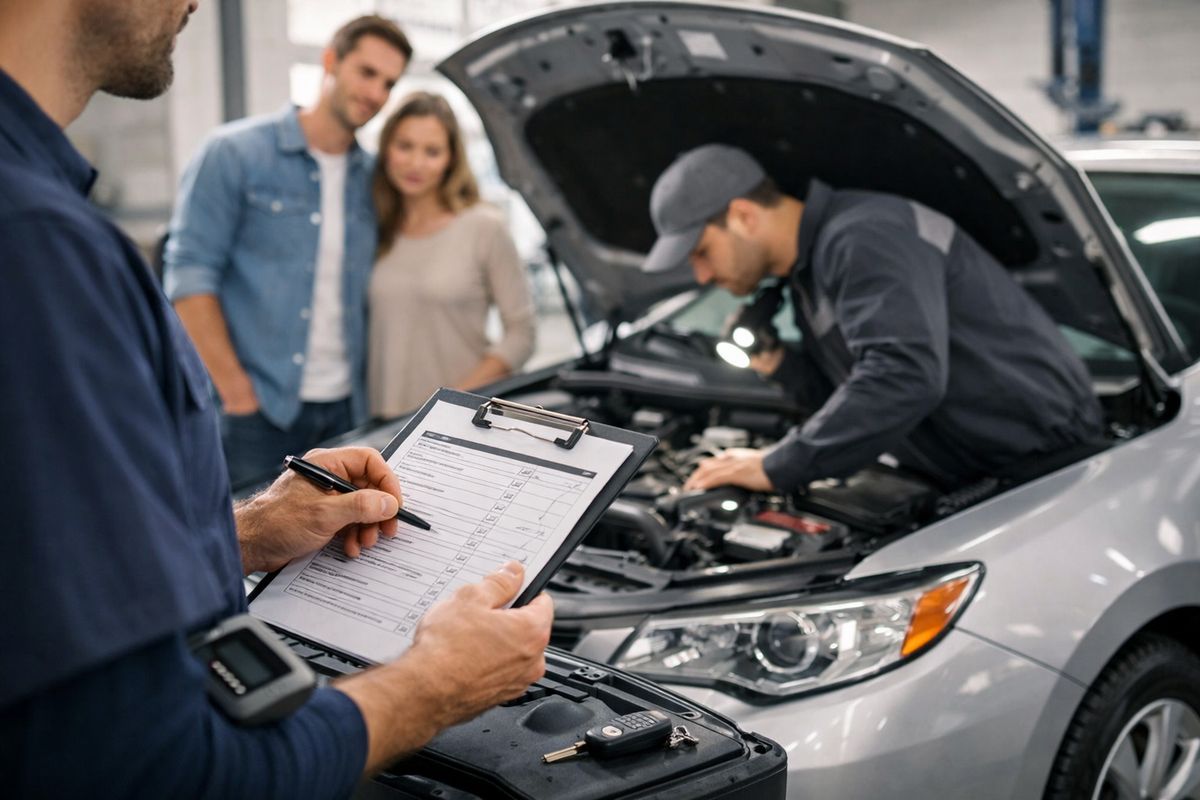
A pre purchase inspection is the easiest way to slow down before a used car drains your wallet. If you have ever stood in a parking lot, liked the color, liked the price, and felt tempted to say yes on the spot, this is the step that keeps that moment from turning expensive.
A pre purchase inspection is an independent inspection of a used car before money changes hands. A mechanic checks the vehicle’s condition, looks for damage, wear, neglect, and safety issues, then gives you a clearer picture of what you’re actually buying. It will not predict every future repair, but it will catch a lot more than a quick walkaround and a 15-minute test drive.
Here’s what you’ll learn:
What a pre purchase inspection really covers
Why it is worth doing on almost any used car
What mechanics look at, system by system
What inspections usually do not include
When to book one and where to go
How much it costs and who pays
How to read the report without spiraling
Special notes for hybrids, EVs, and older cars
What a pre-purchase inspection actually is
A pre purchase inspection, often called a PPI, is a used-car check done by someone with no reason to sugarcoat the truth. That matters. A seller wants to sell. You want to know if the car has a tired transmission, uneven tire wear, or old accident damage hiding under fresh paint.
Skipping this step is one of the easiest ways to get surprised later. Plenty of used cars look good in photos, clean up nicely, and drive fine around the block. That does not mean the brakes are healthy, the suspension is solid, or the underside is free of rust.
The whole point is simple: get facts before commitment. Not after the deposit. Not after the paperwork. Before.
What a PPI can and can’t tell you
A good PPI can spot visible leaks, worn parts, poor repairs, crash clues, rust, low brake life, weak tires, and maintenance that is coming due soon. It can also flag warning codes with a scan tool and catch problems that only show up on a lift or road test.
The catch is, it is still a snapshot. It cannot promise that a fuel pump will not fail six months from now or that an older starter will survive another winter. It also will not involve tearing the car apart just to satisfy curiosity.
That is not a flaw. It is still one of the best reality checks you can buy.
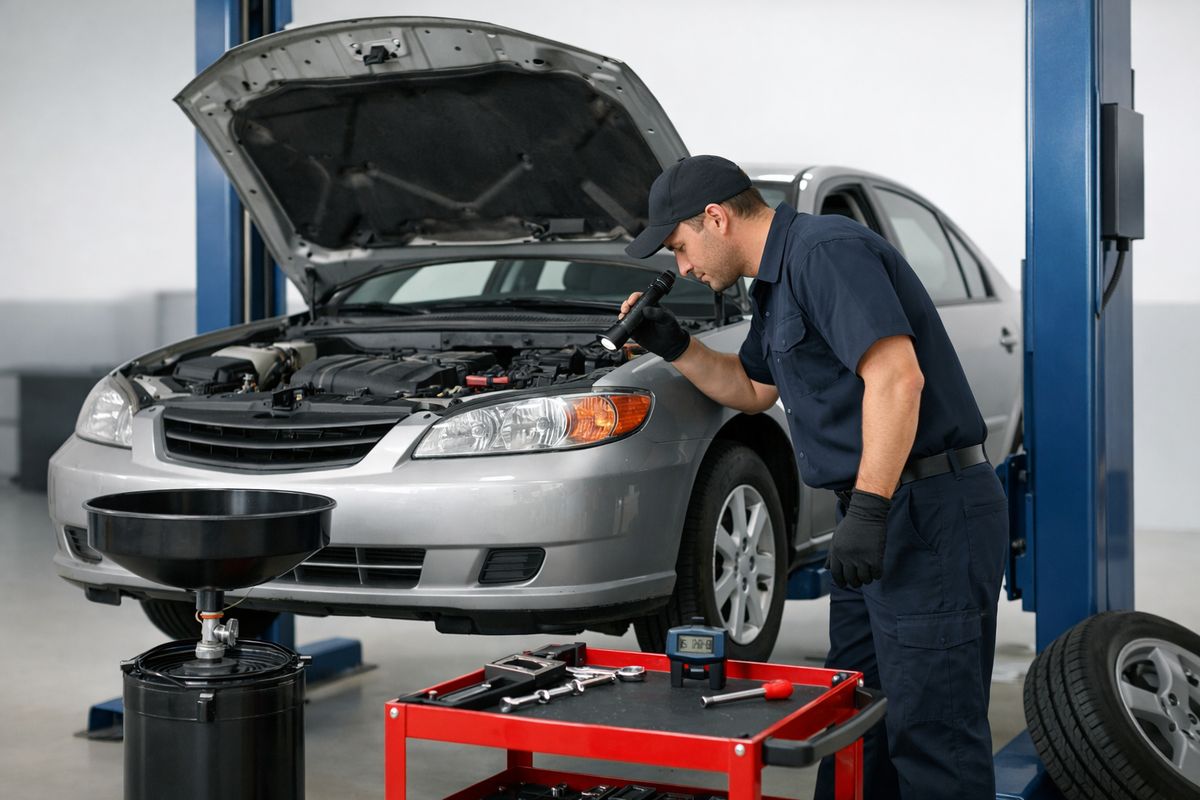
Why a pre-purchase inspection is worth it
This step is absolutely worth doing on almost any used car. Even a cheap inspection can save you from overpaying, help you avoid a safety problem, or give you hard numbers to negotiate with instead of vague worry.
A PPI changes the conversation. Without one, you are reacting to a seller’s story and your own guesswork. With one, you are looking at brake measurements, tire wear, fluid condition, scan results, and actual repair needs.
The risks of buying without one
A quick test drive can hide a lot. Worn brake pads may still stop the car for now. A small oil leak may not drip enough to leave a puddle during your visit. Freshly cleared warning lights can stay off just long enough to get through a showing.
Other common misses include bald inner tire edges, suspension wear that only shows up on rough roads, accident repairs masked by clean bodywork, and signs of neglect like old fluids, cheap mismatched tires, or cracked belts. None of that is rare. It is everyday used-car stuff.
When a PPI matters most
Some situations raise the stakes. Private-party sales deserve extra caution because there is usually less backup if something goes wrong. Older vehicles and higher-mileage cars can still be great buys, but only if maintenance kept up with age. Rebuilt-title cars, out-of-town purchases, and suspiciously great deals all deserve more scrutiny, not less.
Picture meeting a seller in a Vancouver parking lot on a rainy afternoon. The car looks shiny because everything looks shiny in the rain. That is exactly when it helps to pause and let a shop look underneath.
What a pre-purchase inspection checks before you buy
If you have never had a PPI done, “inspected” can sound vague. A real inspection is much more specific than that. A mechanic usually checks the car visually, scans for trouble codes, road-tests it, and, ideally, gets it on a lift.
Exterior, body, and signs of past damage
Body condition says a lot about a car’s history. A mechanic looks for paint mismatches, dents, rust bubbles, cracked lights, chipped glass, and panel gaps, meaning uneven spaces between body parts like the hood and fenders. Uneven gaps can point to past collision repair or poor fitment after body work.
Fresh paint on one area is not automatically a deal breaker. But if the front bumper shade is slightly off, the headlight mounts look newer than everything around them, and the hood gaps are uneven, that tells a story. Not always a terrible one, but a story worth understanding before you buy.
Tires, wheels, and brakes
Tires are one of the best honesty tests on a used car. Good tread depth matters, but wear pattern matters just as much. Uneven wear can point to bad alignment, bent suspension parts, or neglect. If one tire is new and the other three are near the end, that says something too.
Brake inspection usually includes pad life, rotor wear, and sometimes caliper condition. If pads are low or rotors are grooved, you are looking at near-term cost. If wear is oddly uneven side to side, the issue may go beyond basic maintenance.
Engine, transmission, and fluids
This is where most buyers get nervous, and for good reason. The mechanic looks for oil leaks, coolant leaks, cracked hoses, worn belts, weak battery condition, and anything that sounds wrong at idle or under load.
Fluids tell part of the story. Clean fluid does not guarantee a healthy car, but dirty or burnt-smelling fluid can be a red flag. Transmission behavior matters too. Hard shifts, slipping, delayed engagement, or shuddering deserve attention fast. A scan tool can also reveal stored or pending codes that have not lit the dash yet.
Suspension, steering, and underbody
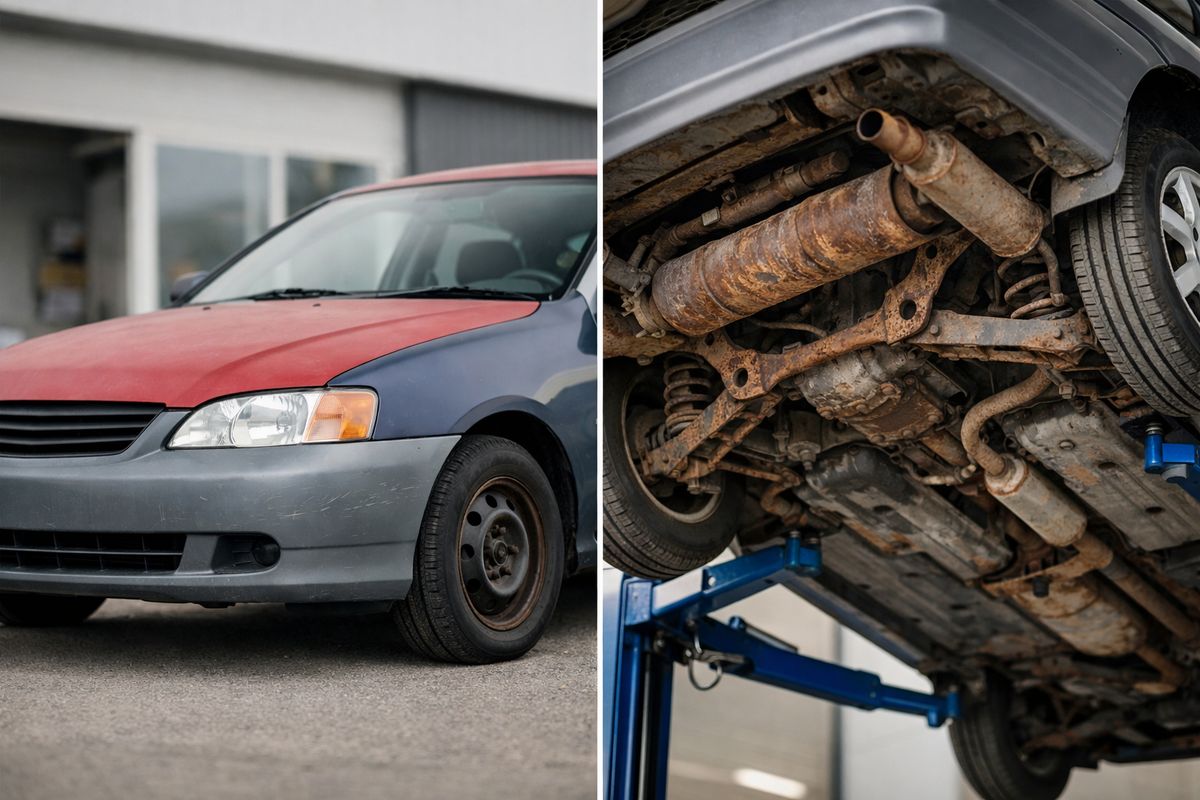
Suspension problems often hide in plain sight because you feel them only on certain roads or at certain speeds. On a lift, a mechanic can check shocks, struts, bushings, ball joints, tie rods, steering components, exhaust condition, and underbody rust.
Here’s the thing: some of the most expensive truths live underneath the car. Bent frame sections, fluid seepage, rust around mounting points, and worn joints are much easier to spot off the ground. That is why a lift matters.
Interior, electronics, and safety features
Daily-life stuff counts. You want the seat belts to latch properly, warning lights to work normally, windows and locks to operate, and the climate control to blow the right temperature. Backup cameras, parking sensors, infotainment screens, heated seats, and charging ports may not strand you, but fixing them can still get pricey.
Modern cars also hide a lot inside electronics. Faulty sensors, intermittent warning lights, and glitchy modules can turn a cheap-looking car into an annoying one fast.
Road test findings
A road test ties everything together. During the drive, a mechanic pays attention to pulling, vibrations, steering feel, brake response, acceleration, transmission behavior, engine response, wheel bearing noise, clunks over bumps, and how the car behaves at city and highway speeds.
A car can feel fine to you and still feel wrong to someone who drives problem cars all day. That difference is the whole value of the test.
What a pre-purchase inspection usually does not include
A PPI has limits, and knowing those limits keeps expectations realistic. Most inspections do not include dismantling parts, removing engine covers beyond basic access, or doing deep diagnostic teardown work. You are paying for evaluation, not surgery.
You also should not assume the inspection includes a full cosmetic grading, a guarantee of future reliability, or proof that every hidden issue has been found. Some shops do not include a compression test, leak-down test, or detailed EV battery health analysis unless you ask and pay extra.
That is normal. The goal is to uncover meaningful current issues, not predict the next three years with a crystal ball.
When to schedule the inspection
Book the inspection after you are seriously interested, but before you commit to anything. That means before signing, before paying a nonrefundable deposit, and before talking yourself into the car because you already imagined it in your driveway.
Timing matters because leverage disappears once the deal feels emotionally done.
Before you negotiate, not after
Get the report first. If the mechanic finds front brakes at 10 percent, tires with uneven wear, and a valve cover leak, your price discussion stops being fuzzy. Now you have a concrete repair list with actual dollar signs attached.
That makes negotiating calmer, not harsher. You are no longer saying, “Can you do better on the price?” You are saying, “This car needs these things.”
How to handle timing with a seller or dealer
Keep it simple. Ask for permission to have the car inspected and set a short window so the process does not drag. Most reasonable sellers will agree if the request is straightforward and organized.
If someone resists, gets slippery, or tries to rush you past the inspection, treat that as useful information. Pushback does not always mean the car is bad, but it definitely means you should slow down.
Where to get a pre-purchase inspection
The best inspection is the one done by a shop that is competent, independent, and familiar with the type of car you want. Convenience matters, but neutrality matters more.
Independent repair shop vs dealership vs mobile mechanic
An independent repair shop is often the sweet spot. It can feel more neutral, rates are usually reasonable, and many shops inspect all makes every day. A dealership can be useful for brand-specific models because factory-trained techs may know common weak points on that make. A mobile mechanic can be handy when the car cannot leave the lot or the seller wants a simpler setup.
Each option has tradeoffs. Mobile inspections may be less thorough if there is no lift. Dealerships may cost more. Independent shops vary, so reputation matters.
Choosing the right shop for the car
Some cars deserve a specialist. European luxury models, hybrids, EVs, trucks, and performance cars often have quirks that a general shop may miss. If the car is a BMW, a hybrid Toyota, or an electric Hyundai, a shop that sees those systems regularly is worth the effort.
The trick is matching the inspection to the vehicle’s complexity. A basic commuter sedan can usually go almost anywhere. A complicated luxury SUV should not.
How much a pre-purchase inspection costs
Most pre purchase inspections cost somewhere around $150 to $300, though pricing can climb for luxury vehicles, specialty shops, or deeper diagnostic work. Location, labor rates, vehicle size, and whether the inspection includes a scan and road test all affect cost.
That range can feel annoying when you have not even bought the car yet. Still, compared with the price of brakes, tires, suspension work, or a transmission problem, it is small money.
Who usually pays
You usually pay. That is normal because the inspection is protecting your money, not the seller’s. A seller who says, “You can inspect it if you want, but you cover it,” is not saying anything unusual.
Why the cost can save you far more
A modest inspection bill can stop you from overpaying by $1,500 or buying a car that needs $4,000 in catch-up work. Even when the car checks out, the report can still help you plan near-term maintenance and negotiate a fairer price.
Think of it like paying for a home inspection before buying a house, just with fewer square feet and more brake dust.
How to prepare for the inspection
A little prep makes the appointment smoother and the report more useful. It also helps you spot evasive behavior early.
What to ask the seller for ahead of time
Ask for the VIN, service records, title status, recall information, accident history report, and permission to take the car to a shop. Service records are especially useful because they show patterns, not just promises.
If the seller cannot produce much paperwork, that does not automatically kill the deal. But it does mean the inspection matters even more.
Questions to ask the mechanic
Go in with a few direct questions. Ask what needs immediate repair, what can wait, whether there is evidence of collision repair, and what the biggest ownership risks look like. One of the best questions is also the simplest: would this car make sense at this price?
That last question cuts through the noise.
How to read the inspection report without getting overwhelmed
Inspection reports can look worse than they are because mechanics write down everything worth noting. That does not mean every item is a crisis. Sort the findings into three buckets: safety issues, near-term repairs, and normal wear.
Safety issues come first. Think bad brakes, major tire problems, steering play, or serious structural rust. Near-term repairs are items you may need to handle soon, like tires at 4/32, a weak battery, or leaking shocks. Normal wear is exactly what it sounds like: used-car aging that comes with the territory.
Red flags that should make you walk away
Some findings are not worth trying to talk yourself around. Structural damage, severe rust, major transmission problems, flood signs, odometer inconsistencies, repeated warning-light history, and obvious long-term neglect belong in the walk-away bucket.
You are buying a car, not adopting a project out of guilt.
Problems you can use to negotiate instead
Other issues are manageable if the price reflects them. Worn tires, a battery near the end, brakes due soon, fluid services, minor leaks, and cosmetic flaws are common negotiation points. The trick is knowing the difference between annoying and deal-breaking.
Used cars are not museum pieces. A good PPI helps you pay for reality, not fantasy.
Special cases: PPIs for hybrids, EVs, and older cars
Not every used car should be inspected the same way. That is where a lot of generic advice falls short.
Hybrid and EV inspection differences
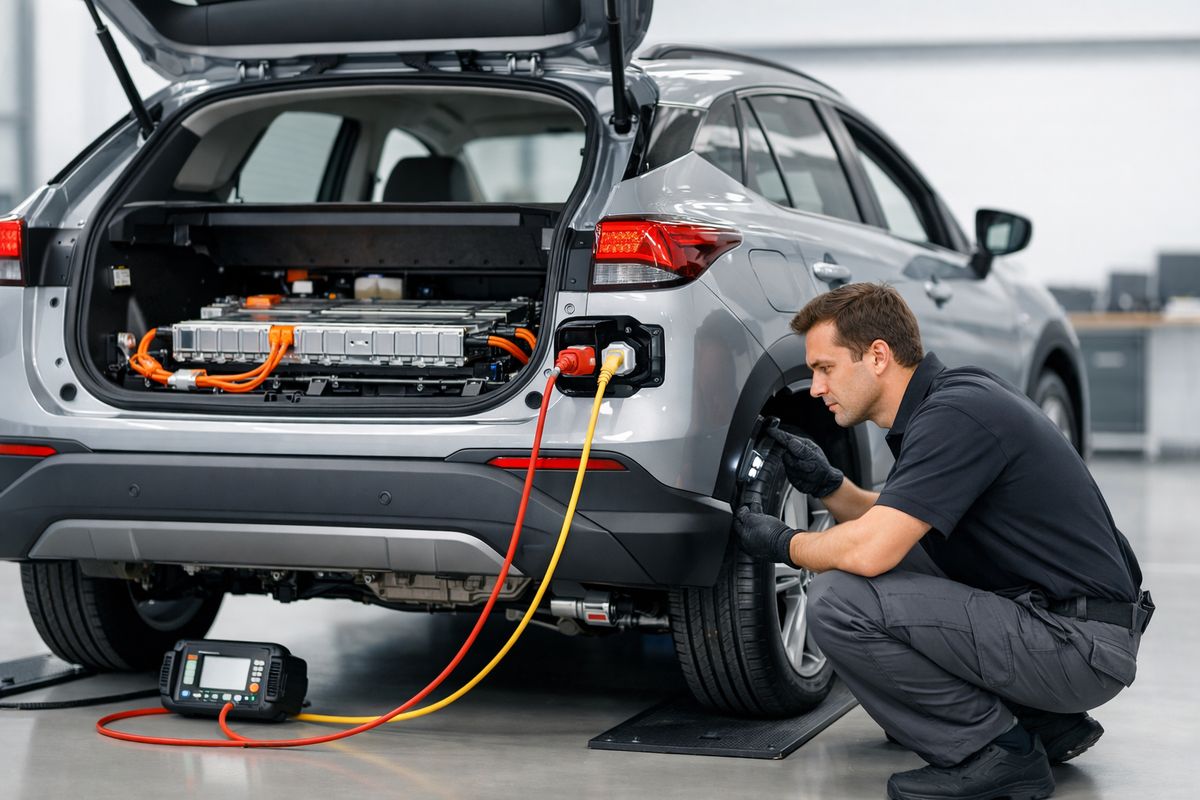
Hybrids and EVs need extra attention in a few areas: battery health, charging function, cooling systems for the battery or power electronics, and any warning codes related to the electric drivetrain. Regenerative braking can also change normal brake wear patterns, so a shop needs to understand what “normal” looks like on that model.
If a shop does not regularly work on hybrids or EVs, ask for one that does. Electric drivetrains are not mysterious, but they are different.
Older used cars and high-mileage vehicles
Age by itself is not the problem. Deferred maintenance is. An older car with consistent service can be a better buy than a newer one that missed oil changes and wore cheap tires.
On older or high-mileage vehicles, pay close attention to rubber parts, leaks, rust, suspension wear, cooling system condition, and signs that maintenance has been postponed for too long. Also look at the asking price honestly. A cheaper car is not really cheaper if it needs immediate catch-up repairs.
Common mistakes to avoid
Most used-car mistakes are not dramatic. They are small rushed decisions that stack up.
Skipping the inspection because the car “drives fine”
A smooth short drive proves very little. Plenty of cars feel fine for 15 minutes and still need brakes, tires, suspension work, or leak repair. Driving fine is not the same as being healthy.
Using the seller’s mechanic only
If the inspection comes from the same person who services the seller’s cars, independence gets fuzzy. That does not mean dishonesty every time. It just means the cleanest setup is your own neutral inspector.
You want fresh eyes.
Treating every issue like a deal breaker
Used cars have wear. That is normal. The goal is not to find a time capsule. The goal is to understand condition, cost, and risk well enough to decide calmly.
A simple pre-purchase inspection checklist for your next used car
When you find a used car you actually like, slow down before you get attached to the paint color or the price. Confirm that the seller allows an inspection. Book an independent shop. Ask for the VIN, records, and history report. Get the car checked before you negotiate or sign anything. Then sort the report into red flags, near-term repairs, and normal wear.
If the findings are minor, use them to negotiate. If the findings are serious, walk away without guilt. Try this one step on the next car you consider, and the whole buying process gets clearer fast.
Frequently asked questions
Is a pre purchase inspection worth it on a cheap used car?
Yes. In some ways it matters even more on a cheap car because there is less room in the budget for surprise repairs. Spending a little upfront can stop you from buying the wrong cheap car.
How long does a pre purchase inspection take?
Most inspections take about one to two hours, depending on the shop, the vehicle, and how detailed the process is. If the shop includes a lift inspection and road test, expect a little more time.
Can a dealership car still need a pre purchase inspection?
Absolutely. A dealer lot is not a guarantee that the car is problem-free. A PPI gives you an independent opinion before you rely on the dealership’s checklist.
What if the seller refuses an inspection?
That is a warning sign. Some sellers have time constraints, but flat refusal usually means you should move on. There are too many used cars out there to gamble on the defensive one.
Does a pre purchase inspection include a vehicle history report?
Usually no. A shop inspects the physical car. A history report is separate, and you should check both because each catches different things.
Can a pre purchase inspection help lower the price?
Yes. A report gives you specific findings to point to, like worn brakes or tires due soon. That makes negotiation more concrete and more reasonable.