Table of Contents
- What Makes a Used Car Reliable
- How to Inspect a Used Car Before Buying
- Vehicle Types That Hold Value
- Understanding Used Car Financing Options
- The Used Car Trade-In Appraisal Process
- Total Cost of Ownership Beyond the Purchase Price
- Dealer vs. Private Seller: Where to Buy
- Red Flags and Common Mistakes to Avoid
- Frequently Asked Questions
Last Updated: October 4, 2026
What Makes a Used Car Reliable
A reliable used car consistently performs as expected with minimal unexpected repairs. Reliability depends on three factors: the vehicle's original engineering quality, previous owner maintenance, and documented history.
Some models hold up exceptionally well after 5-10 years, while others develop costly problems within months. The difference comes down to manufacturer reputation, maintenance records, and driving history. When shopping for reliable used cars under 20000, seek vehicles with proven track records of longevity.
At Variety Auto, our curated inventory is selected based on reliability metrics and transparent history reports to reduce the risk of hidden mechanical issues.
Models with simpler mechanical designs last longer than those packed with complex electronics. Japanese manufacturers like Honda, Toyota, and Mazda have strong durability reputations. European brands vary widely in reliability and repair costs. Domestic options have improved significantly.
Match your budget to a vehicle type known for longevity. A ten-year-old Honda Civic with 120,000 kilometres is likely more reliable than a five-year-old luxury sedan with unknown maintenance history.
How to Inspect a Used Car Before Buying
A pre-purchase inspection (PPI) by a certified mechanic is the most important step in buying a reliable used car under $20,000. It identifies hidden problems that cost thousands to repair. Budget $100-$200 for this essential investment.
What a Professional Mechanic Checks
A certified mechanic uses diagnostic scanners to read fault codes from the vehicle's onboard computer, revealing issues with the engine, transmission, emissions system, and electronics that may not be immediately apparent.
Mechanics perform compression tests to measure piston, ring, and valve health. They inspect transmission fluid for discoloration or burnt smell, and check the coolant system for leaks and proper concentration.
Mechanics examine suspension and steering components for wear, inspect brake lines for corrosion, and check the exhaust system for rust-through or leaks.
Visual and Physical Checks You Can Perform
Exterior inspection: Look for rust around wheel wells, undercarriage, door edges, and roof seams. Surface rust is cosmetic; rust through metal indicates structural corrosion. Check paint consistency for mismatched colors or overspray suggesting accidents. Examine door, hood, and trunk alignment for frame damage.
Interior inspection: Smell for musty or moldy odors indicating water damage. Look for water stains on headliner, carpet, or door panels. Check odometer against service records for unexplained mileage jumps. Inspect seats and carpets for wear consistent with stated mileage.
Under the hood: Start the engine cold and listen for grinding, clicking, or knocking sounds. The engine should settle into a steady idle; rough idling indicates fuel injector or ignition problems. Check fluid levels: oil should be amber to brown (not black or milky), coolant the proper color, brake fluid clear to slightly amber, and transmission fluid red or pink (not brown or burnt-smelling).
Examine hoses and belts for cracks or hardening. Look for obvious leaks under the engine; small drips are normal, but puddles indicate serious leaks.
Test drive assessment: Drive on varied terrain. Brakes should be firm and responsive, not soft or spongy. Grinding sounds indicate worn pads or rotors. Transmissions should shift smoothly without hesitation, clunking, or delay.
Listen for clunking sounds when turning or hitting bumps, indicating worn suspension. Check steering for responsiveness and centering. Test air conditioning, heating, and all electrical systems.
Vehicle History and Documentation
Request a vehicle history report from Carfax or similar service showing accident history, insurance claims, title status, and ownership transfers. Multiple ownership transfers in short timeframes or title issues raise serious concerns.
Ask the seller for service records. Regular oil changes and scheduled maintenance indicate proper care. Gaps in service history suggest neglect or undisclosed repairs.
Verify the title is clear and in the seller's name. A salvage title means the vehicle was previously written off by an insurance company due to damage exceeding 70-80% of its value. A branded title indicates structural damage, flood damage, or other serious issues. These vehicles are riskier and typically worth 30-50% less than equivalent vehicles with clear titles.
Match the Vehicle Identification Number (VIN) across all documents: the title, service records, and the vehicle itself (stamped on the driver's side door jamb and under the windshield). Mismatches are a serious warning sign of fraud or theft.
Red Flags That Warrant Walking Away
Do not proceed if the seller refuses to provide a history report or service records. Do not buy a vehicle with multiple owners in the past two years; rapid ownership changes suggest the car had problems. Do not ignore accident history unless a mechanic has confirmed there is no structural damage. Do not buy a vehicle with a salvage or branded title unless you're buying it as a project car and understand the risks. Do not proceed if the test drive reveals transmission hesitation, brake problems, or suspension clunking, these are expensive repairs.
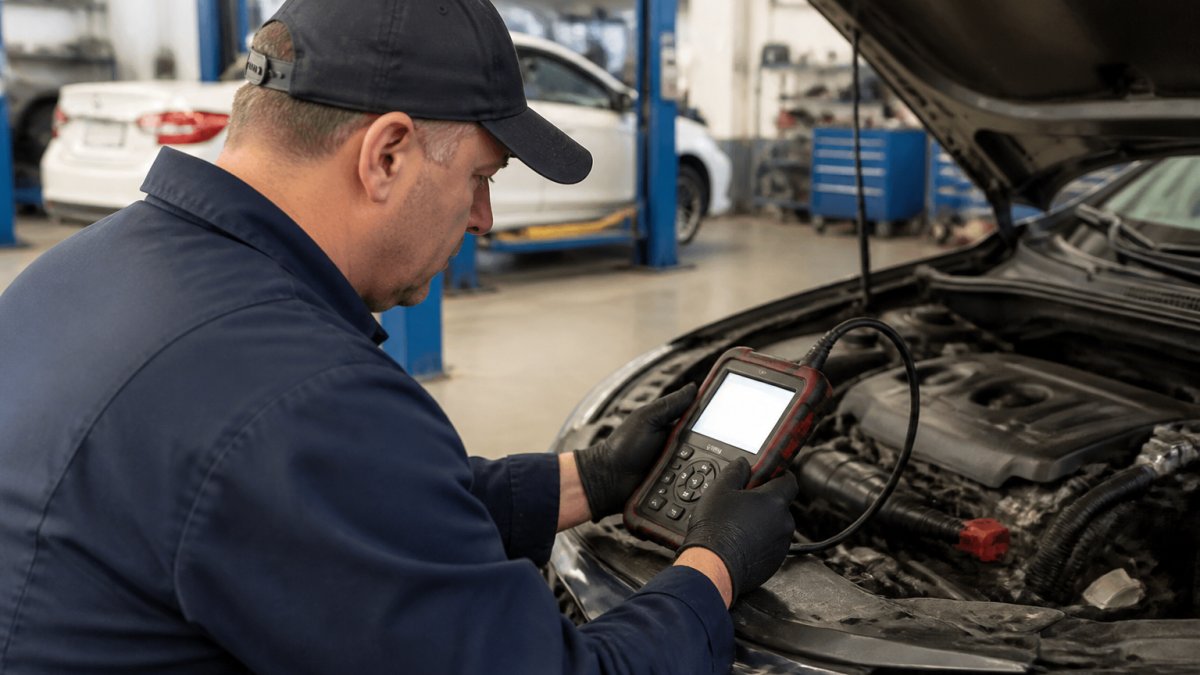 Certified mechanic using a diagnostic scanner on a used sedan's onboard computer system, with fault codes displayed on the scanner screen in a professional garage setting
Vehicle Types That Hold Value
Sedans remain the most reliable category for buyers on a budget. Compact sedans like the Honda Civic and Toyota Corolla are affordable to maintain and hold value well. Mid-size sedans offer more interior space and comfort at reasonable cost.
Hatchbacks are increasingly popular because they combine sedan reliability with cargo flexibility. They're practical for urban driving and typically cheaper to insure than larger vehicles.
SUVs and crossovers command premium prices even used, but they offer space and all-wheel drive capability. However, they consume more fuel and cost more to maintain. If you need the extra space, a used crossover can be worthwhile, just factor in higher fuel and insurance costs.
Trucks are valuable if you actually use them for hauling. Otherwise, they're expensive to own and operate. Pickup trucks hold value well but demand premium prices, even used.
Avoid vehicles with complex technology unless you're confident in repair costs. Some luxury brands have excellent reliability but terrible maintenance expenses. A ten-year-old luxury sedan might cost more to repair than a newer mainstream vehicle.
Understanding Used Car Financing Options
Dealer Financing vs. Bank Loans
Dealer financing is convenient. You complete the paperwork at the dealership and drive away the same day. The dealership handles the lending directly or arranges financing through a partner lender. The catch is that dealer rates are often higher than what you'd get from a bank.
Bank loans typically offer lower interest rates, especially if you have good credit. You secure financing before shopping, which gives you a clear budget and negotiating power. You can shop around between banks and credit unions to find the best rate. The downside is that the approval process takes longer.
Credit unions often offer competitive rates and work with members who have imperfect credit. They're worth exploring if you're a member or eligible to join.
At Variety Auto, our online finance application simplifies the process. You can complete your application from home, and our team handles the approval quickly.
Down Payments and Monthly Payments
A larger down payment reduces your monthly payments and the total interest you'll pay. A 20% down payment is standard and helps you avoid owing more than the car is worth. If you're putting down less than 20%, expect higher interest rates and longer loan terms.
Monthly payments depend on the purchase price, down payment, interest rate, and loan term. A five-year loan is common for used cars. Longer terms mean lower monthly payments but higher total interest cost. Shorter terms cost more monthly but save money overall.
Calculate the total cost of ownership, not just the monthly payment. A slightly higher monthly payment with a shorter term often costs less overall than a longer loan with lower payments.
The Used Car Trade-In Appraisal Process
Trading in your current vehicle simplifies the buying process. You don't have to sell privately, and the dealership handles all paperwork. The trade-in value is deducted from your purchase price, reducing the amount you need to finance.
Trade-in values are typically lower than private sale prices because dealers assume risk and must resell the vehicle. Dealers use market data, vehicle condition, mileage, and demand to calculate value. The appraisal process takes 15-30 minutes and includes a visual inspection similar to the one you'd do as a buyer.
Variety Auto provides fair, transparent trade-in valuations. Our team assesses your vehicle's condition and provides a clear appraisal value.
Get your vehicle detailed before the appraisal. A clean car presents better and may result in a slightly higher valuation. Fix obvious issues like broken trim or burned-out bulbs, they signal neglect and reduce value.
Total Cost of Ownership Beyond the Purchase Price
Buyers shopping for reliable used cars under $20,000 often focus only on the purchase price, but total cost of ownership, insurance, registration, maintenance, and repairs, determines whether a vehicle is truly affordable. A $15,000 car that costs $3,000 annually to maintain is more expensive than a $18,000 car that costs $800 annually.
Maintenance and Repair Budgets for High-Mileage Vehicles
Mileage is the primary driver of maintenance costs. A vehicle with 80,000 kilometres will require fewer repairs than one with 160,000 kilometres. Budget accordingly based on the vehicle's age and mileage.
Routine maintenance (annual costs):
- Oil and filter changes: $50-$150 per service, typically every 5,000-10,000 kilometres (3-4 times annually for high-mileage vehicles)
- Tire rotation and balance: $80-$150 per service, typically twice annually
- Air filter replacement: $30-$80, typically every 15,000-30,000 kilometres
- Cabin air filter replacement: $30-$80, typically every 12,000-15,000 kilometres
- Coolant flush: $100-$200, typically every 2-3 years
- Transmission fluid service: $150-$300, typically every 60,000-100,000 kilometres
For a high-mileage vehicle (120,000+ kilometres), budget $1,200-$1,800 annually for routine maintenance. For a lower-mileage vehicle (80,000-120,000 kilometres), budget $800-$1,200 annually.
Major repairs (likely within 5 years of ownership):
- Brake pads and rotors: $400-$800 per axle (front or rear)
- Battery replacement: $150-$300
- Alternator replacement: $400-$800
- Water pump replacement: $300-$600
- Serpentine belt replacement: $200-$400
- Suspension components (struts, shocks, control arms): $600-$1,500 per component
- Transmission fluid leak repair: $500-$1,500
- Catalytic converter replacement: $800-$2,000
High-mileage vehicles are more likely to need these repairs sooner. A vehicle with 150,000 kilometres may need brake work, battery replacement, and suspension service within the first year of ownership. A vehicle with 100,000 kilometres may not need these repairs for 2-3 years.
Transmission and engine concerns: Transmission repairs are the most expensive maintenance item. Transmission fluid leaks, slipping gears, or delayed engagement can cost $1,500-$4,000 to repair. Automatic transmissions are more expensive to repair than manual transmissions. If a vehicle has transmission issues, walk away unless you're prepared for a $3,000+ repair bill.
Engine problems are equally costly. Head gasket failure, which causes coolant to mix with oil, costs $1,000-$2,500 to repair. Timing chain or belt replacement costs $800-$2,000. These repairs are rare in well-maintained vehicles but common in neglected ones.
Insurance and Registration Costs
Insurance is a major ongoing expense and varies significantly by vehicle. Rates depend on the vehicle's age, value, safety rating, repair costs, and theft risk. A reliable used sedan typically costs less to insure than a luxury vehicle or sports car in the same price range.
Get insurance quotes before buying. Contact multiple insurers (major providers include TD Insurance, Intact, Desjardins, and CAA) to compare rates for the specific vehicle you're considering. Insurance quotes are free and take 10-15 minutes. Some vehicles are significantly cheaper to insure than others at the same price point.
For example, a 2018 Honda Civic might cost $120-$150 monthly for comprehensive coverage, while a 2018 Dodge Charger might cost $180-$220 monthly for the same coverage. The difference is repair costs and theft risk.
Registration and licensing costs vary by province. In most provinces, registration fees are based on the vehicle's value and weight. Budget $200-$400 annually for registration renewal. Some provinces charge additional fees for safety inspections or emissions testing.
Fuel Efficiency and Operating Costs
Fuel consumption directly impacts annual operating costs. A vehicle that averages 8 litres per 100 kilometres costs significantly more to operate than one that averages 6 litres per 100 kilometres.
Calculate annual fuel costs based on your driving. If you drive 20,000 kilometres annually:
- At 6 L/100 km: 1,200 litres annually × $1.50 per litre = $1,800 annually
- At 8 L/100 km: 1,600 litres annually × $1.50 per litre = $2,400 annually
That's a $600 annual difference. Over five years of ownership, fuel efficiency differences add up to $3,000 or more. Smaller, lighter vehicles (compact sedans, hatchbacks) typically achieve better fuel economy than larger vehicles (SUVs, trucks). If you don't need the extra space, a fuel-efficient sedan saves money over time.
Total Cost of Ownership Calculation
Before buying, calculate the total cost of ownership for the specific vehicle you're considering:
Annual costs:
- Insurance: $1,200-$1,800
- Registration: $200-$400
- Routine maintenance: $800-$1,800
- Fuel (based on 20,000 km annually): $1,500-$2,500
- Total annual cost: $3,700-$6,500
Over five years, a vehicle costs $18,500-$32,500 to own and operate, not including the purchase price. A cheaper purchase price doesn't always mean lower total cost. A $16,000 vehicle that costs $5,000 annually is more expensive over five years than an $18,000 vehicle that costs $3,500 annually.
Emergency Repair Fund
Set aside an emergency repair fund for unexpected problems. Even reliable vehicles need unexpected repairs. Budget $100-$150 monthly ($1,200-$1,800 annually) for an emergency fund. This cushion prevents financial stress when a repair bill arrives.
High-mileage vehicles (120,000+ kilometres) should have a larger emergency fund because repairs are more likely. Lower-mileage vehicles (80,000-100,000 kilometres) can have a smaller fund.
Dealer vs. Private Seller: Where to Buy
Buying from a dealer offers several protections. Dealers typically provide some form of warranty, however limited. They handle paperwork and registration. If something goes wrong immediately, you have recourse. Dealer inventory is usually inspected and detailed, presenting the vehicle in its best condition.
The trade-off is price. Dealers mark up vehicles to cover overhead and profit. You'll pay more at a dealership than buying the same car privately.
Private sellers offer lower prices because there's no middleman. You might find a well-maintained vehicle at a genuine bargain. The risk is that private sellers have no obligation to disclose problems, and you have no recourse if something breaks the day after purchase.
Private sales require more due diligence. You must inspect thoroughly, verify the history report, and ideally have a pre-purchase inspection (PPI) performed by a trusted mechanic. A PPI costs $100-200 but can save you thousands by identifying hidden problems before you buy.
Variety Auto bridges this gap. We offer dealer convenience with transparent pricing and fair valuations. Our curated inventory means you're shopping vehicles that have been properly assessed.
Red Flags and Common Mistakes to Avoid
Never buy a vehicle without reviewing its history report. A clean title and service records are non-negotiable. If the seller refuses to provide them, walk away.
Avoid vehicles with multiple owners in a short timeframe. Rapid ownership changes suggest the car had problems that drove previous owners away.
Don't skip the test drive. Drive the vehicle in various conditions and pay attention to how it feels. Your instincts matter. If something feels off, trust that feeling.
Never buy based on price alone. The cheapest option often has hidden problems. A slightly higher-priced vehicle with better history and condition is usually the smarter choice.
Avoid vehicles with accident history unless you've had a mechanic inspect for structural damage. Even minor accidents can affect long-term reliability.
Don't finance longer than necessary. A seven-year loan on a used car means you're paying interest long after the vehicle's warranty and reliability window have closed.
Resist pressure to buy immediately. Take time to compare options, get insurance quotes, and think through your decision. Good vehicles are available constantly, there's no rush.
Frequently Asked Questions
What should I check when buying a used car from a private seller versus a dealership?
Private sellers typically offer lower prices but provide no warranty or inspection guarantees. Dealerships often offer certified pre-owned vehicles with warranty coverage and documented maintenance records. With a private seller, request the complete vehicle history report, service records, and consider paying for an independent pre-purchase inspection. Dealerships should disclose any known issues and provide transparency about the vehicle's condition. Always verify the VIN and title status regardless of source.
How does the used car trade-in appraisal process work?
A trade-in appraisal evaluates your current vehicle's condition, mileage, market value, and service history. The appraiser inspects the exterior, interior, engine, and transmission, then cross-references current market data to determine fair value. This amount is credited toward your new purchase, reducing the financing amount needed. Transparent dealers will explain their evaluation criteria and show you comparable vehicles to justify the offer. Get an independent appraisal estimate beforehand to compare offers.
What financing options are available for reliable used cars under $20,000?
Used car financing options include dealer financing, bank loans, and credit union loans. Dealer financing offers convenience but may carry higher interest rates. Bank and credit union loans typically offer competitive rates if you have good credit. Some lenders specialize in subprime financing for buyers with lower credit scores. Compare down payment requirements, monthly payment terms, and total interest costs across options. Pre-approval helps you understand your budget before shopping.
What are the most reliable used car brands for under $20,000?
Brands known for reliability in the used market under $20,000 include Toyota, Honda, Mazda, and Hyundai. These manufacturers typically have lower maintenance costs, strong parts availability, and good resale value. Look for models with consistent safety ratings, positive reliability reviews, and strong track records for durability. Check vehicle history reports and maintenance records to confirm the specific car was well-maintained. Certified pre-owned versions of these brands offer added warranty protection.
Finding reliable used cars under 20000 requires patience, inspection, and honest assessment of what you need. The right vehicle combines manufacturer reputation, documented maintenance history, and reasonable pricing. Variety Auto's online inventory and transparent financing make this process straightforward. See our inventory today and find the reliable vehicle that fits your budget and lifestyle.