
Table of Contents
- What You'll Need Before You Trade In Your Car
- Documents Needed to Sell a Car
- Understanding Car Trade-In Value
- Private Car Sale vs. Trade-In: Which Option Works Best
- How Long Does a Car Trade-In Appraisal Take
- Step-by-Step: How to Request a Vehicle Quote
- Preparing Your Vehicle for the Appraisal
- Cash Offers and Payment Options
- Common Mistakes to Avoid When Trading In Your Car
- Frequently Asked Questions
Last Updated: October 7, 2026
What You'll Need Before You Trade In Your Car
Before you start the process of getting a vehicle quote for your sell my car trade-in, gather the essentials. You'll need your vehicle's keys, the original ownership documents, and any service records you have on hand. If you've lost paperwork, don't worry, most dealerships can look up your vehicle history using your Vehicle Identification Number (VIN).
Your vehicle's condition matters more than you might think. Take note of any mechanical issues, dents, or interior wear. Be honest about these details when you request a quote, the appraisal will uncover them anyway, and transparency builds trust from the start.
At Variety Auto, we recommend having a clear picture of your vehicle's current state before you contact us. This speeds up the appraisal process and helps us deliver an accurate offer. Knowing your car's mileage, maintenance history, and any accident history upfront means fewer surprises when we evaluate your trade-in.
Documents Needed to Sell a Car
Paperwork is where most trade-ins stall, and it's the part the ranking pages skip almost entirely. Here is a practical checklist for a trade-in or sale in British Columbia, in the order you'll actually need it.
Before the appraisal
- Vehicle registration. Confirms you are the registered owner and that the vehicle is in good standing. Bring the current copy, not a photocopy.
- Government-issued photo ID. Required to sign the transfer and to satisfy identity verification.
- Keys, including spares and fobs. Missing fobs are a real cost to the dealer and can be deducted from an offer.
- Service records. Not mandatory, but oil change receipts, tire rotations, and major repair invoices support a higher appraisal.
- Loan or lease documentation. If money is still owed, bring the lender's name, the account number, and a current payout figure. The dealer needs this to pay the lender directly out of your trade credit.
The transfer itself
In British Columbia, transferring ownership of a vehicle requires a completed transfer form signed by the registered owner, with the purchaser's details recorded. The form captures the vehicle's description, the odometer reading at the time of transfer, the sale price or trade-in value, and both parties' signatures. The odometer declaration matters, an inaccurate reading can invalidate the transfer and expose the seller to liability.
If the vehicle is subject to a lien, the transfer cannot be completed cleanly until that lien is discharged. This is why the payout figure matters: the dealer settles the loan, obtains the lien release, and only then can ownership pass free and clear. If you're selling privately instead, you'll need to obtain the lien release yourself before the buyer can register the vehicle.
Plates and insurance
Your plates do not automatically transfer with the vehicle. In a trade-in, the dealer will typically handle the plate return or transfer as part of the transaction, but confirm this in writing so you aren't left holding plates registered to a vehicle you no longer own. Your insurance policy should be updated or cancelled effective the date of transfer, leaving coverage running on a vehicle you've sold creates both a cost and a liability exposure.
If you're buying a replacement vehicle from the same dealer, the new policy and registration are usually arranged on-site at the same appointment. If you're trading in without buying, you'll need to notify your insurer directly.
Tax and receipt documents
Keep the signed transfer form and your copy of the bill of sale. These are your proof of the transaction date and value, which matters for tax filing and for any later dispute. If the trade-in credit is applied against a replacement vehicle, the tax is calculated on the difference, the bill of sale should show the trade-in value separately so the offset is documented.
If you've lost the paperwork
A missing registration is recoverable. Most dealers can verify vehicle history using the Vehicle Identification Number, and replacement ownership documents can be requested from the provincial issuing office. Start this process before your appraisal appointment rather than on the day, it is the single most common reason a same-day trade-in turns into a second visit.
Consumer protection guidelines for vehicle sales set out the disclosure obligations that apply to vehicle sales in the province, and they're worth a read before you sign anything.
Understanding Car Trade-In Value
Your car's trade-in value depends on four primary factors: make and model, year, mileage, and overall condition. A well-maintained 2020 sedan with 60,000 kilometers will appraise higher than the same model with 120,000 kilometers. The difference can be substantial.
Market demand affects value too. Popular models hold their value better than niche vehicles. A common sedan will appraise higher than an unusual sports car, even if both are the same age and mileage. Dealerships know what sells quickly in the local market.
Accident history significantly impacts your offer. A vehicle with a clean history will receive a higher appraisal than one with previous damage, even if repairs were completed professionally. When you request a vehicle quote, the dealership will pull the accident history report automatically.
The condition of your vehicle's exterior and interior matters during the appraisal. Rust, dents, interior stains, and worn upholstery all reduce value. A fresh detail before your appraisal won't dramatically change the offer, but it shows you've cared for the vehicle.
Private Car Sale vs. Trade-In: Which Option Works Best
The keyword that brought you here contains two ideas that pull in opposite directions: selling your car outright, and trading it in. Most pages only pitch one of them. A neutral comparison of all three realistic routes, private sale, dealership trade-in, and instant cash buyout, is the fastest way to decide which one actually puts more money in your pocket for the effort involved.
The three routes, side by side
Private sale. You advertise the vehicle, field inquiries, arrange viewings and test drives, allow a pre-purchase inspection, and complete the transfer yourself. You capture the retail end of the market rather than the wholesale end, so the headline number is usually the highest of the three. The cost is time: weeks of listing, no-shows, lowball offers, and the risk of a payment that doesn't clear.
Dealership trade-in. You bring the vehicle to a dealer, receive a written appraisal, and apply that credit against a replacement vehicle purchased from the same dealer. The dealer absorbs reconditioning, storage, and resale risk, which is why the offer sits below private retail. In exchange you get a single appointment, the paperwork handled for you, and, in most cases, a reduction in the taxable amount on your replacement vehicle, because the trade-in value is subtracted before tax is calculated. That tax treatment is the detail most private-sale comparisons leave out, and on a higher-value vehicle it can narrow the gap considerably.
Instant cash buyout. A buyer purchases the vehicle outright, with no requirement that you buy anything from them. This is the model most of the pages ranking for this query actually run. It suits sellers who want the vehicle gone without a replacement purchase, but you give up the trade-in tax offset and you are typically offered wholesale value.
How to choose without guessing
Work through four questions in order:
- Are you buying a replacement vehicle? If yes, a trade-in is usually the stronger financial play because of the tax offset and because you avoid a gap between selling and buying.
- How much time do you have? A private sale can take weeks. A trade-in or buyout can close in a day.
- What condition is the vehicle in? Private buyers discount heavily for mechanical problems and cosmetic damage. Dealers and buyout services price that risk in as well, but they can absorb it through their reconditioning channels.
- Is there an outstanding loan? A trade-in lets the dealer pay your lender directly out of the trade credit. A private sale means you must clear the lien before you can transfer clean ownership, which adds a step most sellers underestimate.
A realistic way to compare the numbers
Don't compare the private-sale asking price against the trade-in offer. Compare what you actually keep:
- Private sale: sale price, minus advertising costs, minus any safety or repair work a buyer demands, minus your time.
- Trade-in: trade-in credit, plus the tax saving on your replacement vehicle, minus nothing else.
- Buyout: cash offer, minus the tax saving you gave up if you were also buying a car.
Run those three figures and the "obvious" answer often changes. A trade-in that looks $2,000 light on the sticker can be within a few hundred dollars of a private sale once tax and repair demands are counted.
If you're leaning toward a trade-in, the next section covers exactly what the appraisal involves and how long to budget for it.
How Long Does a Car Trade-In Appraisal Take
A typical car trade-in appraisal takes 30 to 60 minutes from start to finish. The appraiser inspects the exterior, checks the interior condition, reviews the service history, and test drives the vehicle. This thorough evaluation ensures an accurate offer.
The inspection itself usually takes 20 to 30 minutes. The appraiser walks around the vehicle, notes any damage, checks the tires and brakes, and examines the engine bay. They'll also scan the odometer reading and verify the VIN against your ownership documents.
After the physical inspection, the appraiser enters the vehicle's information into their system. They pull the accident history, check market values for your specific make and model, and calculate a fair offer. This data entry and calculation phase typically takes another 15 to 20 minutes.
Once the offer is complete, you'll receive a written quote. At Variety Auto, we present the offer clearly and answer any questions you have. If you decide to accept, you can move forward with the trade-in that same day. If you want to think about it, you can take the offer home and decide later.
Step-by-Step: How to Request a Vehicle Quote
Requesting a vehicle quote is straightforward. Start by gathering your vehicle's information: the year, make, model, mileage, and condition. You'll also need your VIN, which appears on your registration and on the driver's side of your windshield.
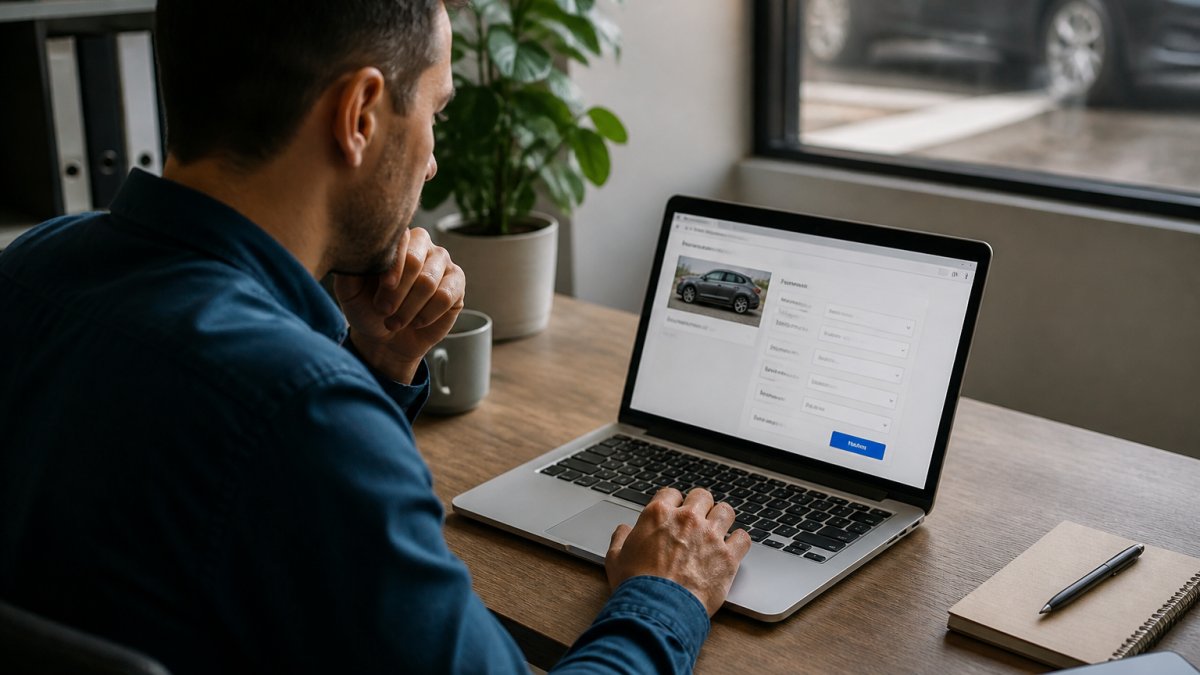 Professional sitting at desk with laptop, reviewing vehicle information and filling out an online trade-in form on the screen, natural office lighting
Visit the Variety Auto website and navigate to the trade-in appraisal section. You'll complete an online form that asks for your vehicle's details. Be as accurate as possible, the more specific your information, the closer the initial quote will be to the final appraisal offer.
After submitting your information, you'll receive an instant preliminary quote. This gives you a ballpark figure for what your vehicle might be worth. Keep in mind this is an estimate based on the data you provided. The final offer may differ slightly once the appraiser inspects the vehicle in person.
Next, schedule an appraisal appointment. Variety Auto offers flexible scheduling to fit your calendar. You can book online or call to arrange a time that works best for you. Most appointments can be scheduled within a few days.
On the day of your appraisal, arrive with your vehicle keys, registration, and ownership documents. The appraiser will conduct the inspection, and you'll receive your final written offer within the hour. If you accept, you can often finalize the trade-in the same day.
Preparing Your Vehicle for the Appraisal
Preparing your vehicle for appraisal doesn't require expensive repairs, but cleanliness matters. Wash the exterior thoroughly and clean the interior completely. Remove personal items, trash, and clutter. A clean vehicle signals that you've maintained it properly.
Check your fluid levels before the appraisal. Top off the windshield washer fluid, engine oil, and coolant. These simple steps show the appraiser that you've been attentive to basic maintenance. A vehicle that's been neglected mechanically will receive a lower offer.
Address any obvious mechanical issues if you can do so affordably. Burned-out brake lights, cracked windshields, and flat tires are easy fixes that improve your appraisal value. However, don't invest in major repairs, the appraiser will factor repair costs into their offer anyway.
Gather your service records and place them where you can easily hand them to the appraiser. Records of oil changes, tire rotations, brake service, and other maintenance demonstrate responsible ownership. These documents can add value to your trade-in offer.
Cash Offers and Payment Options
When you accept a trade-in offer, the dealership typically applies that credit directly toward your next vehicle purchase. If you're buying a car from Variety Auto, your trade-in value reduces the price of the new vehicle. This simplifies financing because you're working with a lower overall amount.
If the trade-in value exceeds the price of your replacement vehicle, you'll receive the difference as cash. This payout can be applied to your down payment, used to pay down your loan, or taken as cash. Discuss payment options with the dealership to understand what works best for your situation.
The timeline for receiving your trade-in credit depends on the transaction type. If you're purchasing another vehicle from Variety Auto, the credit is applied immediately. If you're only trading in without buying, the dealership processes payment within a few business days.
Payment methods vary. Most dealerships offer check, direct deposit, or credit toward your purchase. Ask about the specific options available when you finalize your trade-in. At Variety Auto, we work with you to choose the payment method that suits your needs.
Common Mistakes to Avoid When Trading In Your Car
One of the biggest mistakes is accepting the first offer without shopping around. Different dealerships appraise vehicles differently based on their inventory needs and market position. Getting multiple quotes takes time but often results in a better deal.
Another common error is not disclosing known mechanical issues. When you hide problems, the appraiser discovers them during inspection and reduces your offer. Transparency from the start builds trust and often results in a fairer appraisal.
Don't make major repairs right before trading in. The cost of repairs rarely translates to equal value increases. A transmission overhaul might cost thousands but add only hundreds to your trade-in value. Save major work for after you've received your offer.
Avoid trading in during poor vehicle condition. A quick detail and fluid top-off take minimal effort but improve your appraisal. Presenting a neglected vehicle signals poor maintenance and invites a lower offer.
Many people also fail to understand the difference between trade-in value and private sale value. Expecting private sale prices from a dealership sets unrealistic expectations. Dealerships need margin to cover reconditioning, inventory costs, and risk. A fair trade-in offer acknowledges these realities.
Trading in your vehicle doesn't have to be stressful. Understanding the process, preparing your car properly, and knowing what to expect puts you in control. At Variety Auto, our team specializes in delivering fair, transparent trade-in appraisals that reflect your vehicle's true market value. We handle the paperwork, manage the logistics, and guide you through every step. Ready to get started? See Our Inventory and request your vehicle quote today.
| Step | Time Required | What Happens |
|---|---|---|
| Gather vehicle information | 5-10 minutes | Collect VIN, mileage, registration details |
| Submit online form | 5 minutes | Complete trade-in appraisal form on Variety Auto website |
| Receive preliminary quote | Instant | Get ballpark estimate based on your information |
| Schedule appraisal | 2-5 minutes | Book appointment at dealership |
| In-person appraisal | 30-60 minutes | Appraiser inspects vehicle and calculates final offer |
| Review and accept offer | 10-15 minutes | Receive written quote and decide to proceed |
| Complete paperwork | 15-30 minutes | Sign transfer documents and finalize trade-in |
Selling your vehicle through a trade-in offers speed and simplicity that private sales can't match. The process begins with understanding your car's value and ends with a fair offer you can trust. Research from Automotive industry trade-in data shows that dealership trade-ins account for a significant portion of vehicle sales, reflecting their popularity among buyers seeking convenience.
When you're ready to explore your options, having accurate information about vehicle appraisals and the trade-in process makes all the difference. According to Canadian vehicle ownership guides, understanding your provincial transfer requirements ensures smooth transactions. At Variety Auto, we simplify this journey by providing transparent appraisals, fair offers, and a professional team dedicated to your satisfaction.
The key to a successful trade-in is preparation and knowledge. Know your vehicle's condition, gather your documents, and understand the market value. When you're ready to sell my car trade-in, Variety Auto delivers the straightforward, customer-focused experience that Vancouver drivers deserve. Consumer protection guidelines for vehicle sales emphasize the importance of working with reputable dealers who prioritize transparency, that's our commitment to you.
Frequently Asked Questions
How do I know what my car trade-in value is worth?
Car trade-in value depends on your vehicle's year, make, model, mileage, condition, and service history. Dealers assess these factors during an appraisal to determine a fair offer. Get multiple quotes to compare values. Most dealerships, including Variety Auto, provide free online quotes and appraisals so you can see what your vehicle is worth before committing.
Is it better to sell my car privately or trade it in?
Private sales typically fetch higher prices but require more effort: listing, showing the car, handling inquiries, and managing paperwork. Trade-ins are faster and more convenient, the dealer handles everything, but usually result in lower offers. Choose private sale if you have time and want maximum value. Choose trade-in if you prioritize speed and simplicity, especially when upgrading to a new vehicle.
What documents do I need to sell or trade in my car?
You'll need your vehicle registration, proof of ownership (title or certificate of ownership), service records, and a valid ID. If you still owe money on the vehicle, bring loan documentation. Having all documents ready speeds up the appraisal and closing process significantly.
How long does a car trade-in appraisal take?
Most appraisals take 30 minutes to an hour. The appraiser inspects your vehicle's exterior, interior, engine, and mechanical systems, then provides a quote. Online pre-appraisals can be completed in minutes using your vehicle information. Once you accept an offer, paperwork and vehicle pickup typically happen within a few days, making the entire trade-in process quick and straightforward.