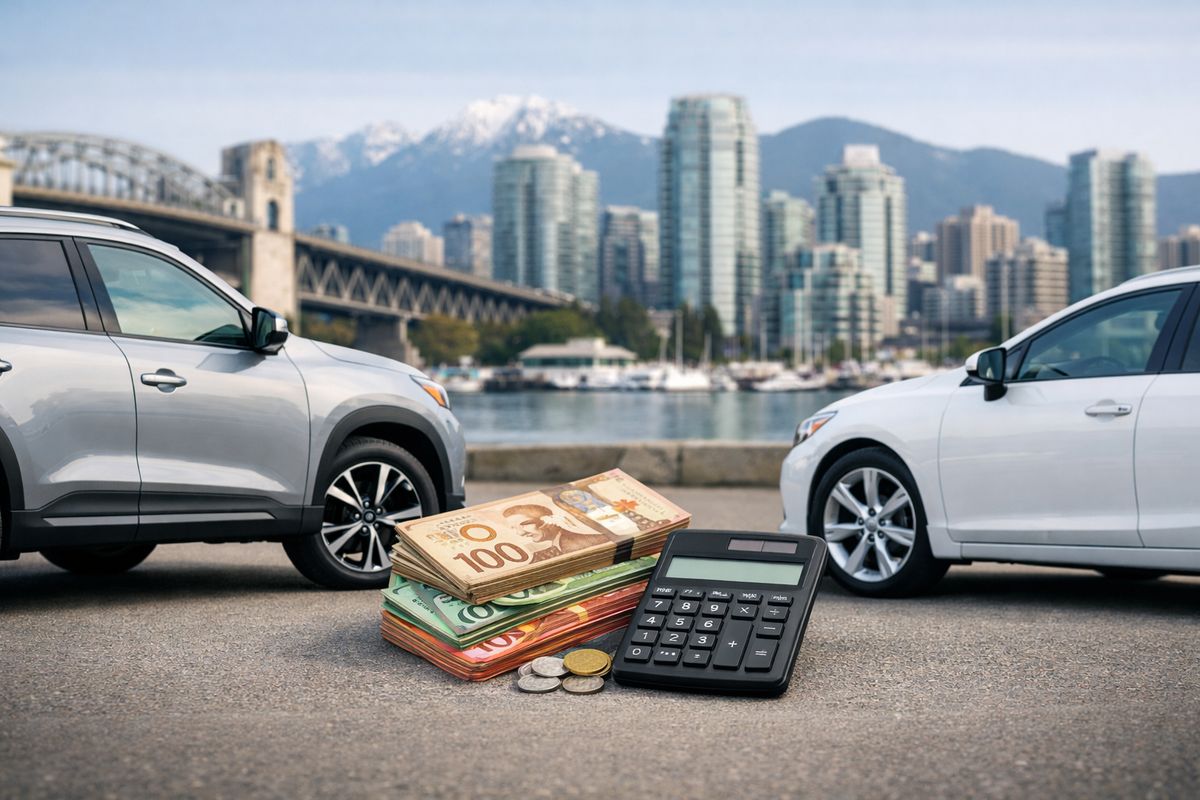
Trying to choose between an SUV vs sedan gets expensive fast if you focus only on sticker price. In Vancouver, the real decision shows up later, at the pump, in your condo parkade, in stop-and-go traffic on Broadway, and on rainy weekend drives out toward Squamish. For most budget-focused used-car shoppers, a sedan is the better buy, but an SUV earns its keep if your life actually uses the extra space and height.
Quick look at SUV vs sedan for vancouver budgets
Here’s the plain-English version: an SUV gives you a taller driving position, easier cargo loading, more flexible space, and a bit more confidence when roads get ugly. A sedan usually saves you money sooner and more often, from purchase price to fuel to tires.
That difference matters in Vancouver because this is not a place where a vehicle only does one job. Your car might commute through Richmond traffic all week, squeeze into a tight spot near Commercial Drive on Saturday, then head toward Cypress or the Fraser Valley on Sunday. Once all of that is part of the picture, the cheaper vehicle on day one is not always the cheaper vehicle to own, but in most cases the sedan still comes out ahead.
If your budget is tight, start with a sedan unless you already know you need SUV space, all-weather confidence, or family-friendly access.
What counts as an SUV or sedan in the used market?
A sedan is the classic four-door car with a separate trunk. Think Honda Civic, Toyota Corolla, Mazda3 sedan, Hyundai Elantra. Lower roofline, lower ride height, usually lighter weight.
An SUV sits taller and usually has a rear hatch instead of a trunk. That includes compact models like the Honda CR-V, Toyota RAV4, and Mazda CX-5, along with larger options like a Highlander or Pilot. More ride height, more cargo flexibility, and usually a higher price.
Here’s where it gets slightly messy: a lot of used listings in Vancouver are actually crossovers. A crossover is basically the middle ground, car-like underneath but shaped like a small SUV. For budget shopping, most of these behave like SUVs in the ways that matter: higher prices, slightly worse fuel economy than sedans, easier cargo access, and a taller seating position.
Upfront purchase price
This is where sedans usually land the first punch.
In the Lower Mainland used market, an SUV often costs more than a similar sedan from the same brand, same year range, and similar mileage. Part of that comes down to demand. SUVs are what many shoppers want, especially compact crossovers with all-wheel drive, so sellers know they can ask more.
Age and mileage matter too, but popularity can override both. A ten-year-old RAV4 with average kilometres can still feel oddly expensive, while a same-year midsize sedan may offer nicer features, lower mileage, and a lower asking price. If you want help spotting inflated prices before wasting a test drive, it helps to know how to tell when a used listing is priced too high.
The catch is that the upfront difference is not always small. In many cases, your SUV budget buys an older vehicle, a higher-mileage vehicle, or a lower trim. Your sedan budget often buys more car for the money. Better condition, fewer kilometres, nicer interior, maybe even better maintenance history.
Fuel costs around vancouver
Fuel is where the budget gap keeps widening.
Sedans usually win on fuel economy because they weigh less, sit lower, and cut through air more cleanly. In everyday Vancouver driving, that means less pain during long commutes, bridge backups, school pickup loops, and short errands that somehow turn into an hour behind the wheel.
An SUV can still make sense if your routine really uses it, but there is no getting around the math. More size and weight usually means more fuel burned. If you spend most of your week commuting solo, a sedan will almost always feel smarter month after month. For a closer look at models that keep fuel bills in check, it helps to compare used cars that are actually cheap to feed.
If your driving is mostly city traffic with the occasional highway run, the sedan advantage gets even stronger. If your routine includes regular ski trips, heavy cargo, or full-family drives, the extra fuel cost may feel easier to justify.
Insurance, registration, and everyday ownership costs
The sticker price gets attention. The boring bills do the real damage.
Insurance can go either way depending on model, trim, repair costs, theft rates, and your driving record, but many budget sedans are cheaper to insure than popular SUVs. That is especially true when you stick to common, lower-powered models with widely available parts. A good starting point is looking at used models that tend to keep insurance costs lower.
Tires are another sneaky budget item. SUV tires are often larger, and replacing four of them usually costs more. Maintenance can also be pricier because there is simply more vehicle to support. More weight can mean faster wear on brakes and suspension parts. If the SUV has all-wheel drive, that adds complexity too.
Registration is less dramatic, but ongoing maintenance is not. Oil changes, brake jobs, alignments, and random repair bills all add up faster when the vehicle is heavier, more complex, or riding on larger parts. If you buy used on a budget, those differences matter more than glossy features.
Parking and city driving
A sedan usually feels easier in the city because, honestly, it is.
Lower length in some models, tighter turning feel, and easier visibility of the car’s corners all help when you are backing into a condo stall or trying to slide into a cramped curbside spot near Main Street. Sedans also tend to feel calmer in stop-and-go traffic because they are easier to place and less bulky in narrow lanes.
SUVs fight back with a taller seating position, which can make traffic feel less stressful. You see further ahead, and that can be reassuring downtown. But the extra height and width do not magically create parking space. In older parkades, that extra bulk gets annoying fast.
If most of your driving is city-based and parking is already a headache, a sedan fits your life better.
Winter driving, rain, and road confidence
This is where many shoppers convince themselves they need an SUV.
In Vancouver, rain matters far more often than snow, and on wet pavement a sedan with good tires can feel excellent. For actual winter conditions, especially if you head to the mountains, the biggest factor is usually not SUV versus sedan. It is tires. Winter tires matter more than many people think, and they matter more than extra ride height in a lot of real situations.
Ground clearance does help in deeper snow, slush, and rougher roads. All-wheel drive helps with getting moving and maintaining traction. But neither helps you stop if your tires are wrong. A front-wheel-drive sedan on proper winter tires can be safer and more predictable than an all-wheel-drive SUV on worn all-seasons.
So yes, SUVs bring more confidence for ski days and stormy conditions. But do not pay a premium for false security. Buy the right tires first.
Cargo space and everyday practicality
This is the clearest SUV advantage.
A sedan trunk can handle groceries, backpacks, a stroller, and a decent Costco run. For a lot of households, that is enough. Fold-down rear seats make longer items manageable too, though the trunk opening can still be awkward for bulky gear.
An SUV makes loading easier because the rear hatch opening is taller and wider. That matters when you are dealing with hockey bags, camping gear, a dog crate, or one of those Costco paper towel packs that somehow takes over half the car. The higher roof also means you can stack more without turning the back seat into a storage unit.
If your life regularly involves bulky stuff, an SUV saves frustration. If not, a sedan is often more practical than shoppers expect.
Passenger comfort and family needs
For one or two adults commuting most days, a sedan is usually plenty comfortable. Modern midsize sedans especially can feel quiet, roomy, and surprisingly upscale without the SUV price bump.
The difference shows up when your back seat gets real use. SUVs usually offer easier entry and exit, more headroom, and a seating position that works better for loading kids into car seats. That small daily convenience adds up fast. So does having more room for diaper bags, sports gear, and all the extras that seem to multiply once your car starts doing family duty.
Still, not every family needs an SUV. A roomy sedan can carry four people comfortably and cost less to buy and run. The trick is being honest about how often your car is full, not buying for the once-a-year exception.
Highway trips, weekend getaways, and lower mainland travel
On longer drives, both can work well, but they feel different.
A sedan often rides lower and feels more planted on pavement. That can make highway driving feel smoother and more settled, especially in crosswinds or at steady cruising speed. Fuel economy is better too, which matters on repeated trips to the Fraser Valley or ferry terminal.
An SUV gives you the higher view, easier cargo loading, and more flexibility for mixed-use travel. If you head to Whistler often, carry outdoor gear, or pack heavily for weekend trips, that extra space feels useful every single time. But if your typical trip is just two people and a couple of bags, you are paying extra for empty air.
Safety and visibility
SUVs often feel safer because you sit higher. That feeling is real, and better forward visibility can reduce stress in dense traffic.
But a sedan has its own safety advantage: it is often easier to maneuver quickly, easier to judge in a lane, and easier to stop smoothly because there is less mass to manage. In practical terms, a sedan can feel more nimble when traffic tightens up or something unexpected happens in front of you.
Visibility also depends on design, not just body style. Some SUVs have thick pillars and poor rear sightlines. Some sedans have excellent outward visibility. That is why a test drive matters more than assumptions. Before buying, it also helps to line up a proper pre-purchase inspection in Vancouver, especially when safety and suspension condition are hard to judge from a quick spin around the block.
Reliability and used-car value
A popular SUV often holds value better. That sounds good until you are the one buying it.
Strong resale means you may recover more later, but it also means you usually pay more up front. Sedans tend to depreciate faster, which is great for budget buyers because you get more vehicle for less cash. If you plan to keep the car for years, that lower buy-in can matter more than future resale.
Condition matters far more than body style alone. A well-kept sedan is a smarter budget buy than a neglected SUV every time. Pay attention to service records, rust, tire wear, suspension noise, and ownership history. It also helps to understand how age and kilometres should be weighed together, because an older low-kilometre SUV is not automatically the better deal.
Pricing and value for money
Pull everything together and the pattern is pretty clear.
Category Sedan SUV Upfront price Usually lower Usually higher Fuel costs Usually lower Usually higher Insurance Often lower Often higher Tire and maintenance costs Usually lower Usually higher Cargo flexibility Limited but often enough Better Winter confidence Good with proper tires Better, especially with AWD Resale value Often lower Often stronger
If your goal is simple value for money, a sedan usually wins both upfront and over time. An SUV can still be worth it, but only when your daily life actually benefits from the extra space, height, or traction.
When a sedan is the better buy
A sedan is the clear winner if your routine looks like this: commuting, errands, city parking, and occasional highway trips without a lot of cargo. It is also the smarter move if your budget is fixed and you want the newest, nicest, or lowest-kilometre vehicle you can reasonably afford.
This choice makes even more sense if fuel costs bother you, parkade space is tight, or your monthly budget already has enough pressure. For lots of Lower Mainland shoppers, the best value is not the most versatile vehicle. It is the one that handles daily life cheaply and without drama. If that sounds like your situation, take a look at cars that make commuting less painful in Vancouver traffic.
When an SUV is worth the extra cost
An SUV earns the extra spend when your life keeps asking for SUV things. Frequent mountain trips, messy weather driving, kids and gear, bulky cargo, pets, strollers, sports equipment, or regular weekend travel all push the value equation toward a crossover or SUV.
It is also a good fit if you know you will outgrow a sedan quickly. Buying a cheap sedan now and replacing it in a year because it no longer fits your life is not really saving money. In that case, paying more once can be the smarter budget move.
The key is honesty. If the SUV space gets used every week, the premium is easier to justify.
Best questions to ask before you choose
Before visiting a lot or messaging a seller, run your choice through a simple filter. How long is your commute, and how much of it is stop-and-go? Where do you park every day? How often do you carry more than two passengers? Do your weekends actually involve gear, snow, or rougher roads, or do you just like the idea of being ready for them?
Then check your budget the unglamorous way. Look at monthly fuel, insurance quotes, tires, and repair cushion, not just the payment. If you need help making price comparisons across listings, it is worth learning how to compare used-car values before buying.
Final verdict: which fits a budget in vancouver?
For most budget-focused Vancouver used-car shoppers, a sedan is the better value. It usually costs less to buy, less to fuel, less to maintain, and less to live with in a city where parking and traffic are already annoying enough.
An SUV wins only when your space, weather, or lifestyle needs truly use what you are paying extra for. If your car regularly hauls people, gear, or heads into mountain conditions, the extra cost can make sense. If not, skip the taller trend and keep the money.
Try this one thing before shopping: write down your last four weeks of driving and cargo needs. That quick reality check will tell you more than any sales pitch.
Frequently asked questions
Is a sedan always cheaper than an SUV?
Usually, yes. A sedan often costs less to buy, fuel, insure, and maintain. The exception is when you compare a luxury or newer sedan against an older basic SUV, so model and condition still matter.
Is all-wheel drive enough for vancouver winter driving?
No. All-wheel drive helps you get moving, but tires matter more for grip and stopping. If you drive to the mountains or deal with snow regularly, proper winter tires are the smarter priority.
Are compact SUVs a better compromise than larger SUVs?
Often, yes. A compact SUV or crossover can give you hatchback cargo space and a taller seating position without the full fuel and cost penalty of a larger SUV. Still, it will usually cost more than a similar sedan.
Does an SUV hold value better in BC?
In many cases, yes. Popular SUVs often have stronger resale value because demand stays high. That also means you usually pay more at purchase, so stronger resale does not automatically make it the better budget choice.
Is a sedan good enough for family use?
For many households, yes. A midsize sedan can handle daily family life just fine if your cargo needs are moderate and your back seat is not constantly packed with bulky gear. The challenge is convenience, not basic capability.
What matters most when buying used, body style or condition?
Condition wins every time. A reliable, well-maintained sedan is a better buy than a rough SUV with hidden problems. Service history, inspection results, and overall upkeep matter more than the shape of the vehicle.