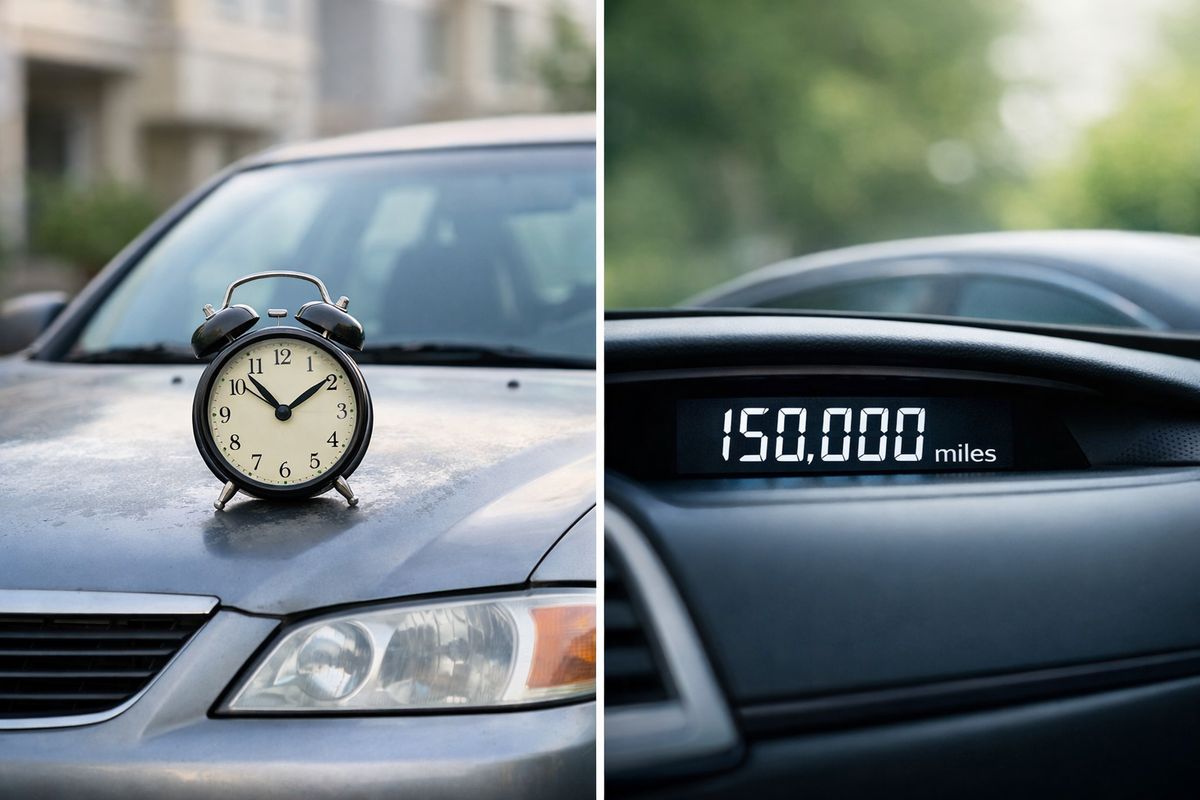
Shopping used car age vs mileage can feel like picking between two kinds of risk. One car is older with impressively low kilometres, the other is newer but has clearly spent a lot of time on the road. The short version is simple: service history matters most, but if you have to lean one way, mileage usually tells you more about mechanical wear than age alone.
Quick answer: age or mileage?
Here’s the thing: neither number wins by itself.
An older car with low kilometres can look like a steal, especially in a Craigslist tab at 10:30 p.m. after half an hour of scrolling. But low mileage does not automatically mean low wear. If that car spent years parked outside in Richmond rain or tucked away and rarely driven, rubber seals, tires, fluids, and even electrical parts may have aged badly.
A newer car with higher mileage can actually be the safer buy if those kilometres came from steady highway commuting and the maintenance was done on time. That kind of use is often easier on a car than years of short city trips, cold starts, and stop-and-go traffic around Vancouver.
If you want the clearest quick rule, use this one: buy the car with the better maintenance trail, cleaner inspection results, and fewer signs of neglect. Then use mileage as the stronger tiebreaker.
How age affects a used car
Age changes parts even when the car barely moves. Rubber dries out. Seals shrink. Hoses get brittle. Tires can age out before the tread wears down. Fluids break down over time, not just distance, and old brake fluid or coolant can cause problems quietly.
Electronics can also become more annoying with age than many shoppers expect. Window switches, sensors, backup cameras, touchscreens, and climate controls do not care that the odometer looks nice. Time, moisture, and heat cycles wear those parts anyway. A ten-year-old car can have low kilometres and still greet you with random warning lights.
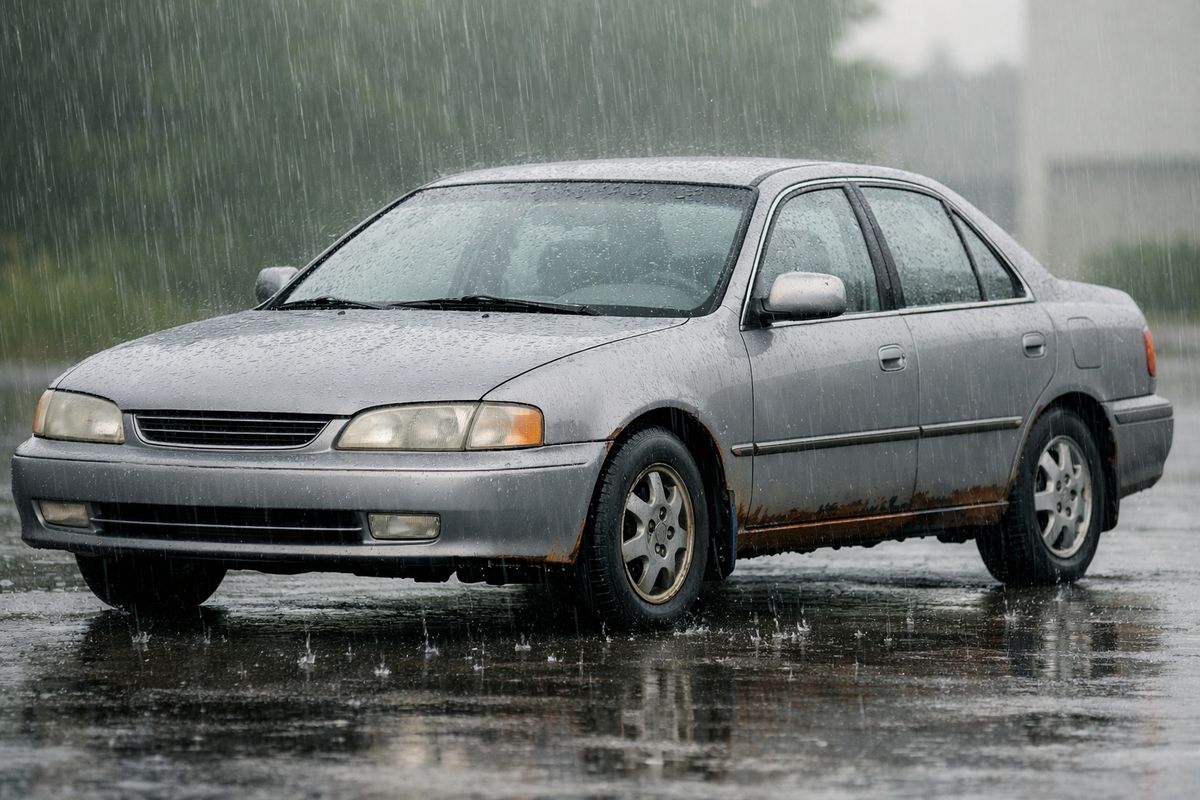
Then there’s paint, trim, and rust. A car that spent years outside may have faded clear coat, cracked weather seals, and corrosion starting underneath. Around the Lower Mainland, damp conditions make this more than cosmetic. Moisture gets into places you do not see at first glance, especially around door edges, hatch seams, and underbody hardware.
That is why an older low-mileage car needs a careful inspection. The number on the dash only tells part of the story.
How mileage affects a used car
Mileage usually says more about how much actual work the car has done. The engine has completed more cycles. The transmission has shifted more times. The suspension has soaked up more bumps. Wheel bearings, brakes, steering parts, and bushings have all had more chances to wear down.
Interior wear often tracks mileage too. Sagging seat bolsters, a shiny worn steering wheel, heavily polished pedals, and tired buttons can tell you a lot. If the odometer claims low kilometres but the cabin looks like a delivery van after five winters, pay attention.
But not all kilometres are equal. Highway driving is generally easier on a car than endless stop-and-go use. Long drives allow the engine to warm fully, reduce repeated cold starts, and put less strain on the transmission and brakes. Short urban trips do the opposite.
That matters in Vancouver traffic. A car with 140,000 kilometres from Langley-to-Burnaby commuting may be in better shape than one with 90,000 kilometres of short hops through East Vancouver, parking lot crawls, and constant idling.
Age vs mileage: which matters more for reliability?
If the question is pure reliability, maintenance history beats both.
Still, between the two, mileage usually deserves a bit more weight because it tracks mechanical use more directly. More kilometres usually mean more wear on expensive components. That is the practical reason buyers, mechanics, and pricing guides tend to notice the odometer first.
Age matters too, just differently. It tells you more about time-related problems: dried seals, aging tires, rust, brittle plastics, and dated electronics. Those issues can be expensive, but they are often easier to spot during an inspection than hidden internal wear from poor maintenance.
So if you are choosing between a 7-year-old car with 160,000 kilometres and a 12-year-old car with 85,000 kilometres, do not assume the lower-kilometre car is safer. Look at the records, condition, rust, and how the car was used. If both are equally well cared for, the newer car often ends up being the smarter daily driver.
For a deeper look at where the line starts to feel uncomfortable, it helps to understand what counts as too many kilometres for a used vehicle.
Maintenance history and service records
A clean odometer photo is nice. Receipts are better.
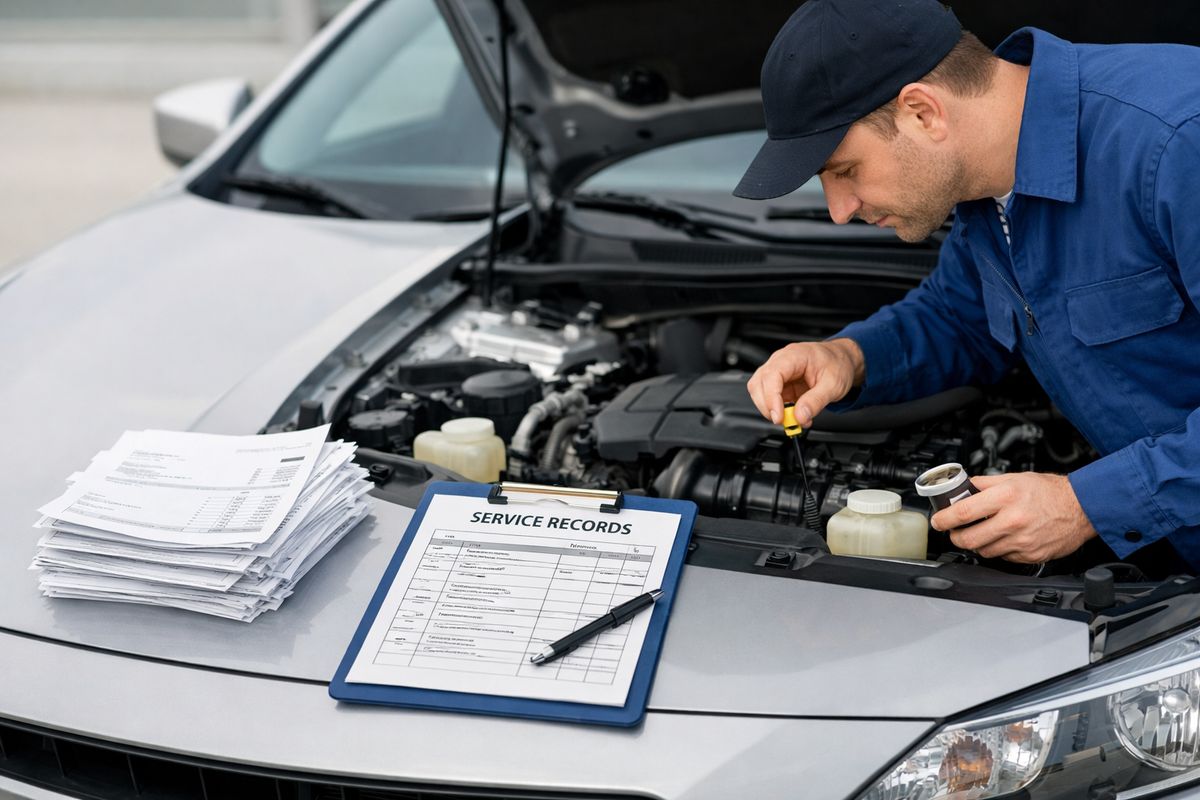
What you want to see is boring, regular care: oil changes done on schedule, brake service, transmission fluid service when required, coolant changes, battery replacement, and proof that problems were fixed instead of ignored. A stack of invoices from a shop in Burnaby means more than a seller saying, “It runs great.”
Good records also help you separate high mileage from hard mileage. A car with 180,000 kilometres and years of documented service can be a better bet than a 95,000-kilometre car with nothing but vague promises. Neglect is what ruins used cars, not just age or distance.
Look for consistency. Dates should make sense. Kilometres should increase normally between visits. Big gaps are a problem, especially around transmission service, brakes, or cooling system work. If you are checking listings and prices at the same time, comparing condition against real market value ranges for similar used cars can keep a tidy-looking car from fooling you.
Driving style and where the car was used
The same mileage can mean very different wear depending on how the car lived.
A highway commuter car usually racks up kilometres quickly, but in a relatively gentle way. Fewer cold starts, fewer hard stops, fewer potholes, and less steering strain all help. That is why a newer car with high mileage from Abbotsford-to-Vancouver commuting can be surprisingly solid.
Short-trip city driving is tougher. Engines spend more time cold, brakes get used constantly, and transmissions shift more often. Add hills, curb impacts, tight parking, and endless idling, and a lower-mileage city car can feel worn out earlier than expected.
Rideshare and delivery use deserve extra caution. Frequent stops, lots of idle time, passenger wear, and heavy urban use can age a car fast without creating shocking mileage totals. The same goes for routes packed with steep grades and rough pavement. The numbers matter, but the pattern matters more.
Rust and climate: the vancouver and lower mainland factor
In this area, moisture changes the equation.
Vancouver and the Lower Mainland do not get the deep winter salt exposure of some provinces, but constant rain, damp air, and wet roads still wear cars down. Add occasional trips to ski hills or the Sea-to-Sky route, where salt and de-icer show up, and underbody corrosion becomes a real concern.
Brake lines, exhaust components, suspension hardware, subframes, and fuel lines can all rust from below while the paint still looks fine up top. Damp interiors can also create musty smells, foggy windows, mold under mats, and electrical gremlins. A car parked outside for years in Surrey or Burnaby may have more hidden moisture wear than a similar car stored in a dry garage.
This is one reason a prepurchase inspection matters so much locally. If you are unsure how much that step really protects you, take a look at why a budget-friendly inspection is still worth booking.
Older low-mileage cars: when they make sense
Older low-mileage cars make sense when the car was driven regularly enough to stay healthy and stored well enough to avoid age damage. That usually means consistent annual use, service records, a clean underbody, and no signs of long-term sitting.
The upside is obvious. You may get lower kilometres, less interior wear, and sometimes a lower price than a much newer model. For a second car, occasional local driving, or a buyer who puts on very few kilometres each year, that can work well.
The catch is that “low mileage” sometimes really means “sat a lot.” That can bring dried seals, flat-spotted or aged tires, weak batteries, stale fuel, sticky brake components, and fluid leaks once regular driving starts again. It is a bit like buying running shoes that stayed in the box for ten years. They look fresh until the glue starts giving up.
If you go this route, inspect tire date codes, ask how often the car was driven, and make sure service happened by time as well as mileage.
Newer high-mileage cars: when they make sense
Newer high-mileage cars often make better sense than shoppers expect.
You get a fresher model year, newer safety features, more modern crash protection, and fewer age-related issues with rubber, electronics, and trim. If the kilometres came from commuting or fleet travel on the highway, the car may still have plenty of life left, especially with solid records.
This can be a strong value play for daily driving. The purchase price is often lower because the odometer scares people off, but the car itself may feel tighter and more current than an older low-mileage alternative. It also tends to fit better if you want something efficient and plan to use it constantly. That is especially true if you are comparing practical daily drivers that keep fuel costs down.
The weak point is simple: once maintenance has been skipped, high mileage gets expensive fast. A newer car is not immune to neglect.
Inspection checklist: what to check before you decide
Once you stop treating age and mileage like the whole story, the shopping process gets clearer.
Start with the cold start. A car tells the truth best when the engine is fully cold. Listen for rattles, rough idle, smoke, or long cranking. During the test drive, pay attention to transmission shifts, braking feel, steering response, vibration, warning lights, and temperature behaviour. If something feels off in the first ten minutes, it usually does not get better later.
Then check the details. Look at tire date codes, not just tread depth. Inspect fluid condition. Look underneath for rust, wet spots, and fresh undercoating that seems designed to hide something. Smell the interior for dampness. Make sure panel gaps, paint finish, and glass markings look consistent with the seller’s story. A BC vehicle history check can help confirm accident records and ownership patterns before you get too invested.
Most of all, book a professional inspection. If you are still debating whether you really need an independent check before buying, the answer for almost any used car with meaningful age or mileage is yes.
Red flags worth walking away from
Some warning signs are not worth rationalizing. Inconsistent service records, missing ownership history, overheating, rough shifting, clunks over bumps, a musty cabin, mismatched tires, or suspiciously low mileage for the age should put you on alert immediately.
The same goes for sellers with strange stories, warm engines before your test drive, dashboard warning lights that “just need a reset,” or accident gaps that do not match the paperwork. If the car keeps raising little doubts, trust that feeling. Another listing will appear by tonight.
Green flags that make either option safer
Good used cars usually feel straightforward.
You want clean fluids, even tire wear, a smooth idle, normal cold start behaviour, consistent service stamps, and an owner who can answer simple questions directly. A car that drives quietly, brakes straight, shifts smoothly, and comes with organized records is often safer than one with prettier photos and a lower number on the odometer.
Plain honesty is a green flag too. A seller who can point out a minor scratch, explain recent brake work, and hand over receipts without drama usually makes the whole deal feel less slippery.
Pricing and value: what age and mileage do to the price
Mileage tends to hit resale value faster than age, especially once a car crosses the mental thresholds buyers dislike. Age chips away too, but often more gradually, unless the model is old enough that parts, tech, and safety start to feel dated.
That said, sticker price is only the opening move. An older cheap car can become expensive in the first six months if it needs tires, brakes, battery, suspension work, and overdue fluid service. A newer high-mileage car may cost more up front but less to sort out after purchase.
Insurance can shift the value picture too, especially for younger drivers or certain body styles. If keeping total ownership costs low matters more than chasing the lowest asking price, it helps to compare not just purchase prices but also repairs, fuel, and which used models tend to be easier on insurance in Vancouver.
Best choice by buyer situation
Your best option depends on what problem you are trying to solve.
If your goal is the lowest upfront cost, an older car with sensible mileage can work, but only if you leave room in the budget for catch-up maintenance. If you need dependable commuting five days a week, a newer car with higher but well-documented highway kilometres is often the safer bet. If you plan to keep the car for years, newer usually ages better because you start with fresher parts and more current safety features.
For a teen driver or first-time buyer, predictability matters more than bragging rights over a low odometer number. Something simple, well-maintained, and easy to insure usually wins over something older and “barely driven.” If avoiding surprise repair bills is your top concern, lean toward the car with the clearest records and the cleanest inspection, even if the kilometres look less attractive at first glance.
Choose the older, lower-mileage car if…
Choose the older car if the kilometres are genuinely low for good reasons, the car was driven regularly enough to stay healthy, and the condition backs up the story. This option makes the most sense if you drive modestly, want a lower purchase price, and find a car with aged parts already dealt with, especially tires, battery, fluids, and seals.
It also fits if the car was clearly stored well and has minimal rust. In that case, lower mileage can still mean less overall wear instead of just more time sitting.
Choose the newer, higher-mileage car if…
Choose the newer car if you want a dependable daily driver, newer safety tech, and fewer age-related headaches. This is often the better buy when the kilometres came from highway use, service records are complete, and the inspection is clean.
For commuting around the Lower Mainland, this usually makes more sense than chasing a decade-old car with a flattering odometer and hidden issues. A newer high-mileage car may look less exciting on paper, but it often works better where it counts, every morning when you turn the key.
Verdict: what matters more when buying a used car?
Maintenance history matters more than either age or mileage. That is the real answer.
But if you need a winner between the two, mileage gets a slight edge because it usually reflects mechanical wear more directly. Age still matters, especially around rust, rubber, fluids, and electronics, but those problems are easier to judge once you inspect the car properly.
Use a simple rule while shopping: choose the car with the best records, the cleanest inspection, and the most believable life story. If two cars are equally well kept, lean toward the one with lower mileage and lower rust risk, not just the newer badge or older bargain.
One smart next step before you buy
Pick two listings that fit your budget, then compare service records before you compare paint colour or wheel design. Book a prepurchase inspection on the one with the stronger maintenance history, and let that result make the final call.
Frequently asked questions
Is an older car with low mileage better than a newer car with high mileage?
Not automatically. An older low-mileage car can still have age-related problems from sitting, while a newer high-mileage car may be in better shape if it was maintained well and driven mostly on the highway.
What matters more, years or kilometres, on a used car?
Kilometres usually matter a bit more because they reflect mechanical use. Years matter too, especially for rust, tires, seals, fluids, and electronics. Maintenance history matters more than both.
Is 200,000 kilometres too much for a used car?
Not always. At 200,000 kilometres, condition and service history matter a lot. A well-maintained car at that mileage can still be a good buy, while a neglected one can become expensive quickly.
Why is low mileage sometimes a bad sign?
Very low mileage can mean the car sat unused for long periods. That can lead to dried seals, old tires, stale fluids, weak batteries, brake issues, and moisture-related problems.
Does highway mileage count differently from city mileage?
Yes. Highway kilometres are usually easier on the engine, transmission, brakes, and suspension than stop-and-go city driving. A car with mostly highway use can be healthier than a lower-mileage city car.
Should you always get a prepurchase inspection?
Yes, especially when age, mileage, rust, or missing records create any doubt. A good inspection helps you spot hidden wear, accident repairs, and deferred maintenance before money changes hands.