
Finding a car you like is the easy part. Then the financing screen shows up, the monthly payment looks weirdly high or suspiciously low, and used car financing Vancouver suddenly feels like a math test you did not study for. This guide clears that up, so you can tell what matters, what is fluff, and how to walk into a dealership or lender without getting boxed into a bad loan.
How used car financing works in vancouver
Used-car financing is just a loan tied to the vehicle you buy. You borrow a set amount, pay it back over time, and the lender charges interest for that money. Simple in theory. In real life, the details decide whether the deal feels manageable or annoying for the next five years.
The amount borrowed is your principal. The interest rate is the price of borrowing that principal. The loan term is how long you take to pay it back, usually measured in months. Total cost is the number that matters most, because it includes what you borrowed plus all the interest and any fees rolled into the loan.
In Vancouver and the Lower Mainland, financing usually comes from four places: the dealership, a bank, a credit union, or an alternative lender. A dealership can arrange financing on the spot, often through partner lenders. A bank or credit union may let you secure financing before you shop. Alternative lenders step in when credit is rough, income is harder to document, or the vehicle falls outside stricter lending rules.
Here’s the thing: the same car can feel affordable or expensive depending on how the loan is structured. A lower payment does not automatically mean a better deal. Sometimes it just means you are paying longer.
Financing through a dealership vs a bank or credit union
Financing at the lot is convenient. You test-drive the car, sit down at a desk, and get numbers right there. If your credit is less than perfect, a dealership may also have access to lenders that are more flexible than your main bank. That convenience matters, especially if you need a car quickly.
The catch is that convenience can hide markup. A lender may approve a certain rate, then the financing offer shown to you comes in higher. That spread does not always happen, but it is common enough that you should assume the first offer is not sacred.
A bank or credit union pre-approval gives you a cleaner starting point. You know what rate range you qualify for, what payment works for your budget, and how much you can borrow before you ever step onto a lot on Broadway or head out to Burnaby. That makes comparison easier. It also helps when you want to separate the price of the car from the price of the loan.
Why used-car financing can feel different from new-car financing
Used cars usually carry more lender caution than new cars. That is because an older vehicle is harder to value, more likely to need repairs, and worth less as collateral if the loan goes sideways. So rates are often higher, terms can be shorter, and some vehicles simply do not qualify.
Age, mileage, condition, and title status all matter. A five-year-old car with clean history and reasonable kilometres is easier to finance than a twelve-year-old car with 230,000 km and a rebuilt title. If you are comparing older vehicles, it helps to understand how age and kilometres pull in different directions before you fall in love with a deal that a lender may not like.

What lenders usually look at before approving you
Lenders do not just ask whether you want a car. You are being evaluated from two angles at once: you and the vehicle. Approval depends on whether you look likely to repay the loan and whether the car looks financeable enough to back it.
Most lenders look at credit history, monthly income, current debt, employment stability, address history, and the vehicle details. None of this is meant to be mysterious. It is basically a picture of how stretched your budget already is and how risky the car looks.
Your credit score and credit history
Your credit score affects both approval odds and your rate. A stronger score usually opens the door to more lenders and lower borrowing costs. A bruised score narrows the field and raises the price. A thin credit file, meaning not much borrowing history at all, can be tricky too, because a lender has less proof of how you handle payments.
Checking your own credit before applying is one of the easiest wins in this process. You catch errors, avoid surprises, and know whether you should expect prime financing, second-chance financing, or something in between. That one step can save you from sitting in an office pretending not to be shocked.
Income, debt, and payment comfort
Income matters, but lenders are not just looking for a certain dollar amount. The real question is how much of your monthly income is already tied up. Rent, credit cards, lines of credit, student loans, child support, and other car payments all count.
That is debt-to-income in plain English: how much of your money is already spoken for before this car enters the picture.
But approval is not the same thing as comfort. A payment can technically fit on paper and still feel lousy by month three, especially once insurance, fuel, and parking hit. If your budget is already tight, choosing a lower-priced vehicle may do more for your finances than stretching the term to force a higher-priced one into the monthly number.
The Car’s age, mileage, and condition
Lenders approve the car too. If the vehicle is too old, has too many kilometres, shows major accident history, or carries rebuilt status, financing can get harder or more expensive. Some lenders cap age and mileage. Others shorten the term on older vehicles so the loan gets paid off before the car becomes even riskier.
That is why a cheap used car is not always easy to finance. Before moving ahead, it helps to know when high mileage starts changing the equation and whether the lower sticker price is really worth the trade-off.
Get your numbers straight before you apply
A lot of financing mistakes start before the application. You spot a car, picture yourself driving it over the Lions Gate, then try to make the budget fit afterward. That order is backwards.
Set your numbers first. Decide what total monthly cost feels safe, what down payment you can make without draining your emergency savings, and how much repair cushion you want left after purchase.
Build a budget around total monthly cost, not just the payment
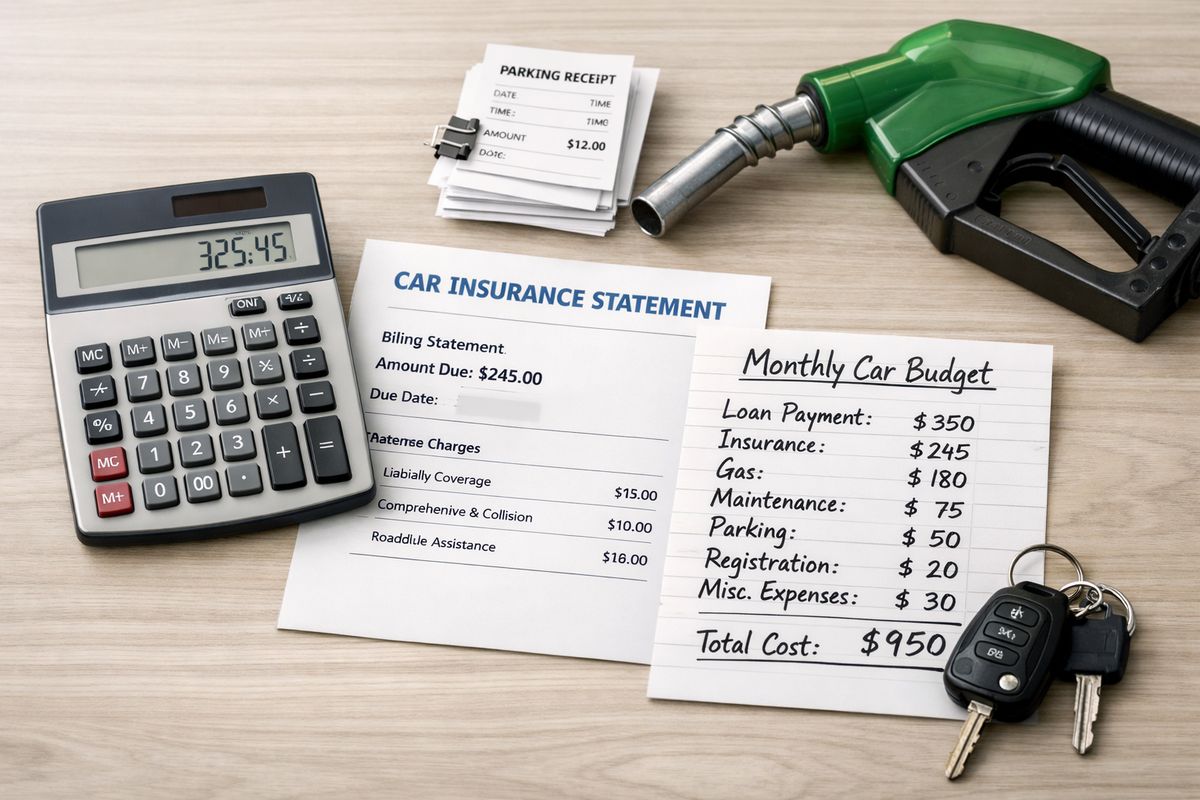
Monthly payment is only one part of ownership. In Vancouver, insurance can swing wildly depending on the car, your driving history, and where you live. Add fuel, parking, maintenance, and the occasional repair, and a car that seemed fine on paper can turn into a budget leak fast.
Focusing only on payment is the fastest way to overpay. That is the claim worth remembering.
A longer term can shrink the monthly number while quietly raising the total cost by thousands. A cheaper-to-insure sedan may beat a slightly nicer SUV if your main goal is staying financially comfortable. If you are deciding between body styles, this breakdown of practical budget trade-offs helps frame the choice beyond just looks.
How much down payment helps
A down payment lowers the amount you borrow. That means less interest, a better chance of approval, and a smaller risk of owing more than the car is worth early in the loan. It also gives a lender some confidence that you are financially invested in the purchase.
A bigger down payment matters most when credit is limited, the vehicle is older, or the payment is right on the edge of affordability. Even a modest amount can improve the structure of the deal. If you want a clearer sense of ranges, this look at realistic upfront amounts makes the math easier to picture.
Trade-ins, taxes, and other costs that change the math
Trade-ins can reduce the amount financed, but only if the trade value is solid and any remaining loan on that car is handled cleanly. If you owe more than your current car is worth, that negative equity can be rolled into the next loan, which is usually bad news disguised as convenience.
Then there are the extras that show up late in the conversation: sales tax, documentation fees, registration-related charges, and optional add-ons. None of these should be treated like background noise. They change the amount financed and the total cost, sometimes by more than expected.
Pre-approval: why It’s worth doing first
Pre-approval gives you a baseline before the sales process starts. It is not a promise that every car will qualify, and it is not the same as final approval. But it tells you what kind of loan terms you are likely to get, which is incredibly useful when shopping.
With pre-approval, you are not guessing whether a payment is reasonable. You already know your likely rate range, maximum amount, and rough monthly budget. That makes comparison sharper and negotiation calmer.
What to have ready for a pre-approval application
Most pre-approval applications ask for the same basic information: government-issued ID, income details, employer information, address history, and a rough picture of your monthly obligations. If you are self-employed or newly employed, expect a few more documents.
Keep it tidy. A clean application moves faster and gives fewer reasons for follow-up delays. If you are also preparing for the ownership side after the purchase, this BC paperwork checklist helps you avoid the annoying scramble later.
How to compare offers without getting lost
When two offers land in front of you, compare the APR, term length, payment frequency, down payment requirement, and total borrowing cost. Look for lender conditions too, especially if approval depends on a certain vehicle age, mandatory add-on, or proof of extra income.
The best deal is not always the lowest monthly payment. A slightly higher payment on a shorter term can be much cheaper overall. Think of it like grocery shopping with unit pricing. The sticker on the shelf is not the whole story.
Common financing traps to avoid
Used-car financing has a few repeat offenders. Once you know what they look like, they are easier to avoid.
Shopping by monthly payment alone
This is the big one. Stretching a loan from 48 months to 72 or 84 can make almost any car look affordable for a moment. But that lower payment often comes with much more interest and a longer stretch of owing money on an aging vehicle.
If the sales conversation keeps circling back to “What payment do you want?” without talking about total price and total loan cost, slow the whole thing down. A payment is just one number. It should never be the only number.
Skipping the vehicle history and inspection
You are not just financing transportation. You are financing that specific used car, with its exact maintenance habits, accident history, and hidden problems. If the vehicle is shaky, the loan becomes shakier too.
Always review service records and get a vehicle history report. Better yet, line up a proper pre-purchase inspection before signing anything, especially if the car is older or priced suspiciously well. If rebuilt status is in the mix, this guide to that risk can save you from confusing “cheap” with “worth it.”
Applying everywhere at once
Spraying your information across a dozen loan forms in one afternoon is messy. It can create duplicate calls, conflicting offers, and extra stress. In some cases, too many separate applications can also make your credit profile look frantic.
Focused rate shopping works better. Get one pre-approval or a small handful from lenders you actually trust, then compare from there.
Rolling extras into the loan without checking the total
Extended warranties, gap coverage, anti-theft products, tire packages, and other add-ons are not automatically bad. Some can be useful, depending on the car and your situation. But once they are folded into financing, you also pay interest on them.
That means a $2,000 add-on does not really cost $2,000 if it sits inside a long loan. Ask what each product costs on its own, whether it is optional, and how much it adds to the total loan amount.

Financing options for different credit situations
Perfect credit is not required to finance a used car. But your path changes depending on where your credit stands, and pretending otherwise wastes time.
If you have strong credit
Strong credit usually means lower rates, more lender choices, and better flexibility on term length. It can also give you more confidence pushing back on financing markup or unnecessary conditions.
That is the moment to separate decisions clearly. Negotiate the vehicle price. Compare the financing. Do not let both get blurred together. If you want room to bargain on the car itself, these pricing tactics for local used-car deals can help.
If your credit is limited or damaged
Second-chance or subprime financing is the lane for weaker credit or recent credit trouble. Approval is still possible, but rates are usually higher and down payment expectations may rise too. Terms can be tighter, and the vehicle choices that qualify may narrow.
Read everything carefully. A rushed yes can lock you into a loan that feels impossible six months later. If a deal only works because the term is very long, the rate is high, and add-ons are bundled in, it probably does not work.
If You’re new to canada or rebuilding after a rough patch
This is a common Vancouver situation. If your credit history in Canada is short or your past has a few dents, lenders may lean harder on proof of steady income, stable residence, a co-signer, or a larger down payment.
Urgency is what gets expensive here. Needing a car for work in Richmond next week or school drop-offs tomorrow can make any approval feel like a good one. It is not. A bad loan is still a bad loan, even when it solves an immediate problem.
Questions to ask before you sign anything
A few good questions can save you a surprising amount of money and stress. Bring them with you and ask them out loud.
What is the full cost of the loan?
Ask for the full amount paid over the entire term. Not just the biweekly or monthly payment. You want the principal, the interest, the fees, and the cost of any optional products included in one clear number.
If nobody wants to show that number, that is a bad sign.
Are there penalties, fees, or conditions I should know about?
Ask about early payoff rules, missed-payment fees, automatic payment requirements, and any lender conditions attached to the approval. Some loans are straightforward. Some come with fine print that only matters once life gets messy.
You also want to know whether the approval depends on a larger down payment, proof of income, or a specific vehicle condition.
Has the car been properly checked and priced fairly?
Financing a bad car at a decent rate is still a bad deal. Ask for inspection records, accident history, service records, and pricing support. If the asking price feels off, compare it against similar local listings and value benchmarks before committing.
Best used car financing approach by buyer situation
The right financing approach depends on what kind of shopping trip you are actually on. Fast purchase, low payment, long-term value, each one changes what to prioritize.
If you need a car quickly for work or family
Move fast on the prep, not on the decision. Get pre-approved first, set a hard spending cap, and focus on vehicles that are reliable, common, and easier for lenders to approve. Mainstream sedans and compact SUVs with clean history usually create fewer financing headaches than niche or heavily modified cars.
Speed matters, but structure matters more. A same-day approval is nice. A payment you can live with is better.
If You’re trying to keep monthly costs low
Start with the total monthly cost, then work backward to the vehicle price. A less expensive car, a healthier down payment, and a reasonable term usually beat stretching the loan just to hit a target payment.
Also pay attention to insurance and fuel economy. Sometimes the cheaper buy becomes the more expensive own. A practical commuter with lower operating costs can do more for your budget than shaving twenty dollars off the loan payment.
If You’re focused on long-term value
Look for a dependable used vehicle with solid history, manageable mileage, and financing terms that let you pay it off on a sensible timeline. The goal is not just approval. The goal is ending up with a car that still feels like a good decision two or three years from now.
Start with one simple move: check your credit and get one pre-approval before visiting a lot on Broadway or in Burnaby. That single step changes the whole conversation.
Frequently asked questions
Is it better to get used car financing before going to a dealership in vancouver?
Yes, in most cases. Pre-approval gives you a rate baseline, a realistic budget, and a way to compare the dealership offer against something concrete instead of guessing in the office.
What credit score do you need for used car financing in vancouver?
There is no single cutoff. Stronger scores usually get better rates and more lender options, but financing is still possible with limited or damaged credit. The trade-off is usually a higher rate, a larger down payment, or stricter loan terms.
How much should you put down on a used car?
More down payment usually helps, especially on older cars or with weaker credit. It lowers the amount borrowed and can improve approval odds. The right amount is one that strengthens the deal without wiping out your emergency cushion.
Can you finance an older used car with high mileage?
Sometimes, yes. But lenders may shorten the term, raise the rate, or decline the vehicle if the age, kilometres, or condition fall outside lending limits. Older and higher-mileage cars are simply riskier to finance.
Does applying for car financing hurt your credit?
A loan application can affect your credit, but focused rate shopping within a short period is usually less damaging than scattering applications everywhere. The smarter move is to target a few serious options instead of applying blindly across the internet.
Are dealership financing offers always more expensive than bank financing?
Not always. Sometimes a dealership can match or even beat what you find elsewhere, especially if several lenders are competing for the deal. But you should still compare the rate, term, and total cost carefully, because convenience can come with hidden markup.