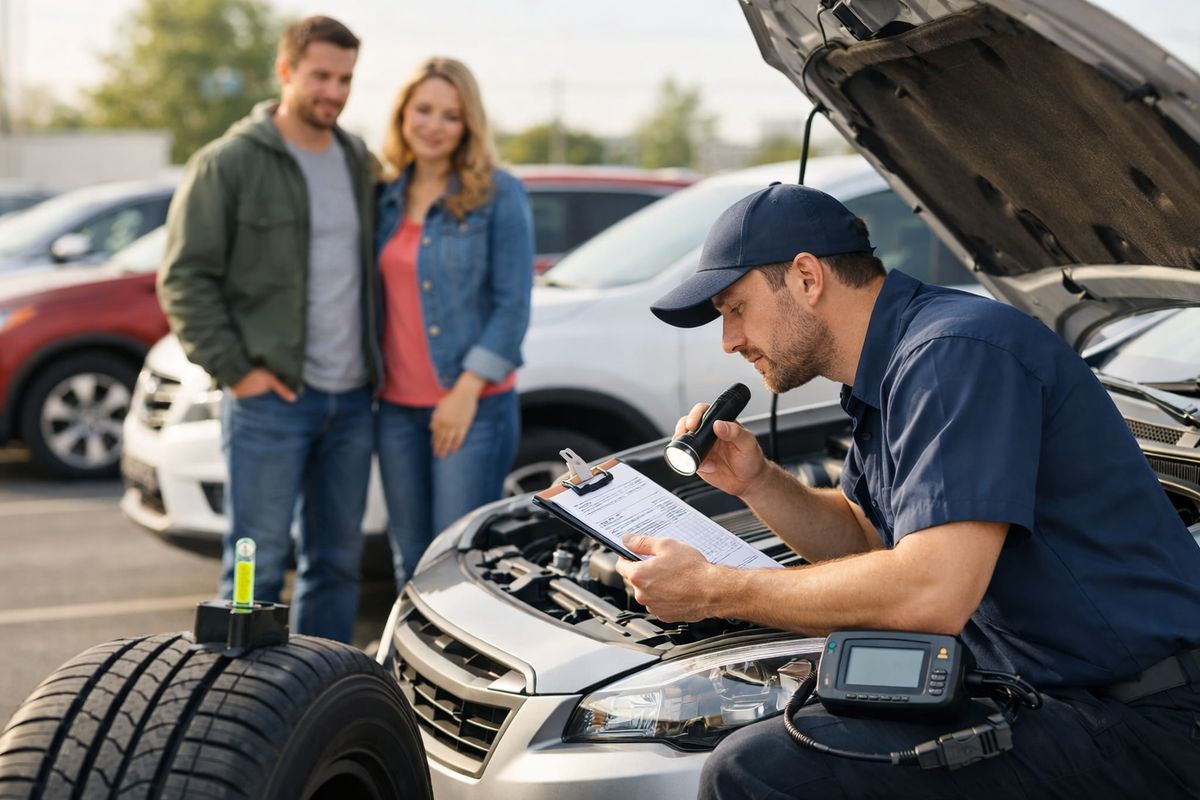
A used car inspection is a pre-purchase check by a mechanic before you hand over your money, and yes, it usually matters most when your budget is tight. A car can look clean in a parking lot, drive fine for ten minutes, and still hide the kind of repair bill that wrecks your whole plan. If you’re shopping in Vancouver or anywhere in the Lower Mainland, this is one step that can save you from buying someone else’s expensive problem.
What a used car inspection actually is
A used car inspection is a detailed look at the vehicle before the sale is final. The goal is simple: find problems you can’t spot from photos, a quick walkaround, or a seller saying “it runs great.”
That sounds obvious, but here’s the thing: plenty of issues stay hidden until a car goes up on a lift, gets scanned for trouble codes, or gets checked by someone who sees worn suspension, oil leaks, and patched collision damage every day. A proper inspection is not the same as kicking the tires in a driveway. It is also not the same as a seller showing receipts for an oil change.
Think of it like buying an apartment after only peeking through the front window. You might get lucky. You also might miss the leak behind the wall.
Do you really need one if You’re buying on a budget?
Yes, in most cases, you do.
Budget buyers often feel pressure to skip the inspection because the fee looks like one more cost piled on top of insurance, tax, and registration. But the catch is that a cheaper car has less room for surprise repairs. If your whole budget is already stretched, inheriting bad brakes, leaking shocks, or a transmission issue is not a minor inconvenience. It can turn a decent deal into a financial mess by the next payday.
A used car inspection protects a tight budget. It is not fluff. It is one of the few parts of the buying process that can actually stop you from spending thousands for the wrong reason. If you want a deeper look at the money side, this guide on protecting your budget before you buy breaks that tradeoff down well.
When an inspection matters most
Some situations are especially risky.
Private-party sales deserve extra caution because there is usually less paperwork, fewer return options, and more pressure to decide fast. Older vehicles and high-kilometre cars also need a closer look because parts wear out, seals dry up, and maintenance gaps start to matter more.
Rebuilt-title cars, “priced to sell” listings, and anything that looks suspiciously nice for the money should make you pause. Fresh detailing, shiny tire dressing, and spotless floor mats can distract from what is happening underneath. In a wet Lower Mainland climate, rust and moisture damage can hide quietly for a long time.
When you might skip it , and the tradeoff
There are a few cases where buyers skip an inspection on purpose. Maybe the car is a very cheap beater and you already expect rough edges. Maybe it is a dealer-certified vehicle with recent service records and a clear inspection report from a shop you trust.
But skipping the inspection always means accepting more risk. It is like buying a couch off Marketplace without sitting on it first. Maybe it is fine. Maybe the frame sags the second you get it home.
What a pre-purchase inspection usually covers
A real inspection is broader than most people expect. It is not just “does the engine start?”
A mechanic usually checks the body, interior, fluids, tires, brakes, suspension, steering, battery, lights, belts, hoses, leaks, and general signs of neglect. The car may also get a road test and a computer scan. Some shops include photos and a written report, which is helpful when you need proof for negotiation.
What you are really paying for is trained pattern recognition. A mechanic notices things that look ordinary to you because those small clues often point to bigger repairs.
Exterior, body, and signs of past damage
This part covers paint mismatch, rust, dents, windshield chips, panel gaps, headlight condition, and tire wear. Uneven gaps between doors and fenders can hint at old collision repair. One tire worn far more than the others can point to alignment or suspension trouble.
Moisture matters in the Lower Mainland. Rain, road grime, and damp parking conditions can speed up rust around wheel wells, rocker panels, and underbody seams. A car that looks fine near Metrotown or parked off Kingsway can still hide corrosion underneath.
Interior, electronics, and everyday usability
Inside the cabin, the shop usually checks seats, seatbelts, windows, locks, mirrors, dash lights, stereo functions, heat, and air conditioning. That may sound like comfort stuff, but odd smells, wet carpets, or electrical glitches can point to leaks or wiring issues.
A musty smell is not just annoying. It can mean water is getting in somewhere it should not, and water inside a car often leads to mold, bad sensors, or strange electrical problems later.
Under the hood and under the vehicle
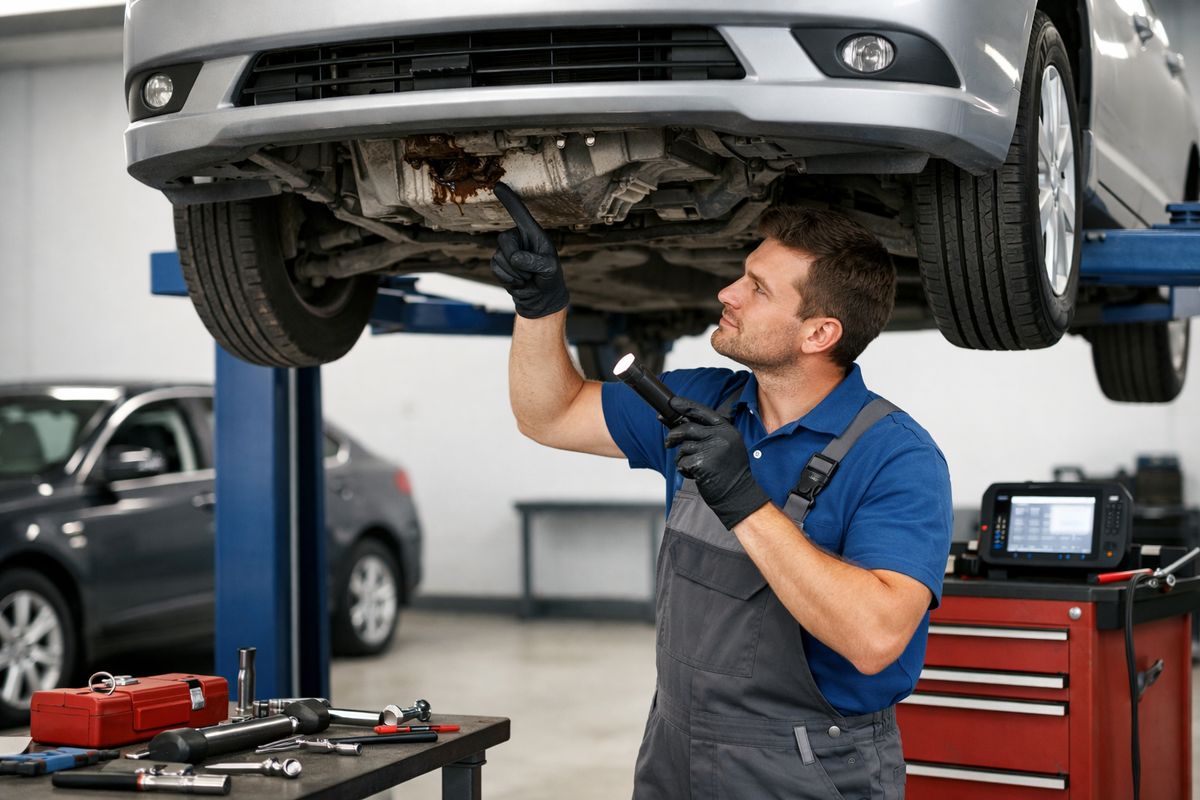
This is where the inspection starts earning its keep. Fluids get checked for level and condition. Belts and hoses get looked at for cracks or wear. The battery, radiator area, brake components, suspension parts, exhaust, and underside get checked for leaks, rust, or damage.
A few terms are worth translating. Suspension means the parts that help the car ride smoothly and stay stable over bumps. Shocks or struts are part of that system. If they leak or wear out, the car can bounce, handle poorly, and chew through tires. A gasket is a seal between engine parts. When it starts failing, oil or coolant can leak out.
Road test and computer scan
A short road test can reveal a lot. Steering pull, brake vibration, rough shifting, clunks over bumps, and whining noises often show up once the car is moving normally.
The computer scan matters too. Modern cars store fault codes even when the dashboard looks clear. Sometimes a seller clears a warning light shortly before the sale. A scan can show stored or pending codes that haven’t turned the light back on yet.
What an inspection can catch that you probably Won’t
Most hidden problems do not announce themselves.
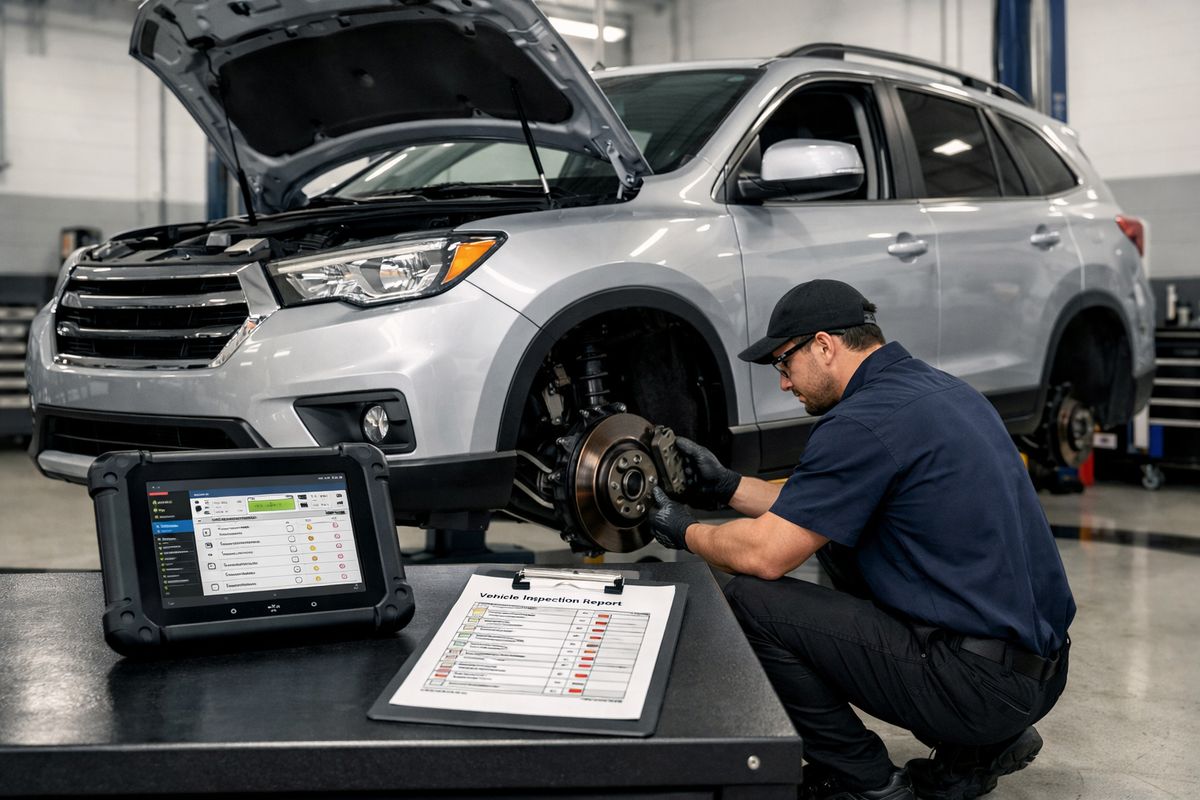
A slow oil leak can stay out of sight until the car sits on a lift. Brakes can feel decent on a quick drive and still be near the end of their life. Suspension wear often builds gradually, so you may not notice how loose or noisy the car has become.
Inspection reports also catch signs of patched collision work, frame damage, cheap repairs, and maintenance that got skipped for far too long. Maybe the tires are almost bald, the battery is weak, and the front control arm bushings are cracked. None of that jumps out in a casual meeting at a gas station.
That is why “it drove fine” is not a serious standard.
How much a used car inspection costs , and why it can save you money
In Vancouver and the Lower Mainland, a used car inspection often costs somewhere around $150 to $300, depending on the shop, the vehicle, and how detailed the service is. Some mobile inspectors may charge in a similar range, sometimes more for convenience or specialty vehicles.
That number can feel annoying when you are trying to keep the purchase affordable. But compare it with one repair. Front brakes and rotors, new tires, or suspension work can easily cost more than the inspection on day one. Engine or transmission repairs can turn that fee into the cheapest part of the whole deal.
What You’re paying for
You are paying for technician time, a hoist or lift, diagnostic tools, and experience. A parking-lot look cannot show you what a leak looks like from underneath. It cannot measure brake wear properly or scan the car’s computer for hidden trouble.
You are also paying for honesty from someone who has no emotional stake in the sale. That matters more than people admit.
How to use the results to negotiate
An inspection report gives you something concrete. If the shop finds bald tires, leaking shocks, and rear brakes close to done, you now have facts instead of hunches.
At that point, you can ask for a lower price, request repairs before purchase, or walk away. Not every issue should kill the deal. Used cars come with wear. But the report helps separate normal aging from “this will cost you a lot next month.”
Where to get a used car inspection in vancouver and the lower mainland
You have a few options: independent repair shops, brand-specific specialists, mobile inspectors, and dealerships. The best choice usually depends on the car, the location, and how easy the seller is to work with.
An independent shop is often the easiest starting point because it feels neutral. Brand specialists can be especially useful if you are buying something known for specific issues, like an older BMW, Subaru, or Volkswagen. Mobile inspectors can help if the seller refuses to travel far, though a full shop with a lift is often more thorough.
A practical move is to line up a shop near the seller. If you’re meeting someone in Surrey, Burnaby, or near Kingsway in Vancouver, book a nearby inspection slot before you even go for the final look. That keeps the process normal and avoids last-minute scrambling.
Independent shop vs. dealer inspection
Independent shops often feel more objective, especially if the seller already uses a dealership and you want a second opinion. Many are also faster to book and easier to talk to about what matters now versus what can wait.
A dealer inspection can make sense for a brand-specific vehicle. Dealer technicians may know common model issues better and have model-specific tools or software. Still, dealer does not automatically mean better. What matters is whether the inspection is thorough, documented, and clear.
What to ask before booking
Before you commit, ask what the inspection includes. Ask whether the car will get a road test, whether the shop scans for codes, and whether you get a written report.
Also ask whether urgent repairs are separated from future maintenance. That detail matters. You need to know the difference between “this needs attention soon” and “this car should not be bought at this price.”
How to arrange an inspection without making the deal awkward
This part feels bigger in your head than it usually is.
A reasonable seller expects you to want an inspection, especially on a private sale. If the seller gets weird about it, that reaction tells you something. You are not accusing anyone of anything. You are just verifying the condition before spending real money.
Confidence helps here. Calm, normal, direct.
What to say to a private seller
Try something simple: “The car looks good, and if everything checks out, I’m interested. Before buying, I’d like to take it to an independent shop for a pre-purchase inspection.”
That works because it is polite and matter-of-fact. No drama. No apology for being careful.
Red flags if a seller pushes back
Watch for excuses like “another buyer is coming right now,” “my cousin already checked it,” “no time for a shop,” or pressure to leave a deposit before any inspection happens.
Those responses matter because honest sellers usually understand the request. Fast pressure is a classic way to push you past your better judgment. If someone refuses a reasonable inspection, assume the risk is higher, not lower.
What you can check yourself before paying for an inspection
You do not need to pay for an inspection on every sketchy listing. A basic filter saves time and money.
Your job at this stage is not to diagnose the car. It is to spot obvious warning signs before you spend more.
Quick walkaround checklist
Take a few minutes and check the tires for uneven wear, the body for rust spots, the ground for fresh fluid leaks, and the exhaust for smoke. Look at the VIN, which is the vehicle identification number, and make sure it matches the paperwork and the dashboard tag.
Turn the key on and look for warning lights. Some lights should briefly appear and then go out. If a light never comes on at all, that can be suspicious too. Pay attention to signs of very recent cleaning, especially greasy engine shine, heavy air freshener, or suspiciously damp carpets.
Questions to ask before you book
Ask for service records, accident history, title status, recent repairs, and the reason for selling. Ask whether the seller is open to an independent inspection before you drive across town.
The answer to that last question can save you an entire wasted afternoon.
Common myths about used car inspections
Bad assumptions cost budget buyers real money. A few myths keep showing up because they sound sensible right up until the repair estimate lands.
“If it drives fine, It’s fine”
A smooth ten-minute drive proves very little. Many expensive problems do not show up in a short loop around local streets. Transmission issues may appear only when fully warmed up. Suspension problems can feel subtle. Brake wear can stay hidden until a proper inspection.
Driving fine is nice. It is not proof.
“A dealer sale means You’re safe”
Dealer cars are not automatically trouble-free. Some have been reconditioned well. Some have had the bare minimum done to get them sale-ready.
If a vehicle is sold as-is, or with limited recent work, you can still end up dealing with worn tires, brakes, leaks, or electrical issues soon after purchase. The dealership setting feels reassuring, but the car itself still needs evaluation.
“An inspection will tell you everything”
An inspection reduces risk. It does not predict the future with magic certainty.
A mechanic can catch existing problems, warning signs, and neglected maintenance. But no inspection can promise that a sensor will not fail next month or that an older starter will last another year. The goal is a smarter decision, not perfect certainty.
The smartest way to decide after the inspection
Getting the report is not the hard part. Interpreting it calmly is.
Almost every used car will have something on the list. The question is whether those items are normal, manageable, and already reflected in the price.
Good buy, fair buy, or walk away?
A good buy is a car with minor issues, decent maintenance, and no serious mechanical or structural problems. A fair buy is one that needs some work, but the repairs are predictable and the seller adjusts the price enough to make sense.
A walk-away car usually shows structural damage, major leaks, transmission trouble, obvious neglect, or a long list of overdue repairs stacked on top of each other. One issue might be manageable. Five expensive ones at once usually are not.
One simple next step
Before saying yes to any used car, line up an independent inspection and let the report do the talking. That one move can save your budget from the kind of “deal” that stops feeling cheap the second you drive it home.
Frequently asked questions
How long does a used car inspection take?
Most inspections take about one to two hours, depending on the shop and how detailed the service is. If the shop includes a road test, lift inspection, and computer scan, expect it to take a bit longer.
Who pays for the used car inspection?
Usually, you do as the buyer. That is standard, because the inspection is for your protection. In some cases, a seller may agree to split the cost, but that is not something to count on.
Can a seller refuse a pre-purchase inspection?
Yes, a seller can refuse. But that refusal is useful information. If someone will not allow a reasonable inspection at a nearby shop, the safest move is often to walk away.
Is a mobile inspection good enough?
Sometimes, yes, especially if the inspector is experienced and uses proper diagnostic tools. But a full shop inspection with lift access is usually more thorough because the underside of the car can be checked more clearly.
Should you get an inspection on a dealer car too?
Yes, especially if the vehicle is older, sold as-is, or only lightly reconditioned. A dealer lot does not erase mechanical wear, past damage, or deferred maintenance.
What if the inspection finds problems?
That depends on the type of problem and the price of the car. Minor wear can be used to negotiate. Major issues like structural damage, serious leaks, or transmission trouble are often a reason to leave the deal behind.