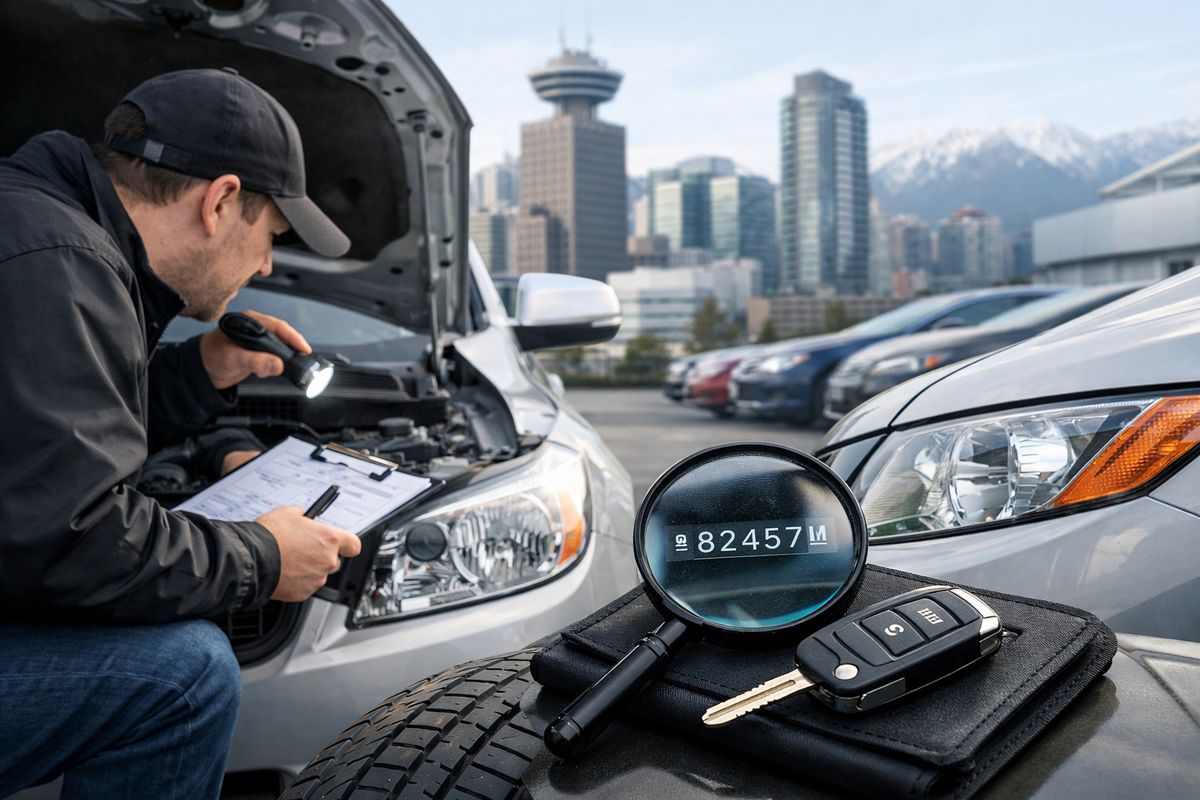
A used car can look spotless in a Richmond parking lot and still be one pothole away from showing you everything that’s wrong with it. A smart used car inspection Vancouver routine starts with the fastest deal-breakers first, then works down into the details that actually matter, so you don’t waste time on a car that was never worth chasing.
In plain terms, a used car inspection is a structured check of the car’s condition, history clues, and road behavior before you buy. The goal is simple: spot expensive problems early, avoid overpaying, and know when a proper shop inspection is worth the money.
Here’s what you’ll learn in this guide:
The first red flags to check
How to do a quick walk-around
What the interior can reveal
What to look for under the hood
How to test drive properly
Which paperwork matters most
When to book a pro inspection
Vancouver-specific trouble spots
A 10-minute priority checklist
Used car inspection in vancouver: what to check first
The trick is not to start with the fun stuff. Not the touchscreen, not the leather, not the sunroof. Start with the ugly possibilities, because ugly possibilities are what drain your budget later.
If a car fails the first few checks, move on. That’s not being picky. That’s being efficient. In the Lower Mainland, where rain, stop-and-go traffic, hills, and coastal moisture all add extra wear, a clean listing photo means almost nothing on its own.
Start with the big red flags before anything else
Before you look at trim level, fuel economy, or whether the seats fold flat, check for signs that the car’s story doesn’t make sense. A five-minute first pass can save you from spending an hour talking yourself into a bad idea.
Mismatch between the story and the car
Listen closely to how the car is described, then compare that story to what’s actually in front of you. “Lady-driven” or “mostly highway kilometres” means nothing if the driver’s seat is crushed, the steering wheel is shiny from heavy use, and the pedals look tired.
Maintenance records matter here. A few missing receipts are normal. Big gaps are not. If oil changes, brake service, or major repairs have no paper trail, you’re relying on memory and optimism. That’s a bad combo when money is on the line.
Low-kilometre claims deserve extra attention. A car showing modest mileage but heavy interior wear can be telling a different story. If you’re trying to make sense of age, mileage, and condition together, it helps to understand what matters more between years and kilometres.
Signs of accident damage or poor body repairs
You don’t need body-shop experience to spot suspicious repairs. Stand back and look down both sides of the car. Panel gaps should look even. If one side of the hood sits higher, one door looks slightly tucked in, or the trunk closes with a twist instead of a clean shut, something may have been repaired badly.
Then get closer. Look for paint that changes shade between panels, rough edges around trim, and overspray on rubber seals or plastic pieces. Foggy headlights on just one side can also hint at a replacement after a collision. Same with cracked trim that seems newer than the rest of the car.
Here’s the thing: cosmetic damage is one thing. Bad structural repair is another. If the car looks straight only from ten feet away, keep your guard up.
Rust, leaks, and other walk-away problems
In Vancouver, rust doesn’t always show up like an old prairie truck with flaking fenders. It can start quietly around wheel arches, under door edges, under the hatch, or underneath the car where constant moisture hangs around.
Crouch down and look under the rocker panels and wheel wells. Surface rust can be manageable. Crusty underbody corrosion, bubbling paint, or rust near suspension mounting points is a different conversation. That can turn into a hard no very quickly.
Also check the ground where the car was parked. Fresh oil spots, coolant drips, or anything wet under the engine bay should get your attention. Inside the cabin, a strong mold or mildew smell is another walk-away clue, especially after a rainy week.
Do a simple walk-around that catches more than You’d think
A basic walk-around is easy, fast, and surprisingly revealing. Most sellers expect you to glance at the paint and kick a tire. Almost nobody checks with purpose.
Tires, wheels, and brake clues
Tires tell the truth fast. Uneven wear on one edge can point to alignment problems, worn suspension parts, or previous impact damage. If one tire is much newer than the others, ask why. Maybe it was a flat. Maybe it was curb damage. Maybe it was something bigger.
Check tread depth across the width of each tire, not just the center. Also look for the tire’s age code on the sidewall. Even if tread looks decent, old rubber can harden and lose grip. Wheels with heavy curb rash can hint at rough city use, and deep scoring on visible brake rotors can suggest overdue brake work.
If the numbers start adding up in your head, that matters. Tires, brakes, and suspension work can change the whole value equation, which is why it helps to know how to compare asking prices against real used-car value.
Glass, lights, and mirrors
Small glass chips have a habit of turning into full cracks at the worst time. Check the windshield carefully, especially near the edges. That’s where little damage can spread.
Look inside the headlights and taillights for moisture. Water inside a light housing usually means a bad seal or a cheap replacement. Mismatched headlights can point to repair history, and broken mirror adjusters are more than annoying, they can also hint at minor impact damage or neglected maintenance.
These details matter because they affect safety, inspection readiness, and the bigger picture of how the car was treated.
Doors, hood, trunk, and seals
Open everything. Seriously, everything. Doors should swing cleanly and latch without a shove. A sagging driver’s door can mean worn hinges, but it can also hint at body flex or previous repair work.
Lift the hood and trunk. Check the rubber weather seals around openings for tears, flattening, or signs of water getting past them. In hatchbacks especially, worn seals can lead to damp cargo areas and hidden mildew. If a trunk looks like it’s been taken apart recently, pay attention.
This is one of the easiest checks to do, and one of the most skipped.
Check the cabin for wear, water damage, and electrical problems
The interior usually gives up secrets faster than the exterior. A shiny detail job can hide a lot outside. Inside, wear patterns are harder to fake.
Wear that does not match the odometer
A low-kilometre car should generally feel tight and lightly used. If the steering wheel is slick, seat bolsters are split, pedals are worn smooth, and common buttons are faded, that story falls apart.
The cabin is like a pair of running shoes. You can tell pretty quickly if somebody actually used them every day. Don’t ignore obvious mismatch between displayed mileage and lived-in wear.
Mileage alone also doesn’t decide whether a car is a smart buy. A well-kept higher-kilometre car can beat a neglected low-kilometre one by a mile, which is why it helps to get clear on when higher mileage is a real problem and when it isn’t.
Damp carpets, musty smells, and flood clues
Pull back floor mats. Press into the carpet with your hand. Check the trunk floor, spare tire well, and edges of the headliner. If anything feels damp, smells musty, or shows staining, something is getting in.
Around Vancouver, clogged sunroof drains, poor hatch seals, and windshield leaks are common enough to take seriously. Hatchbacks and wagons can be especially sneaky here because water can collect in back corners where nobody looks.
Musty interiors are not just annoying. Moisture can damage wiring, cause mold, and lead to ongoing electrical headaches.
Test every button before you get attached
Try every switch before you start imagining the car in your driveway. Power windows, locks, mirrors, seat controls, heated seats, the backup camera, infotainment, wipers, blower fan, and air conditioning all deserve a quick test.
Small failures stack up fast. One dead window motor, one flaky screen, and one weak blower fan can turn a decent deal into a repair list. If the seller shrugs and says, “It probably just needs a fuse,” assume nothing.
Look under the hood without overthinking it
You do not need to diagnose an engine in a driveway. You just need to notice whether anything looks neglected, leaking, missing, or suspiciously cleaned.
Fluids, belts, and battery basics
Check the engine oil on the dipstick if the seller allows it. Oil should look like oil, not thick sludge or metallic glitter. Coolant should be at the proper level and look reasonably clean, not rusty or muddy. Brake fluid should not be empty or dark like old coffee.
If the car has hydraulic power steering, check that fluid too. Then scan the belts for obvious cracks and look at the battery terminals for corrosion, which usually looks like crusty white or blue buildup.
None of this has to be perfect. But neglected basics often travel in groups.
Hoses, leaks, and DIY cleanup tricks
Look around the engine for wet spots, oily residue, or dried coolant crust, often white, pink, or green depending on the fluid. Squeeze visible rubber hoses lightly if accessible. Brittle or wet hoses deserve attention.
A spotless engine bay can sound reassuring, but the catch is that fresh cleaning sometimes hides leaks. It’s like mopping the floor right before a landlord shows up. Not always suspicious, but suspicious enough to look closer.
Warning labels, VIN stickers, and missing parts
Factory stickers can tell you more than expected. Check for the VIN label on the dash and door jamb, and look for manufacturer labels under the hood. Missing labels, mismatched VIN tags on body panels, or odd gaps where covers and clips should be can hint at prior repairs.
If the numbers don’t line up, stop there and sort that out before talking price. For a closer look at history checks, claims, and branding, see what a BC vehicle report can actually reveal.
Take a test drive that actually tells you something
A test drive should do more than confirm the radio works. It should tell you how the car starts, brakes, steers, shifts, and behaves when nobody is posing for a listing photo.
Cold start, idle, and first impressions
A bad cold start is never a small detail to ignore. If possible, ask for the car to be cold when you arrive. The first minute can reveal hard starting, rough idle, smoke from the exhaust, rattles, warning lights, or fuel and coolant smells.
Pay attention to how quickly the idle settles. A brief high idle on startup can be normal. Shaking, hunting, or obvious misfiring is not. If the seller has warmed the car up before you got there, ask why.
Steering, suspension, and brake feel
Drive on mixed roads if possible, not just a smooth block around the seller’s house. A rough side street, a few turns, and some stop-and-go traffic near a place like Kingsway will tell you more than a perfect road ever will.
Notice whether the car pulls to one side, clunks over bumps, or vibrates through the steering wheel. Brakes should feel firm and predictable, not soft, grabby, or noisy. Steering should not feel strangely heavy or loose.
Transmission, acceleration, and highway speed
Automatic cars should shift cleanly without harsh bangs, delayed engagement, or slipping revs. Manual cars should take up smoothly without clutch shudder or grinding. During acceleration, hesitation or surging can point to engine or transmission trouble.
If you can, get the car to 60 to 80 km/h. Strange humming, vibration, or drivetrain noise often shows up there. Older cars can have minor quirks, sure, but major shift problems are expensive enough that you should not talk yourself past them.
Check the paperwork before you talk price
A good-looking car can fall apart the second paperwork enters the conversation. This is where appearance meets reality.
Registration, VIN, and ownership details
Match the VIN on the dash, the door jamb, and the paperwork. If one digit is off, that is not a minor typo until proven otherwise. Also make sure the seller’s identification and ownership details line up with the registration.
Ask whether any money is still owed on the car. Liens can complicate a sale fast. If you want the full process after the sale makes sense, it helps to review the BC paperwork steps that come after agreeing on the car.
Service records and repair receipts
Useful records show dates, kilometre readings, and what was actually done. Oil changes, brake jobs, tires, battery replacement, and larger repairs all help build a believable timeline.
Gaps are not automatic deal-breakers. Patterns matter more. A car with regular maintenance for years and one missing stretch is very different from a car with almost no record of anything.
Vehicle history reports in british columbia
A history report can reveal insurance claims, branding, registration changes, and odometer issues. That can confirm what you already suspect, or completely change the conversation.
But don’t treat a clean report like a golden ticket. A report helps. It does not replace seeing the car, driving it, and checking it in person.
Know when to get a professional pre-purchase inspection in vancouver
Your own check is for filtering. A professional inspection is for confirming. Once a car makes your shortlist, this is where spending a little can save a lot.
What a pre-purchase inspection usually includes
A proper pre-purchase inspection usually includes a lift inspection, brake and suspension checks, fluid leak review, underbody inspection, road test, and a diagnostic scan. A diagnostic scan is simply a computer check for stored trouble codes and electronic faults.
That matters because some problems won’t show up on a quick driveway look. If you’re debating the value of paying for one, here’s a good breakdown of when a budget-friendly inspection still makes sense.
How much a used car inspection in vancouver costs
In Vancouver, a used car inspection often lands somewhere around $150 to $300, though specialty vehicles and European brands can cost more. Mobile inspections may price differently from shop-based ones, and very detailed inspections can go higher.
That can feel annoying when you haven’t even bought the car yet. Still, it’s usually cheap compared with one surprise suspension repair, one transmission issue, or one hidden oil leak.
Mobile inspection vs. shop inspection
Mobile inspections are convenient. You meet at the seller’s location, save time, and get quick feedback. For newer mainstream cars, that can be enough to rule a car in or out.
Shop inspections usually go deeper because the car can go on a lift and get a better underbody look. For older cars, performance cars, or European models, the full shop visit is often the smarter call. If you’re still deciding how much inspection is enough, this helps answer whether you really need one before buying.
Focus on vancouver and lower mainland trouble spots
A local used car inspection should account for local wear. Vancouver driving is its own kind of stress test.
Rain, road salt, and coastal moisture
Constant wet weather can speed up rust, brake wear, interior moisture issues, and electrical gremlins. Coastal air does the rest. Even a car that looks glossy outside can hide corroded fasteners, damp carpets, or water intrusion.
Salt exposure is usually less severe than in some colder provinces, but mountain trips and imported cars can change that. Moisture is the bigger everyday issue.
Hills, commutes, and stop-and-go wear
Brake wear tends to show up sooner when a car spends life on hills or in traffic. That means more heat, more stopping, and more wear on rotors, pads, and suspension parts. Long crawls through Burnaby, Surrey, Richmond, or North Van aren’t easy on automatics either.
Clutches can age quickly in heavy stop-and-go driving. Suspension parts also take a beating on patched streets, speed bumps, and rough side roads. A commuter car in this region can be mechanically more tired than the odometer suggests.
Out-of-province and recently imported cars
Out-of-province cars deserve extra scrutiny. Different climates can mean hidden rust, different repair history, or emissions equipment that was altered or removed. Imported cars can also come with paperwork gaps or odd equipment differences.
If the paperwork feels messy or the story keeps changing, slow down. There’s no shortage of used cars in the Lower Mainland.
Use a simple first-check checklist before you commit
Once you know what to look for, the process gets a lot less overwhelming. You stop reacting to shiny paint and start noticing what matters.
Your 10-Minute used car inspection priority list
Use this order when you first see the car:
Check body gaps and paint mismatch
Look for rust, leaks, and mildew smells
Inspect tires, wheels, and brakes
Open doors, hood, and trunk
Check cabin wear against mileage
Test lights, windows, and electronics
Watch the cold start and warning lights
Drive at city and moderate speed
Match VIN and paperwork details
Book a pro inspection if it passes
Save that list to your phone. It works.
When to walk away and when to keep going
Worn tires, a weak battery, or a stone chip in the windshield can be manageable if the price reflects it. Structural rust, transmission slip, flood signs, major accident repair clues, and mismatched paperwork are a different class of problem.
The simple rule is this: maintenance items can be negotiated, hidden damage usually cannot. If the car raises too many questions before you even own it, imagine what happens after.
One smart next step before you buy
If a car passes your first check, don’t hand over a deposit just because it “feels right.” Take that shortlist car for a proper inspection and let a shop confirm what your eyes and test drive started to reveal.
That one move separates a decent gamble from a smart purchase.
Frequently asked questions
How long does a used car inspection take in vancouver?
A quick personal check can take 10 to 20 minutes. A professional pre-purchase inspection usually takes about 60 to 90 minutes, depending on the shop and the car.
Is a vehicle history report enough on its own?
No. A history report is helpful, but it won’t tell you everything about current mechanical condition, hidden leaks, poor repairs, or interior water damage.
What should you check first on a used car?
Start with deal-breakers: accident signs, rust, leaks, mold smells, warning lights, and paperwork mismatch. Cosmetic details come later.
How much should you pay for a pre-purchase inspection?
For many used cars in Vancouver, expect roughly $150 to $300. Specialty vehicles, luxury brands, and deeper inspections can cost more.
Should you get an inspection for a cheap used car?
Yes, especially if the car is old enough that one major repair would wipe out any savings. On lower-budget cars, inspection money often saves more than it costs.
Can you inspect a used car yourself before calling a mechanic?
Yes. A basic walk-around, interior check, cold start, and test drive can filter out obvious bad options. That first pass helps you avoid paying for professional inspections on cars that already show major red flags.