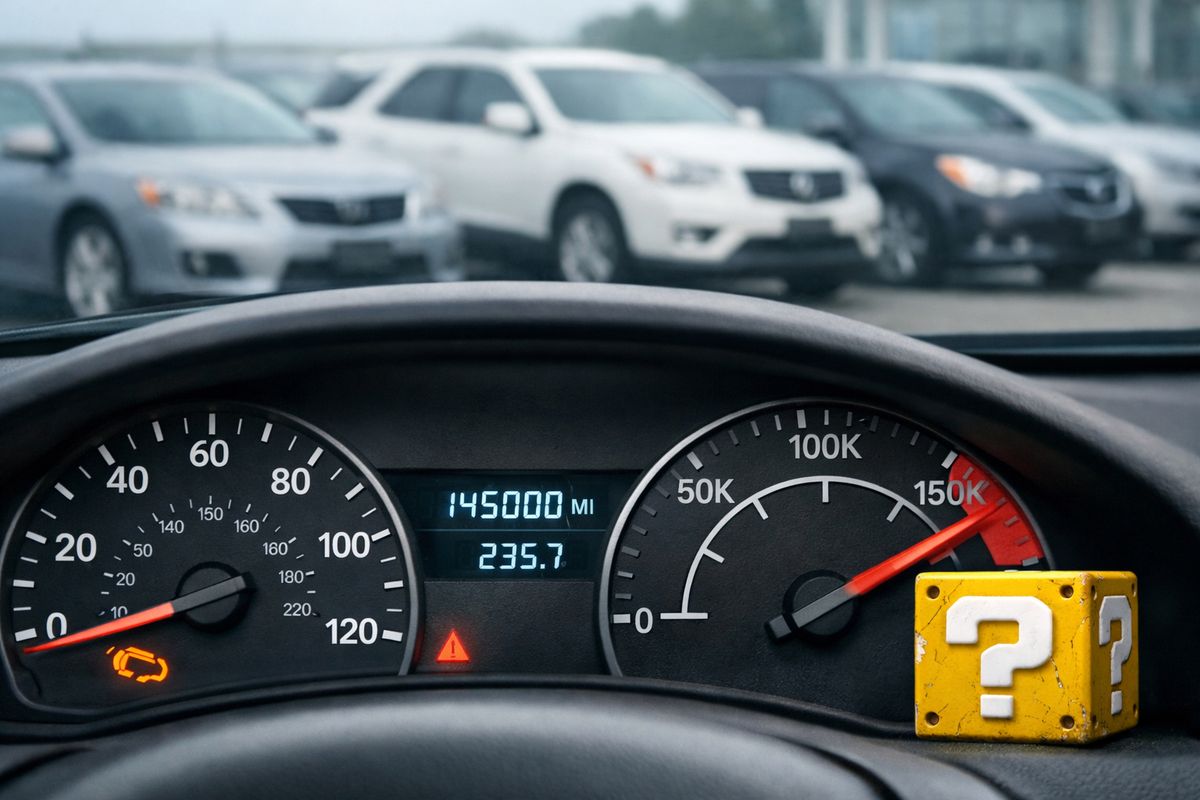
Shopping with a used car mileage limit in mind makes sense, but the odometer is only one piece of the puzzle. A car with 130,000 well-kept highway miles can be a safer bet than a neglected 70,000-mile city car, and once you know what to look for, that number on the dash gets a lot less mysterious.
What counts as “too much” mileage on a used car?
The plain answer is simple: there is no single magic mileage limit that makes a used car good or bad.
Condition beats the odometer every time. A clean, well-serviced car with higher mileage is often a better buy than a lower-mileage car that missed oil changes, sat for long stretches, or got hammered over potholes and curbs. Here's the thing, mileage tells you how much a car has been used. It does not tell you how well it was treated.
That matters because shoppers often fixate on a number. Once the odometer rolls past 100,000 miles, a lot of people panic. That reaction is outdated. Modern cars regularly go far beyond that if maintenance stayed on schedule. The better question is not “what’s too much?” but “what shape is this specific car in for its age and price?”
The quick rule of thumb: miles per year
A useful benchmark is about 12,000 to 15,000 miles per year. That range gives you a quick way to tell if a used car has below-average, average, or above-average mileage for its age.
Think of it like checking the wear on a pair of running shoes. Two pairs might be the same age, but the one worn every day will look different from the one used only on weekends. Cars work the same way. A five-year-old vehicle with 60,000 to 75,000 miles is roughly in the normal zone. Far above that is not automatically bad, but it deserves a closer look.
How to do the math in 30 seconds
The math is easy: divide the current mileage by the car’s age.
If a 2019 car has 84,000 miles in 2026, that works out to about 12,000 miles per year. That is normal. If a 2019 car has 125,000 miles, that is closer to 18,000 miles per year, which is above average. If you are scrolling listings on your phone while waiting at a light in Burnaby or parked outside a coffee shop in Surrey, that quick check tells you a lot right away.
Still, treat it as a starting point, not a verdict.
Why “average” Doesn’t always mean “better”
Average mileage sounds reassuring, but average does not mean best.
A car with lower-than-average mileage can actually hide problems if it sat too much. A car with above-average mileage may have spent most of its life on the highway, had regular service, and still drive beautifully. The catch is that mileage without context can fool you. That is why it helps to compare the odometer with the service history, overall condition, and price. If you want a deeper side-by-side look at this tradeoff, it helps to understand how age and mileage pull in different directions.
Why mileage matters , and why It’s not the whole story
Mileage matters because moving parts wear out. More miles usually means more wear on the engine, transmission, suspension, brakes, wheel bearings, tires, and even the driver’s seat and steering wheel. That part is real.
But mileage is not the whole story because it does not show how those miles happened. A car can rack up miles gently on open roads, or it can crawl through stop-and-go traffic, bounce over rough streets, and miss every scheduled service. Those are very different lives.
So yes, the odometer deserves attention. It just should not make the decision for you.
Highway miles vs. city miles
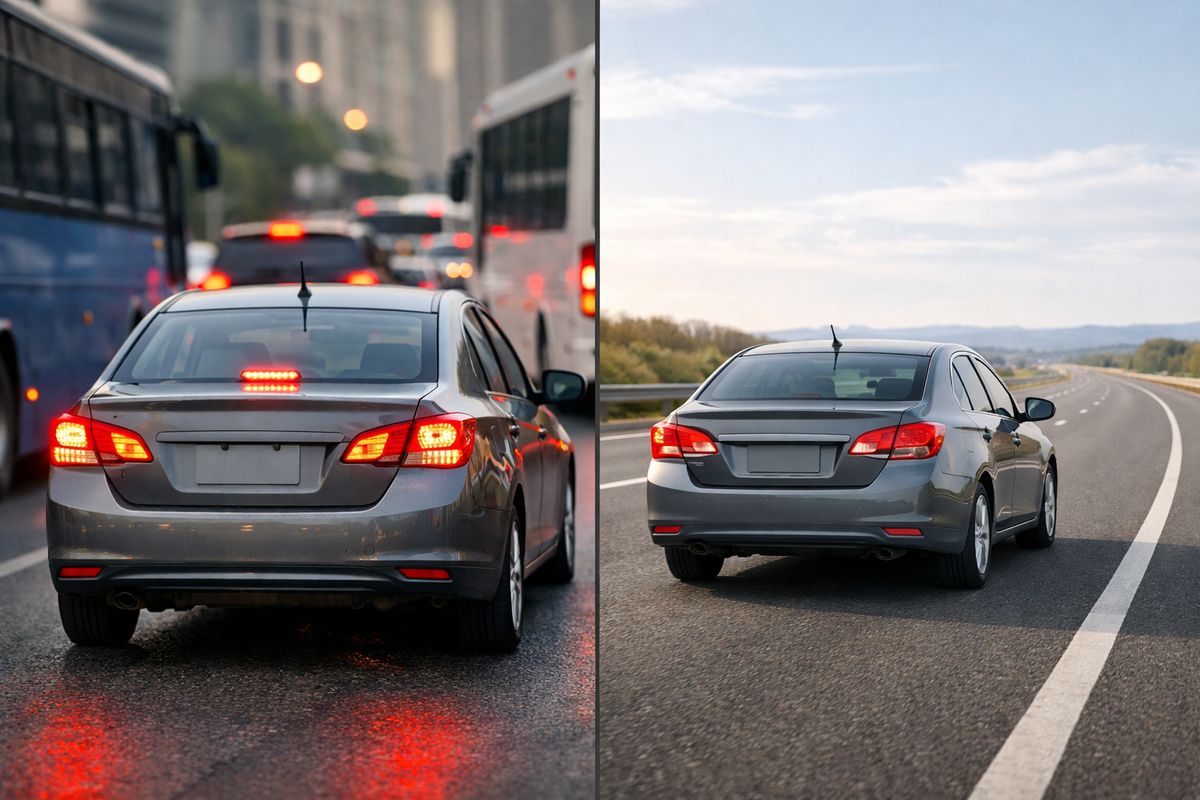
Highway miles are usually easier on a car than city miles. Steady speeds, fewer stops, and less gear hunting put less stress on the brakes, transmission, and engine than constant stop-and-go driving.
Picture the difference between cruising along Highway 1 and inching through downtown Vancouver traffic or crawling onto the Ironworkers during rush hour. One is smooth and consistent. The other is repeated braking, idling, short acceleration bursts, and more heat cycles. A 120,000-mile commuter car that mostly lived on highways can be healthier than an 85,000-mile car that spent every weekday in dense city traffic.
Age vs. mileage: which one should you care about more?
You should care about both, but neither should win by default.
An older low-mileage car can sound perfect until you remember what sitting does. Seals dry out. Tires age even if tread looks decent. Batteries weaken. Fluids get old. Rubber hoses and belts do not care that the car stayed parked. On the other side, a newer car with higher mileage may have been used constantly but serviced on time, which is often easier for a vehicle than long periods of inactivity.
That is why the smartest approach is balance. Look at year, mileage, condition, history, and price together. If you are comparing cars at the higher end of the odometer, this guide on when mileage starts getting genuinely risky helps put that number in context.
Mileage ranges: what to expect at different odometer numbers
Mileage bands are useful because they help you judge risk faster. Not perfectly, but fast enough to narrow your search.
Under 60,000 miles
This is the range that feels safest to most shoppers, and for good reason. Cars under 60,000 miles usually have less wear, fewer major repairs behind them, and stronger resale appeal later.
But price tends to rise fast here. You pay for that comfort. Low mileage only matters if the condition supports it. A shiny exterior and a freshly vacuumed interior do not prove much. You still want records, smooth driving behavior, and signs that routine service happened on time.
60,000 To 100,000 miles
This is often the sweet spot for value. You avoid the premium attached to very low-mileage cars, but you are not necessarily stepping into high-risk territory either.
At this point, look for upcoming maintenance. Brakes, tires, battery, fluids, spark plugs, and model-specific scheduled service can all show up around this range. If a seller already handled those items, that adds real value. If not, your budget needs room for them. It also helps to know how to spot a price that looks fair at first glance but really isn’t.
100,000 To 150,000 miles
This range scares off some shoppers, which is exactly why it can hold good deals.
A car in this bracket is not automatically too much. But inspection matters more now. Pay close attention to maintenance history, transmission behavior, suspension wear, fluid leaks, tire condition, and whether major service was done when it should have been. A car that shifts smoothly, idles steadily, tracks straight, and comes with a stack of receipts can still be an excellent buy here.
If the records are thin and the seller leans on phrases like “runs great” without proof, be careful.
Over 150,000 miles
Now the tradeoffs get sharper. The price is lower, but the risk is higher. Your budget has less room for bad surprises because one repair can wipe out the savings.
That said, some high-mileage cars still make sense. A commuter car with documented oil changes, recent brakes, newer tires, transmission service, and a clean inspection can be worth buying if the price reflects the mileage. This is especially true if you need basic transportation, plan to keep the car modestly, and are realistic about future repairs. If this is the kind of car you are considering, it helps to read more about when a high-odometer car is still worth a look.
The service history is the real deal-breaker
Service history matters more than the odometer. Full stop.
A six-digit mileage number with strong records is less worrying than a five-digit number with missing history. Skipped oil changes, mystery gaps, and vague stories do more damage to your confidence than honest, documented mileage ever will. Maintenance is the difference between normal wear and accelerated wear.
Records that actually help you
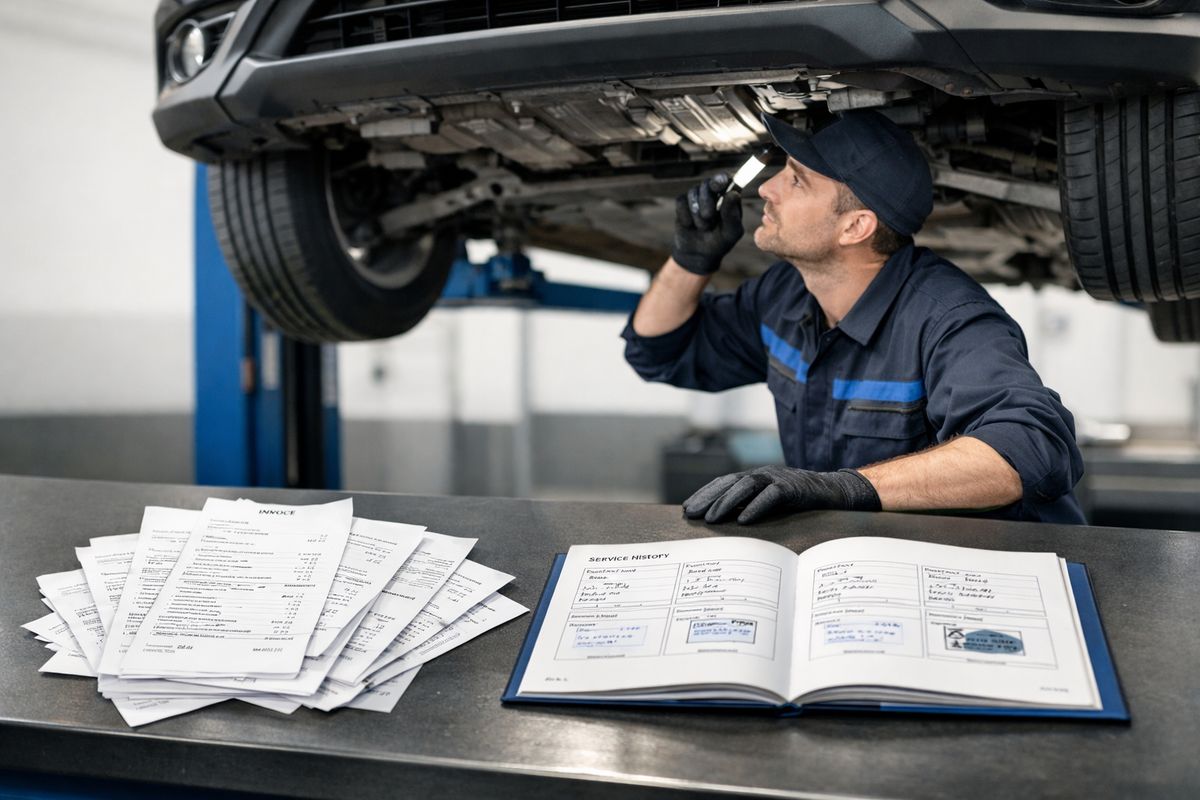
Useful paperwork is simple, practical stuff: oil change records, brake work, tire replacement, transmission service, coolant service, timing belt replacement if the car uses one, and receipts for major repairs. You do not need a perfect binder worthy of a museum display. You just want a believable pattern that shows the car was looked after.
A vehicle history report also helps fill gaps by confirming mileage consistency, registration history, and certain reported incidents. Before you get too attached to any listing, check what a history report in BC can actually show you.
Red flags that should make you pause
Some warning signs deserve instant skepticism. Inconsistent mileage records are one. Missing service history on an older or higher-mileage car is another. Fresh detailing can be nice, but if the engine bay is suspiciously cleaned while the seller gets vague about repairs, pause. Dashboard warning lights, rough cold starts, leaks, strange smells, or answers that dance around basic questions are not small things.
Trust the pattern, not the pitch.
What changes in vancouver and the lower mainland
Local driving adds its own twist to the mileage question. Vancouver and the Lower Mainland are easier on cars than places with heavy winter salt, but local conditions still create wear that the odometer does not fully capture.
Wet roads, bridge traffic, hills, short commutes, and coastal moisture all matter. A car can have moderate mileage and still show extra wear in brakes, tires, suspension, or underbody components because of how and where it was driven.
City commuting, short trips, and stop-and-go wear
Short trips are harder on cars than most people realize. If a car spends its life doing ten-minute runs around Vancouver, Richmond, or the North Shore, the engine may not fully warm up often enough. That can increase moisture buildup in the oil, create more wear during cold starts, and put extra stress on the battery.
Add stop-and-go traffic, hills, and lots of braking, and your “average mileage” car can be more worn than expected. This is why the same odometer number can mean very different things depending on daily driving patterns.
Rust, moisture, and underbody checks
The coast is kinder than salt-heavy regions, but moisture still matters. Constant dampness can contribute to corrosion underneath, especially around brake lines, exhaust components, suspension hardware, and subframes.
An underbody check is worth your time. Surface rust is common and not always alarming. Heavy flaking rust, corrosion around mounting points, or signs of water-related neglect are another story. If you want a more detailed look at what to examine before money changes hands, start with the first areas to inspect on a local used car.
How to tell if a high-mileage used car is still a good buy
At this point, the goal is simple: stop fearing the number and start judging the car.
A high-mileage used car is still a good buy when the condition, records, driving feel, and price all line up. If one of those pieces is weak, the deal gets shakier fast.
Signs the car has been cared for
The best signs are boring, and that is exactly what you want. Consistent service records. Matching tire wear. Smooth shifting. A stable idle. Clean fluids. A test drive without rattles, smoke, warning lights, or strange vibrations. Doors, windows, and electronics should work normally. Nothing should feel improvised.
You are looking for evidence of steady ownership, not flashy presentation.
Signs you could be buying someone Else’s problem
Bad signs usually show up in clusters. Rough starts, clunks over bumps, burnt smells, slipping transmission behavior, uneven panel gaps, mismatched tires, suspicious leaks, or a price that seems weirdly cheap all deserve caution. A bargain stops being a bargain the second it needs a transmission or head gasket.
This is also where the seller matters. The experience is different depending on where the car is coming from and how the sale is handled.
Why a pre-purchase inspection is worth it
A pre-purchase inspection is the easiest way to separate a solid car from a money pit. It is not overkill. It is protection.
Even if you know cars fairly well, an independent mechanic on a lift can spot leaks, worn suspension parts, accident repairs, rust issues, and maintenance needs that are easy to miss in a driveway. If the car has high mileage, this step becomes even more valuable. Before you commit, read why an inspection before buying is money well spent.
Financing, warranty, and resale limits to keep in mind
Mileage affects more than wear. It can also affect how easy the car is to finance, whether you can buy certain warranty coverage, and how much value is left when you want to sell later.
This part gets overlooked a lot, especially when a listing price looks attractive.
Mileage limits from lenders and warranty providers
Some lenders and aftermarket warranty companies place limits on vehicle age, mileage, or both. A car with very high mileage may qualify for fewer financing options or come with higher borrowing costs. Warranty coverage can also get thinner or disappear entirely once a vehicle crosses certain thresholds.
If you are shopping near the edge of your budget, that matters. A cheaper car with limited financing and no warranty can end up costing more in the real world than a slightly pricier car with stronger terms.
What mileage means for future resale
Think one move ahead. If you buy a car today at 80,000 miles and drive 12,000 miles a year for three years, you may sell it around 116,000 miles. That is a different resale conversation than buying at 120,000 miles and trying to sell at 156,000.
Neither choice is wrong, but you should go in with open eyes. Higher-mileage cars usually depreciate differently, and the buyer pool narrows as the number climbs. If you know you will want to swap cars again soon, mileage at purchase matters more.
Common questions about used car mileage limits
Is 100,000 miles too much for a used car?
No, not by itself. A car with 100,000 miles can still be a smart buy if it has been maintained properly, drives well, and is priced accordingly. Service records and a pre-purchase inspection matter more than the round number on the dash.
Is low mileage always better?
No. Very low mileage on an older car can mean long periods of sitting, which brings its own problems. Dry seals, aging tires, weak batteries, stale fluids, and neglected maintenance can all show up on cars that were rarely driven.
Does mileage matter more than model year?
Neither should be judged alone. Mileage tells you how much a car was used. Model year tells you its age, design, and likely safety and tech features. Condition, maintenance history, and driving history tie those two numbers together.
What’s The one thing you should check first?
Check the service history first. Then compare the miles per year and book an independent inspection before making a decision. That simple sequence will protect you from a lot of expensive mistakes.
Is a high-mileage commuter car better than a low-mileage city car?
Sometimes, yes. Steady highway driving is usually easier on a car than constant stop-and-go city use. A commuter car with strong records can be a better buy than a lower-mileage car that spent years doing short trips in traffic.
Where should your attention go before the odometer?
Start with maintenance records, overall condition, and inspection results. The odometer matters, but it should never be the first or only filter.
The simple rule that actually works
If you want one rule to keep in your head, use this: buy the best-maintained car you can afford, not the lowest-mileage car you can find.
That one shift changes everything. Instead of chasing a number, you start looking for proof. Proof of oil changes, proof of real upkeep, proof from the test drive, and proof from an inspection. Try that on your next few listings, and bad deals start standing out fast.