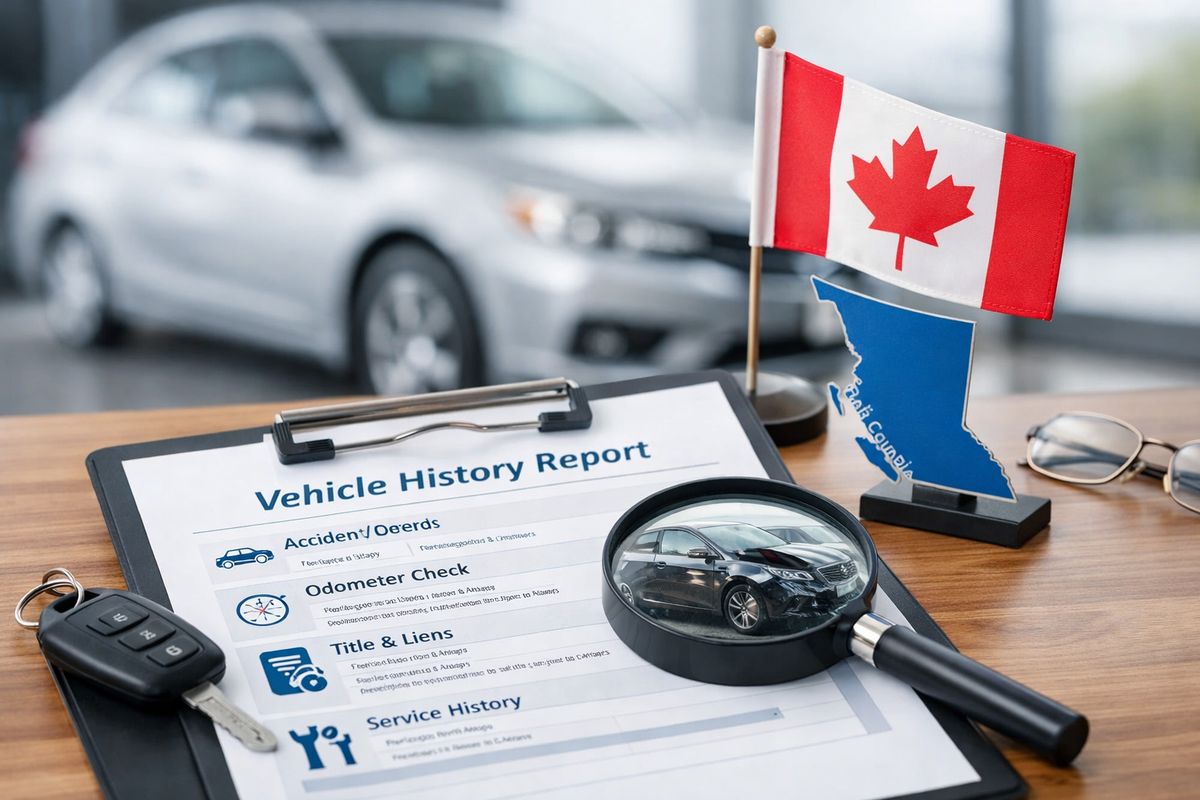
A vehicle history report BC buyers use is the closest thing to a background check for a used car. Before you hand over cash in a Richmond parking lot, meet somebody off Kingsway, or burn half a Saturday driving across the Fraser for a Facebook Marketplace listing, it shows you the story behind the shiny photos and the asking price.
What a vehicle history report in BC actually is
A vehicle history report is a record summary tied to a car’s VIN, which stands for vehicle identification number. Think of the VIN as the car’s fingerprint. Once that number is searched, the report pulls together pieces of the vehicle’s past: ownership history, registration events, reported damage, title brands such as salvage or rebuilt, lien records, theft records, and sometimes odometer readings.
That matters because used cars are rarely sold with the full story sitting on the windshield. A seller can say a car was “well cared for” or “just had one small bump,” but the report gives you something more useful than a sales pitch. It gives you a paper trail.
In plain English, a vehicle history report helps answer a simple question: what happened to this car before it got here?
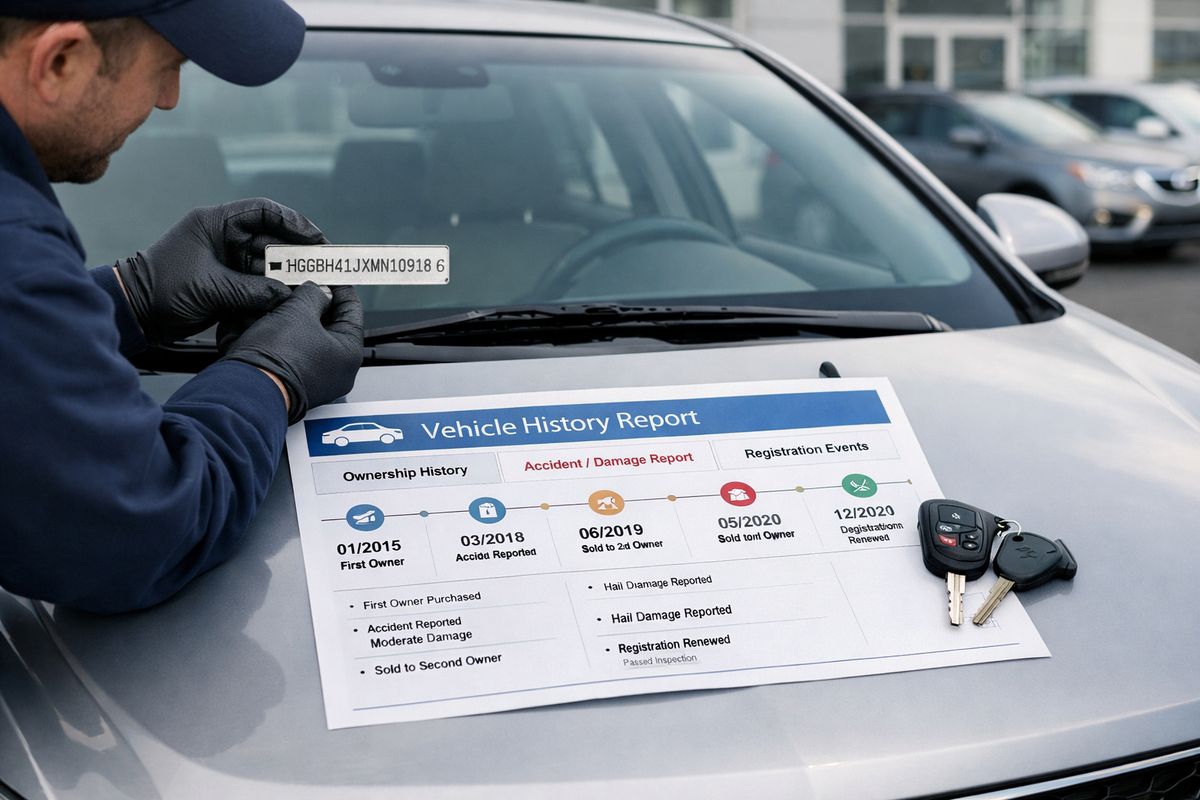
Why it matters so much in BC used-car shopping
In BC, this step is not optional if you want to avoid expensive surprises. Private sales move fast, good listings disappear quickly, and a clean-looking car can still come with a messy history. A vehicle history report is one of the fastest ways to cut through guesswork.
That speed matters in Vancouver and the Lower Mainland. A seller in Surrey might have three people messaging within an hour. A car in Burnaby can look spotless in photos, get detailed that morning, and still have a write-off history buried underneath. The report helps you sort promising cars from problem cars before emotions get involved.
It also keeps you grounded on price. If you are already comparing what similar used cars are really worth, history becomes part of the value equation. Two identical Civics can be priced the same, but one with a clean history is simply worth more than one with a rebuilt brand and past collision claims.
What a report can save you from
The obvious risk is overpaying. If a vehicle has major past damage, a salvage history, or a lien, the asking price should reflect that. If it does not, you are not getting a deal.
It can also save you from buying a rebuilt vehicle without realizing it. That happens more often than most shoppers expect, especially when a listing focuses on low kilometers, new tires, and a fresh detail job. A report may also reveal an unpaid lien, which means somebody else still has a legal claim to the car because of unpaid debt. That is not a small paperwork issue. It is the kind of problem that can follow you after the sale.
Then there are odometer problems and insurance write-offs. Odometer fraud is less common than general accident history, but if the mileage trail looks wrong, that is enough reason to slow down. The same goes for a car that was written off and later returned to the road.
What a report Can’t tell you on its own
Here’s the thing: a strong report does not mean the car is automatically good. It only means the paper history looks decent.
A vehicle history report cannot tell you how the transmission shifts today, whether the alignment pulls slightly right on Highway 1, or whether flood water got into a connector and caused electrical gremlins six months later. It also cannot confirm that repairs were done well. “Damage reported” and “properly fixed” are not the same thing.
That gap matters. The report tells you the car’s documented past. A test drive and an inspection tell you what the car feels like now. If you are wondering how much an independent check really matters, this is exactly why it matters.
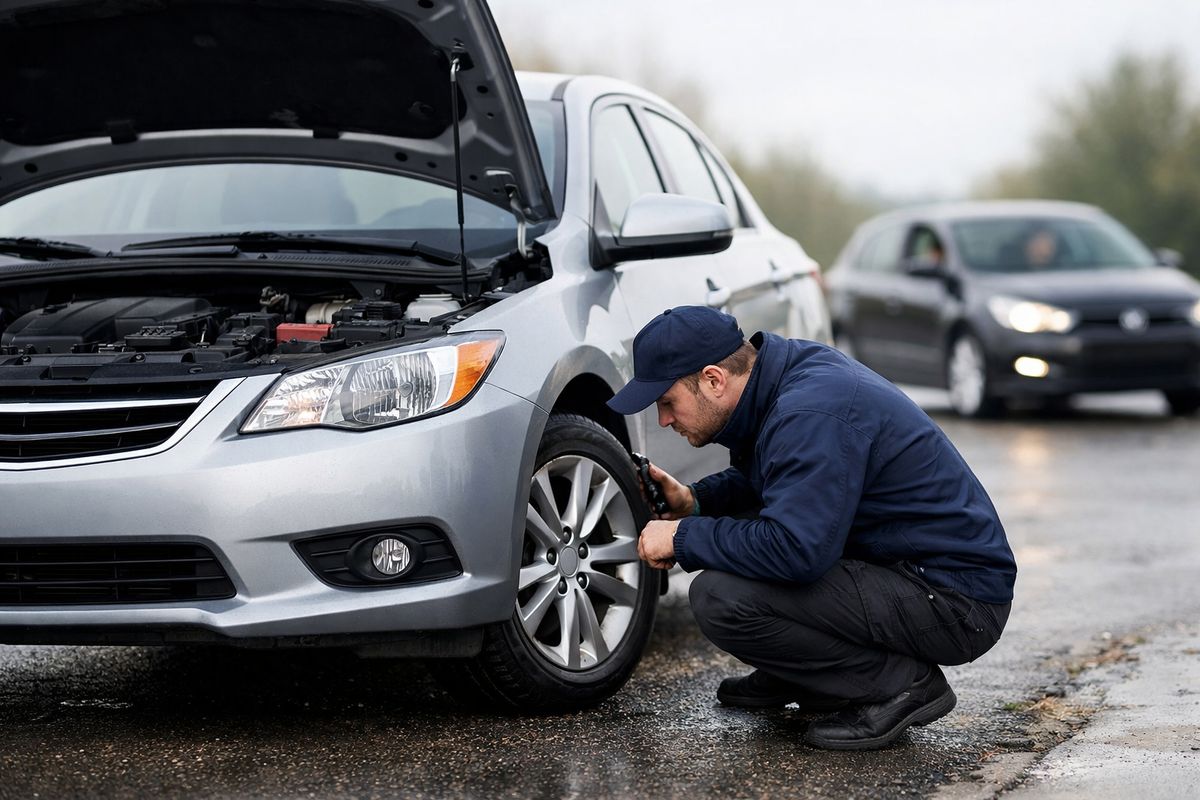
What shows up on a vehicle history report in BC
Most reports look busy at first. Lots of dates, codes, provinces, and labels. But the core sections are pretty simple once you know what you are looking at.
Ownership and registration history
This section shows where the vehicle has been registered and how ownership changed over time. A few ownership changes over several years are normal. Cars get traded in, sold privately, moved between provinces, or passed through dealers.
The catch is frequent flipping. If the car changed hands again and again in short stretches, pay attention. That does not always mean trouble, but it can mean nobody wanted to keep it for long. A vehicle bouncing from owner to owner can be like an apartment with five tenants in one year. Maybe nothing is wrong. Maybe everybody found out the same thing.
Registration location can be useful too. A car that spent years in one province and suddenly appears in BC after major damage deserves a closer look. Same with a car that moves through several channels quickly before landing in a private sale.
Accident and damage records
This is the section most shoppers jump to first, and for good reason. It may show collision claims, damage estimates, insurance claims, and repair-related records.
The dollar amount matters, but not in a simple way. A small claim is not always minor in real life. Sometimes damage was repaired cheaply or reported incompletely. On the flip side, a larger claim is not always a reason to run. Some vehicles are repaired properly and continue for years without issue.
What matters most is context. Was it one isolated claim years ago, or multiple incidents close together? Was the damage followed by a salvage or rebuilt brand? Did the seller mention it clearly, or did you find it yourself? Those details tell you more than a raw number on a page.
Title brands: rebuilt, salvage, and other labels
A title brand is the legal status attached to a vehicle because of its history. In BC, the brands shoppers usually care about most are salvage and rebuilt.
Salvage generally means the vehicle was damaged badly enough that an insurer considered it uneconomical or unsuitable to repair for normal road use. Rebuilt means that same vehicle was repaired and approved to return to the road after required steps were completed.
That does not make every rebuilt car a terrible purchase. But it absolutely changes the conversation. Safety, insurance, financing, and resale value all get affected. Some lenders are less willing to finance branded vehicles, and some buyers will not touch one later when you try to sell. If you are weighing whether a branded car is ever worth it, history and repair records matter more than the discount alone.
Lien information
A lien means somebody else may still have a legal financial interest in the vehicle because money is still owed on it. Usually that means a lender financed the car and the debt has not been fully cleared.
In a private sale, this matters a lot. If you pay a seller and the lien is still active, the situation can get ugly fast. The seller’s loan problem does not magically disappear because the car changed driveways.
If a report shows a lien, treat it as something to resolve before payment, not after. Clear documentation matters here. Verbal promises do not.
Odometer readings and possible rollbacks
Mileage records can help you spot inconsistencies. You are looking for a basic story that makes sense over time. The numbers should move upward in a normal pattern as the car ages.
If the mileage suddenly drops, freezes for an unusually long period, or does not line up with service stickers, wear on the steering wheel, or general condition, that is the catch. Something may be off.
Most of the time, odometer trouble is less common than collision history or branding. Still, it is worth checking because mileage affects value directly. If you are already sorting out what counts as too many kilometers for a used car, accurate mileage is the foundation for that judgment.
Theft records and insurance write-offs
Some reports show whether a vehicle was reported stolen, later recovered, or declared a total loss by an insurer. A recovered stolen vehicle is not automatically a bad buy, but it deserves more scrutiny.
Why? Because the issue is not just the theft event itself. You want to know what happened during that missing period. Was the car stripped, damaged, raced, smoked in for weeks, or repaired poorly afterward? The report opens the door to those questions.
Insurance write-off history matters even more. A total loss decision means the insurer decided the damage or recovery situation crossed a major line. If that vehicle returned to the road, you need the full story.
Where BC vehicle history data comes from
These reports are not magic. They are only as good as the records feeding them.
ICBC, registration databases, and insurance records
In BC, provincial insurance and registration systems can supply some of the most useful data. That often includes registration events, branding details, and certain insurance-related damage history.
For you, that means local records can reveal whether a car was branded, registered consistently, or tied to past claims. That is especially useful when shopping private sales, where the listing itself may include very little hard detail. It also pairs well with a practical guide to the paperwork side of buying a used car in BC, because history only helps if the documents match the transaction.
Police, repair, auction, and industry sources
Some reports also pull from police databases, auction records, repair networks, fleet records, and other industry sources. That broader net can help show theft events, auction appearances, or service-related mileage entries.
Auction records can be especially revealing. If a car passed through an auction shortly after major damage and now appears as a private sale with a vague description, that pattern tells a story. Not always a deal-breaking story, but definitely one worth reading carefully.
Why some events never appear
Not every problem ends up on a report. That is the part many shoppers misunderstand.
If somebody backed into a pole, paid cash to fix the bumper, and never involved insurance, the report may stay silent. Same for small driveway repairs, unreported scrapes, or cut-rate bodywork done off the books. Missing data does not mean nothing happened. It only means nothing made it into the systems feeding the report.
That does not make the report useless. It just means you should treat it as one tool, not the whole toolbox.
How to read a vehicle history report without getting lost
A lot of first-time buyers make the same mistake: opening the report and trying to read every line equally. That is exhausting and not very effective.
Start with the VIN and vehicle details
First, confirm the report matches the exact car in front of you. Check the VIN, year, make, model, trim, and any body style or engine details shown.
If this part is off, stop there. Nothing else matters if the report is for a different vehicle. VIN mismatches are not a minor typo. They are a hard stop.
Look for the big red flags first
Before getting lost in dates, scan for the issues that matter most right away: title brands, active liens, total-loss history, theft status, major damage claims, and odometer inconsistencies.
This is your triage pass. Within a minute or two, you should know whether the car deserves more attention or less. If multiple serious flags show up together, you are usually better off moving on and putting energy into a cleaner option.
Then check the timeline for gaps or odd patterns
After the big flags, read the report like a story. Look at the sequence of events. Did the car have major damage and then quickly change hands? Was there a long quiet stretch followed by an auction listing? Did ownership change repeatedly over a short period?
Odd patterns are not proof on their own, but they often point to the questions worth asking. That is also where you can spot mismatches between a polished listing and a messy timeline.
Common red flags for used-car shoppers in vancouver and the lower mainland
Local used-car shopping has its own rhythm. Listings move fast, private sellers often keep details short, and attractive pricing can pull you in before you have checked the basics.
A very clean listing with very little paper trail
A spotless ad can be strangely persuasive. Fresh wash, shiny wheels, parked under good light, maybe a few words about “runs great.” But a clean listing is not the same as a clear history.
If the report is thin, inconsistent, or missing obvious context, slow down. The trick is not to confuse presentation with transparency. Paint can shine while the backstory stays muddy.
Rebuilt status without clear repair records
A rebuilt vehicle without supporting paperwork deserves extra caution. If the seller cannot show inspection paperwork, repair invoices, and a clear explanation of what was fixed, you are being asked to trust too much.
That gets even more important with higher-priced cars. If you need to negotiate based on that history, knowing how to push back on the asking price without guessing can save you from paying clean-title money for a branded vehicle.
Price That’s lower than similar cars nearby
A lower-than-market price in Burnaby, Surrey, or Coquitlam usually has a reason. Sometimes the seller just wants a quick sale. More often, there is history, condition, or paperwork behind the discount.
That is where the report earns its keep. It helps you tell the difference between a real bargain and a problem dressed up as urgency. If you are checking how to spot an overpriced or suspicious listing quickly, history is one of the fastest clues.
How to use the report before you buy
The report is most useful when you use it early, not after you already fell in love with the car.
Use it before you meet the seller if possible
Get the VIN first if you can. Running the report before meeting saves time, gas, and hassle, especially if the car is across town or across a bridge.
That sounds obvious, but it is easy to skip when a listing looks good and the seller says there is lots of interest. Do the check anyway. A ten-minute report review can save a two-hour trip.
Match the report against the Seller’s story
Compare the report with what the seller tells you. If the seller says there was “just one small bump” but the report shows multiple claims, a rebuilt brand, or auction history, that mismatch matters more than the explanation afterward.
Honest sellers usually line up with the paperwork. The details may not be perfect, but the basic story should match. When the story keeps changing, trust the documents.
Pair it with an independent inspection
A report helps you ask better inspection questions. If you see prior front-end damage, ask for a close look at alignment, frame repair, tire wear, radiator support, and cooling components. If the report shows repeated claims, ask the mechanic to watch for signs of uneven repair quality.
That is why a pre-purchase check by an independent mechanic is so useful. The report tells you where to point the flashlight.
Questions buyers ask about vehicle history reports in BC
Is a vehicle history report required for a private sale in BC?
Not usually in the sense of a legal requirement for every private sale. But as a buying decision, it is one of the smartest checks you can do. Required or not, skipping it is an easy way to miss expensive problems.
Who pays for the report?
Sometimes the seller provides one. Sometimes you order it yourself. Either can work, but a fresh report is better than an old screenshot or a cropped image with missing pages. If money is about to change hands, current information is worth having.
Is one report enough?
For many lower-risk cars, one solid report is a good start. For higher-value vehicles, branded titles, cross-province histories, or anything with warning signs, checking more than one source can make sense. Extra verification is cheaper than fixing a bad purchase.
What should you do if the report shows a problem?
You have three practical options: ask more questions, negotiate based on documented history, or walk away. Walking away often feels annoying in the moment, but honestly, it is usually the cheapest fix available.
Does a clean report mean the car is good?
No. A clean report means no major recorded issues showed up in the databases searched. The current mechanical condition can still be poor, which is why the report should always be paired with a test drive and inspection.
A simple checklist for your next used-car search
Used-car shopping gets easier once you stop treating every listing like a mystery. Get the VIN, run the report, scan for brands, liens, damage, theft status, and mileage issues, then compare that history with the seller’s story and the car in front of you.
After that, book an inspection if the car still looks promising. That simple process will save you from a lot of bad detours and a few polished lemons. Try it on the next listing that catches your eye before you spend the time or the gas to go see it.