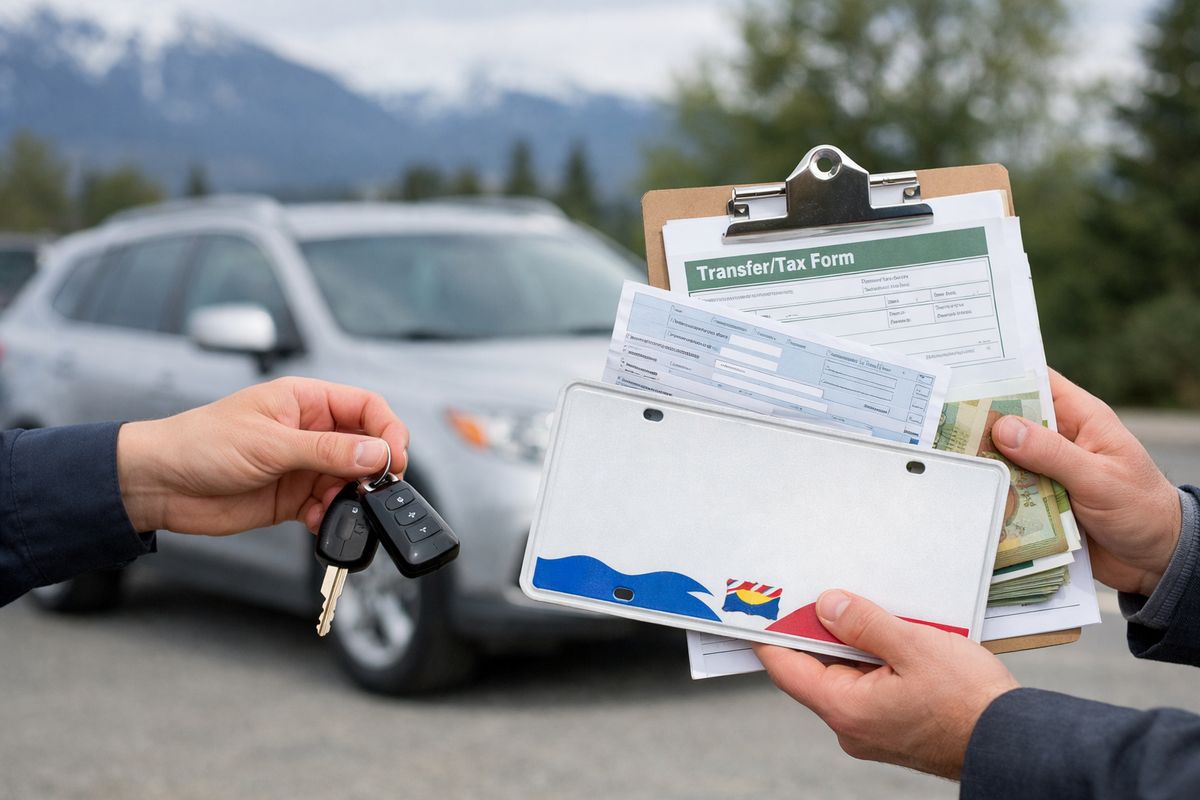
Buying a used car can feel done the moment you shake hands, but the vehicle transfer BC process is the part that actually makes the car yours. If you want to avoid a second trip to the broker, a bad surprise at the counter, or the awful feeling of realizing the paperwork does not match the car sitting in front of you, the steps below will keep everything clean and simple.
What you’ll need before you start the vehicle transfer in BC
A smooth transfer usually comes down to boring stuff done well. Papers, names, signatures, payment, insurance. Not exciting, but this is what saves you from standing at a broker desk in East Vancouver with one missing document and a seller who has already gone home.
Your ID, payment method, and contact details
Bring government-issued ID and make sure the name matches the name you plan to use on registration and insurance. If your address has changed recently, have the correct current details ready so the broker can enter everything properly the first time.
Also bring a payment method that works for taxes, fees, and insurance costs. The exact amount can vary, so do not show up assuming a small transfer fee is the whole bill. If you are still sorting out budget and total ownership costs, it helps to look at what a realistic used-car budget actually covers before purchase day.
The seller’s registration and signed transfer documents
The seller needs the current registration document, not an old photocopy stuffed in the glove box from years ago. On that registration, the transfer section has to be filled out clearly, with the correct names, date, and signatures.
Here’s the thing: tiny errors matter. A nickname instead of a legal name, a rushed signature in the wrong box, or a date that does not match your bill of sale can slow down the whole transfer.
Proof of insurance or a plan to set it up on the spot
You cannot legally drive away just because money changed hands. Insurance has to be active. In BC, that usually gets handled through an Autoplan broker during the same visit as the ownership transfer.
If you already have insurance on another vehicle, bring the details. If this is your first car, have your licence and personal information ready so the broker can set up coverage without extra back-and-forth.
A bill of sale with the key details
A simple bill of sale does a lot of work. It should include the date, purchase price, VIN, year, make, model, seller name, your name, and both signatures. Keep the wording plain and easy to read.
That one page can settle a lot later, especially if questions come up about price, included items, or the exact date the sale happened.
Step 1: confirm the car and seller details before money changes hands
This step is not optional. Before cash, e-transfer, or bank draft changes hands, make sure the car, paperwork, and seller all line up. Fixing a mismatch before payment is easy. Fixing it after payment is a headache.
Match the VIN on the car to the registration
Find the VIN on the vehicle, usually at the lower corner of the dashboard near the windshield or on the driver-side door frame.
Compare it character by character to the VIN on the registration.
Stop if even one letter or number does not match.
A VIN is like the car’s fingerprint. One wrong character is not a small typo to shrug off. It is a reason to pause the deal.
Verify the seller’s name and legal right to sell
Check the seller’s ID.
Compare the legal name on the ID to the name on the registration.
Confirm the seller is the registered owner or has proper authority to sell the vehicle.
If the story gets fuzzy here, do not push past it. A line like “it’s actually my cousin’s car” or “the registration is still under the old name” is a sign to stop and sort it out first.
Check for liens or financing issues
Ask directly whether any money is still owed on the car.
Request proof if the seller says a loan has been paid off.
Review a history report or lien information before completing the purchase.
A clean interior and shiny paint do not tell you anything about financing attached to the vehicle. For that side of the story, check what a BC vehicle history report can uncover. Paper problems are often more expensive than cosmetic ones.
Step 2: inspect the used car like you’re buying time, not just wheels
A cheap used car stops being cheap the second it needs tires, brakes, and suspension work in the same month. You are not just buying transportation. You are buying your next stretch of inconvenience, or peace and quiet.
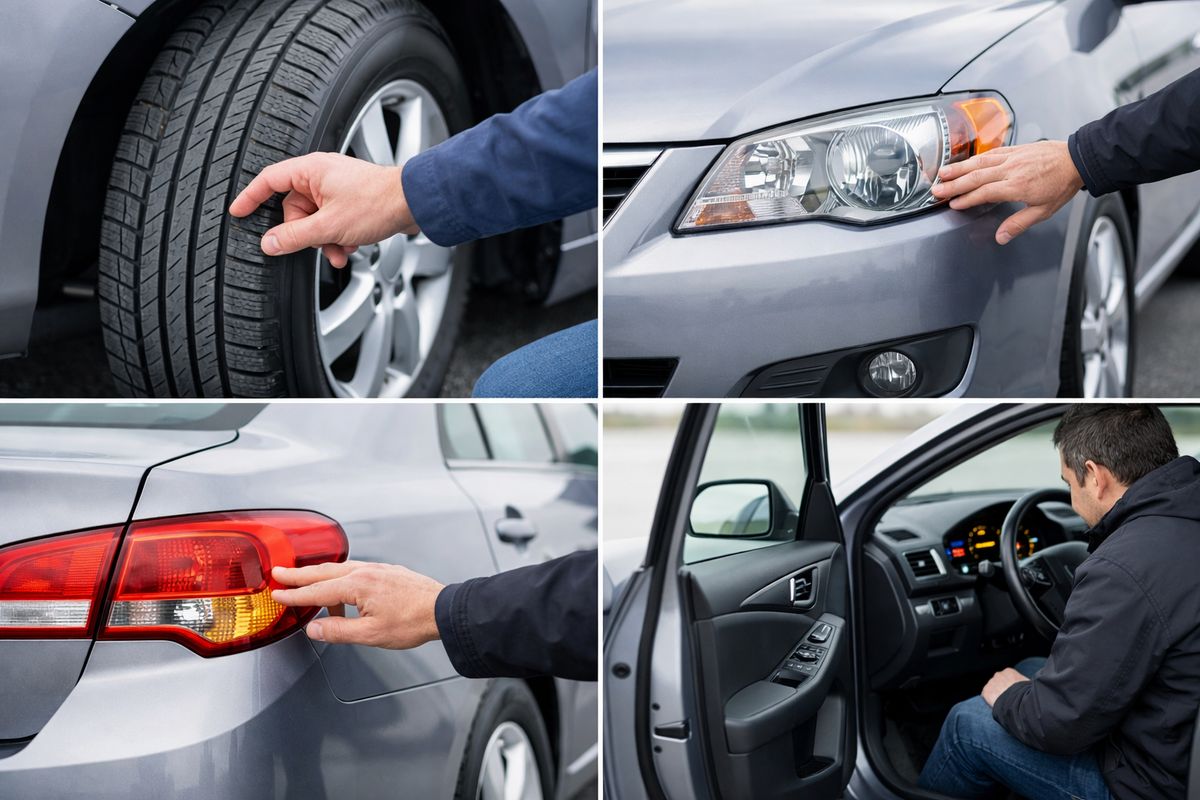
Look over the exterior, tires, and lights
Walk around the car in daylight if possible.
Check for rust, dents, cracked glass, and mismatched paint.
Look at tire tread and notice whether wear looks even.
Test headlights, brake lights, turn signals, and reverse lights.
Uneven tire wear can hint at alignment or suspension trouble. Mismatched body panels can point to past collision repairs. Little clues add up fast.
Test the basics inside the cabin
Start the car and look for warning lights that stay on.
Test the heat, AC, windows, locks, horn, and wipers.
Try the radio, backup camera, and charging ports if those matter to you.
Notice smells, especially mildew, coolant, or burnt oil.
If you want a deeper checklist, it helps to review what to check before buying around Vancouver. It is much easier to notice a missing feature or hidden issue when you already know where to look.
Take a proper test drive
Drive on regular city streets.
If possible, include a faster road so you can feel acceleration and braking at speed.
Listen for clunks, whining, vibration, or steering pull.
Try parking, reversing, and a few tighter turns.
A ten-minute drive near Kingsway in stop-and-go traffic can tell you more than a polished online listing ever will. If the transmission feels strange, the brakes pulse, or the steering wanders, believe the car, not the sales pitch.
Step 3: collect and complete the required transfer paperwork
Once the car checks out, get the paperwork done before anybody disappears for “just a minute.” Most transfer delays happen here, and usually for very fixable reasons.
Fill out the transfer section on the registration
Use the current registration document from the seller.
Fill in the buyer and seller details exactly as required.
Check spelling, address, date, and signatures before leaving.
Write clearly. Messy handwriting creates avoidable confusion, especially with names and addresses. If you want the bigger picture, this paperwork rundown for used-car buyers in BC helps keep everything organized.
Write a clear bill of sale
Enter the date of sale.
Write the purchase price.
Add the VIN, year, make, and model.
Include both full names and signatures.
Note any extras included in the sale, such as winter tires or a second key.
Do not overcomplicate it. Plain language wins here.
Record the sale price accurately
Write the actual amount paid.
Make sure the amount matches across the bill of sale and transfer documents.
Keep your payment record in case questions come up later.
The catch is that a price that looks suspiciously low can trigger extra questions. Saving a bit on tax is not worth creating a paperwork fight you cannot easily prove.
Step 4: visit an autoplan broker to transfer ownership and registration
This is the official handoff. In BC, a broker usually handles the transfer, registration, and insurance in one place, which is honestly much better than mailing forms into the void and hoping for the best.
Bring all documents in one folder
Put your ID, signed registration, bill of sale, and insurance details together.
Add any payment proof if the price might need support.
Bring lien or history documents if anything about the sale needs explanation.
A folder sounds almost silly, but it works. Instead of digging through a backpack or glove box at the counter, you can hand over exactly what is needed.
Pay the applicable taxes and transfer fees
Expect to pay transfer-related fees at the broker.
Expect applicable sales tax based on the declared purchase price.
Review the charges before paying so you understand what each amount covers.
Taxes are where buyers often get surprised. If you want a better sense of whether the car was priced fairly in the first place, look at how to compare similar used-car values before you buy.
Review the new registration before you leave
Check your name and address.
Confirm the VIN, year, make, and model are correct.
Review plate information and any insurance details.
Fix errors before walking out.
Typos are much easier to deal with while you are still standing at the counter.
Step 5: set up or update your insurance before you drive away
This part deserves your full attention. Ownership transfer and insurance are connected, but not identical. You need both.
Choose the right coverage for how you actually drive
Tell the broker how you use the car, commuting, occasional driving, or something in between.
Think about where you park, especially if street parking is part of daily life.
Choose optional coverage that fits the real risk, not just the lowest monthly number.
If insurance cost is a big factor, it helps to start with cars that tend to be cheaper to insure. The right car can make the coverage decision much less painful.
Transfer plates or get new ones if needed
Ask whether your existing plates can move to the new vehicle.
Confirm whether your situation calls for new plates instead.
Make sure the plate information on your paperwork matches what is on the car.
Do not assume the plates stay with the vehicle. That is one of those details that feels obvious until it is wrong.
Confirm when coverage starts
Ask for the exact date and time coverage becomes active.
Review the insurance documents before leaving.
Do not drive away until you are sure the policy is in effect.
Close enough does not count here. Active insurance means active insurance.
Step 6: handle tax, pricing, and value questions without getting stuck
This is where buyers sometimes feel blindsided. You agree on a price, arrive at the broker, and suddenly the numbers need explaining.
Understand how the purchase price affects tax
Use the real sale price on every document.
Make sure the amount is readable and consistent.
Keep your payment record in case the broker asks for clarification.
The amount on paper is not just a note for your records. It directly affects tax and how the transfer gets processed.
Be ready if the vehicle value is questioned
Stay calm if the broker asks about the declared price.
Show your bill of sale and any supporting details.
Be prepared to explain obvious condition issues that affected the price.
This happens most often when the number looks far below market value. A rough car with body damage, worn tires, and overdue maintenance may honestly sell lower, but you still want the paperwork to tell a believable story.
Keep copies of everything you sign and pay for
Save the bill of sale.
Save the registration paperwork.
Save insurance documents and receipts.
Take photos or scans the same day.
A small folder at home beats a frantic search six months later.
Step 7: register the car for practical next-day use
Once the transfer is done, you are not quite finished. A few small follow-up tasks make the car usable in normal life instead of just legally yours on paper.
Check that the registration stays in the vehicle
Put the current registration somewhere safe inside the car.
Make sure you can reach it quickly if needed.
Keep older paperwork at home, not mixed into the active documents.
This is one of those boring details that matters the first time you need it fast.
Update parking, toll, and building records
Update condo or apartment parking records.
Change work parking details if needed.
Update any gate, toll, or vehicle access information tied to plate numbers.
It is easy to forget this until a parkade gate refuses to open or a notice lands in your inbox.
Book any maintenance the car clearly needs
Make a short list of issues noticed during inspection or the test drive.
Book service for safety items first, especially tires and brakes.
Tackle small maintenance early before it turns expensive.
If you already know the car needs work, start with small maintenance jobs that save money later. A used car is much easier to live with when you deal with the obvious stuff right away.
Step 8: know the special cases that change the transfer process
Most private sales are straightforward, but a few situations come with extra steps. Spot those early and you save yourself a wasted trip.
Buying from a private seller versus a dealership
Expect more self-checking with a private sale.
Review every document yourself instead of assuming it is handled.
At a dealership, still read the paperwork before signing anything.
If you are still deciding where to buy, it helps to compare how private sales stack up against dealer purchases. The paperwork burden is one of the biggest differences.
Buying an out-of-province vehicle
Confirm BC requirements before purchase.
Ask whether an inspection or extra registration step applies.
Do not assume an out-of-province car can be transferred the same day without conditions.
This is the kind of detail to sort out before you commit, not after.
Buying for a family member or joint ownership
Confirm exactly whose name will go on registration.
Ask what ID and signatures are required for every listed owner.
Check requirements before showing up if the buyer is not present in person.
Extra names often mean extra document rules. It is much easier to ask first than redo forms later.
Common mistakes to avoid during a vehicle transfer in BC
Most transfer problems are not dramatic. They are annoying. And expensive in time.
Missing signatures or incomplete forms
Go line by line before leaving the seller. Then do it again before handing papers to the broker. One blank field can stop the process cold.
Driving before insurance is active
Do not assume the car is legal to drive just because the sale is done. Until coverage is active, keep it parked.
Trusting verbal promises instead of written details
If the sale includes repairs, extra tires, roof racks, or another key, put it in writing on the bill of sale. Spoken promises disappear fast once the deal is over.
Troubleshooting: what to do if something goes wrong
Sometimes the issue is small. Sometimes it is a hard stop. The trick is knowing which is which.
If the seller signed the wrong spot or filled out the form incorrectly
Do not scribble over mistakes and hope for the best. Ask the broker whether the document can be corrected neatly or whether it needs to be redone. Clean paperwork moves faster than patched paperwork.
If the VIN or vehicle details do not match
Stop immediately. Do not continue the transfer, do not complete payment, and do not drive the car away until the vehicle and paperwork match exactly. This is not a “sort it out later” problem.
If you cannot complete the transfer on the same day
Call or visit the broker and find out what stays valid and what needs to be redone. Some delays are harmless. Others affect signatures, insurance timing, or your ability to drive the car home that day.
What you should have when the transfer is done
At the end of the process, you want more than a handshake and a key. You want proof that the car is yours, insured, and ready for real life.
Your final vehicle transfer BC checklist
Before you consider the job finished, make sure you have:
current registration in your name
active insurance documents
confirmed plate details
a signed bill of sale copy
receipts for taxes, fees, and payments
If one of those is missing, fix it before moving on.
Your next best move after the purchase
Take five minutes when you get home and put every car document in one folder. Registration copy, bill of sale, receipts, insurance papers, everything. It feels small, but it is the kind of small habit that saves a huge amount of hassle later.
Frequently asked questions
Can you transfer ownership of a car in BC without a bill of sale?
A bill of sale is strongly worth having, even if other transfer paperwork is in place. It backs up the sale price, date, VIN, and the names involved, which helps if any detail gets questioned.
Can you drive a used car home before the transfer is finished?
No. You should not drive the car until ownership transfer and insurance are properly handled. A completed sale by itself does not make the car legal to drive.
What happens if the sale price looks too low?
The broker may ask questions or request more information. Keep the price accurate, readable, and consistent across documents, and hold onto proof of payment.
Do plates stay with the car in BC?
Not always. Plate handling depends on the situation, so confirm it during the broker visit instead of assuming the plates transfer with the vehicle.
What if the seller’s name does not match the registration?
Stop and sort it out before paying. If the seller is not the registered owner, or the paperwork does not explain the difference, the transfer can become a serious problem.
Is a same-day vehicle transfer in BC possible?
Yes, often. If the paperwork is correct, your ID is ready, and insurance is set up at the broker, the transfer can usually be completed the same day. The biggest delays usually come from missing signatures, mismatched details, or insurance not being arranged properly.