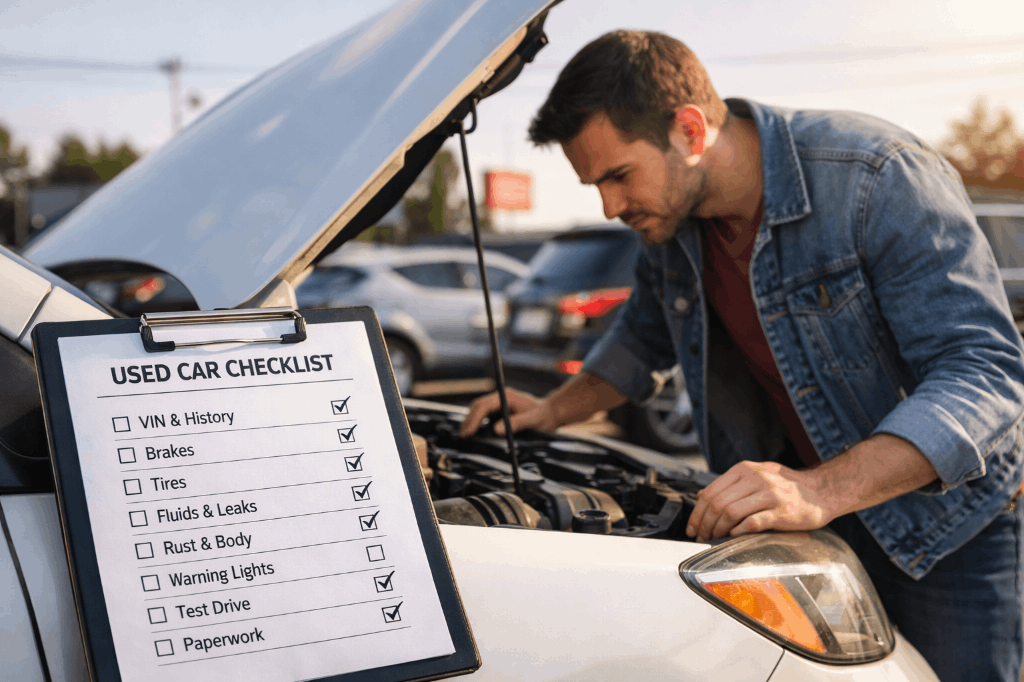
Buying a used car can save you money, but only if you check the right things before you commit. A vehicle can look clean, drive well for a few minutes, and still come with hidden mechanical problems, paperwork issues, or warning signs that change the real value of the purchase.
That is why it helps to slow the process down and use a clear checklist. Instead of relying on first impressions, you should look at the vehicle from several angles: its documents, history, visible condition, mechanical behaviour, and how it performs on the road.
This guide walks through 20 practical things to check before buying a used car so you can reduce risk, ask better questions, and make a more informed decision. If you want a broader step-by-step view of the buying process, you can also read our complete guide to buying an affordable used car in Vancouver.
Quick Answer: What Should You Check Before Buying a Used Car?
Before buying a used car, you should check the vehicle history, ownership documents, service records, exterior condition, tire wear, warning lights, fluid condition, cold-start behaviour, and overall performance on the test drive. For a more detailed inspection-focused walkthrough, see our used car inspection checklist guide. You should also confirm that the VIN matches the paperwork, review any recall history, and consider getting a professional pre-purchase inspection before making a final decision.
A used car should not be judged by appearance alone. The safer approach is to verify the paperwork, inspect the condition carefully, and make sure the vehicle behaves the way it should before any money changes hands.
Why a Used Car Checklist Matters
Many buyers miss important problems because they inspect the car casually or out of order. They may focus on paint, the interior, or how the car feels during a short drive while missing issues that matter more, such as poor maintenance history, uneven tire wear, fluid leaks, hidden rust, or incomplete paperwork.
A checklist helps you stay objective. It gives you a structure to follow, especially when you are under pressure, short on time, or dealing with a seller who wants to move quickly. It also helps you compare more than one vehicle fairly.
That matters even more for budget-conscious buyers. A lower price does not always mean lower risk. In many cases, a cheaper vehicle becomes more expensive after purchase if it needs repairs, tires, brakes, registration corrections, or overdue maintenance. If budget is a major part of your decision, our guide to budget used cars in Vancouver can help you think through value more carefully.
In the sections below, we will go through 20 checks in a practical order, starting with documents and background verification, then moving into condition, mechanical signs, and test-drive behaviour.
Documents and Background Checks
The first things you should verify are not cosmetic. Before you focus on paint, wheels, or how the car feels on the road, make sure the vehicle and the paperwork make sense together. Many costly mistakes begin when buyers skip this step and assume the seller’s explanation is enough.
These early checks help you confirm that the vehicle has a consistent identity, a believable ownership story, and fewer hidden surprises.
1. Make Sure the VIN Matches the Car and the Paperwork
Start by checking the VIN, or Vehicle Identification Number. It should match across the dashboard plate, door sticker, registration documents, and any vehicle history report you review. If the number is inconsistent anywhere, stop and clarify it before moving forward.
A VIN mismatch is not a small detail. It can point to paperwork errors, ownership problems, past damage issues, or in some cases a more serious problem with the vehicle’s identity.
2. Check That the Registration and Seller Details Make Sense
Review the registration carefully and confirm that the seller has the legal right to sell the vehicle. The name on the registration should match the seller’s identification, and the vehicle details should line up with what you are being shown.
If the seller is acting on behalf of someone else, ask for a clear explanation and supporting documentation. The more vague the story becomes, the more cautious you should be.
3. Review the Vehicle History Report Carefully
A vehicle history report can reveal important details such as accident records, branding, registration history, and other background information. It should not replace a physical inspection, but it can help you identify questions that need answers before you proceed.
Do not just glance at the report and move on. Look for gaps, repeated transfers, major claims, or anything that changes how you understand the vehicle’s past.
4. Ask for Service Records and Maintenance History
Service records help you understand how the vehicle was maintained over time. Oil changes, brake work, tire replacements, major repairs, and scheduled maintenance all help build a more complete picture of ownership.
Records do not guarantee that the vehicle is problem-free, but they do make it easier to judge whether the car was cared for consistently. When a seller can clearly explain the maintenance history and support it with documents, the vehicle is usually easier to evaluate.
5. Check for Open Recalls Before You Buy
Recall history is another part of risk reduction that buyers often overlook. A recall does not always mean you should avoid the vehicle, but you should know whether any open recalls still need to be addressed.
Use the VIN to check recall information through official manufacturer tools or trusted Canadian recall resources. This helps you understand whether a known safety issue is still unresolved.
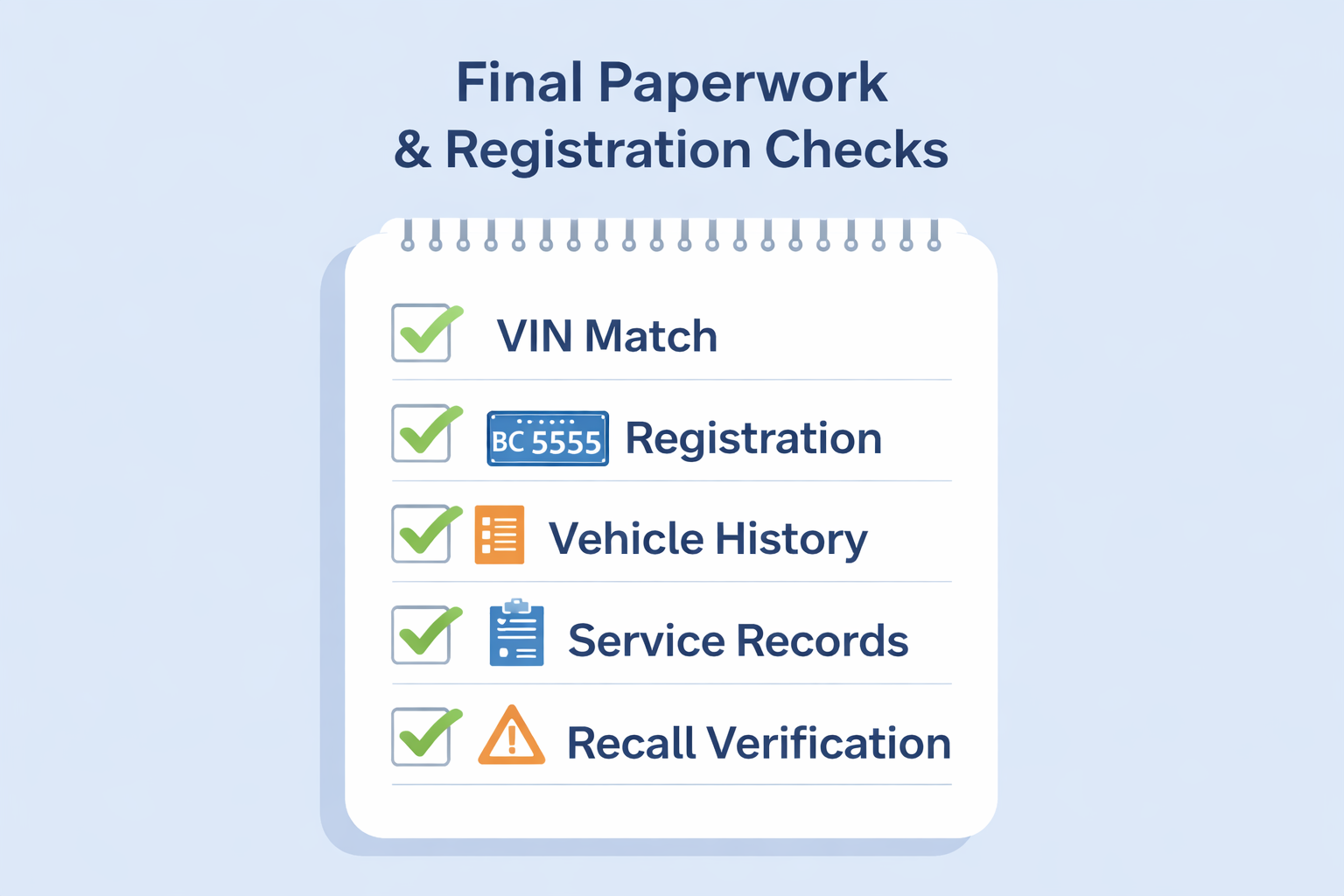
These five checks create the foundation for the rest of the inspection. Once the paperwork, history, and seller story make sense, you can move on to the physical condition of the vehicle with better context.
Exterior Condition Checks
Once the documents and background information look reasonable, the next step is to inspect the outside of the vehicle carefully. Appearance is only one part of the story. The real goal is to look for clues about accident history, neglect, hidden repair costs, and how the vehicle may have been used over time.
A quick walk-around is not enough. Slow down, look from several angles, and pay attention to details that reveal inconsistency.
6. Look for Paint and Body Panel Inconsistencies
Stand back and examine the vehicle from both sides in good lighting. Check whether the paint colour looks even across panels and whether the gaps between doors, hood, trunk, and fenders appear consistent.
Uneven panel gaps, overspray, waviness in the reflection, or one panel that looks newer than the rest can suggest previous body work. That does not automatically make the vehicle a bad choice, but it does mean you should ask direct questions about repairs and look more closely at the history.
7. Check for Rust in Common Trouble Areas
Rust is one of the most important things to inspect on an older used car, especially in areas that collect moisture, salt, and debris. Look around the wheel arches, lower door edges, rocker panels, under the doors, around the trunk opening, and anywhere underneath that is visible.
Surface rust may be manageable in some cases, but heavier rust, bubbling paint, or corrosion underneath can point to more serious structural or long-term ownership concerns. A vehicle can look clean from a distance while hiding expensive rust problems in lower sections.
8. Inspect the Glass, Mirrors, and Lights
Check the windshield for cracks, chips, and spreading damage. Then inspect the side windows, mirrors, headlights, tail lights, and signal lenses.
These may seem like smaller details, but damaged glass or broken lighting components still affect safety, cost, and the effort needed to bring the vehicle up to standard. Cloudy or heavily oxidized headlights may also reduce visibility.
9. Look Closely at the Tires
Tire condition can tell you a lot about both immediate cost and underlying mechanical condition. Check whether all four tires have usable tread, whether they are wearing evenly, and whether they are the same type and size where appropriate.
Uneven wear can point to alignment problems, suspension issues, or neglected maintenance. Bald edges, cracking, or mismatched tires should make you more cautious, especially if the rest of the vehicle is being presented as well maintained.
10. Check the Vehicle’s Stance and Overall Walk-Around Condition
Before moving on, take one more slow walk around the vehicle and look at how it sits. Does one corner appear lower than the others? Does the car lean slightly? Does anything look out of place around the wheels, bumpers, or underbody?
An uneven stance can sometimes point to suspension wear, previous impact damage, or load-related issues. This is also a good moment to look under the vehicle for anything obvious, such as hanging plastic covers, fresh drips, or visible damage that was easy to miss the first time.
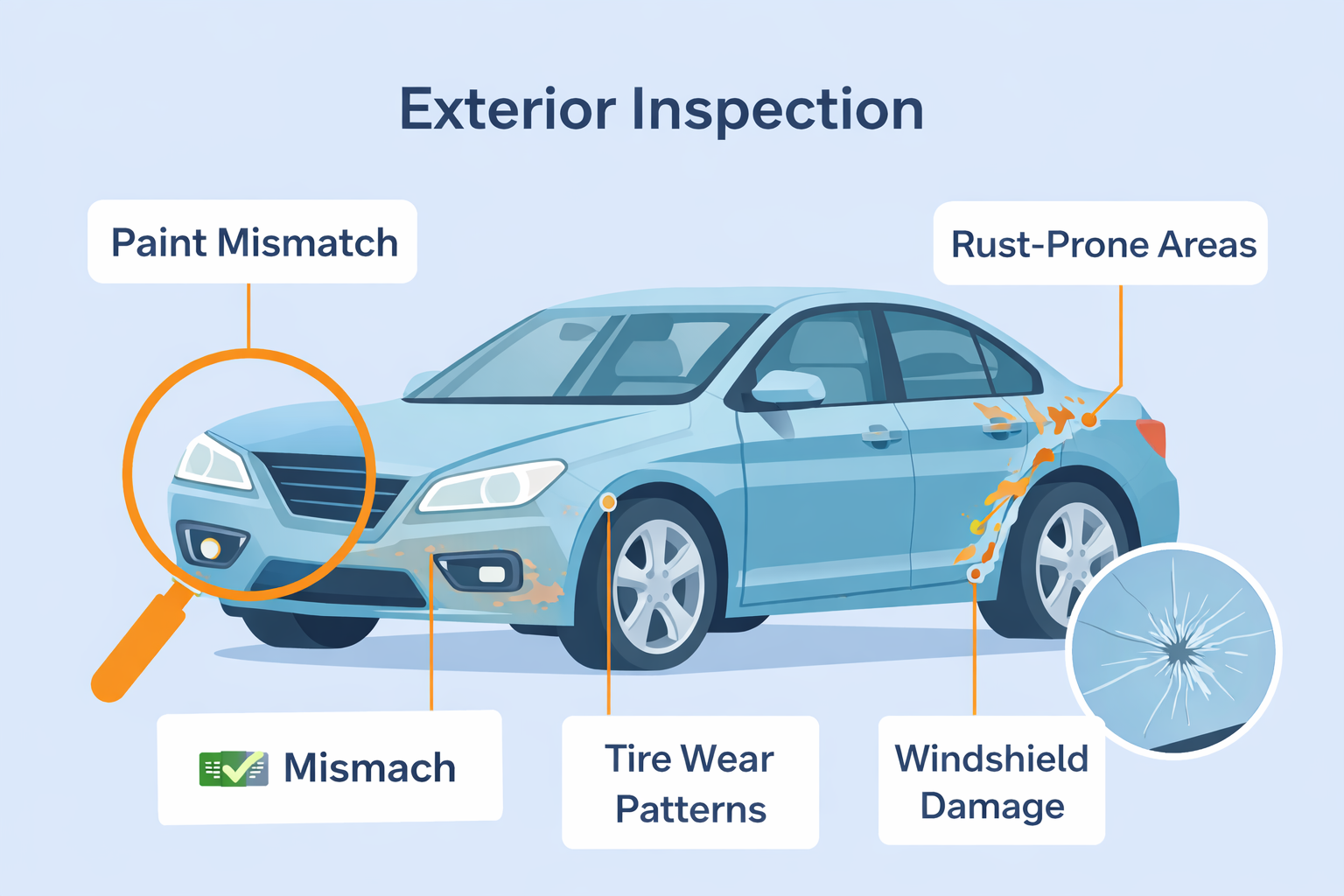
Exterior checks help you spot visible warning signs early, but they still do not tell you everything. A vehicle can pass a casual walk-around and still have hidden interior, electrical, or mechanical issues. That is why the next step is to move inside the vehicle and check how well the cabin, controls, and basic functions hold up under closer inspection.
Interior and Feature Checks
The interior of a used car can tell you a lot about how it was used, how carefully it may have been maintained, and whether there are warning signs that were not visible from the outside.
Take your time before the test drive begins. Sit in the vehicle, turn it on properly, and check whether the condition and features match the story the seller has given you.
11. Check Whether Interior Wear Matches the Vehicle’s Age and Mileage
Look at the driver’s seat, steering wheel, gear selector, pedals, buttons, armrest, and door panels. These are the areas that show wear first. A vehicle with moderate mileage should normally show some age, but the wear pattern should still feel believable.
If the odometer is relatively low but the cabin looks heavily worn, that mismatch is worth paying attention to. It does not automatically prove a serious issue, but it should make you ask more questions and review the vehicle history more carefully.
12. Make Sure Warning Lights Behave Normally
Turn the ignition on and watch the dashboard carefully. Warning lights should illuminate briefly as part of the startup check, then go off if there is no active issue. If important lights stay on, flicker strangely, or never appear at all, you should not ignore that.
Dashboard lights related to engine, ABS, airbags, battery, or other key systems can point to problems that may require diagnosis and repair. A seller may describe a light as minor, but it is still something you should verify before making a decision.
13. Test the Basic Features and Electronics
Check the windows, locks, mirrors, interior lights, infotainment controls, backup camera if equipped, heater, air conditioning, wipers, horn, and seat adjustments. These may not all be deal-breakers, but each problem adds cost, inconvenience, or signs of neglect.
You are not just checking whether features work. You are also checking whether the vehicle feels complete and properly functioning as a whole. Multiple small failures can suggest that maintenance was postponed in more important areas too.
14. Watch for Odors, Moisture, and Signs of Water Damage
Before the cabin airs out fully, pay attention to what you smell. Strong smoke odors, mildew, damp carpet smell, or heavy air freshener can all tell you something. Then look for stained headliner fabric, damp floor mats, condensation where it should not be, or corrosion in hidden corners.
Water intrusion can lead to electrical problems, mold, interior deterioration, and long-term frustration. Even if the car looks freshly cleaned, moisture-related signs should make you slow down and inspect more carefully.
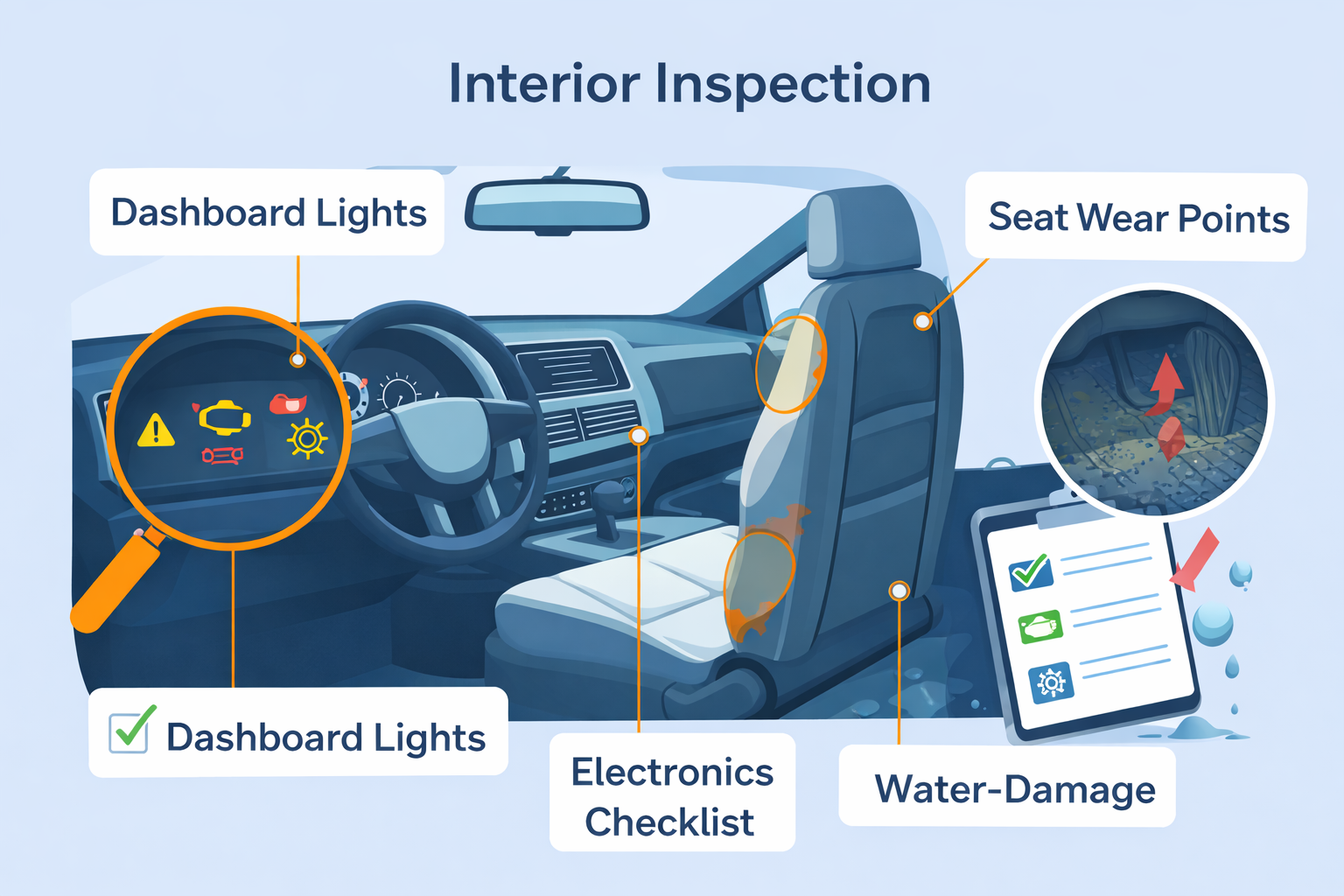
By this point, you should have a clearer picture of whether the vehicle feels consistent inside and out. The next step is to check the mechanical side more closely, especially how the engine bay looks and how the vehicle behaves during startup and idle.
Mechanical Checks Before and During Startup
Mechanical problems are not always obvious during a quick visit, but there are still useful signs you can check before and during startup. At this stage, your goal is not to diagnose the entire vehicle yourself. It is to notice anything that looks neglected, sounds wrong, or feels inconsistent with a healthy used car.
Whenever possible, inspect the vehicle before it has been fully warmed up. Some problems are easier to notice on a cold start than after the engine has already been running.
15. Pay Attention to How the Engine Starts from Cold
A cold start can reveal issues that may be hidden later. Listen to how quickly the engine fires up, how smoothly it catches, and whether there is excessive cranking, roughness, or unusual noise in the first moments after startup.
A healthy vehicle should generally start without drama. Struggling starts, loud rattles, or unstable initial idle can point to battery, ignition, fuel, sensor, or other engine-related concerns that deserve closer attention.
16. Look for Obvious Leaks or Signs of Neglect Under the Hood
Open the hood and inspect the engine bay with a practical mindset. If you are also comparing financing scenarios while shopping, it helps to understand how total ownership cost fits into your payment plan. Our article on used car financing in Vancouver can help with that broader decision. You are not looking for perfection, but you should look for signs that suggest poor upkeep, rushed cleanup, or active problems. Check for oil residue, coolant staining, loose components, cracked hoses, corrosion around terminals, and anything that looks excessively wet or recently cleaned in one isolated area.
A dusty engine bay is not necessarily a problem. In some cases, an engine that looks too freshly washed may deserve more caution, especially if it appears to hide leaks or seepage.
17. Check Fluid Condition at a Basic Level
If it is appropriate and safe to do so, check basic fluids such as engine oil and coolant. The purpose is not to do a full mechanical inspection, but to notice obvious warning signs. Oil that is extremely dirty, unusually low, or contaminated can raise questions about maintenance. Coolant that looks discoloured or neglected can do the same.
Fluid condition alone does not confirm the full health of the vehicle, but it helps you judge whether the car appears to have been cared for with reasonable consistency.
18. Listen to the Idle and Watch for Unusual Vibration or Smoke
Once the engine is running, let it idle for a moment and pay attention. Does it sound steady, or does it hunt, shake, or surge? Do you feel unusual vibration through the seat or steering wheel? Is there any visible smoke from the exhaust after startup that seems excessive or persistent?
A smooth idle does not guarantee a perfect engine, but a rough idle is often a reason to investigate further. Unusual smoke, shaking, or unstable behaviour should not be dismissed just because the seller says the vehicle “just needs a little drive.”
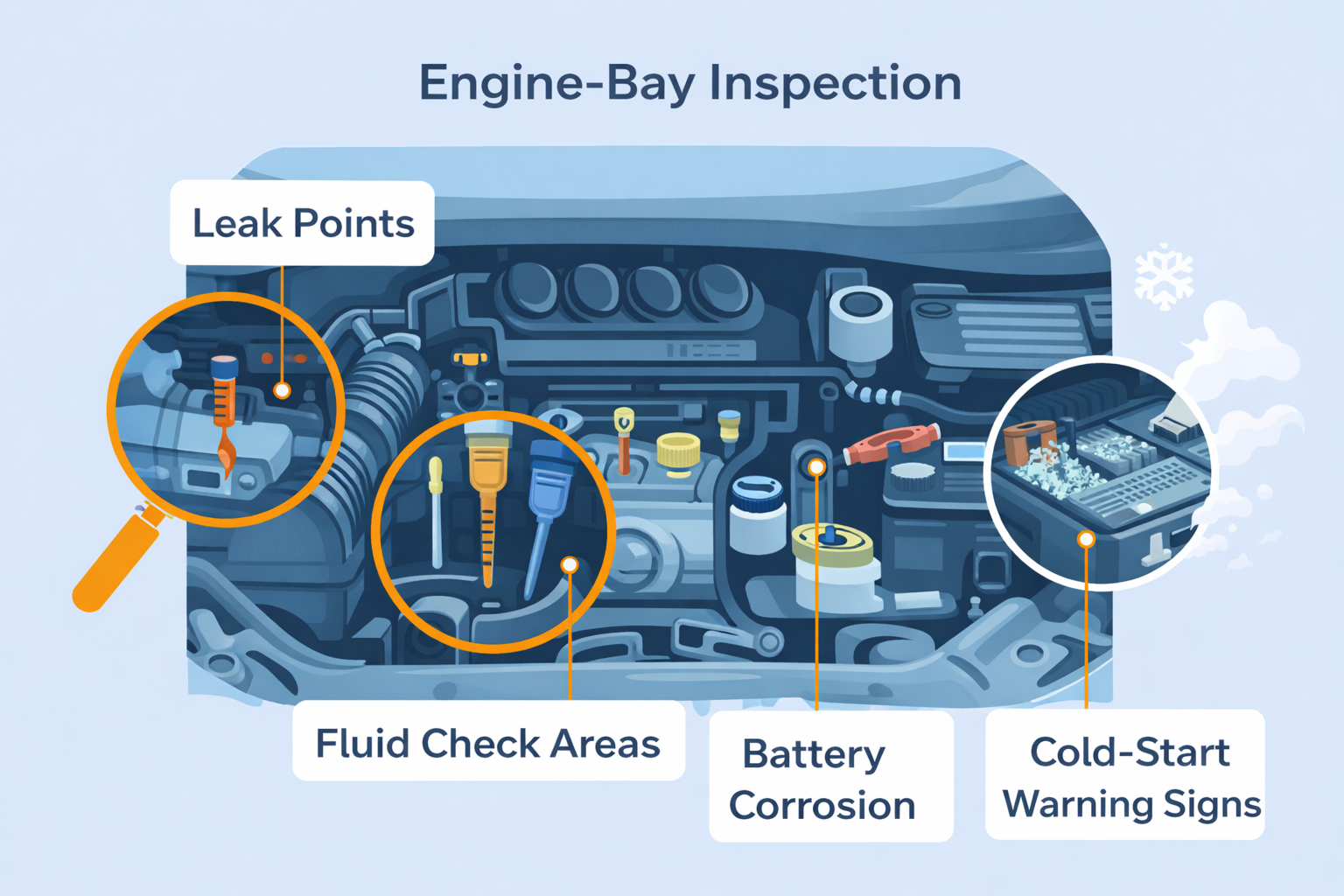
After these checks, you should have a better sense of whether the vehicle is giving off obvious mechanical warning signs. The next step is to drive it properly and pay attention to how the transmission, steering, braking, and road behaviour hold up under real use.
Test-Drive Checks
A test drive should do more than confirm that the car moves. It should help you judge whether the vehicle feels stable, predictable, and mechanically consistent under normal driving conditions. A quick loop around the block is rarely enough.
During the drive, keep the radio off and stay alert to changes in sound, vibration, steering feel, and how the car responds to your inputs.
19. Pay Attention to the Transmission, Steering, Brakes, and Acceleration
As you drive, notice how the vehicle responds when you accelerate, slow down, steer, and come to a stop. An automatic transmission should shift in a way that feels reasonably smooth and predictable. A manual transmission should engage properly without obvious slipping, grinding, or hesitation. Steering should feel controlled rather than loose, overly heavy, or delayed.
Brakes should feel firm and confidence-inspiring, without strong vibration, pulling, grinding, or unusual softness in the pedal. Acceleration does not need to feel fast, but it should feel consistent and appropriate for the vehicle. Delayed response, harsh shifting, or awkward braking behaviour can all point to underlying issues.
20. Check Whether the Car Tracks Straight and Avoids Unusual Noises
On a level road, the vehicle should generally track straight without needing constant correction. If it pulls strongly to one side, wanders, or feels unstable, there may be alignment, tire, suspension, or brake-related problems worth investigating.
Listen carefully throughout the drive. Clunks over bumps, humming that changes with speed, clicking while turning, or whining under acceleration can all provide useful clues. Some noises may be minor, but others can point to repairs that affect the real cost of ownership.
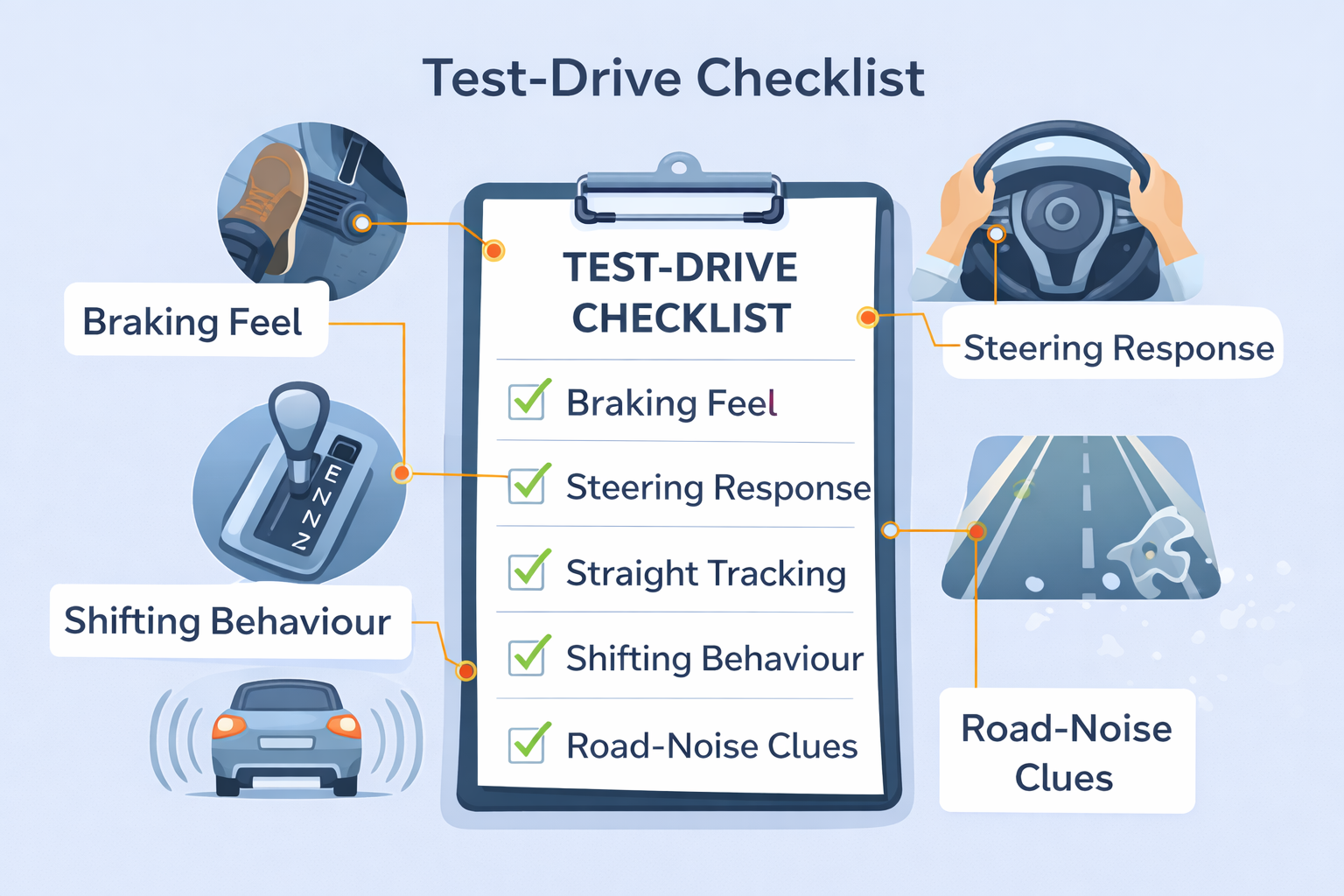
If the vehicle performs well on the road, that is a positive sign, but it should still be treated as one part of the decision rather than the final answer. The last step is to review the bigger warning signs, confirm the paperwork and registration path, and make sure you are not rushing into a purchase just because the car felt decent on one drive.
Red Flags That Should Make You Slow Down
Not every concern means you should automatically reject a used car, but some warning signs should make you pause and investigate further before making any commitment. The problem is not only the issue itself. It is also what the issue suggests about how the vehicle was maintained, how transparent the seller is, and how much uncertainty you are accepting.
A careful buyer does not need a car to be perfect. A careful buyer needs the story, the condition, and the paperwork to make sense together.
The Seller Cannot Explain the Vehicle Clearly
If the seller gives vague answers about ownership, maintenance, accidents, repairs, or why they are selling the car, that should reduce your confidence. Serious sellers do not need to know everything from memory, but they should still be able to explain the basics in a direct and believable way.
The Paperwork Does Not Match the Situation
If the VIN, registration details, ownership story, or seller identification do not line up, slow the process down immediately. Paperwork confusion creates risk that goes far beyond a cosmetic or mechanical issue.
The Car Shows Signs of Rushed Preparation
Some vehicles are cleaned and prepared well before sale, which is normal. What should make you cautious is when the car feels dressed up only on the surface. Fresh detailing, strong air fresheners, recently washed engine components, or selective cosmetic cleanup can sometimes be used to distract from deeper issues.
Warning Lights, Leaks, or Unusual Noises Are Minimized
One of the clearest trust signals is how the seller responds when a problem appears. If warning lights are brushed off, a leak is described as normal, or a strange sound is treated as unimportant without a clear explanation, you should take that seriously.
The Price Feels Too Low Without a Good Reason
A lower asking price is not always a bargain. Sometimes it reflects urgency, deferred maintenance, hidden damage, or a problem the seller wants to pass on quickly. When the price feels unusually attractive, that is often the moment to become more careful, not less.
You Feel Pressured to Decide Too Quickly
Pressure is a red flag on its own. If the seller pushes for an immediate deposit, avoids time for inspection, discourages a mechanic review, or creates a false sense of urgency, you should step back and reassess.
A used car purchase should feel clearer as you move forward, not more rushed or more confusing. If each new answer creates more uncertainty, it is often smarter to slow down or walk away.
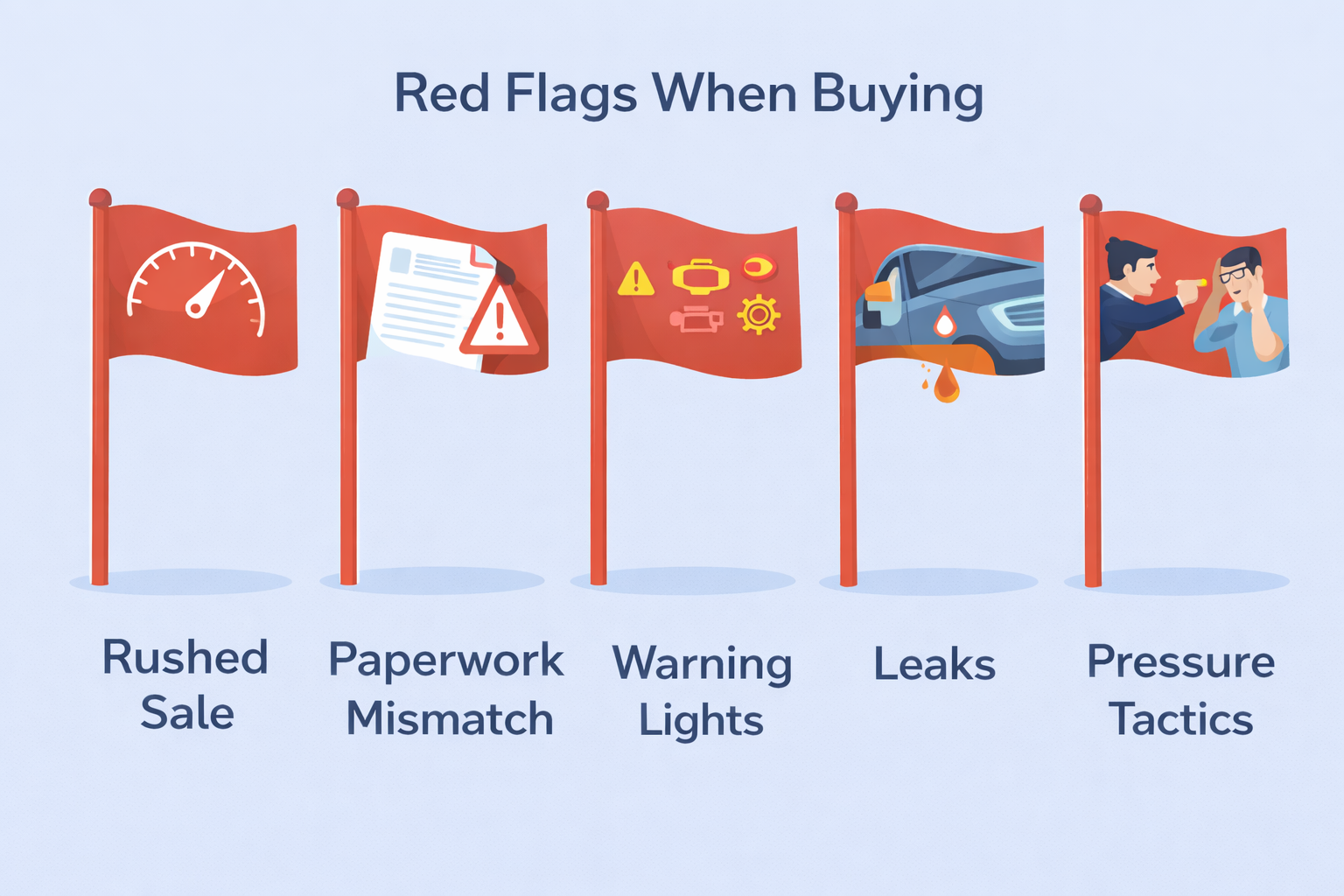
Once you have reviewed the major warning signs, the final step is to make sure the ownership transfer and registration path are clear. That matters in every market, but it is especially useful to understand the process in British Columbia before you complete the purchase.
BC Buyers: Final Paperwork and Registration Checks
If you are buying a used car in British Columbia, inspection is only part of the process. You also need to make sure the ownership transfer is handled properly and that the documents required for registration are ready before the sale is finalized.
The safest approach is to treat the paperwork as part of the purchase decision, not as an afterthought.
Confirm the Transfer Documents Are Ready
Before buying, make sure the required transfer paperwork is available and complete. The seller should be able to provide the signed registration documents and the information needed to complete the ownership transfer properly.
Do not assume missing details can always be fixed later without delay or inconvenience. If something important is incomplete, unclear, or inconsistent, it is better to sort it out before money changes hands.
Make Sure the Seller’s Information Is Consistent
The seller’s identity and the ownership documents should tell the same story. If the name on the paperwork does not match the person selling the vehicle, or if the explanation changes when you ask basic questions, you should become more cautious.
This does not always mean something improper is happening, but it does mean the transaction needs more verification before you move forward.
Understand the Registration and Insurance Step
In BC, the vehicle must be properly registered and insured through the appropriate process after the sale. Buyers who are comparing dealership and local market options can also review our guide to buying used cars in Vancouver. That means the transfer is not fully complete just because payment has been made or keys have been handed over.
Buyers should understand where they need to go next, what documents they need to bring, and how the registration step fits into the overall purchase process. A smooth transaction should include clarity on this part before the deal is closed.
Keep Copies and Review Everything Before Finalizing
Before you finalize the purchase, review the documents one more time and keep copies of what you sign or receive. That includes sale-related paperwork, supporting records, and anything that helps confirm the terms of the transaction.
A used car purchase involves more than choosing the right vehicle. It also involves making sure the ownership trail is clear, the documents are complete, and the next steps are understood from the beginning.
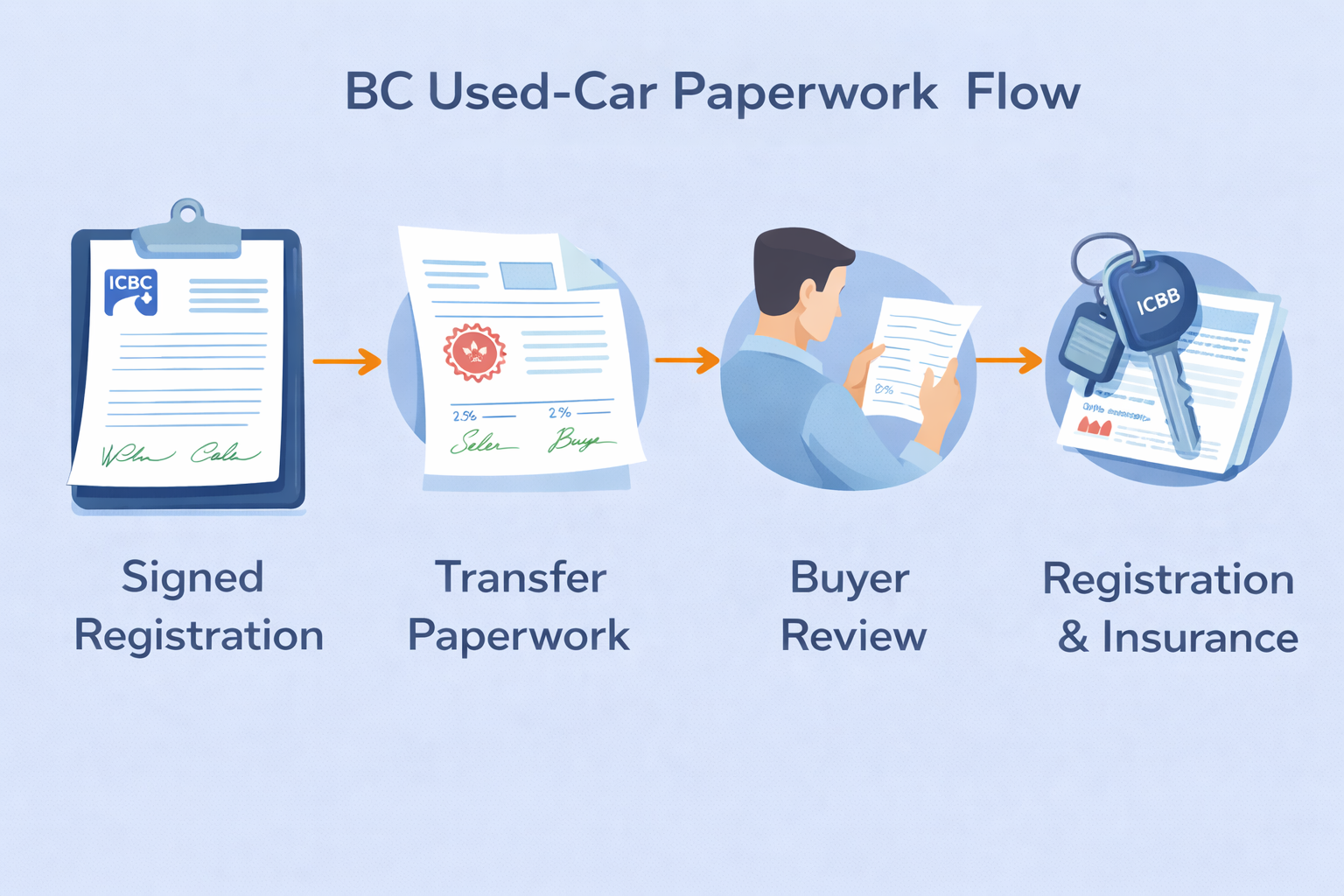
Once the vehicle, the seller story, and the paperwork all make sense together, you are in a much better position to decide whether to move ahead. The final section brings everything together into one practical checklist you can review before making a final decision.
Final Pre-Purchase Checklist
Before you buy a used car, pause and review the full picture one more time. At this point, the real question is whether the condition, paperwork, history, and road behaviour all make sense together.
Use this final checklist as a simple decision filter:
- The VIN matches the vehicle and all related documents
- The seller’s identity and ownership story are clear
- The vehicle history report does not raise unresolved questions
- Service records support the seller’s maintenance claims
- Open recalls have been checked
- Paint, body panels, and exterior condition look consistent
- Rust has been checked in common problem areas
- Tires, lights, mirrors, and glass are in acceptable condition
- Interior wear matches the age and mileage of the vehicle
- Warning lights behave normally during startup
- Basic electronics and comfort features work as expected
- There are no strong odours or signs of water damage
- The engine starts properly from cold
- No obvious leaks or major neglect appear under the hood
- Fluids do not show immediate warning signs
- Idle quality feels stable and normal
- The vehicle drives smoothly and responds predictably
- Steering, braking, and transmission behaviour feel right
- The car tracks straight and avoids unusual noises
- The paperwork and registration path are clear before payment
If several of these points feel uncertain, do not rush the decision. A used car does not need to be perfect, but it should make sense as a whole.
In many cases, the smartest final step is still to arrange a professional pre-purchase inspection. When you are ready to move from research to action, you can also browse our inventory, book a test drive, or contact us with questions. A careful visual check and test drive can help you avoid obvious mistakes, but an independent mechanic can often identify problems that are easy to miss during a normal viewing.
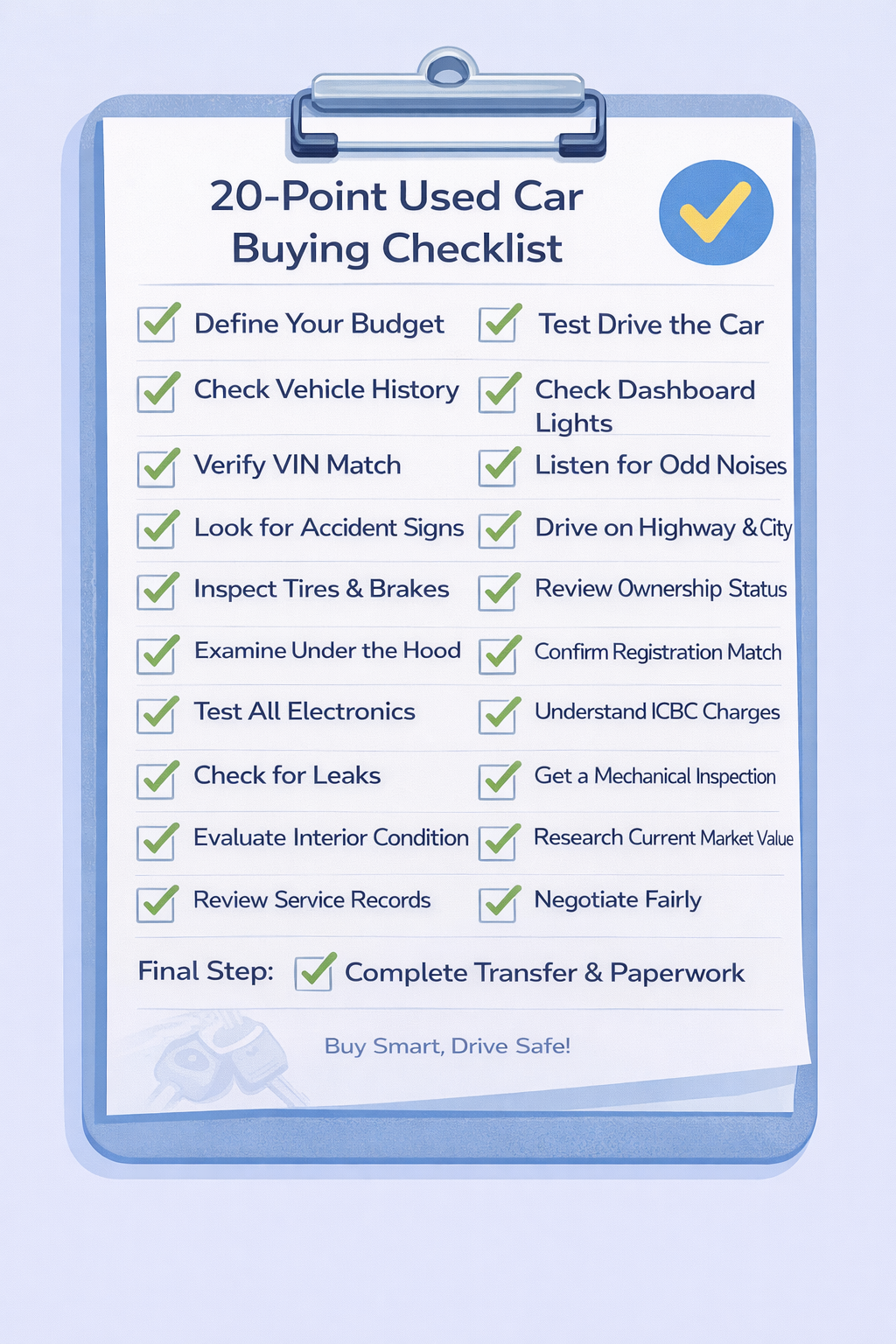
With that checklist in mind, the next step is to answer a few common questions buyers often have before making a final decision.
FAQ
What is the most important thing to check before buying a used car?
There is no single check that matters more than everything else, because a used car should be judged as a whole. In most cases, the safest approach is to verify the paperwork, review the vehicle history, inspect the condition carefully, and pay close attention to how the car behaves during startup and on the test drive. If one part looks fine but the rest does not support it, you should slow down.
Should I buy a used car without service records?
A used car can still be worth considering without full service records, but the level of risk is usually higher. Records help you understand how the vehicle was maintained and whether important work was done on time. If records are missing, you should be more cautious with the inspection, the history review, and the decision to arrange a professional pre-purchase inspection.
How can I tell if a used car has been in an accident?
You can look for clues such as uneven panel gaps, mismatched paint, overspray, replacement lighting, inconsistent body lines, or signs of repair underneath the vehicle. A vehicle history report may also help reveal past claims or damage records. Still, not every previous repair is obvious during a walk-around, which is another reason a professional inspection can be valuable.
Is a short test drive enough before buying a used car?
Usually not. A very short drive may confirm that the car starts, moves, and stops, but it may not reveal how the steering, brakes, suspension, transmission, and overall road behaviour hold up under more normal use. A better test drive includes low-speed driving, turns, braking, moderate acceleration, and enough time to notice vibration, pulling, or unusual sounds.
Should I get a mechanic to inspect a used car before I buy it?
In many cases, yes. A mechanic’s inspection adds another layer of protection, especially if you are serious about the vehicle or if the car is older, higher mileage, or showing minor warning signs. Even when a used car looks clean and drives well, a professional inspection can still uncover problems that are not easy to see during a normal visit.
What paperwork should I check before buying a used car in BC?
You should make sure the VIN matches the vehicle and the documents, confirm that the seller has the right to sell the car, and review the registration and transfer-related paperwork carefully. You should also understand what is needed for the next registration and insurance step in British Columbia before finalizing the purchase.
Are warning lights always a deal-breaker?
Not always, but they should never be ignored. Some warning lights may point to smaller issues, while others can signal more serious mechanical or safety-related concerns. The real problem is not only the light itself, but also whether the seller explains it clearly and whether the issue has been diagnosed properly.
Is a lower price worth the risk on a used car?
Sometimes a lower price reflects fair value, but sometimes it reflects hidden cost. A cheaper used car can become more expensive after purchase if it needs tires, brakes, repairs, paperwork correction, overdue maintenance, or diagnostic work. The better question is whether the total value makes sense after you account for the vehicle’s condition, history, and likely ownership cost.
Final Thought
Checking a used car properly is not about finding minor flaws. It is about reducing the chance of making a costly mistake. When you inspect the documents, condition, mechanical signs, and road behaviour in a structured way, you give yourself a much better chance of making a sound purchase decision.
A careful buyer does not need to rush. The right used car should make sense on paper, in person, and on the road before you move forward. If you find a vehicle that fits what you need, you can also apply for financing or value your trade-in as part of your next step.