Introduction
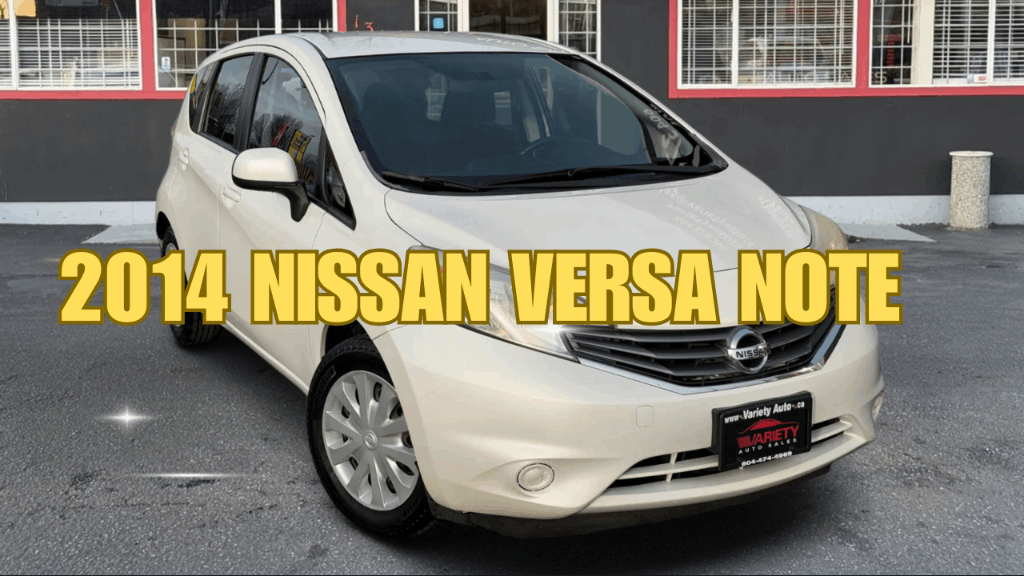
If you are considering a 2014 Nissan Versa Note, the best way to buy confidently is to follow a repeatable process: confirm the vehicle’s history, inspect the known risk areas for this model year, and test drive in a way that reveals problems before you commit.
This guide is designed to be evergreen and practical. It focuses on what to check on a 2014 Versa Note specifically (including the powertrain choices and common owner concerns), while also giving you a structured used-car checklist you can reuse.
If you would like to compare options, you can start by browsing current inventory on our site: Used vehicle inventory.

Quick overview of the 2014 Nissan Versa Note
The 2014 Nissan Versa Note is a subcompact 5‑door hatchback aimed at affordable city driving, simple ownership, and strong fuel economy. It is commonly found with:
- A 1.6L 4-cylinder engine
- A 5-speed manual transmission (less common)
- A CVT (continuously variable transmission), often Nissan’s Xtronic CVT
Your inspection strategy should be slightly different depending on whether the vehicle has a manual or a CVT.
Practical strengths buyers often prioritize
- City usability: easy parking, good visibility, low running costs
- Cargo flexibility: hatchback layout can be more useful than a small sedan
- Fuel economy: typically a core buying reason in this segment
What to keep in mind from the start
- The vehicle is now at an age where maintenance history matters more than low mileage alone.
- For many buyers, the key decision is whether a specific unit’s transmission behavior and service history are acceptable.
For fuel economy and spec reference (Canadian figures), see Nissan Canada’s 2014 Versa Note specifications.
Trims and options to know before you shop
Trim names can vary by market and equipment, but you will commonly see S/S Plus/SV/SL-style naming in listings.
Options worth verifying in used listings
When comparing two Versa Notes that appear similar on paper, these details often matter more than you expect:
- Transmission type: manual vs CVT (confirm visually and by test drive)
- Air conditioning performance: verify cold output at idle and while driving
- Backup camera / parking assistance: helpful in city use, not always present
- Bluetooth / infotainment: confirm hands-free calls and audio work reliably
- Heated seats / heated mirrors: important for many Vancouver-area drivers
Verification tip: Do not rely only on a listing headline. Confirm the feature works in person and check the vehicle’s equipment list using the VIN or original window sticker when possible.

Fuel economy and operating costs
Fuel economy is often the reason buyers shortlist the Versa Note. Nissan Canada publishes the following L/100 km ratings for the 2014 model year:
- 5-speed manual: City 7.4 / Highway 5.4 / Combined 6.5
- CVT: City 6.1 / Highway 4.8 / Combined 5.5
Source: 2014 Versa Note specifications (Nissan Canada).
What affects real-world fuel economy
- Tires and alignment: uneven wear and poor alignment can increase rolling resistance
- Short-trip driving: frequent cold starts typically increase consumption
- Underinflated tires: a common, avoidable issue
- Dragging brakes: can reduce fuel economy and signal maintenance needs
Simple check: Ask when the tires were last replaced and whether the car has had a recent alignment. On a test drive, the car should track straight on a level road without constant steering correction.
Safety ratings and how to interpret them
Safety ratings matter, but they require careful reading. Ratings often reflect a specific test configuration and may not include every scenario.
IIHS crashworthiness reference
For 2014 Versa Note crashworthiness context, consult the IIHS ratings page.
Government crash test context
For additional summary context, you may also review the model’s crash test information through sources that compile government results (for example, Edmunds’ 2014 Versa Note review).
What you should confirm on the specific vehicle
Regardless of ratings, confirm the vehicle you are inspecting has:
- No active airbag warning lights
- Seat belts that retract smoothly and lock under a firm pull
- Proper child-seat anchors and functional rear seat latches
- Tires with safe tread depth and no sidewall damage

Reliability overview and common issues to watch for
No used vehicle is “problem-free,” but each model has patterns that influence what you should inspect first.
High-priority watch area: CVT behavior and updates
For the 2014 Versa Note, the CVT is a common point of buyer attention. Nissan issued a voluntary service campaign for some 2014 Versa Note vehicles involving TCM reprogramming for the CVT.
- Reference bulletin: NHTSA bulletin PDF (CVT/TCM reprogram campaign context)
This does not automatically mean a vehicle is “bad,” but it does mean you should take the test drive seriously and verify documentation where available.
Symptoms checklist (what you can detect quickly)
During a normal test drive, watch for:
- Delayed engagement when shifting into Drive or Reverse
- Surging or “rubber-band” feel that is inconsistent or excessive
- Shuddering or vibration under light acceleration
- Unusual whining that changes with speed and throttle
- Warning lights (especially check engine, transmission, ABS)
If you notice any of the above, you should pause and request a mechanical inspection before proceeding.
Other age-related items to check
At this age, many concerns are not model-specific. You should still check:
- Brakes (pad thickness, rotor condition, braking straight and smooth)
- Suspension wear (clunks over bumps, uneven tire wear)
- Battery/charging health (slow starts, warning lights)
- A/C performance (especially at idle)
- Exhaust noises (leaks, rattles)
For ownership-cost context, RepairPal provides a baseline estimate for average annual repair cost and reliability scoring (useful as a general reference): RepairPal — 2014 Versa Note.
Recall history and VIN-check steps (Canada-focused)
Recalls are not unusual and do not necessarily indicate poor care. What matters is whether recall repairs were completed.
Known recalls to be aware of (Canada)
Transport Canada recall notices relevant to this model year include:
- Lower body sill bolts: inspection/tightening/replacement as needed — Transport Canada recall 2013254
- Rear seat back latch bolts: dealers replace bolts — Transport Canada recall 2013255
Step-by-step: how to check recall completion
- Locate the VIN (dash tag visible through windshield, driver door jamb sticker).
- Ask the seller or dealer for proof of recall completion (service invoices are best).
- Cross-check recall information through official sources.
- If unsure, contact a Nissan dealer service department with the VIN and request confirmation.
Practical note: If a recall is open, you can often plan the repair after purchase, but you should understand whether the car can be safely driven and whether parts availability may cause delays.
Pricing expectations and how to judge a fair price
Pricing on a 2014 Versa Note varies widely with mileage, trim, accident history, maintenance records, tire condition, and cosmetic condition.
How to compare prices responsibly
- Compare like-for-like: same trim level, similar mileage, similar condition.
- Separate “advertised” vs “real” value: reconditioning, tires, and documentation can change the true cost.
- Budget for immediate needs: many used cars require maintenance shortly after purchase.
Market value references you can use
- For U.S.-based market value guidance that updates frequently: Kelley Blue Book — 2014 Nissan value context
- For live Canadian listing comparisons: AutoTrader Canada — 2014 Versa Note listings
Important: Online pricing tools are reference points. The final “fair price” depends on the individual vehicle’s history and condition.
Pre-purchase inspection checklist (Versa Note–specific)
This section is designed so you can walk around the car and check items in a set order.
Step 1: Walk-around and exterior checks
- Panel gaps and paint match: look for mismatched paint, overspray, uneven gaps
- Glass condition: cracks, chips, and wiper-sweep scratches
- Headlights/taillights: moisture inside housings can indicate leaks
- Tire condition:
- even tread wear across the tire
- no bulges, cuts, or exposed cords
- matching tire sizes and similar brands/quality
- Rust check (BC reality): look at rocker panels, wheel arches, under the hatch area, and underbody seams
Quick test: Open and close all doors and the hatch. They should latch cleanly without excessive force.
Step 2: Cabin checks (function and warning lights)
- Turn the key to ON (engine off) and confirm warning lights illuminate briefly (then go out after start).
- Test:
- power windows and door locks
- blower fan at all speeds
- A/C cold output
- heat output (after warm-up)
- infotainment and Bluetooth
- backup camera (if equipped)
Step 3: Under-hood checks (basic, non-technical)
If you are not mechanically experienced, keep this simple:
- Fluid leaks: look for fresh wet spots under the engine bay area
- Coolant: level should be within marked range; avoid cars with brown sludge or oily residue
- Oil: check level and condition; very dark oil is not always fatal, but poor maintenance signs should raise questions
- Belts and hoses: look for cracks, swelling, or loose connections
Step 4: Undercarriage basics (especially important on older vehicles)
If you can safely view under the car:
- Look for oil leaks near engine and transmission areas
- Look for exhaust corrosion and loose heat shields
- Check for suspension damage and torn rubber bushings
- Look for heavy structural rust (different from surface rust)
If you want a structured next step with professional support, you can book an appointment and request an inspection-oriented visit.
Test-drive guide (what to do in the first 10 minutes)
A test drive should be structured. You are not trying to “enjoy” the drive; you are trying to surface problems.
Before moving (cold start checks)
- Start the engine from cold if possible.
- Listen for:
- rattles on startup
- unstable idle
- loud ticking or knocking
- Confirm the idle settles and the engine temperature rises gradually.
Low-speed checks (parking lot and residential streets)
- Full-lock turns in both directions: listen for clicking (CV joint concerns).
- Brake test at low speed: braking should feel straight and predictable.
- Steering feel: no heavy vibrations through the steering wheel.
CVT-specific checks (if applicable)
- From a stop, apply light throttle and confirm smooth takeoff.
- Do a few gentle accelerations from 20–60 km/h.
- Confirm there is no persistent shuddering, harsh engagement, or unusual whining.
Highway checks
- Drive at stable speed (80–100 km/h where appropriate).
- Confirm:
- no wandering steering
- no excessive road noise beyond what is typical for a small hatchback
- steady temperature gauge
- smooth braking from highway speed
After the drive, recheck for new leaks under the car and smell for burning odors.
Maintenance planning and cost of ownership
At this age, the best value usually comes from cars with documented maintenance. Even a clean-looking vehicle can become expensive if maintenance has been deferred.
Maintenance records that matter most
Ask for proof of:
- Regular oil changes
- Brake service history
- Tire replacement and alignment history
- Cooling system service (when applicable)
- Transmission service documentation (especially if equipped with CVT)
Manufacturer schedule reference
For schedule guidance, Nissan provides a maintenance schedule tool that you can use as a starting point: Nissan Canada maintenance schedules — 2014 Versa Note.
Budget line items many buyers overlook
- Tires (all-season vs winter, and age even if tread looks fine)
- Battery replacement (especially after several years)
- Brakes and rotors
- Fluids (coolant, brake fluid)
- Wiper system and windshield chips
If you plan to finance, it can help to estimate payment range first using the loan payment calculator before you shop.
Insurance considerations (British Columbia)
Insurance costs in BC depend more on driver factors and vehicle use than many buyers expect.
To understand what affects premiums, see ICBC’s official guidance:
- What determines insurance costs? (ICBC)
- Drivers, experience and crash history (ICBC)
- Territory and rate class (ICBC)
Practical insurance checklist before you buy
- Confirm the VIN matches the paperwork.
- Confirm the vehicle use you need (pleasure vs commute) because the rate class matters.
- If multiple drivers will regularly drive the vehicle, plan to list them properly.
- Ask your broker what optional coverages are recommended for your driving pattern.
Who the 2014 Versa Note is good for (and who should skip it)
Good fit for
- Budget-conscious buyers who want simple city transportation
- Commuters prioritizing fuel economy and low running costs
- Drivers who value a practical hatchback cargo layout
Consider alternatives if
- You routinely drive long highway distances and want more power and cabin isolation
- You need AWD for your use case
- You want a larger vehicle for frequent passengers, equipment, or towing
Financing and trade-in next steps (practical, document-based)
If you want to keep the process smooth, prepare your documentation early.
Financing preparation checklist
- Confirm your budget range and comfortable monthly payment
- Gather identification and residency documents as required
- Be ready to disclose employment and income information accurately
- Decide on a down payment target
You can begin with the online application: Finance application.
Trade-in preparation checklist
- Bring both sets of keys (if available)
- Collect service records and receipts
- Clean out the vehicle and remove personal items
- Note any warning lights or known issues honestly
You can start with: Value your trade.
FAQ — 2014 Nissan Versa Note
Is the 2014 Versa Note CVT reliable?
Reliability depends heavily on the individual car’s service history and current condition. On a CVT-equipped unit, prioritize a thorough test drive and request documentation of transmission-related updates or service where available. For background context on Nissan’s campaign bulletin, see the NHTSA bulletin PDF.
What mileage is “too high” for a 2014 Versa Note?
There is no universal cutoff. A well-maintained higher-mileage vehicle can be a better purchase than a neglected lower-mileage one. Focus on service records, condition, and inspection results.
What recalls should I check?
Review Transport Canada recall notices and confirm completion by VIN:
What should a pre-purchase inspection include?
A proper inspection typically reviews brakes, tires, suspension, steering, fluids/leaks, battery/charging, and confirms warning lights and electronic systems. For a CVT-equipped Versa Note, extra keep focus on drivability symptoms and documentation.
What is the best trim to look for?
The “best” trim depends on your priorities. Many buyers prefer trims with comfort and safety features (for example, upgraded infotainment, backup camera, and convenience features). The most important factor remains overall condition and maintenance history.
How do I confirm maintenance history?
Ask for invoices, service stamps, and any dealership service printouts. If records are limited, you can still evaluate condition through inspection and test-drive behavior, but you should price the vehicle with “unknowns” in mind.
Final checklist and next steps
Before you commit to any 2014 Nissan Versa Note, ensure you can answer “yes” to the following:
- I verified the VIN on the vehicle matches the documents.
- I reviewed accident history and ownership history where possible.
- I checked recalls and understand whether any are still open.
- I completed a structured inspection and a structured test drive.
- I budgeted for immediate maintenance items (tires, brakes, fluids) if needed.
- I confirmed insurance rate class and driver listing requirements.
If you would like help with a specific vehicle, you can:
You can also browse what is currently available: Used vehicle inventory.