Last Updated: November 21, 2026
Quick Summary
After buying an unregistered car, you must stop driving it until it is registered and insured, collect every document from the seller, and check the paperwork for missing signatures or mismatched names. Then buy insurance, book a safety inspection if required, and visit the registration office with your documents and payment.
- The seller's job ends at signing; the buyer handles the transfer, fees, and plates.
- Bring a signed transfer form, bill of sale, photo ID, proof of insurance, and inspection certificate if required.
- A bill of sale should include both full names, the VIN, make, model, year, price, date, and both signatures.
- A temporary operating permit lets you drive legally for a short window, usually to complete registration or an inspection.
- If the seller is not the registered owner, ask for a signed authorization letter and a copy of the owner's photo ID.
Table of Contents
- What to Do First After Buying an Unregistered Car
- Registering a Used Vehicle After Purchase
- Documents Needed to Register a Used Car
- Insurance for an Unregistered Vehicle
- Temporary Operating Permit for an Unregistered Car
- When the Seller Is Not the Registered Owner
- Fixing Missing, Unsigned, or Mismatched Documents
- Registration Deadlines, Fees, and Sales Tax
- What to Do If Registration Cannot Be Completed
- Buying Your Next Used Car With the Paperwork Handled
- Frequently Asked Questions
What to Do First After Buying an Unregistered Car
Buying an unregistered car is not the end of the deal. It is the start of a paperwork job you now own. In most cases, the buyer must complete the transfer, pay the fees, and get plates before the vehicle can legally be driven.
This guide walks you through buyer responsibilities after purchasing an unregistered car, step by step. Below, we show you how to move from "keys in hand" to "legal on the road" without fines or surprises.
Here is the part most guides skip: the seller's job ends at signing. Everything after that is on you.
Your Immediate Action Plan
Act fast, and in this order:
- Stop driving the car until it is registered and insured.
- Collect every document the seller gave you.
- Check the paperwork for missing signatures or mismatched names.
- Buy insurance before you register.
- Book a safety inspection if one is required.
- Visit the registration office with your documents and payment.
Do not wait weeks. Deadlines and penalties apply, and an unregistered car sitting in your driveway can still cause problems.
Here is the order of steps to follow once you have the keys to an unregistered car.
| Step | What to do |
|---|---|
| 1 | Stop driving the car until registered and insured |
| 2 | Collect every document the seller gave you |
| 3 | Check paperwork for missing signatures or mismatched names |
| 4 | Buy insurance before you register |
| 5 | Book a safety inspection if one is required |
| 6 | Visit the registration office with documents and payment |
Registering a Used Vehicle After Purchase
Registering a used vehicle after purchase means transferring the vehicle into your name with the provincial motor vehicle authority. The buyer usually handles this, not the seller.
The exact steps depend on where the vehicle was registered.
Here is the general flow:
- Confirm the seller signed the transfer form
- Get proof of insurance
- Pass any required safety inspection
- Pay the transfer fee and applicable tax
- Receive your registration certificate and plates
One common mistake: buyers assume the dealer or seller will file the transfer for them. In a private sale, that is almost never true.
If you want the full walkthrough of BC used-vehicle paperwork, see our guide to buying Vancouver used vehicles. It covers registration and transfer in detail.
Documents Needed to Register a Used Car
The documents needed to register a used car usually include a signed transfer form, a bill of sale, proof of insurance, and valid ID. Some provinces also require a safety inspection certificate.
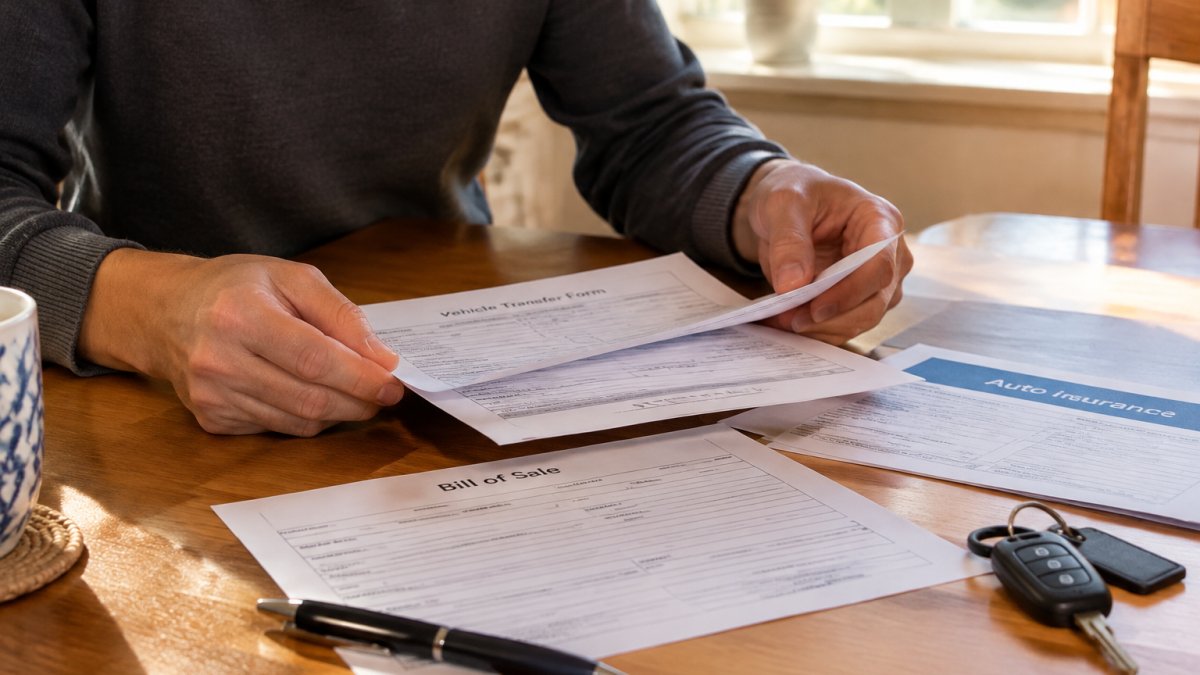 Infographic showing the essential documents needed to register an unregistered car including the bill of sale.
Bring this checklist to the registration office:
- Signed transfer form, with both buyer and seller signatures
- Bill of sale showing the purchase price
- Government-issued photo ID
- Proof of insurance
- Safety inspection certificate, if required
- Vehicle identification number, checked against the paperwork
- Payment for fees and tax
Missing one item usually means a second trip. Check the list twice before you go.
Bill of Sale Requirements
A bill of sale is a written record of the sale. It should include:
- Buyer and seller full names
- Vehicle identification number
- Make, model, and year of manufacture
- Purchase price
- Date of sale
- Both signatures
Keep your original. Registration staff may ask for it, and your insurer will want a copy. If the price looks low, expect questions, because tax is often based on the stated price.
Want to make sure your bill of sale is clean? Read our guide on how to avoid hidden fees when buying a used car before you sign anything.
Insurance for an Unregistered Vehicle
You need insurance for an unregistered vehicle before you can register it in most provinces. Registration and insurance go hand in hand.
Here is the catch: many insurers will not cover a car you cannot legally drive. So the sequence matters.
What insurers typically ask for:
- Vehicle identification number
- Bill of sale or proof of purchase
- Your driver's licence
- The address where the car is kept
Do not drive on a lapsed policy. A crash in an unregistered, uninsured car can leave you paying out of pocket, and it may affect your future rates.
Temporary Operating Permit for an Unregistered Car
A temporary operating permit for an unregistered car lets you drive legally for a short window, usually to complete registration or an inspection. It is not a substitute for full registration.
Use a temporary permit when:
- You need to drive the car to a safety inspection
- You are waiting on documents to clear
- You just bought the car and need to move it legally
Rules vary by province. Some permits last days, others a few weeks. You usually need insurance and proof of purchase to get one.
Watch out: driving without a valid permit is treated as driving an unregistered vehicle. The fines and insurance consequences are not worth the shortcut.
When the Seller Is Not the Registered Owner
This is where deals fall apart. If the seller is not the registered owner, the transfer can stall or fail outright, and you may have little recourse if the paperwork does not clearly connect the seller to the vehicle.
Common situations include a seller flipping the car without ever transferring it into their own name, a family member selling on someone else's behalf, or a vehicle bought at an auction or from an estate. In each case, you need a clear chain of ownership from the registered owner to you.
Before you hand over money or sign anything, verify the seller's authority with these steps:
- Ask to see the seller's government-issued photo ID and compare the name to the name on the vehicle registration. If they do not match, ask why.
- Ask for the registration document showing the current registered owner's name. If the seller cannot produce it, treat that as a serious red flag.
- If the seller is acting for the registered owner, ask for a signed authorization letter from the registered owner, a copy of the owner's photo ID, and, where the provincial authority requires it, a specific authorization or power-of-attorney form. Ask the motor vehicle authority which form they accept before you rely on a homemade letter.
- If the vehicle came from an estate, ask for the grant of probate or letters of administration showing the executor's authority to sell, plus the executor's ID. Registration staff may want to see these documents.
- If the vehicle was bought at an auction, ask for the auction invoice and any transfer documents the auction house provided. Auction sales sometimes come with a bill of sale in the auction company's name, which can complicate the chain.
A seller who cannot prove ownership may be a curbsider, someone posing as a private seller while actually dealing cars. That is a red flag, and it may also breach provincial consumer-protection rules for motor vehicle dealers.
Watch out: if the seller's name is not on the registration and they cannot produce authorization from the registered owner, pause the transfer. Paying the seller in that situation can leave you with a vehicle you cannot register, and recovering your money may require legal action.
If the paperwork looks shaky, slow down. Ask the motor vehicle authority whether they will accept the documents you have before you pay. Our guide on spotting an overpriced used car also helps you judge whether the deal and documents are legitimate.
If you have already paid and the seller cannot prove authority, document everything, the listing, messages, payment records, and any documents you received, and contact the motor vehicle authority for guidance. If the amount is significant, consider legal advice. Some provinces have consumer-protection complaint processes for vehicle sales; ask the authority or your provincial consumer affairs office what applies.
Fixing Missing, Unsigned, or Mismatched Documents
Missing or mismatched documents do not always kill the deal, but they must be fixed before registration. The key is to work through each defect methodically and keep a paper trail, because registration staff will scrutinize the chain of ownership.
Start by sorting the problem into one of four buckets, because each has a different fix:
- Missing seller signature on the transfer form: contact the seller and ask them to re-sign. If they are local, meet in person and bring the original form plus a copy. If they are remote, ask them to sign, scan, and mail the original, registration offices often want the ink original, not a scan.
- Name mismatch between the seller and the registered owner: request government-issued photo ID from the seller that matches the name on the registration. If the seller is acting for someone else, ask for a signed authorization letter from the registered owner plus a copy of the owner's ID. Some provincial authorities require a specific power-of-attorney or authorization form; ask the motor vehicle authority which one they accept.
- Wrong vehicle identification number (VIN) on the bill of sale or transfer form: ask the seller to issue a corrected bill of sale with the VIN exactly as it appears on the vehicle's compliance label or dashboard plate. Do not strike through and initial the old VIN, registration staff may reject altered documents. A fresh, corrected document is cleaner.
- Lost or never-received documents: apply for a replacement from the motor vehicle authority. In many provinces, the registered owner can request a duplicate registration or transfer form; if you are not the registered owner, you may need the seller to make the request. Ask the authority what identification and fees apply.
Keep a written record of every conversation. Texts and emails help if a dispute arises later, and a dated log of who you spoke to, when, and what they said can support your position if you need to escalate.
Watch out: if the seller disappears or refuses to cooperate, do not alter documents yourself. Changing a signature, VIN, or name on a transfer form can turn a fixable paperwork problem into a legal one, including potential fraud allegations. Instead, contact the motor vehicle authority and explain the situation. Ask whether they will accept a statutory declaration or affidavit explaining the missing signature, and whether they can contact the registered owner directly. Some provinces have a process for this; others do not.
If the authority cannot help and the seller is unresponsive, send a written demand by email or registered mail asking the seller to complete the paperwork within a set period, such as 10 business days. Keep a copy. If the seller still does not respond, you may need to seek legal advice or pursue a remedy through small claims court, depending on the amount involved. Consumer-protection legislation in your province may also apply if the seller misrepresented the vehicle's registration status.
A common pattern is that buyers wait too long to escalate. The longer you wait, the harder it is to reach the seller and the more likely the trail goes cold. Start the fix the same week you discover the problem.
Registration Deadlines, Fees, and Sales Tax
Deadlines and fees vary by province, so check your local motor vehicle authority for current amounts. What you can count on is this: the longer you wait, the more it costs.
Typical costs include transfer fees, registration fees, sales tax on the purchase price, safety inspection fees if required, and plate fees. Confirm the current amounts with your provincial authority.
Register within the deadline set by your province. Late registration can trigger penalties, and driving an unregistered car risks fines and insurance trouble.
For official rules and current fees, check ICBC vehicle registration and your provincial authority.
What to Do If Registration Cannot Be Completed
Sometimes registration simply cannot happen. The title is unclear, the seller vanished, or a lien blocks the transfer.
Your options:
- Contact the motor vehicle authority and explain the situation.
- Request a lien search to confirm whether an outstanding loan exists.
- Get legal advice if ownership is disputed.
- Return the vehicle if the sale was misrepresented.
A lien search is cheap insurance. It shows whether money is still owed on the car, which can block your registration.
If you are stuck, it may be time to reconsider the vehicle. Our article on high-mileage used cars can help you weigh whether to fix the paperwork or walk away.
Buying Your Next Used Car With the Paperwork Handled
The best way to avoid this whole mess is to buy from a seller who handles the paperwork properly. That is where Variety Auto comes in.
Variety Auto offers a curated inventory of quality used vehicles with easy online access. You can complete a secure online finance application and enjoy a simplified approval process, and our trade-in appraisal service provides fast, fair valuations on your current car.
Our team is professional and helpful, and Google reviews reflect that experience.
Planning your next purchase? Read our guide on the best time of year to buy a car so you buy when the process runs smoothly.
Ready to skip the paperwork headaches? At Variety Auto, we help you find a reliable used vehicle, sort your financing, and get the transfer done right. Browse our inventory, apply online, and let our team handle the details so you can focus on the road ahead.
Frequently Asked Questions
Can I drive an unregistered car home after buying it?
Not legally on public roads. An unregistered car has no valid plates or insurance, so driving it can bring fines and leave you liable for any damage. Your options are a temporary operating permit from your provincial motor vehicle authority, towing it, or having the seller deliver it. Arrange one of these before you take possession, and confirm the permit's date and route limits, since it covers a set window rather than open-ended driving.
What documents do I need to register a used car after a private sale?
You will typically need a signed transfer form, a bill of sale showing the purchase price and both parties' details, the vehicle registration certificate signed over by the seller, and proof of insurance. Bring government photo ID and be ready to pay sales tax and registration fees. Check the vehicle identification number against every document before you leave the seller, because a mismatch means a trip back to fix it.
What should I do if the seller cannot provide the registration or transfer documents?
Ask the seller to obtain a replacement registration certificate or complete the transfer form before you pay. If they cannot, treat it as a warning sign. A lien search and a vehicle history check will show whether someone else has a claim on the car. Without clean ownership documents, you may be unable to register the unregistered car in your name, so pause the sale until the paperwork is resolved.
Can I get insurance before the car is registered?
Yes. Insurers can set up a policy using the vehicle identification number before registration is complete, and you usually need proof of insurance to register. Confirm the coverage start date matches the day you take possession. If the car will sit unregistered for a while, ask about storage-only coverage, which costs less than full road coverage and still protects the vehicle.
