Last Updated: October 28, 2026
Quick Summary
Common maintenance costs for used cars include oil and filter changes, tire rotation and replacement, brake pads and discs, fluid replacements, battery testing and replacement, wheel alignment and suspension work, and timing belt or chain service. Budgeting monthly helps: newer used cars run about $80-$120 per month, while high-mileage vehicles over 180,000 km run $180-$300 per month.
- Oil and filter changes are the most frequent and most predictable maintenance cost.
- Rotate tires every 8,000 to 10,000 km and test the battery once a year before winter.
- A transmission rebuild or replacement is the largest common bill at $2,500-$6,000+.
- Keep a repair reserve separate from your routine maintenance budget for big bills.
- Get a pre-purchase inspection so a mechanic's report forecasts upcoming costs.
Table of Contents
- The Seven Maintenance Costs Used Car Owners Actually Pay
- Used Car Maintenance Costs Per Year: What to Budget
- Your Used Car Maintenance Schedule, Service by Service
- Used Car Repair Costs: What the Big Bills Look Like
- Used Car Pre-Purchase Inspection Cost and Why It Pays
- How to Estimate Maintenance Costs for a Specific Used Car
- Repair or Replace: Deciding When a Used Car Is Worth Keeping
- Labour Rates, Parts Choices, and the DIY Trade-Off
- Planning for Surprise Repairs With an Emergency Fund
- Check a Vehicle's Service Records Before You Commit
- Frequently Asked Questions
The Seven Maintenance Costs Used Car Owners Actually Pay
Most used car buyers focus on the sticker price and forget the bills that follow. That's a costly mistake.
Common maintenance costs for used cars can include several types of service and repair. Below, we'll outline what each one involves and how to budget for it.
A used car's purchase price is a one-time event. Maintenance costs can continue over time. Planning for them can help buyers budget.
Let's break down the seven costs you'll actually pay.
- Oil and filter changes - the most frequent, most predictable cost
- Tire rotation, inspection, and replacement - the biggest wear item by far
- Brake pads and discs - safety-critical and unavoidable
- Fluid replacements - coolant, transmission, brake, and power steering
- Battery testing and replacement - a sudden cost when it fails
- Wheel alignment and suspension work - the hidden damage from rough roads
- Timing belt or chain service - the big one that catches people off guard
Used Car Maintenance Costs Per Year: What to Budget
How much should you set aside each year? A practical rule many owners use is to budget for routine maintenance plus a buffer for wear items. The exact number depends on age, mileage, and how the car was treated before you bought it.
Newer used cars tend to cost less in year one. Older, higher-mileage cars cost more, and the bills arrive faster.
Monthly and Annual Budgets by Vehicle Age and Mileage
Use this as a starting framework, not a fixed quote. Your actual costs depend on the specific model, your driving habits, and local labour rates.
| Vehicle Profile | Monthly Budget | Annual Budget | Main Cost Drivers |
|---|---|---|---|
| Under 5 years, low mileage (under 100,000 km) | $80-$120 | $1,000-$1,500 | Oil and filter changes, tire rotation, fluid top-ups, annual inspection |
| 5-10 years, average mileage (100,000-180,000 km) | $120-$200 | $1,500-$2,400 | Brakes, battery, suspension components, coolant and transmission fluid service |
| 10+ years, high mileage (over 180,000 km) | $180-$300 | $2,200-$3,600 | Timing belt or chain, major suspension work, exhaust, air conditioning, unexpected repairs |
Treat the monthly figure like a car payment to yourself. Put it aside every month. When a bill lands, the money is already there.
What Drives the Number Up or Down
- Driving conditions: Stop-and-go city driving wears brakes and tires faster than highway cruising. Short trips are harder on batteries and exhaust systems.
- Climate: Provinces with heavy winter road salt see more corrosion-related repairs. Extreme cold shortens battery life.
- Vehicle type: A compact sedan typically costs less to maintain than an SUV or a vehicle with all-wheel drive, which adds differential and transfer-case service.
- Parts choice: Genuine parts cost more upfront; quality aftermarket parts can reduce the bill without sacrificing reliability.
- Labour rate: Independent shops generally charge less per hour than dealerships. Rural rates often differ from urban ones.
A Simple Monthly Savings Plan
Review your fund every six months. If you've had a quiet stretch, keep building. If a big bill hit, top it back up before the next surprise.
Your Used Car Maintenance Schedule, Service by Service
A used car maintenance schedule can help organize service. Follow the intervals in your owner's manual.
Confirm service intervals for your model in the manual.
- Oil and filter change: every 8,000 to 12,000 km, or once a year
- Tire rotation: every 8,000 to 10,000 km
- Brake inspection: at every oil change, or once a year
- Fluid check and top-up: at every service visit
- Battery test: once a year, and before winter
- Wheel alignment: once a year, or after hitting a curb
- Timing belt: follow the manual, often around 100,000 km
Wear Items and When They Need Replacing
Wear items are the parts designed to fail and be replaced. Knowing their lifespan helps you plan.
- Brake pads: inspect regularly, replace when worn
- Brake discs: replace when scored or below minimum thickness
- Tires: replace when tread is low or the rubber cracks
- Battery: test yearly, replace when it fails a load test
- Windshield wipers: replace when they streak or chatter
- Shocks and struts: replace when the ride gets bouncy or tires wear unevenly
Replace wear items according to the vehicle's maintenance guidance.
Used Car Repair Costs: What the Big Bills Look Like
Not every cost is routine. Some repairs arrive suddenly and cost far more than a service visit. These are the bills that separate a well-planned owner from a stressed one.
The big-ticket repairs usually involve:
- Transmission work - one of the most expensive common repairs
- Timing belt or chain service - labour-heavy and best done on schedule
- Suspension overhaul - shocks, struts, and bushings together
- Head gasket or engine work - rare but costly
- Air conditioning repair - compressor and system parts
Typical Repair Cost Ranges
| Repair | Typical Cost Range (CAD) | Notes |
|---|---|---|
| Brake pads and rotors (per axle) | $300-$700 | More for performance or large vehicles |
| Battery replacement | $150-$350 | Includes installation; higher for AGM batteries |
| Alternator replacement | $400-$900 | Labour varies by engine layout |
| Starter replacement | $350-$800 | Similar labour variability |
| Timing belt service | $600-$1,200 | Often bundled with water pump |
| Water pump replacement | $400-$900 | Frequently done with timing belt |
| Radiator replacement | $500-$1,000 | Coolant flush usually included |
| Suspension overhaul (shocks/struts, four corners) | $1,000-$2,500 | Depends on vehicle and parts quality |
| Transmission service (fluid and filter) | $200-$400 | Not a rebuild |
| Transmission rebuild or replacement | $2,500-$6,000+ | The largest common bill |
| Head gasket replacement | $1,500-$3,500 | Engine-dependent; can exceed this |
| Air conditioning compressor | $800-$1,500 | Includes recharge and labour |
| Catalytic converter replacement | $800-$2,500 | Theft-replacement costs can be higher |
Why Big Repairs Cluster on Older Cars
Parts wear out on a curve, not a straight line. A car with 150,000 km may need brakes, struts, and a timing belt within a year or two of each other. That's why the annual budget for a high-mileage vehicle is higher, not because any single repair is unusual, but because several arrive close together.
The lesson: keep a repair reserve separate from your routine maintenance budget. When the big bill comes, you pay it without panic.
Used Car Pre-Purchase Inspection Cost and Why It Pays
A pre-purchase inspection can provide information about a car's condition before you commit.
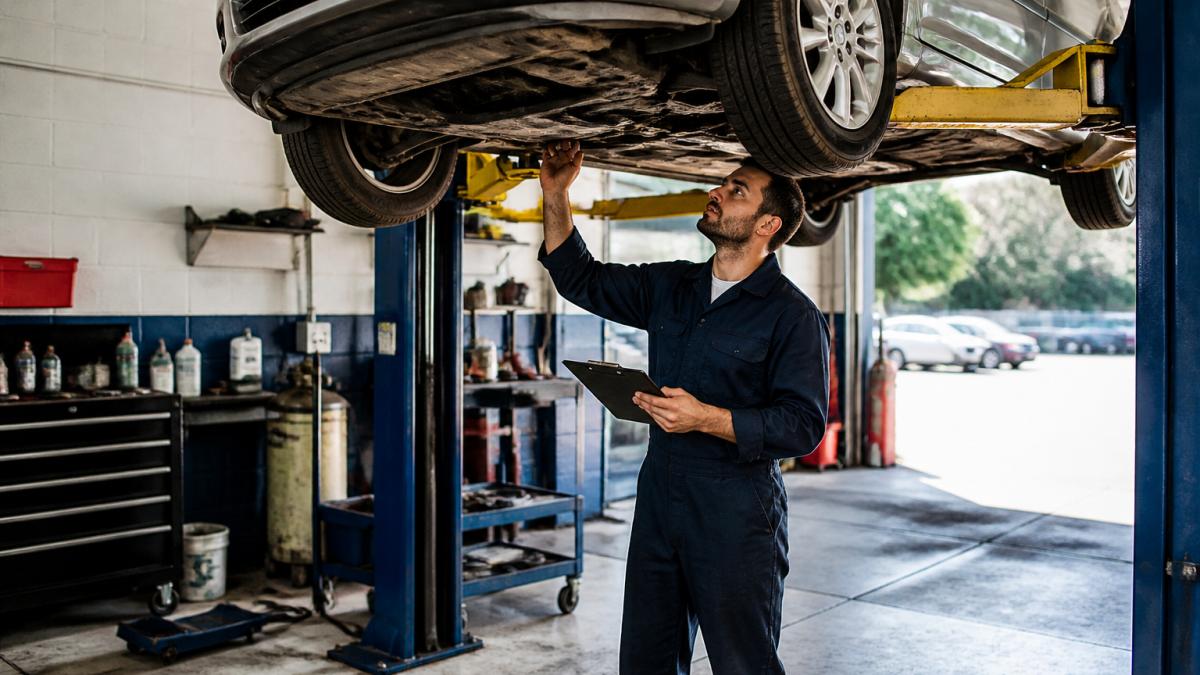 Mechanic inspecting a used car on a lift to avoid future maintenance costs
Consider having a mechanic you trust check the car before you buy. For a closer look at whether it's worth the cost, read Pre-Purchase Inspections: Worth It on a Budget Used Car?.
How to Estimate Maintenance Costs for a Specific Used Car
You can research potential costs for a specific car before you buy it.
Follow these steps:
- Check the model's reputation. Search for common problems on that specific model and year. Our model-specific buyer guides cover common issues and costs for particular models.
- Read the service records. A well-documented car tells you what's been done and what's coming.
- Ask about upcoming services. Timing belts and major intervals are the big costs.
- Get a pre-purchase inspection. The mechanic's report is your best cost forecast.
- Budget for wear items. Add a reserve for brakes, tires, and battery.
Repair or Replace: Deciding When a Used Car Is Worth Keeping
Owners may need to consider whether to fix a car or replace it. There's no single right answer.
Ask yourself:
- Is the repair more than the car is worth? If yes, consider whether replacement makes sense.
- Is this the first big bill or the third this year? Repeated repairs are one factor to consider.
- Is the rest of the car solid? The car's overall condition is one factor to consider.
- Do you still trust the car? Reliability matters as much as cost.
Consider the repair in relation to the car's overall condition.
Labour Rates, Parts Choices, and the DIY Trade-Off
- Dealership service - highest labour rates, genuine parts
- Independent shop - lower rates, quality aftermarket parts
- DIY - you pay only for parts, but you supply the time and skill
Parts choice matters too. Genuine parts cost more. Quality aftermarket parts often work well for less. Cheap no-name parts can cost more in the long run when they fail early.
Planning for Surprise Repairs With an Emergency Fund
Setting money aside before a surprise repair can help with budgeting.
How to build one:
- Set a monthly amount and treat it like a bill
- Keep it separate from your everyday account
- Top it up after you use it
- Aim for a buffer that covers a major repair
Check a Vehicle's Service Records Before You Commit
Service records can provide information about a car's maintenance history.
What to look for:
- Regular oil changes at the right intervals
- Completed scheduled services like timing belts
- Repair history that shows problems were fixed
- Consistent mileage that matches the records
If records are missing, you can ask the seller about the car's maintenance history. For practical guidance on what to check before buying a used car, from vehicle history to safety features, see our inspection guide.
Variety Auto offers a curated used-vehicle inventory that you can browse online, a secure online finance application, and trade-in appraisal services. Real feedback from Google reviews is available.
Frequently Asked Questions
How much should you budget each year for used-car maintenance?
Maintenance costs vary by vehicle and its condition. Track service needs and consider setting aside money for unexpected repairs.
Are used cars more expensive to maintain than new cars?
Maintenance costs depend on the vehicle, its condition, and its service needs. Review available maintenance records and consider having a vehicle inspected before buying.
What repairs should you expect when buying a used car?
Potential maintenance needs vary by vehicle. Review available service records and consider having the vehicle inspected before buying.
How can you estimate a used car's maintenance costs before buying it?
Review available service records and the vehicle's maintenance schedule. Consider having the vehicle inspected before buying, and account for potential maintenance needs in your budget.
Buying a used car shouldn't mean bracing for hidden bills. The right car, checked properly and budgeted for, keeps costs predictable and stress low. Variety Auto makes that easier with a quality used vehicle inventory, a simplified online finance application, and convenient trade-in appraisal services. Get started with Variety Auto and find a reliable vehicle you can budget for with confidence.
