Shopping for a cheap car can feel like a win right up until the first repair bill lands. If you’re wondering whether a pre-purchase inspection used car shoppers pay for is actually worth it on a tight budget, the short version is yes, most of the time, and this guide will show you why.
Why This Question Matters More on a Budget Used Car
Budget buyers feel every extra expense. That’s exactly why skipping an inspection can be so expensive.
In Vancouver and the Lower Mainland, “cheap” doesn’t always mean low-risk. The used market is still tight, and only a 38-day supply of vehicles priced under $15,000 is available. So when a half-decent listing shows up, it’s easy to feel rushed. Add in that used-car prices are up 18% over the past five years and the average used-car transaction price is about $26,000, and even older, high-mileage cars can cost real money.
That’s the trap. People think, “It’s just a budget car, I’ll take the risk.” But a budget car is often the one least able to absorb surprise repairs.
The short answer: yes, usually
For most buyers, a pre-purchase inspection is worth it. It helps you avoid major repairs, spot bad deals, and prevent the classic “as is” regret that shows up a week after you hand over cash.
There’s a reason this is becoming more common. The used car pre-purchase inspection market was estimated at $1.64 billion in 2025 and is projected to grow at 8.35% annually. More buyers are deciding that a few hundred dollars upfront beats a few thousand later.

What a Pre-Purchase Inspection Actually Is
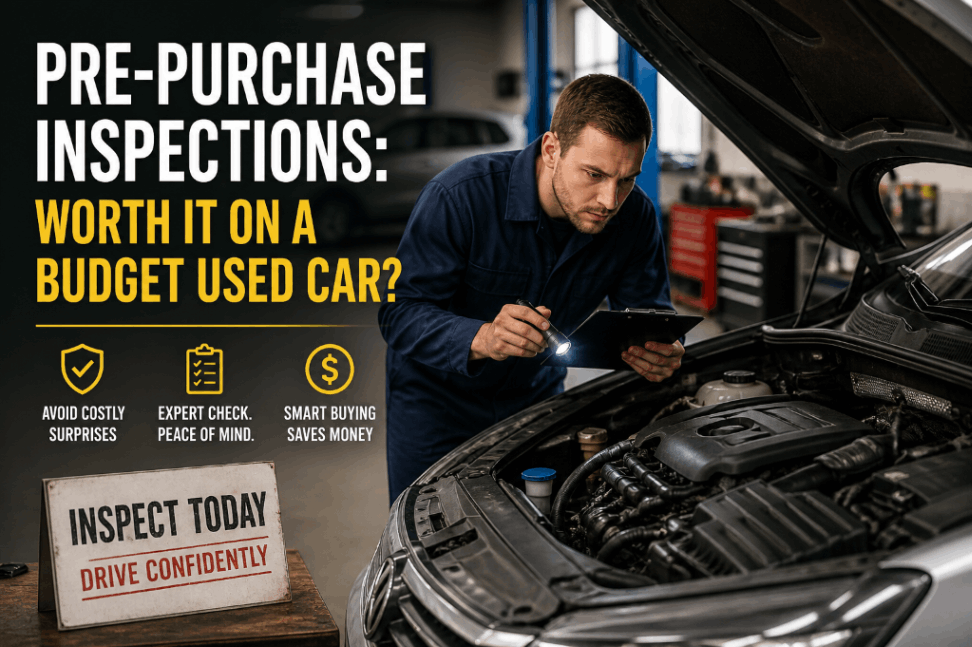
A pre-purchase inspection is an independent mechanic’s check of a vehicle before you buy it. Not the seller’s opinion. Not your cousin’s “it sounds fine.” Not a quick spin around the block.
It’s a real assessment of the car’s current condition before money changes hands. That matters because a used car under $10,000 can look clean, drive okay for 15 minutes, and still have serious problems underneath. As one inspection source puts it, you should never sign the papers without a professional pre-purchase inspection, because shiny paint can hide frame or engine trouble.
What a mechanic usually checks
A proper inspection usually covers the things that cost real money when they go wrong. That includes brakes, tire condition and wear patterns, suspension components, fluid leaks, engine operation, transmission behavior, battery health, exhaust condition, warning lights, steering, and visible signs of rust or previous accident repair.
Many mechanics will also look for frame damage, poor bodywork, undercarriage corrosion, and signs that parts were repaired cheaply after a crash. Some mobile services go deeper, offering color-coded reports with photos and videos that cover the engine, undercarriage, fluid quality, and paint depth. That can be very helpful when you’re buying from a private seller or from another city.
What it does not guarantee
A pre-purchase inspection is risk reduction, not fortune-telling.
It may not catch every future failure, especially intermittent electrical issues or parts that are about to fail but haven’t shown symptoms yet. It also does not replace the paperwork side of your research. You still want a history report, a lien check, recall lookup, and title verification.
The FTC is blunt about this: a vehicle history report is not a substitute for an independent pre-purchase inspection, and the reverse is true too. You need both.
Why Budget Cars Need More Scrutiny, Not Less
Cheaper used cars under $5000 often come with more mileage, more age, and more deferred maintenance. That doesn’t mean they’re all bad. It does mean the margin for error is smaller.
CarEdge says the quality of used cars for sale may be at its lowest level ever, with average mileage above 70,000 miles. That matters because once you get into older, high-mileage vehicles, wear items start stacking up. Tires, brakes, suspension bushings, wheel bearings, battery, belts, leaks, and cooling system parts can all need attention around the same time.
And sometimes sellers know exactly what they’re doing. Price it aggressively, clean it up, move it fast.
Common hidden issues in cheaper used cars
The expensive stuff is not always obvious in a parking lot. Budget buyers often get hit with worn brakes, old tires, oil or coolant leaks, neglected timing belt service, rough transmissions, rust, failing suspension parts, or a pile of overdue maintenance.
None of those problems sound dramatic on their own. Together, they can turn a “good deal” into a car that needs $2,500 in work in the first month.
The “looks fine to me” trap
A freshly washed car is not a healthy car.
A clean cabin, shiny tires, and a smooth 10-minute test drive can hide a lot. Maybe the engine was warmed up before you arrived, so you miss a rough cold start. Maybe the transmission only acts up once it’s hot. Maybe the tires are worn unevenly because of suspension damage you won’t notice until later.
Here’s the thing: used cars are really good at pretending to be fine for half an hour.

When a Pre-Purchase Inspection Is Most Worth the Money
Not every used car carries the same risk. But some situations practically beg for an inspection.
Private-party sales and Facebook Marketplace listings
This is where independent inspections matter most. Private sales usually mean fewer protections, no cooling-off period, and a lot more “someone else is coming to see it tonight” pressure.
The BBB says used-car shoppers should request a vehicle history report, conduct a test drive, and consider an independent inspection before finalizing a purchase. That’s especially true on Marketplace, where seller quality is all over the place.
Cars priced below market value
If a car is clearly cheaper than similar listings, there’s usually a reason. Sometimes it’s harmless, like cosmetic wear. Sometimes it’s because the seller wants out before the next warning light shows up.
That doesn’t mean you should avoid every cheap car. It means you should verify why it’s cheap.
High-mileage, older, or rebuilt-status vehicles
These are higher-risk purchases by default. Older cars and high-mileage cars can still be smart buys, but only if they’ve been maintained well. Rebuilt-status vehicles raise the stakes even more because repair quality matters just as much as the accident itself.
This is where a mechanic earns their fee. You’re paying for trained eyes, and honestly, that’s the whole point.
Buying from out of town or online
Buying a car in Surrey while you live in Vancouver is one thing. Buying one from the other side of the Lower Mainland, or fully online, is another.
The growth of online listings is one reason independent inspections are in higher demand, because online platforms often don’t provide the same physical evaluation and transparency as traditional dealerships. A mobile inspector can be especially useful here because they can go to the car’s location, whether it’s at a dealership or a private seller’s driveway.
What a Pre-Purchase Inspection Costs in Vancouver and How to Judge the Value
In the Vancouver area, inspection pricing varies by shop, depth, and whether you use a mobile service. Expect it to feel annoying if you’re already stretching to buy the car.
Still, this isn’t really a question of cost alone. It’s a question of downside.
The cost vs repair math
A pre-purchase inspection usually costs a lot less than one meaningful repair. That’s the math.
Bad tires alone can cost four figures once mounted and balanced. Brake work adds up fast. Suspension repairs are rarely cheap. Transmission trouble can blow up the budget completely. Even smaller issues, like leaks or neglected maintenance, can stack into a painful first service visit.
That’s why CarEdge says buyers should always get an independent inspection. With used-car loan rates over 10% APR, the last thing you want is to finance repairs on top of the purchase.
When the inspection can pay for itself in negotiation
This part gets overlooked. An inspection doesn’t just help you walk away. It can help you buy smarter.
If the mechanic finds upcoming brake work, tired tires, or a leak, you’ve got leverage. One inspection company gives a simple example: if a report identifies $800 in upcoming brake work or a small oil leak, you can use that to negotiate a lower price. Sometimes the inspection pays for itself twice over.
And if the seller refuses to budge? Fine. At least you know what you’re buying.
Cases Where You Might Skip It, or Scale It Back
There are a few situations where a full inspection may not make sense. They’re just narrower than people think.
Very low-value cars with a short ownership plan
If you’re buying a true beater for very little money, already expect issues, and only need it to last a short time, paying for a full inspection may take too big a bite out of the purchase price.
That said, even then, some level of screening still matters. You might skip a full inspection, but you shouldn’t skip a test drive, paperwork checks, VIN lookup, and a basic mechanical once-over if possible.
Certified or dealer-inspected cars still deserve caution
Dealer inspections and certified programs can be helpful. In fact, certified pre-owned programs are increasing demand for standardized inspections because they create minimum quality benchmarks.
But “dealer-inspected” is not the same as “problem-free.” The FTC says buyers should consider paying an independent mechanic to inspect a used car even if it has been certified, inspected by the dealer, or sold with a warranty. That’s a good rule. Verify what was checked, who checked it, and what is actually covered.
How to Get a Pre-Purchase Inspection Without Blowing Your Budget
You don’t need to make this complicated. The goal is to build the inspection into the buying process early, not scramble after you’ve already fallen in love with the car.
Ask for the inspection before you negotiate final price
Do this early. Before final paperwork. Before the emotional attachment kicks in.
If you negotiate first, then ask for an inspection, it gets awkward fast. The seller feels like you’re reopening the deal. You feel pressure to keep moving. Flip that around and say the inspection is part of your normal process. Much easier.
Use a local independent shop or mobile mechanic
Independent shops are often the better fit for budget buyers because they’re usually faster and more practical. JD Power found that 62% of aftermarket service visits for similar work take less than one hour, and that dealership maintenance visits take three times longer than at aftermarket facilities.
Mobile mechanics can be even easier for private sales. If the seller won’t let the car leave, the FTC says buyers can use a mobile inspection service or ask the dealer to bring the car to a facility chosen by the buyer.
Bring your own checklist too
A mechanic’s inspection is the main event, but your own quick checklist still matters. Before you book anything, look at the cold start, test drive behavior, dashboard lights, service records, tire wear, and signs of rust or water damage.
A simple checklist keeps you from paying for an inspection on a car that already has obvious deal-breaking problems. The FTC also notes that buyers should test drive a used car under varied road conditions, including hills, highways, and stop-and-go traffic. That’s good advice in the Lower Mainland, where one route can tell you very little.

Red Flags That Mean You Should Walk Away
Sometimes an inspection reveals the problem. Sometimes the seller does that before you even get there.
Seller red flags
Be careful if the seller refuses an independent inspection, pushes you to use their mechanic, can’t explain how long they’ve owned the car, or has missing paperwork.
The same goes for urgency games. “Another buyer is coming in an hour” might be true. It’s also one of the easiest ways to get you to skip due diligence.
The BBB reported nearly 19,000 complaints related to used car sales last year, including breakdowns shortly after purchase, missing titles, and outright scams. If the seller story feels fuzzy, trust that feeling.
Vehicle red flags
Walk carefully, or walk away, if you see fresh fluid leaks, uneven tire wear, mismatched paint, warning lights, overheating, musty smells, or paperwork that doesn’t line up with the car.
Online listings deserve extra caution too, because damaged vehicles may be resold after natural disasters before problems appear in history reports. That’s one more reason a physical inspection matters.
Pre-Purchase Inspection vs Vehicle History Report
A lot of shoppers think these are interchangeable. They’re not.
A history report tells you what was recorded. An inspection tells you what the car looks like now.
What a history report can tell you
The FTC says a vehicle history report can reveal ownership history, accident history, repair records, and whether the vehicle was declared salvage. You can also check title, insurance loss, and salvage information through NMVTIS, and look up open safety recalls by VIN.
That’s all useful. Sometimes it’s the difference between moving forward and walking away immediately.
Why a history report is not enough on its own
History reports miss plenty. They may not show unreported accidents, poor-quality repairs, worn-out brakes, bad suspension, fluid leaks, or a transmission that’s about to give up.
That’s why the FTC says a vehicle history report is not a substitute for an independent pre-purchase mechanical inspection, because history reports usually do not list mechanical problems. You want both tools working together.
A Simple Decision Framework for Budget Buyers
If you’re trying to decide quickly, use this as your gut-check.
Get the inspection if…
Get the inspection if the car is a private sale, older, high-mileage, rebuilt, priced below market, missing service records, bought online, or gives you any uncertainty at all.
Honestly, uncertainty alone is enough. If you’re not sure, that’s your answer.
You might skip or limit it if…
You might skip or scale back only if the car is extremely cheap, known to have issues already priced in, and you can afford for the deal to go sideways without real financial pain.
That’s a small category. Most people shopping on a budget are not actually in that category, even if they wish they were.
Smart Next Steps Before You Hand Over Cash
On a budget used car, the inspection is usually the cheaper pain. The expensive pain comes later, when you buy fast and learn slow.
Before you commit, line up an independent mechanic, pull a history report, check recalls, verify the title, and review whatever maintenance records the seller can provide. The FTC also recommends asking for the car’s maintenance record from the owner, dealer, or repair shop, which is worth doing because patterns matter.
Do not let urgency make the decision for you. In a tight market, that’s easier said than done. But it’s still the rule.
Take the Next Step With Confidence
Once you have a clearer idea of what to look for, the next step is to turn that research into action.
You can
- Browse our current used car inventory,
- Explore financing options,
- Contact our team with questions,
- Or book an appointment or test drive.
Whether you are still comparing options or feel ready to move forward, taking the next step with a clear process can help you buy with more confidence and less guesswork.