
Table of Contents
- Why a Test Drive Matters Before Buying
- How to Book a Used Car Test Drive Online
- Pre-Purchase Vehicle Inspection vs. Test Drive
- Used Car Test Drive Checklist
- Questions to Ask Before Test-Driving a Used Car
- How Long to Test-Drive a Used Car
- Road Test Preparation and Safety
- Vehicle History Verification and Documentation
- Common Mistakes to Avoid During a Test Drive
- After Your Test Drive: Next Steps
- Frequently Asked Questions
Last Updated: October 9, 2026
Why a Test Drive Matters Before Buying
When you book used car test drive appointments, you get a chance to experience a used car firsthand before committing to the purchase. You'll feel how it handles, listen to the engine, and assess comfort in real driving conditions. No amount of online photos or dealer descriptions replaces the information you gather behind the wheel.
Many buyers skip this step or rush through it, assuming they've already decided. That's a costly mistake. A test drive reveals mechanical issues, transmission problems, and handling quirks that inspections alone might miss. It's your opportunity to confirm the vehicle matches your expectations and budget before signing paperwork.
At Variety Auto, we encourage every buyer to take time during their test drive. Our team makes scheduling straightforward so you can focus on evaluating the car thoroughly rather than rushing through the process.
How to Book a Used Car Test Drive Online
What Information You'll Need
Before booking a test drive, gather basic details about yourself and the vehicle you're interested in. Most dealerships and private sellers will ask for your name, phone number, and email address. Have your driver's license ready, dealerships typically require a valid license before allowing you behind the wheel.
Know which vehicle you want to test. If you're browsing multiple cars, note the year, make, model, and VIN or listing number. This ensures the appointment is scheduled for the correct vehicle. If you're unsure about a specific car, contact the seller first to discuss options.
Some sellers may ask about your financing status or trade-in vehicle. Having this information prepared speeds up the booking process. If you're planning to trade in your current vehicle, bring its keys and registration documents.
Scheduling Your Appointment
Most dealerships now offer online booking systems on their websites to book used car test drive appointments. Navigate to the inventory section, select your vehicle of interest, and click the "Schedule Test Drive" or "Book Appointment" button. You'll typically fill out a short form with your contact information and preferred time slots.
Be flexible with timing. Weekday mornings often have shorter wait times than weekend afternoons. Choose a time when you're not rushed, you'll want at least 30 to 45 minutes for a thorough test drive and discussion with the seller or dealer.
Confirm your appointment details via email or text. This gives you a reference point and allows you to reschedule if needed. If you don't receive confirmation within a few hours, follow up with a phone call to ensure your slot is secured.
Pre-Purchase Vehicle Inspection vs. Test Drive
A pre-purchase inspection and a test drive serve different purposes, though both are valuable. A pre-purchase inspection is a detailed mechanical assessment performed by a certified mechanic who examines the vehicle's systems, components, and overall condition. The mechanic produces a written report highlighting any issues, repairs needed, and estimated costs.
A test drive is your hands-on evaluation of how the vehicle performs in real conditions. You assess handling, braking response, acceleration, comfort, and overall driving experience. You also notice sounds, smells, and feel that a static inspection cannot capture.
The best approach is to do both. Schedule a test drive first to confirm the vehicle is worth further investment. If you like it, then arrange a professional pre-purchase inspection before finalizing your purchase. This two-step process protects you from buying a vehicle with hidden mechanical problems.
Used Car Test Drive Checklist
Exterior and Interior Condition
Start your test drive by walking around the vehicle's exterior. Check for dents, rust, paint inconsistencies, and signs of previous accidents. Look at the tire tread depth and condition, uneven wear suggests alignment or suspension issues. Inspect all lights, wipers, and mirrors to ensure they function.
Open and close all doors, the trunk, and the hood. They should move smoothly without grinding sounds. Check that windows roll up and down without stuttering. Examine the interior for tears, stains, or odors. Test the air conditioning and heating systems. Verify that all electronic features, power windows, locks, seats, and dashboard controls, work as expected.
Engine Performance and Mechanical Assessment
Once you're behind the wheel, start the engine and listen carefully. A healthy engine should start smoothly without hesitation or rough sounds. Let it idle for a moment and note any vibration or unusual noises.
During your test drive, accelerate gently and then firmly. The engine should respond without hesitation. Listen for knocking, pinging, or grinding sounds that suggest mechanical wear. Pay attention to how the vehicle shifts gears if it's an automatic transmission. Shifts should be smooth and timely. Manual transmissions should engage cleanly without grinding.
Check the dashboard warning lights. Any illuminated light, check engine, oil pressure, battery, indicates a problem that needs investigation before purchase.
Brakes, Suspension, and Transmission Check
Test the brakes at various speeds. They should feel responsive and stop the vehicle smoothly without pulling to one side. If the brake pedal feels soft or spongy, hydraulic issues may be present. Listen for squealing or grinding sounds, which indicate worn brake pads.
Evaluate suspension by driving over bumps and rough road sections. The vehicle should absorb impacts smoothly without excessive bouncing. Feel for clunking sounds or vibrations that suggest worn shock absorbers or struts.
If the vehicle is an automatic, feel for smooth gear transitions at different speeds. Manual transmissions should engage without grinding, and the clutch should feel responsive. Any hesitation or rough shifting warrants further investigation.
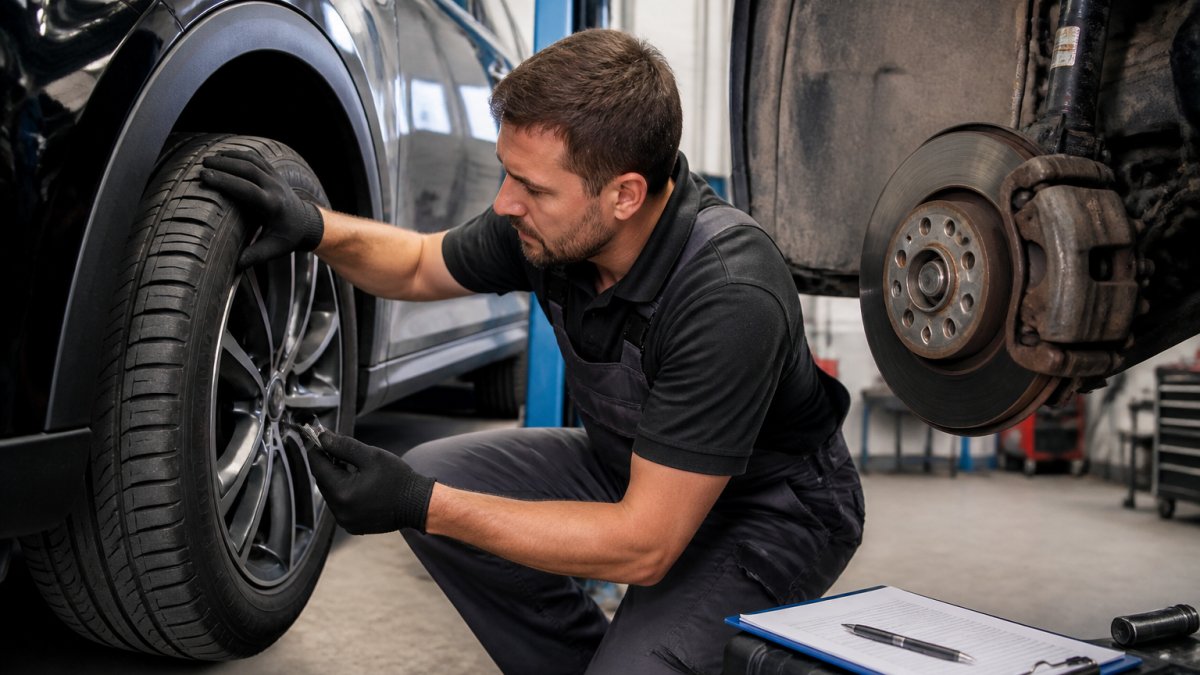 Professional inspector conducting detailed used car inspection, checking tire tread depth and examining brake components with clipboard and diagnostic tools in well-lit service bay
Questions to Ask Before Test-Driving a Used Car
Before you take the keys, ask the seller or dealer specific questions about the vehicle's history and maintenance. Ask about the number of previous owners, how long the current owner has had the vehicle, and why they're selling. Ask whether the vehicle has been in any accidents or had major repairs. Request information about regular maintenance, oil changes, tire rotations, and any service records.
Inquire about the warranty or guarantee, if any. Some dealerships offer limited warranties on used vehicles. Ask what's covered and for how long. If the vehicle has a service history, ask to review it. Regular maintenance records indicate the previous owner cared for the vehicle.
Ask about any known issues or quirks. Honest sellers will mention minor problems upfront rather than having you discover them during the test drive. This builds trust and helps you make an informed decision.
How Long to Test-Drive a Used Car
The ideal test drive duration is 30 to 45 minutes. This timeframe allows you to assess the vehicle's performance on various road types, residential streets, highways, and parking situations, without being rushed.
Start with 10 to 15 minutes of city driving to evaluate acceleration, braking, and handling in normal conditions. Spend 10 to 15 minutes on highway driving to assess stability at higher speeds and how the engine performs under sustained acceleration. Use the remaining time for parking practice and a final walk-around inspection.
Don't feel pressured to rush. If the seller or dealer seems impatient, that's a red flag. A reputable seller wants you to be confident in your purchase decision.
Road Test Preparation and Safety
Choosing Your Test Drive Route
Plan your test drive route before you arrive. Include a mix of environments: residential streets, at least one main road or highway section, and a parking area where you can practice maneuvering. This variety gives you a complete picture of how the vehicle handles different driving scenarios.
Choose a route you know well so you can focus on the vehicle rather than navigation. Avoid overly complex routes with heavy traffic that might mask mechanical issues or make it difficult to concentrate.
Understanding Test Drive Liability and Insurance
Before you drive, clarify liability and insurance coverage. Most dealerships require you to sign a liability waiver acknowledging that you assume responsibility for the vehicle during the test drive. This is standard practice.
Ask whether the dealership's insurance covers you during the test drive or if you need your own coverage. Some sellers may require you to provide proof of insurance. If you're driving a private party's vehicle, confirm their insurance covers test drives. Never drive an uninsured vehicle.
Understand that any damage you cause during the test drive is your responsibility. Drive carefully and stay within speed limits. If you're uncomfortable with the vehicle's handling or condition, stop the test drive and return the vehicle immediately.
Vehicle History Verification and Documentation
A test drive tells you how the car feels today. A history report tells you what happened to it before you arrived. In Canada, that means pulling two separate things: a vehicle history report and a lien search. Skipping either one can leave you owning someone else's debt or a rebuilt wreck.
Pulling a Vehicle History Report
Start with the 17-digit VIN, found on the driver's-side dashboard near the windshield, on the driver's door jamb sticker, and on the ownership document. Cross-check all three. If they do not match, stop and walk away.
In Canada, the two most commonly used providers are CARFAX Canada and AutoCheck. Both draw on provincial motor vehicle records, insurance claims data, and auction records. Expect to pay roughly $40 to $60 for a single report, with multi-report packages costing less per vehicle. A report typically shows:
- Accident and damage records, including whether the vehicle was declared a total loss
- Branding such as salvage, rebuilt, flood, or lemon
- Odometer readings over time, which can reveal rollback
- Registration history across provinces
- Import records, useful if the car originated in the United States
- Service and maintenance entries where shops have reported them
Read the report critically. A single minor collision with a repair invoice is very different from a structural repair or a rebuilt brand. If the report shows a gap in registration of more than a year, ask why.
Running a Lien Search
A history report does not always show whether money is still owed on the vehicle. In most provinces, you can run a lien search through the provincial personal property registry or through a service that queries it. In British Columbia, for example, liens are registered with the Personal Property Registry, and a search is inexpensive, often under $20.
Why it matters: if the seller still owes money on the car, the lender's claim can follow the vehicle. You could pay cash, receive the keys, and later discover the vehicle is subject to a secured debt. Always get written confirmation that the lien has been discharged before you hand over money.
Matching Documents to the Vehicle
Before you finalize anything, line up the paperwork:
- Ownership or registration in the seller's name, matching their government-issued ID
- The VIN on the ownership matching the VIN plate on the vehicle
- A bill of sale that lists the VIN, purchase price, date, and both parties' full legal names
- The most recent provincial inspection certificate, if the province requires one for the transfer
- Service records, which are a bonus rather than a legal requirement, but a strong signal of care
Common Mistakes to Avoid During a Test Drive
Don't skip the pre-drive walk-around inspection. Many buyers jump directly into driving without checking the exterior and interior. This oversight means you miss obvious issues like dents, rust, or interior damage.
Avoid testing only one type of road. Driving only on highways misses how the vehicle handles city driving, parking, and low-speed maneuvers. Test the full range of conditions you'll actually encounter.
Don't ignore warning signs during the test drive. If you hear unusual noises, feel vibrations, or notice warning lights, mention them immediately. Some sellers expect minor issues and will negotiate on price if you bring them up early.
Avoid making a decision while still sitting in the vehicle. Take a break, step out, and review your notes. Emotions run high during test drives, give yourself time to think rationally before committing.
Don't skip the pre-purchase inspection even if the test drive goes well. A professional mechanic can identify issues you missed. This final step protects your investment.
After Your Test Drive: Next Steps
Once you've completed the test drive and feel confident about the vehicle, schedule a pre-purchase inspection with a trusted mechanic. Provide the mechanic with your notes about any concerns you noticed during the test drive. This helps them focus their inspection on potential problem areas.
Review the inspection report carefully. If significant repairs are needed, negotiate with the seller to either reduce the price or complete the repairs before sale. Use this information to make your final decision.
If you decide to move forward, work with Variety Auto or your chosen dealer to finalize financing and paperwork. Review all documents carefully before signing. Confirm the price, warranty terms, and any trade-in valuations are accurate.
Take your time with this process. Buying a used car is a significant investment. Rushing through test drives and inspections leads to regrettable purchases. A thorough approach, booking your test drive, preparing your checklist, conducting the inspection, and reviewing documentation, ensures you drive home in a vehicle you're confident about.
Booking a used car test drive is the first step toward a confident purchase decision. Whether you're exploring options online or visiting a dealership in person, a well-planned test drive reveals essential information about a vehicle's condition and performance. Variety Auto makes the booking process straightforward so you can focus on what matters: finding the right vehicle for your needs. Our team is committed to guiding you through every step of the buying journey with transparency and care. Visit our inventory today to schedule your test drive and take the next step toward your next vehicle.
Frequently Asked Questions
How do I book a used car test drive online?
Most dealerships offer online booking through their website. You'll select your desired vehicle, choose a convenient date and time, and enter your contact information. Some dealers like Variety Auto provide a streamlined online appointment system that confirms your test drive within hours. You may need to provide a driver's license number and basic vehicle information to complete the booking.
What should I check during a used car test drive?
Use a test drive checklist covering exterior condition (paint, dents, tires), interior wear (seats, dashboard, carpets), engine performance (acceleration, idle smoothness), brakes (responsiveness, pulling), suspension (bumps and handling), and transmission (smooth shifts). Pay attention to unusual noises, warning lights, and how the steering feels. Test features like air conditioning, windows, and wipers to ensure everything functions properly.
How long should a used car test drive take?
A thorough test drive typically lasts 15 to 30 minutes. This gives you time to assess the vehicle's performance on different road types, test acceleration and braking, and evaluate overall comfort. Avoid rushing; a quick spin around the block won't reveal transmission issues or suspension problems. Allow extra time if you're testing multiple vehicles or need to discuss financing options afterward.
What questions should I ask before test-driving a used car?
Ask about the vehicle's maintenance history, any accidents or damage repairs, warranty coverage, and why the previous owner sold it. Inquire about specific mechanical concerns (transmission, engine, suspension), fuel economy expectations, and available service records. Request the vehicle history report and ask if a pre-purchase inspection is available. Understanding these details before driving helps you focus on confirming what matters most during the test drive.