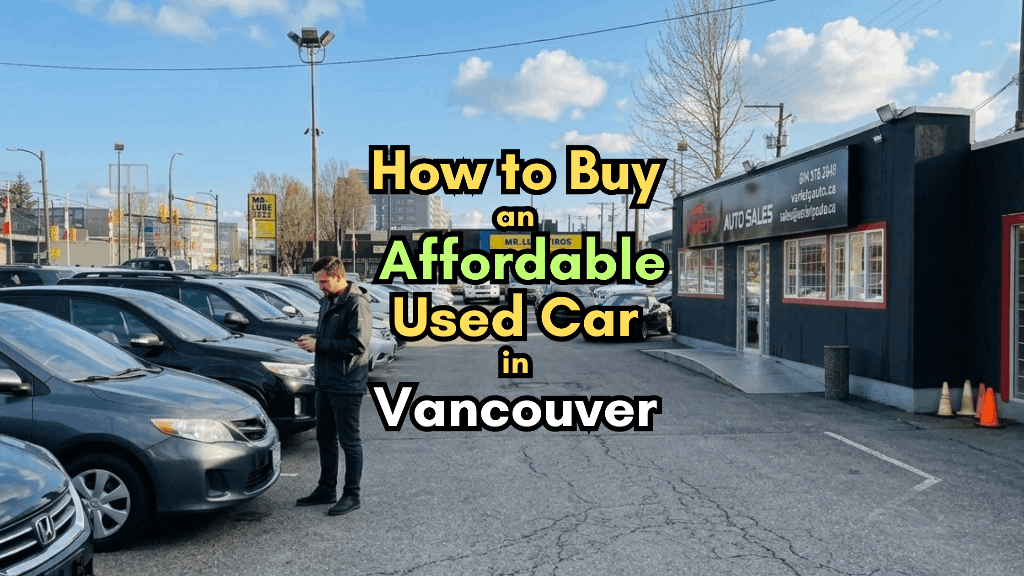
Buying a used car in Vancouver can be a smart move, but let’s be honest — it can also feel messy. Prices jump around. One listing looks like a bargain, then an accident record, overdue maintenance, or expensive financing changes the whole picture. For first-time buyers, budget-minded families, commuters, and anyone trying not to make an expensive mistake, the process can feel heavier than it should.

That pressure is even stronger in Greater Vancouver. The cost of living is already high, so a vehicle has to fit around rent or a mortgage, insurance, fuel, and everything else life throws at you. Local driving adds another layer. A car that looks fine on paper may not suit wet roads, bridge traffic, tight parking, long commutes, or the occasional trip toward the mountains.
This guide is here to make the process clearer. It walks through the steps that matter most: building a realistic budget, understanding the local market, choosing the right vehicle type, researching reliability, checking history and recalls, reviewing financing, inspecting carefully, test driving properly, and handling the paperwork in British Columbia.

The main idea is simple. The best used car is not always the cheapest one. It is the one that gives you the best balance of price, condition, history, reliability, daily usefulness, and long-term cost. When you approach the search that way, the decision usually gets calmer — and smarter.
Explore Our Complete Used Car Buying Guides
Buying a used car gets easier when you follow the right path.
- Start with our Budget Used Cars Guide if affordability is your main concern.
- Explore the Used Car Financing Guide if you want to understand approval, payments, and financing options.
- Use the Used Car Inspection Guide to learn what to check before you buy.
- For local advice, process tips, and Vancouver-specific buying guidance, visit our Vancouver Used Car Buying Guide.
Quick Buyer Summary
If you want the short version first, the safest way to shop for a used car is to follow a clear order instead of jumping straight into listings. Start with what you can actually afford, not just what a lender might approve. Then narrow the search based on your real life: commuting, family use, cargo needs, fuel economy, parking, and Vancouver driving conditions.
Once you have a shortlist, compare local pricing, review the vehicle’s history, understand the financing if you need it, inspect carefully, and make sure the BC paperwork is handled properly before you commit.
In simple terms, the process looks like this:
- Set a realistic all-in budget.
- Choose the right type of vehicle for your needs.
- Research reliability and ownership costs.
- Compare fair local pricing.
- Check history, recalls, and documentation.
- Understand financing before committing.
- Inspect the vehicle carefully.
- Test drive it in realistic conditions.
- Negotiate based on evidence.
- Complete transfer, registration, and final checks in BC.

This order matters because most used-car problems begin when buyers skip steps. Some people shop emotionally before they set a budget. Others get attached to a low price before checking accident history or maintenance records. Some focus only on the monthly payment and ignore insurance, fuel, repairs, and the total cost of ownership. Slowing down usually saves money later.
If you are early in the process, this section works as a quick roadmap. If you are already deep into listings, think of it as a reset point — a way to make sure nothing important gets skipped before money changes hands.
Guide Navigation
Buying a used car is not one decision. It is a chain of decisions, and each one affects the next. Budget shapes what is realistic. Vehicle type affects fuel use, insurance, and maintenance. Pricing research changes how you negotiate. History and inspection change your risk level. Financing changes the true cost. In British Columbia, paperwork and registration matter just as much as the vehicle itself.
That is why this guide is structured as a roadmap rather than a quick article. You can read it from start to finish or jump to the part that matches where you are in the buying process.

Here is what the guide covers:
- Why buying a used car can make financial sense
- How the used-car market works in Vancouver
- A step-by-step buying process from budgeting to paperwork
- How to set a realistic budget and estimate ownership costs
- What kinds of vehicles make sense for different buyers
- How to research reliability before choosing a model
- How to judge pricing and compare local listings
- How to check history, recalls, and documents
- How used-car financing works
- How to inspect and test drive a vehicle properly
- How to negotiate and avoid common red flags
- The difference between buying from a dealer and a private seller
- What documents and transfer steps matter in BC
- How to choose a vehicle that fits Vancouver driving conditions
- A final checklist before purchase
A structured guide makes the process feel less overwhelming. Instead of trying to think about everything at once, you can focus on the next question in front of you: Can I afford this? Is it the right type of vehicle? Is the price fair? Is the history clean? Does the condition support the price? Are the financing terms manageable? Is the paperwork being handled properly?
That progression matters. Most expensive mistakes happen when buyers skip ahead too fast. A good used-car purchase usually comes from a process, not from reacting to one exciting listing.
Why Buying a Used Car Makes Financial Sense
For many buyers in Vancouver, a used car is not just a cheaper alternative to buying new. It is often the more practical financial choice. A carefully chosen used vehicle can give you years of dependable service while keeping the purchase price lower, reducing how much you need to finance, and helping you avoid the steep early depreciation that usually hits new vehicles the hardest.

That matters even more in a high-cost region like Greater Vancouver. When transportation has to fit beside housing costs and day-to-day living expenses, paying for the right vehicle matters more than paying for the newest one. A dependable used model with a sensible history and manageable running costs can leave a buyer in a much healthier position than stretching for a newer vehicle that creates pressure every month.
Depreciation is one of the biggest reasons people buy used. New vehicles tend to lose value fastest in their first years. A used buyer still faces normal depreciation, of course, but the sharpest drop has often already happened. That can mean more vehicle for the same budget — or less money tied up in the purchase.
Still, buying used only makes financial sense when the vehicle is chosen carefully. A low sticker price can be cancelled out fast by weak fuel economy, neglected maintenance, worn tires and brakes, repair bills, or expensive financing. So the real question is not just, ‘How cheap is it?’ The better question is, ‘What gives me the best balance of price, condition, history, reliability, and ongoing cost?’

Understanding the Used Car Market in Vancouver
Anyone shopping for a used car in Metro Vancouver notices pretty quickly that this market has its own rhythm. Prices can feel firm, inventory quality can vary a lot, and the same kind of vehicle may be valued differently here than it would be in a smaller city. That means buyers need to judge a vehicle in local context, not just by broad assumptions about what a used car should cost.

Demand plays a big role. In Vancouver and across the Lower Mainland, many shoppers want practical daily drivers that can deal with commuting, stop-and-go traffic, wet roads, occasional highway use, and weekend trips out of the city. Fuel-efficient sedans still appeal to commuters, but compact SUVs, crossovers, hybrids, and all-wheel-drive models often stay popular because they balance versatility with everyday usability.
Local driving habits also shape what matters. Bridge traffic, short city trips, tight parking, heavy rain, and mixed city-highway driving make features like fuel economy, visibility, tire condition, braking confidence, cargo flexibility, and comfort more important than they may look in a basic listing.

That is why pricing comparison matters so much here. A fair deal in Vancouver is not always the same as a fair deal somewhere else. Mileage, trim, accident history, service records, seasonal demand, tire condition, and seller type can all push asking prices up or down. The smartest buyers compare several similar local vehicles before deciding whether a number really makes sense.
The Used Car Buying Process: Step-by-Step Timeline
A good used-car purchase usually does not come from reacting quickly to one listing. It comes from following a sequence. When buyers move through the process in the right order, they are more likely to stay on budget, compare vehicles properly, and avoid ugly surprises after the sale.
At a high level, the process breaks into ten stages:
- Set a realistic budget.
- Decide what type of vehicle fits your needs.
- Research which models and years are worth shortlisting.
- Compare local pricing and market value.
- Understand financing options before committing.
- Review vehicle history, recalls, and paperwork.
- Inspect the vehicle carefully.
- Test drive it under realistic conditions.
- Negotiate based on evidence.
- Complete the BC purchase, transfer, and registration process correctly.

Each step supports the next one. Budget tells you what is realistic. Vehicle type narrows the field. Reliability research weeds out weak choices. Pricing research improves negotiation. History checks and inspection lower risk. Financing tells you what the purchase really costs. Correct paperwork makes sure the transaction is completed properly.
When these stages get skipped or mixed up, buyers often end up making decisions with missing information. That is why this guide works best as a start-to-finish roadmap — but it also works as a reference if you are already somewhere in the middle of the process.

Step 1: Determine Your Budget Before Shopping
One of the most common used-car mistakes is starting with listings before setting a budget. That usually leads people toward vehicles that feel exciting in the moment but stop making sense once financing, insurance, fuel, maintenance, taxes, and repair risk enter the picture. A better approach is to decide what is truly affordable first, then shop inside that range with some discipline.

This matters a lot in Vancouver, where vehicle costs have to compete with already high living expenses. A buyer may qualify for more than they should comfortably spend. Approval and affordability are not the same thing. The better question is not, ‘How much can I get approved for?’ It is, ‘What can I carry without creating pressure on the rest of my life?’
A realistic budget should include more than the asking price. Think about the all-in cost: purchase amount, down payment, financing charges if needed, taxes, insurance, fuel, routine maintenance, and likely wear items such as tires or brakes. For older or higher-mileage vehicles, it is also smart to leave room for post-purchase repairs or catch-up maintenance.
It often helps to set two numbers: a target budget and a hard ceiling. The target is where you would like to stay. The ceiling is the number you will not cross, even if a listing looks tempting. That small bit of structure makes it much easier to say no to the wrong car — and much easier to stay calm while shopping.

The Real Cost of Owning a Used Car
Once you set a purchase budget, the next step is to look past the windshield price. This is where many decisions become clearer. A vehicle may look affordable at first glance, but the real cost of ownership can be very different once insurance, fuel, maintenance, wear items, and repair exposure are factored in.
Two vehicles with similar asking prices can lead to very different ownership experiences. One may have stronger fuel economy, better maintenance history, and fewer likely repairs. The other may cost less to buy but more to live with. Buyers who compare sticker price alone often discover that difference too late.

A practical ownership review should include fuel use, insurance, routine maintenance, wear items like tires and brakes, and the risk of larger repairs. Older vehicles or vehicles with weak records can still be good value, but only if you go in with realistic expectations. A cheap purchase price can disappear quickly if major work shows up soon after the sale.
That is why careful buyers ask a longer-term question: what is this vehicle likely to cost me over the next one to three years? When you start thinking that way, the search gets sharper. You stop chasing the cheapest car and start looking for the one that is most affordable to own.
Best Used Cars by Budget
One of the simplest ways to shop well is to think in budget bands. That keeps expectations realistic and makes comparison easier. A buyer looking under $10,000 should not judge the market the same way as someone shopping closer to $20,000 or above.
Every price band comes with trade-offs. As the budget changes, so do the likely age, mileage, condition, feature set, repair risk, and chance of finding remaining warranty coverage. Understanding those trade-offs early saves a lot of frustration later.

Under $10,000
At this level, condition and mechanical soundness matter more than features or styling. Vehicles are often older, mileage is often higher, and screening has to be more careful. A strong buy in this range is usually not the newest or flashiest option. It is the one with the best chance of giving dependable transportation without immediate major expense.
This is where many first-time buyers and cash buyers start. The biggest risk is mistaking low price for good value. Accident history, deferred maintenance, tire and brake condition, and signs of upcoming repairs deserve extra attention here.
$10,000 to $15,000
This range often opens up more balanced choices. You may start seeing better maintenance history, more manageable mileage, or a more useful mix of age and features. For many shoppers, this is where careful comparison can lead to very solid long-term value.
The same rules still apply, though. A vehicle in this bracket is not automatically a smart buy just because it is a little newer. History, condition, running costs, and fit still matter.
$15,000 to $20,000
In this range, many buyers start to find stronger late-model options, better-equipped trims, and lower-mileage examples. It can be a sweet spot for commuters, couples, and small families who want something more current without taking on the cost structure of buying new.
The trap here is paying extra only for appearance or age. A newer-looking vehicle is not automatically better value. A smart purchase still comes down to the overall balance of history, reliability, maintenance, and ownership cost.
$20,000 and above
Above this level, buyers may have access to newer used vehicles, more safety and technology features, lower mileage, and sometimes remaining manufacturer warranty coverage. That can mean lower risk and more predictability while still avoiding the hardest hit of new-car depreciation.
Even here, discipline matters. A higher budget creates more choice, but it should not weaken the screening process. Premium pricing still has to be justified by the vehicle itself.
Step 2: Decide What Type of Vehicle You Actually Need
After setting a budget, the next step is deciding what kind of vehicle truly fits your life. It sounds obvious, but this is one of the most important filters in the process. Many buyers start with whatever catches their eye, then try to justify it afterward. It works better the other way around.
A vehicle can be a good car in general and still be the wrong car for you. A compact sedan may be excellent for commuting, fuel economy, and city parking, but not ideal for a family that needs more cargo room or rear-seat flexibility. A compact SUV may feel more versatile, but it may also cost more to buy, fuel, insure, and maintain.

For many Vancouver buyers, daily use should guide the choice. Commuters may benefit from something smaller, efficient, and easy to maneuver. A growing family may care more about access, seating space, and cargo room. Someone who travels outside the city often or carries gear may need more utility than a basic commuter car offers.
This is where it helps to separate must-haves from nice-to-haves. Must-haves are the things that affect daily life. Nice-to-haves are the features that are pleasant but not essential. When buyers mix those together, they often end up paying for equipment before making sure the vehicle format itself actually makes sense.
Step 3: Research Reliability Before Choosing a Model
Once you know the kind of vehicle you want, the next step is narrowing the shortlist based on reliability. This is where many used-car decisions either improve or fall apart. A vehicle may look good, fit the budget, and seem practical on paper, but if that model year is known for expensive problems, the lower price can lose its appeal fast.

Reliability research should be specific. Make, model, year, engine, transmission, drivetrain, and maintenance history can all change the risk level. Some vehicles have a decent overall reputation but still have certain years or powertrain combinations that deserve caution. Others may not look exciting at all, yet turn out to be strong value because they tend to be more predictable to own.
A practical review asks simple questions. Are there common issues with this year and model? Are those issues minor annoyances or major repair risks? Are parts and service likely to be manageable? Does the trim or drivetrain make ownership more complex? Those answers help you avoid vehicles that look affordable only because the risk has not been noticed yet.
Reliability research also improves later steps. If a model is known for transmission hesitation, oil consumption, cooling-system trouble, or suspension wear, you already know what deserves closer attention during the inspection and test drive.
Step 4: Understand Used Car Pricing
Once the shortlist is tighter, it is time to understand how pricing actually works. An asking price may look fair, high, or attractive at first glance, but without context that impression is not very useful. The real question is not whether a vehicle is cheap. It is whether the price makes sense for that vehicle in that market.
Mileage matters, but it is only one factor. Trim level, engine and drivetrain, maintenance records, accident history, number of owners, tire and brake condition, cosmetics, seller type, and seasonality can all affect value. Two vehicles with the same year, make, and model can still justify very different prices once those details are taken seriously.

That is why buyers should compare several similar local vehicles instead of judging value from one listing. If one car is priced much lower than comparable examples, ask why. It may be a real opportunity, but it may also reflect a weaker history, neglected condition, or missing information. On the other hand, a slightly higher price may be justified if the records, condition, and ownership profile are clearly stronger.
In Vancouver, local demand keeps prices firm on certain practical vehicles. So good value is not always the cheapest listing. Sometimes the smarter buy is the one priced a little higher but supported by better evidence.
Step 5: How Used Car Financing Works in Canada
For many buyers, financing is the point where a used car either stays manageable or becomes stressful. That is why it should be understood before the purchase decision is made, not after. A vehicle may look affordable based on the listing price alone, but once the interest rate, term length, down payment, taxes, and total amount financed are considered, the picture can change a lot.
At its simplest, used-car financing means borrowing money and repaying it over time through regular payments. Those payments are shaped by several moving parts: purchase price, down payment, interest rate, loan term, and any extra costs rolled into the financing. Looking at the monthly payment by itself can be misleading.

A lower payment can feel attractive, but if it comes from stretching the term too far, the total cost may end up much higher. Sometimes a slightly higher monthly payment on a shorter and healthier term makes better financial sense. The goal is not the smallest payment at any cost. The goal is a structure you can live with comfortably.
It is also worth remembering that financing approval and financing comfort are not the same thing. Being approved for an amount does not automatically make that amount wise. Real affordability still depends on income, other obligations, insurance, fuel, maintenance, and how much room you want left in your budget after the excitement of buying wears off.
Step 6: Inspecting a Used Car Properly
A used-car inspection is where assumptions start turning into evidence. By now, a vehicle may already look promising on price, history, and general fit, but that still has to match the real physical condition of the car. A vehicle that looks good on paper can still show neglect, hidden damage, or signs of future expense when you inspect it carefully.

You do not need to be a mechanic to do a useful inspection. The goal is not to diagnose everything yourself. It is to notice enough to understand whether the vehicle seems consistent, cared for, and worth deeper confidence.
Start outside. Look at body panels, paint consistency, panel gaps, glass, lights, trim, dents, scratches, rust spots, and signs of repair. Check tire condition and wear pattern. Uneven wear can hint at alignment or suspension issues. Inside the vehicle, pay attention to wear, odours, electronics, warning lights, climate controls, and whether the cabin condition makes sense for the claimed mileage.
Under the hood, even a basic visual check helps. Look for obvious leaks, corrosion, rough repairs, or signs of neglect. If possible, pay attention to the underbody as well. Vancouver’s milder climate helps, but age, moisture, road grime, and hard use still matter. When uncertainty is higher, a professional pre-purchase inspection is often money well spent.
Step 7: How to Test Drive a Used Car
A test drive is not just a quick spin to see whether the car feels pleasant. It is one of the best chances you have to judge how the vehicle actually behaves. A short loop around the block rarely tells the full story. Wherever possible, the route should include realistic conditions: lower-speed city driving, braking, turns, rougher pavement, and some higher-speed road use if that fits the purchase.
If you can, pay attention from the moment the vehicle starts. A cold start can reveal things that disappear once the engine warms up. Rough idle, delayed response, smoke, warning lights, or unusual sounds deserve attention immediately.

Once moving, focus on behaviour rather than appearance. The steering should feel stable. Braking should feel controlled, not shaky or uneven. Acceleration should feel appropriate for the vehicle without hesitation or vibration. The transmission should shift in a way that feels normal and consistent. Over bumps, the suspension should not feel loose, noisy, or unsettled.
The test drive is also where practical fit shows itself. Visibility, cabin noise, seat comfort, parking ease, and general confidence matter. A vehicle can be mechanically acceptable and still feel like the wrong fit for your everyday life. If something feels off, do not talk yourself out of that feeling too quickly.
How to Negotiate the Price of a Used Car
Negotiation feels uncomfortable for many buyers, but it gets easier when you treat it as a practical discussion instead of a showdown. The strongest position comes from preparation. If you understand local pricing, condition, history, and likely near-term costs, you are already negotiating from real information.

The goal is not to force an unrealistic discount. It is to judge whether the asking price matches the vehicle’s actual value. If the price already looks fair for the market and the condition is strong, there may not be much room to move. If there are clear issues — worn tires, brake wear, incomplete records, cosmetic damage, or likely maintenance coming soon — those details may support a reasonable conversation.
Keep the discussion calm and specific. Referring to comparable vehicles, concrete condition points, or near-term costs usually works better than vague bargaining. It shows that you are not guessing.
And remember this: one of the best negotiating tools is the willingness to slow down or walk away. Buyers lose leverage when they get attached too early. The decision is not about whether you ‘won’ the conversation. It is about whether the purchase still makes sense after everything is considered.
How to Check a Vehicle’s History, Recalls, and Paper Trail
Once the pricing looks reasonable, the next step is to verify the vehicle’s background. This is where buyers stop judging by appearance and start judging by evidence. A used car may look clean, drive well on a short route, and still carry history details that change the decision completely.
Start with the VIN. The vehicle identification number should match across the vehicle itself, the listing, and the related documents. A mismatch does not automatically prove something improper, but it is a serious warning sign that needs to be resolved before anything continues.
Accident and damage history also needs context. A reported claim does not automatically make a car a bad buy, but the type of damage, the severity, the quality of repair, and the price all matter. A better question than ‘accident or no accident?’ is whether the history still supports fair value and reasonable long-term confidence.
Service records matter just as much. Clear maintenance history usually gives a buyer far more confidence than verbal assurances alone. Recalls deserve attention too. A recall does not always mean a car should be rejected, but buyers should know whether one exists, whether it has been addressed, and whether there are safety concerns still open.
Used Car Evaluation Scorecard
By this stage, you have already worked through several useful filters: budget, vehicle type, reliability, pricing, history, and financing. A scorecard helps bring those pieces together. Instead of reacting to each vehicle based on appearance or emotion, you can compare them more consistently.
A scorecard does not need to be complicated. It simply gives structure to your comparisons so details do not blur together after several test drives or listing reviews. One car may look impressive on first glance, but another may turn out to have better records, better condition, or lower long-term risk.
A practical scorecard can include price and market value, service history, accident confidence, mechanical condition, tire and brake condition, interior and exterior condition, expected ownership cost, test-drive impression, paperwork confidence, and overall fit for your needs.
Not every category needs the same weight. For one buyer, reliability and ownership cost may matter most. For another, family space and fuel economy may lead the decision. What matters is using the same logic each time so one vehicle does not get judged more kindly simply because it looked exciting.
Common Used Car Scams and Red Flags to Avoid
A careful buying process does more than help you find value. It also helps protect you from bad situations. Some risks in the used-car market come from normal uncertainty, but others come from obvious warning signs that should slow the process down right away.

One of the clearest red flags is a price that seems unusually low without a clear reason. Sometimes there is a harmless explanation. Other times the low number reflects hidden damage, missing documents, serious mechanical issues, or a seller trying to avoid closer scrutiny. A low price should trigger more questions, not less.
Incomplete or inconsistent paperwork is another warning sign. If the VIN does not match, the service history feels vague, or the seller cannot clearly explain ownership details, take that seriously. Pressure tactics matter too. A seller who rushes you, discourages inspection, or pushes for a deposit before proper review may be creating urgency for a reason.
The basic rule is simple: if the vehicle, the paperwork, and the seller’s explanation do not line up clearly, slow down. Most expensive used-car mistakes happen when buyers talk themselves past early discomfort instead of paying attention to it.
Mistakes to Avoid When Buying a Used Car
Even buyers who understand the process can still make expensive mistakes when things get rushed or emotional. Most problems do not come from one dramatic error. They usually come from a handful of smaller shortcuts that seem harmless at the time.

One of the biggest mistakes is shopping by monthly payment alone. A payment may look manageable, but without understanding the rate, term, total financed amount, and overall ownership cost, that sense of affordability can be misleading. A lower payment does not always mean a better deal.
Another common mistake is confusing low price with good value. A cheap vehicle can become expensive very quickly if it has hidden damage, weak reliability, poor maintenance history, or immediate repair needs. Skipping research is another problem. Buyers sometimes fail to compare local pricing, overlook known issues with a model year, or rush through inspection and test drive because the listing feels urgent.
It is also easy to get attached to one vehicle too early. Once that happens, people start excusing warning signs instead of evaluating them clearly. A structured process helps prevent that. It keeps comparison, evidence, and fit at the centre of the decision.
Dealer vs Private Seller: Detailed Comparison

One of the biggest decisions in the buying process is not only which vehicle to buy, but where to buy it. For most shoppers, that means comparing two main paths: buying from a dealership or buying from a private seller. Neither route is automatically right for everyone, but each comes with different strengths and trade-offs.
Private sales are often linked to the possibility of a lower price. Sometimes that is true. But a lower asking price should always be weighed against the rest of the transaction. Private sales can involve more responsibility for the buyer, less support with paperwork, less flexibility around financing, and more need for independent verification.
A dealership purchase usually offers a more structured environment. Buyers may be able to compare several vehicles in one place, ask financing questions, and move through the paperwork in a more organized way. That does not make every dealership vehicle the right choice, but for many shoppers — especially first-time buyers — that structure reduces friction and uncertainty.
The best route depends on your priorities. A buyer comfortable doing more of the work independently may prefer private opportunities. A buyer who values structure, easier comparison, financing access, and more process support may feel more comfortable at a dealership. What matters most is not the channel itself, but how clean and well-supported the transaction feels.
Documents Required to Buy a Used Car in British Columbia
Paperwork is not the most exciting part of buying a used car, but it is one of the most important. A vehicle can make sense in terms of price and condition and still turn into a stressful purchase if the documents are incomplete, inconsistent, or handled badly. In British Columbia, this part deserves real attention.
Think of paperwork as part of risk management. The documents connected to the sale help confirm what is being purchased, who is selling it, and whether the ownership transfer is being handled properly. That is not just admin. It is part of protecting yourself from confusion, delays, and avoidable mistakes.
Consistency is the key idea. The vehicle details should line up across the listing, the VIN, any supporting records, and the sale documents. The seller’s information should make sense. If something feels incomplete or rushed, stop and sort it out before moving any further.
In BC, the process does not end when money changes hands. Transfer, registration, and insurance steps still need to be completed properly so the vehicle can be used legally and without confusion. That is why documents should be reviewed before the payment stage, not as a last-minute afterthought.
Where to Buy a Used Car in Vancouver
Once you understand budget, vehicle type, reliability, pricing, history, inspection, financing, and paperwork, the next question becomes practical: where should you actually shop? In Vancouver, buyers usually work through dealerships, private sellers, online marketplaces, or a mix of all three.
Each path shapes the experience differently. A dealership may offer structure, multiple vehicles in one place, financing support, and help with next steps. A private seller may offer a different price dynamic and a more direct conversation. Online marketplaces widen the search, but they also demand more filtering and more independent verification.
The best place to shop depends on how you want to shop. Some buyers like having several vehicles available for comparison in one visit. Others are comfortable spending more time screening listings on their own. Some need financing built into the process. Others are paying cash and care more about flexibility.
In a market like Vancouver, convenience has value too. A slightly lower advertised price is not always the best route if the process around the vehicle feels vague or hard to verify. The better buying channel is usually the one that makes comparison easier and reduces uncertainty, not just the one that looks cheapest at first glance.
Best Used Cars for Vancouver Driving Conditions
Not every good used car is the right used car for Vancouver. Local conditions shape what matters in everyday ownership. A car that looks appealing on paper may feel less practical once you put it into real city use.
For many local drivers, commuting is the starting point. Stop-and-go traffic, bridge approaches, frequent braking, tight parking, and mixed city-highway driving favour vehicles that are easy to manoeuvre, efficient to run, and comfortable over repeated short and medium-distance trips. That is one reason compact sedans, hatchbacks, hybrids, and practical crossovers remain popular here.
Weather matters too. Wet roads are common for much of the year, so tire quality, braking confidence, visibility, and general road manners are important. Not every buyer needs all-wheel drive, but every buyer should care about condition and tyre quality. A well-kept front-wheel-drive vehicle can suit many city drivers very well.
The best used car for Vancouver depends on your own pattern of use. A commuter may value parking ease and low operating cost. A family may care more about rear-seat space and cargo room. A weekend traveller may want more versatility. The strongest choices usually come from matching the vehicle to actual daily life, not to the image of what seems exciting in a listing.
Final Checklist Before You Buy
By the final stage, the goal is not just to feel excited. It is to feel clear. A good used-car purchase usually happens when budget, vehicle type, pricing, history, financing, condition, and paperwork all support the same decision. If one of those areas still feels uncertain, that is the moment to slow down and sort it out.
A final checklist creates one last pause between interest and commitment. Instead of asking, ‘Do I want this car?’ ask a better question: ‘Have I actually verified the things that matter most before I buy it?’
Before moving ahead, confirm that the vehicle still fits your real all-in budget, the type still suits your daily needs, the price makes sense against similar local vehicles, the history and paperwork have been reviewed, the inspection did not reveal ignored concerns, the test drive supported confidence, and the financing — if there is financing — still feels affordable in real life.
A good used-car deal should still look good when you review it calmly. It should not depend on pressure, confusion, or last-minute compromise. If the decision still feels strong after that final review, you can move forward with much more confidence.
Next Steps: Find the Right Vehicle with Confidence
After working through budget, vehicle type, reliability, pricing, history, financing, inspection, paperwork, and final checks, the process gets a lot clearer. At that point, the goal is no longer to browse blindly. It is to move forward with a shortlist and a better sense of what a strong used-car purchase should look like.
That shift matters. At the beginning, the market can feel crowded and noisy. Every listing seems urgent. Once you understand the process, the search becomes more manageable. You stop reacting to price or appearance alone and start focusing on vehicles that fit your real budget, daily needs, and comfort level.
A practical next step is to narrow the field to vehicles that already make sense on paper, then evaluate those options carefully in person. That might mean comparing a few specific vehicles, booking an appointment, or asking financing questions before moving further. The right next step depends on where you are, but by now it should feel intentional, not random.
A good used-car purchase should not feel like guesswork. It should feel like the outcome of a structured process. When you reach that point, you are in a much better position to filter out weak options and move toward the right vehicle with confidence.
Take the Next Step With Confidence
Once you have a clearer idea of what to look for, the next step is to turn that research into action.
You can
- Browse our current used car inventory,
- Explore financing options,
- Contact our team with questions,
- Or book an appointment or test drive.
Whether you are still comparing options or feel ready to move forward, taking the next step with a clear process can help you buy with more confidence and less guesswork.