Last Updated: November 1, 2026
Quick Summary
Buying a car usually takes a few hours at the dealership, but the full process can stretch to several weeks. Preparation matters most, since buyers with documents and a financing plan move through it much faster.
- Shopping time and dealership time are separate clocks; most delays come from confusing the two.
- Dealership time for a typical used car is about 4 to 6 hours of active work, spread over 2 to 4 days.
- Financed buyers can add 1 to 5 business days waiting for loan approval unless they are pre-approved.
- Gather your license, proof of income, proof of insurance, and banking details before your visit.
- Ask the dealer to email the bill of sale and financing documents before signing to save 20 to 30 minutes.
Table of Contents
- How Long Buying a Car Takes From Start to Finish
- Shopping Time vs. Dealership Time: Separating the Two Clocks
- How Long It Takes to Buy a Car at a Dealership
- Steps to Buying a Used Car, With Time Estimates for Each
- Used Car Pre-Purchase Inspection: Where Time Is Well Spent
- Documents Needed to Buy a Car and How They Affect Timing
- What Causes Delays and How to Prevent Them
- Booking Your Online Finance Application and Visiting Variety Auto
- Frequently Asked Questions
How Long Buying a Car Takes From Start to Finish
Buying a car usually takes a few hours at the dealership, but the full process can stretch to several weeks. Some buyers arrive with their paperwork ready and drive home the same afternoon. Others spend days comparing options before they ever step on a lot.
According to Cox Automotive's 2022 Car Buyer Journey Study, vehicle buyers were frustrated by high prices, limited availability, and the amount of time required. That frustration often comes from not knowing how long each stage should take.
Here is a rough breakdown of the full process:
-
Research and shopping: Anywhere from a few days to several weeks
-
Paperwork and delivery: Usually the same day as your final agreement
The biggest factor is how prepared you are. Buyers who bring documents and a financing plan move through the process much faster.
Shopping Time vs. Dealership Time: Separating the Two Clocks
Think of car buying as two separate clocks running at once. The first clock is shopping time, which covers research, comparing vehicles, and checking availability. The second clock is dealership time, which covers the test drive, negotiation, and sales paperwork.
Most of the confusion comes from mixing these two up. A buyer might say the process took three weeks, but only four hours of that happened in the showroom.
Keep the clocks separate when you plan:
- Shopping time: Set by how quickly you narrow your choices
- Dealership time: Set by how organized your visit is
- Waiting time: Set by vehicle availability and approvals
Knowing which clock is running helps you spot where delays actually happen.
How Long It Takes to Buy a Car at a Dealership
Time at the dealership depends on how prepared you are and how the visit is organized. Booking an appointment can help you plan your visit.
Visits run longer when:
- The vehicle needs to be pulled from another location
- Financing requires additional review
- Trade-in appraisal takes extra time
- The buyer compares several options on the lot
Contact Variety Auto to ask whether an appointment can be arranged ahead of your visit.
Steps to Buying a Used Car, With Time Estimates for Each
A useful way to plan is to separate active time (hours you actually spend doing something) from waiting time (hours or days you spend waiting on someone else). Most buyers underestimate the waiting and overestimate the active work.
Here is a stage-by-stage breakdown for a typical used car purchase, with both clocks shown:
| Stage | Active time | Waiting time | What actually happens |
|---|---|---|---|
| Set your budget | 1-2 hours | None | List your monthly payment ceiling, insurance estimate, and a repair reserve of roughly 10% of the purchase price. |
| Browse inventory and shortlist | 2-5 hours total, spread over 2-7 days | None | Filter by body style, mileage cap, and budget; save 3-5 candidates. |
| Confirm availability and book a test drive | 15-30 minutes | Same day to 2 days | Ask for the VIN, confirm the vehicle is physically on the lot, and request an appointment. |
| Test drive | 30-60 minutes per vehicle | None | Drive at least 15 minutes on mixed roads, including a highway merge and a parking-lot maneuver. |
| Pre-purchase inspection | 1-2 hours at the shop | 1-2 days to book | A mechanic checks brakes, tires, suspension, fluid leaks, and scans for stored codes. |
| Negotiation and trade-in appraisal | 30-90 minutes | None | Appraisal alone is usually 30-60 minutes; negotiation adds 15-45 minutes. |
| Financing application and approval | 30-60 minutes to apply | 1-5 business days for approval, longer if documents are missing | Lender verifies income, employment, and credit; pre-approval shortens dealership time. |
| Paperwork and signing | 45-90 minutes | None | Bill of sale, lien check, transfer documents, insurance confirmation. |
| Registration and plates | 30-60 minutes | Same day to a few days depending on service channel | Can often be handled online or at a registry agent after signing. |
| Vehicle preparation and delivery | 30-60 minutes | Same day to 2 days if detailing or safety work is needed | Confirm whether the vehicle is being sold with a safety inspection and what reconditioning is included. |
How the totals add up by scenario:
- Cash buyer, no trade, vehicle on the lot: roughly 4-6 hours of active time spread over 2-4 days, with most of the dealership portion done in a single 2-3 hour visit.
- Financed buyer, no trade: add 1-5 business days of waiting for approval unless pre-approved; active time rises by about 1 hour.
- Trade-in included: add 30-60 minutes for appraisal and 15-30 minutes for the trade paperwork; if the trade has a lien, add 1-3 business days for payout verification.
- Custom order or dealer transfer: add 4-12 weeks for factory order or 3-10 days for a dealer locate, depending on availability.
Used Car Pre-Purchase Inspection: Where Time Is Well Spent
A pre-purchase inspection adds time to the process but can reveal mechanical problems that are not visible during a test drive.
A common mistake is skipping the inspection to save a day. A problem found after the sale can cost far more to fix. You can read more about this in Canadian consumer guidance on used vehicle inspections. For a closer look at whether the cost and time are justified on a tighter budget, see whether a pre-purchase inspection is worth it on a budget used car.
Ask the seller whether an inspection is allowed before you commit. To understand when and why a vehicle inspection is needed, read our article on used car pre-purchase inspections.
Documents Needed to Buy a Car and How They Affect Timing
Having the right documents ready is one of the easiest ways to speed up your purchase. Missing paperwork is one of the most common causes of delay.
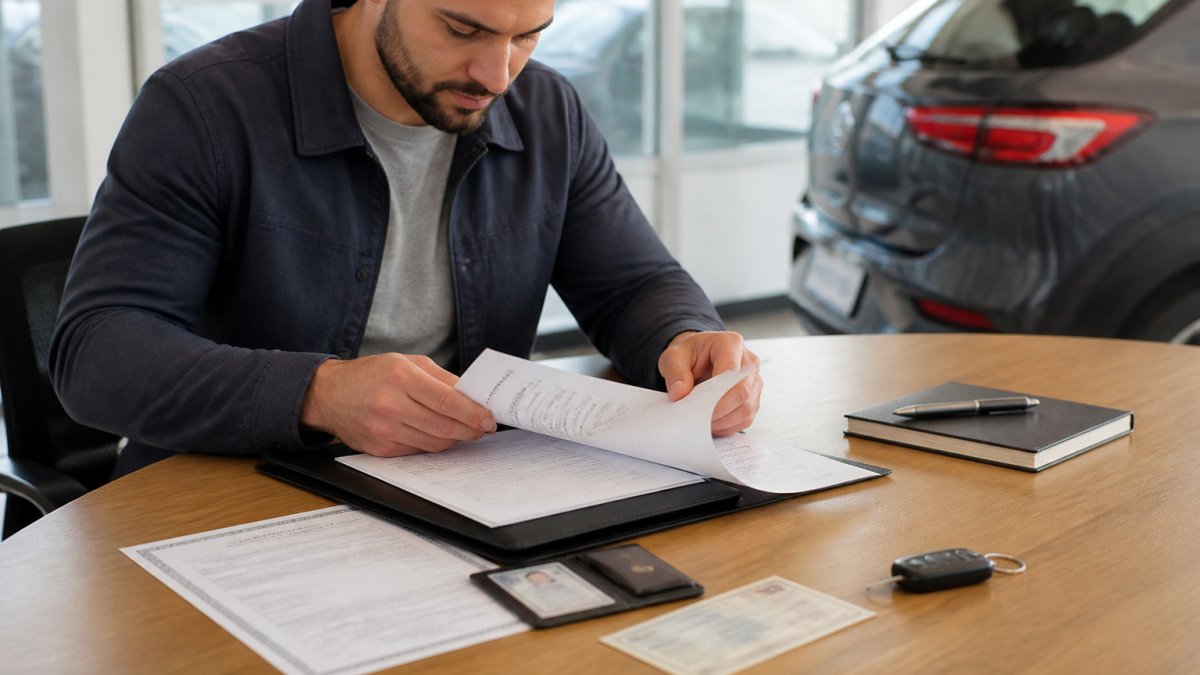 Buyer organizing documents like a driver's license while buying a car at a bright Canadian dealership office.
Bring these items to your visit:
- Valid driver's license
- Proof of insurance
- Proof of income or employment
- Trade-in documents, if applicable
- Payment method or down payment details
If you are missing any of these, your visit may stretch into a second day. Gather everything before you book your appointment.
![A buyer at a desk in a bright Canadian dealership office organizing a folder of documents, driver's license and proof of insurance beside a laptop | section:Documents Needed to Buy a Car and How They Affect Timing]
What Causes Delays and How to Prevent Them
Some common causes of delay can be prepared for in advance. The checklist below covers several of them.
1. Missing or mismatched documents
- What happens: Missing or mismatched documents can delay a purchase.
- Prevent it: Gather your driver's license, proof of income, proof of insurance, and banking information before your visit, and check that names and addresses match across documents.
2. Lender verification and credit review
- What happens: Lenders verify employment, income, and existing debt.
- Prevent it: Ask the lender which documents they need for your specific situation before you shop.
3. Trade-in title and lien issues
- What happens: If your current vehicle has a lien, the payout may need to be confirmed before a trade is finalized.
- Prevent it: Request a lien payout statement from your lender and confirm who is registered as owner before your visit.
4. Vehicle availability
- What happens: A vehicle listed online may no longer be available.
- Prevent it: Confirm with Variety Auto that the vehicle is still available before you visit.
Quick pre-visit checklist:
- License, income proof, insurance proof, banking details in one folder
- Pre-approval letter in hand (or application submitted 2-5 days ahead)
- Lien payout statement for trade-in
- All registered owners available to sign
- VIN confirmed and vehicle confirmed on the lot
- Safety inspection and reconditioning terms in writing
- Insurance effective date aligned with delivery date
Booking Your Online Finance Application and Visiting Variety Auto
Ready to move forward? You can submit an online finance application and contact Variety Auto to ask about a test drive or vehicle availability.
If you plan to trade in your current car, you can get a trade-in appraisal to learn its value before you negotiate.
Frequently Asked Questions
How long does it take to buy a car at a dealership?
The full process often runs longer than a single visit when research, financing approval and paperwork are included. Buyers who arrive with documents and a clear budget can move through the transaction more smoothly. Delays often come from waiting on credit decisions, vehicle preparation or incomplete paperwork.
How long does it take to buy a used car from start to finish?
The full timeline for a used car can range from a single day to a few weeks, depending on how long you spend researching, whether you need financing and how quickly the paperwork is completed. Shopping and comparing vehicles usually takes the longest part of the process. Once you choose a vehicle, the pre-purchase inspection, trade-in appraisal and financing approval can each add time, so handling them in parallel where possible helps. Exact timing varies, so contact Variety Auto for current availability and next steps.
Is a pre-purchase inspection worth the time for a used car?
A pre-purchase inspection adds time to the process but can reveal mechanical problems that are not visible during a test drive. Arranging an inspection before you commit to a purchase protects you from surprise repair costs after the sale. Ask the seller or dealership about the inspection options available for the vehicle you are considering.
What documents do I need to buy a car in Canada?
Most buyers need a valid driver's license, proof of insurance for the vehicle, proof of income and a method of payment. If you are financing, the lender may also request recent pay stubs, proof of address and information about your existing debts. Having these documents ready before you arrive reduces delays at the sales desk. If you plan to trade in a vehicle, bring its registration and any remaining loan details as well. Confirm the exact requirements with Variety Auto before your visit.
