Table of Contents
- Why Knowing Your Used Car's Worth Matters
- What You'll Need Before You Start Valuing Your Vehicle
- Understanding Trade-In Value vs. Private-Sale Value vs. Retail Value
- Using a Used Car Value Calculator
- How Mileage Affects Car Value
- Checking the Canadian Red Book Car Value
- How to Reconcile Multiple Valuation Estimates
- Factors That Increase or Decrease Your Used Car's Worth
- Getting a Professional Dealer Appraisal
- Common Mistakes to Avoid When Valuing Your Vehicle
- Frequently Asked Questions
Last Updated: October 16, 2026
Why Knowing Your Used Car's Worth Matters
Understanding what your used car worth is one of the most important steps in selling or trading in a vehicle. When you know the actual market value, you negotiate from a position of strength. You avoid accepting offers that are too low. You also set realistic expectations if you're buying.
The value of your vehicle depends on multiple factors. Mileage, condition, accident history, and local demand all play a role. A car worth $18,000 in one market might be worth $16,500 in another. Regional differences matter more than most sellers realize.
Getting an accurate estimate saves time and prevents regret. Whether you're upgrading to a new car or selling privately, knowing what your used car is worth gives you confidence in every conversation.
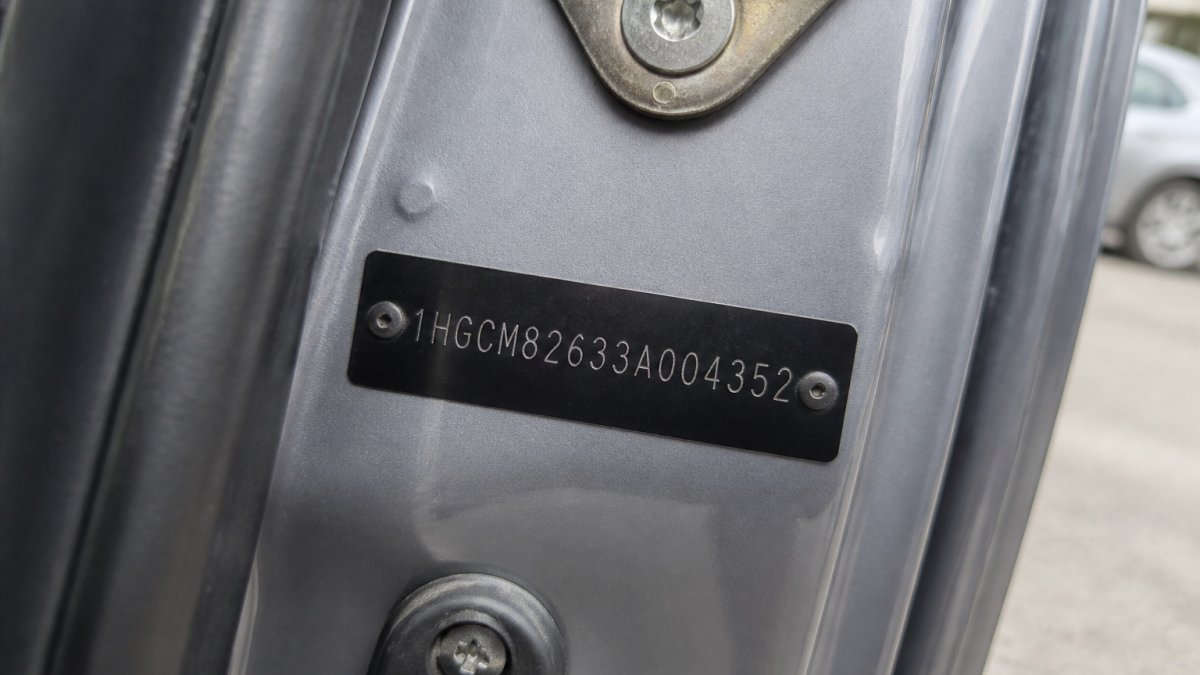 Close-up of a vehicle's VIN plate on the driver's side door jamb, showing the 17-character identification number clearly visible under natural daylight
What You'll Need Before You Start Valuing Your Vehicle
Gathering the right information before you value your car makes the process faster and more accurate. You'll need specific details about your vehicle. Without them, online valuation tools can only give you rough estimates.
Start by collecting these key pieces of information:
- Your vehicle's VIN (Vehicle Identification Number)
- Year, make, model, and trim level
- Current mileage reading from your odometer
- A honest assessment of the vehicle's condition
- Service history and maintenance records
- Any accident history or damage repairs
- A list of optional features and upgrades
Having this information ready saves time when you use online valuation tools or contact a dealer for an appraisal. It also ensures the estimates you receive are as accurate as possible.
Vehicle Identification Number (VIN) Lookup
Your VIN is a 17-character code that tells you almost everything about your vehicle. Every car has a unique VIN. You can find it on the driver's side door jamb, on your insurance documents, or on your vehicle registration.
The VIN breaks down into sections. The first three characters identify the manufacturer. Characters four through eight describe the vehicle type, body style, and engine. Characters nine through seventeen provide the model year, assembly plant, and serial number.
You can use your VIN to look up your vehicle's history. In Canada, you can check provincial vehicle history reports. These reports reveal past damage, title issues, and maintenance records. Knowing your vehicle's history helps you understand why its value might be higher or lower than similar models.
Year, Make, Model, and Trim Details
The year, make, model, and trim of your vehicle are the foundation of any valuation. Two cars that look identical can have very different values if one is a year newer or has a higher trim level.
Your trim level matters significantly. A base model sedan is worth less than the same model with a luxury package. Trim levels often include different engines, transmissions, and interior features. Specify your exact trim when getting estimates.
The year of your vehicle affects its value more than most people expect. A 2024 model is worth considerably more than a 2022 model, even with similar mileage. Newer vehicles command higher prices because they have more warranty coverage remaining and newer technology.
Mileage and Vehicle Condition Assessment
Mileage is one of the biggest factors in used car valuation. Every 1,000 kilometers added to your odometer reduces your car's value. High-mileage vehicles sell for less, even if they're well-maintained.
Be honest about your vehicle's condition when valuing it. Condition includes interior wear, exterior damage, mechanical issues, and overall cleanliness. A car with a clean interior and no visible damage is worth more than one with stains, tears, or dents.
Check these condition factors carefully:
- Exterior paint and body damage
- Interior upholstery and carpet condition
- Dashboard cracks or wear
- Tire tread depth and condition
- Mechanical issues or warning lights
- Rust or corrosion on the undercarriage
Minor cosmetic issues reduce value slightly. Major mechanical problems reduce it significantly. A transmission problem costs thousands to fix, so dealers factor that into their appraisals.
Understanding Trade-In Value vs. Private-Sale Value vs. Retail Value
Your used car is worth different amounts depending on how you sell it. Understanding these three values helps you make the right decision about selling or trading in.
Trade-in value is what a dealer will give you when you buy another vehicle from them. This value is typically the lowest of the three. Dealers need margin to cover their costs, inspections, and potential repairs.
Private-sale value is what you can expect to receive if you sell your car directly to another person. This value is usually higher than trade-in value because there's no dealer middleman. You keep the full profit from the sale.
Retail value is what a dealer charges when selling a used car to a customer. This is the highest of the three values. Dealers mark up their inventory to cover overhead and profit.
The gap between trade-in and retail value can be substantial. A car worth $15,000 as a trade-in might sell for $17,500 at retail. That $2,500 difference is the dealer's margin. If you're selling privately, you can capture some of that margin yourself.
Your choice depends on your situation. Trading in is faster and requires less effort. Selling privately takes more time but puts more money in your pocket.
Using a Used Car Value Calculator
Online valuation tools give you instant estimates for your vehicle. These calculators use databases of recent sales to estimate market value. They're convenient and free, but they have limitations.
Most calculators ask for the same basic information:
- Year, make, and model
- Mileage
- Vehicle condition (excellent, good, fair, poor)
- Optional features and packages
- Your location or postal code
Enter this information and the tool generates an estimate within seconds. Many tools show a range rather than a single price. A range of $15,000 to $17,000 is more realistic than a single figure.
Use multiple calculators to cross-check estimates. Different tools use different data sources and algorithms. If five calculators show your car is worth between $16,000 and $18,000, you can be confident in that range.
The limitation of online tools is that they can't inspect your car. They don't know about recent repairs, hidden damage, or how well you've maintained it. They give you a starting point, not a final answer. A professional appraisal is more accurate than any online calculator.
How Mileage Affects Car Value
Mileage still matters in 2026, but it no longer works as a simple "cents per kilometer" deduction. The used market has shifted: buyers now weigh condition, service records, and accident history more heavily than a raw odometer number, especially for vehicles between 80,000 and 160,000 kilometers. A high-kilometer car with a full service history can outperform a low-kilometer car with gaps in maintenance.
The practical way to think about mileage is in bands, not single kilometers. Most appraisers and online tools group vehicles into ranges:
- Under 60,000 km, considered low; minimal mileage penalty.
- 60,000-120,000 km, the normal range for a 4-7 year old vehicle; modest adjustment.
- 120,000-180,000 km, buyers start pricing in upcoming maintenance (timing belt, suspension, brakes).
- 180,000-220,000 km, significant discount; expect scrutiny on transmission and engine health.
- Over 220,000 km, value drops sharply unless the vehicle is a known long-life model with documented service.
Round-number thresholds are real. A vehicle at 199,500 km will often appraise higher than the same vehicle at 200,500 km because buyers and dealers anchor on the 200,000 km mark. The same effect appears at 100,000 km and 150,000 km. If you are close to a threshold and planning to sell, timing the sale before the odometer rolls over can preserve several hundred dollars in value.
Mileage also interacts with vehicle type. A pickup truck or full-size SUV at 180,000 km may hold value better than a compact sedan at the same reading, because truck buyers expect higher kilometers and prioritize mechanical condition. Conversely, a luxury sedan at 180,000 km can lose value faster because repair costs on complex systems scare buyers away.
Finally, be skeptical of tools that apply a flat per-kilometer rate. They are useful for a quick range, but they cannot see your maintenance history, your trim level, or your local market. Use mileage as one input, not the verdict.
Checking the Canadian Red Book Car Value
The Canadian Red Book remains one of the most recognized valuation references in this market. Dealers, insurers, and appraisers use it because it draws on transaction data rather than asking prices. But in 2026, treating any single guide as the final word is a mistake. The real skill is reconciling Red Book against live listings, online calculators, and a physical appraisal.
Red Book publishes three numbers for most vehicles: trade-in, private sale, and retail. Those three numbers exist because the same car is worth different amounts depending on how it changes hands. A trade-in figure reflects what a dealer can pay after accounting for reconditioning, lot time, and margin. A private-sale figure reflects what a patient buyer will pay. Retail reflects what a dealer will ask after preparing the vehicle.
To use Red Book well, follow this sequence:
- Pull the Red Book value using your exact year, make, model, trim, and kilometer reading. Note all three numbers, not just trade-in.
- Check live listings for the same vehicle within 200 km of your postal code. Filter by similar kilometers and trim. Ignore asking prices that are clearly aspirational, look at the middle of the range.
- Run two or three online calculators and record their ranges. If they cluster, you have a signal. If they diverge widely, your vehicle likely has features or history the tools are not capturing.
- Get one in-person appraisal from a dealer or independent appraiser. This is the only source that can see paint depth, tire wear, warning lights, and service records.
A common pattern is that Red Book trade-in sits slightly below what a motivated dealer will actually offer when they need inventory, and slightly above what a dealer will offer when their lot is full. That gap is normal and is one reason you should never accept the first trade-in number without a second appraisal.
Canadian Red Book official valuation lookup
Once you have Red Book, live listings, calculator ranges, and one appraisal, you are no longer guessing. You are triangulating. That is the difference between a seller who accepts the first offer and one who negotiates from evidence.
How to Reconcile Multiple Valuation Estimates
Getting estimates from multiple sources is smart. But when the estimates don't match, it's confusing. Different tools and appraisers can give you different numbers.
Start by understanding why estimates differ. Some tools focus on trade-in value. Others show private-sale value. Some factor in regional demand. Others use national averages. These differences explain much of the variation you see.
Create a simple table to compare your estimates:
| Source | Trade-In Value | Private-Sale Value | Notes |
|---|---|---|---|
| Online Calculator 1 | $15,500 | $17,200 | National average |
| Online Calculator 2 | $15,800 | $17,500 | Regional data |
| Dealer Appraisal | $15,200 | $16,800 | Condition discount |
| Red Book Reference | $15,600 | $17,300 | Standard benchmark |
Look for the middle ground. If four sources show trade-in value between $15,200 and $15,800, your realistic trade-in value is around $15,500. Outliers that are much higher or lower often reflect incomplete information.
Ask dealers why their appraisal differs from online estimates. They might have seen damage you didn't mention. Or they might offer lower trade-in value because they're factoring in reconditioning costs. Understanding the reasoning helps you decide whether the estimate is fair.
Factors That Increase or Decrease Your Used Car's Worth
Several factors beyond mileage and age affect your vehicle's value. Understanding these factors helps you understand why your car is worth what it is.
Service History and Maintenance Records
A well-maintained vehicle is worth more than one with a spotty service history. Buyers pay a premium for cars that have been regularly serviced. Maintenance records prove that you've taken care of the vehicle.
Keep all service records and receipts. Document oil changes, tire rotations, filter replacements, and major repairs. When you sell, provide these records to potential buyers or dealers.
Regular maintenance extends your vehicle's lifespan. It also protects your resale value. A car with a full service history might be worth $1,000 to $2,000 more than the same model without records.
Accident History and Damage
Accident history significantly reduces vehicle value. A car that's been in a major accident is worth less than one with a clean history, even if repairs were completed.
Buyers worry about hidden damage and future reliability issues after accidents. Insurance companies and appraisers check accident history carefully. If your vehicle has been in an accident, disclose it. Hiding it will come out during a vehicle history check.
The severity of the accident matters. A minor fender-bender has less impact than a major collision. Structural damage reduces value more than cosmetic damage. If your vehicle has been in a serious accident, expect the appraisal to be 10-20% lower than comparable vehicles with clean histories.
Optional Equipment and Features
Optional features add value to your vehicle. A car with a sunroof, leather seats, or advanced technology features is worth more than a base model.
Not all options add equal value. Popular features like heated seats and navigation systems add more value than rarely-used options. Luxury features on premium vehicles add more value than on economy models.
List all optional equipment when getting valuations. Some online tools let you select specific features. This customization makes estimates more accurate.
Regional and Local Market Demand
Your location affects your vehicle's value. Popular vehicles in your region are worth more. Vehicles that don't sell well locally are worth less.
For example, all-wheel-drive vehicles are more valuable in regions with heavy snow. Convertibles are more valuable in warm climates. Pickup trucks are worth more in rural areas. These regional preferences create real price differences.
Check local online listings to see what similar vehicles are selling for in your area. This gives you a sense of local market demand. A vehicle listed at $18,000 online might only be worth $16,500 in a market where demand is weak.
Getting a Professional Dealer Appraisal
An in-person dealer appraisal is more accurate than any online estimate. A professional appraiser inspects your vehicle thoroughly. They check condition, test drive it, and review its history.
Variety Auto offers convenient trade-in appraisals. Our team evaluates your vehicle fairly and transparently. If you're trading in, we make the process straightforward.
Bring your keys, registration, and service records to your appraisal. Clean your vehicle inside and out. A clean car makes a better impression and can result in a higher valuation.
Be prepared to answer questions about the vehicle's history. Disclose any accidents, repairs, or mechanical issues. Honesty during the appraisal process ensures you get an accurate valuation.
A dealer appraisal typically takes 30 minutes to an hour. The appraiser will inspect the exterior, interior, and mechanical systems. They'll also test drive your vehicle. At the end, you'll receive a written appraisal with the trade-in value offered.
Common Mistakes to Avoid When Valuing Your Vehicle
Avoiding these mistakes helps you get an accurate valuation and make the right selling decision.
Don't rely on a single online estimate. Use multiple tools and compare results. One calculator might have outdated data. Multiple sources give you confidence in the range.
Don't overestimate your vehicle's condition. Be honest about wear, damage, and mechanical issues. Appraisers will find problems you didn't disclose. It's better to acknowledge issues upfront.
Don't ignore maintenance records. If you have them, provide them. If you don't have records, your vehicle's value will be lower. Going forward, keep all service documentation.
Don't assume all dealers offer the same trade-in value. Shop around. Get appraisals from multiple dealers. Trade-in values vary based on dealer inventory needs and reconditioning costs.
Don't sell too quickly without understanding your options. Take time to research values. Understand the difference between trade-in and private-sale value. Make an informed decision based on your situation.
Don't neglect your vehicle's appearance before getting an appraisal. Clean both the interior and exterior. Fix minor issues if they're inexpensive. A well-presented vehicle gets a better appraisal than one that looks neglected.
Frequently Asked Questions
What information do I need to estimate my used car's worth?
Gather your vehicle's VIN, year, make, model, trim, body style, current mileage, and service history. Document the vehicle's condition, including any accident history, damage, or repairs. Note optional equipment like leather seats, navigation systems, or all-wheel drive. This information helps valuation tools and appraisers calculate an accurate estimate of your used car worth.
How do I check my car's value using the Canadian Red Book?
The Canadian Red Book car value tool provides market-based pricing data. Enter your vehicle's year, make, model, trim, mileage, and condition to receive an estimate. The tool factors in local market demand and depreciation trends. Results show trade-in, private-sale, and retail values separately, giving you a realistic range for your specific vehicle in 2026.
Is a trade-in value lower than a private-sale value?
Yes. Trade-in value is typically 10-20% lower than private-sale value because dealers factor in reconditioning costs and profit margins. Private-sale value reflects what an individual buyer might pay. Retail value (what a dealer charges) is highest. Understanding these three price points helps you decide whether trading in or selling privately makes more financial sense for your situation.
How does mileage affect my used car's value?
Mileage is one of the strongest depreciation factors. Most valuation tools apply a per-kilometre penalty; higher mileage reduces value substantially. A vehicle with 160,000 km is worth significantly less than the same model with 80,000 km. However, low mileage on an older vehicle may indicate limited use rather than better condition, so overall vehicle age and maintenance history matter equally when determining how mileage affects car value.
Knowing what your used car is worth puts you in control of the selling or trading process. Use the tools and strategies in this guide to get accurate estimates. When you're ready to trade in or sell, Variety Auto makes the process simple and transparent. Our team provides fair appraisals and answers your questions every step of the way. See Our Inventory and discover how we can help you move forward with confidence.